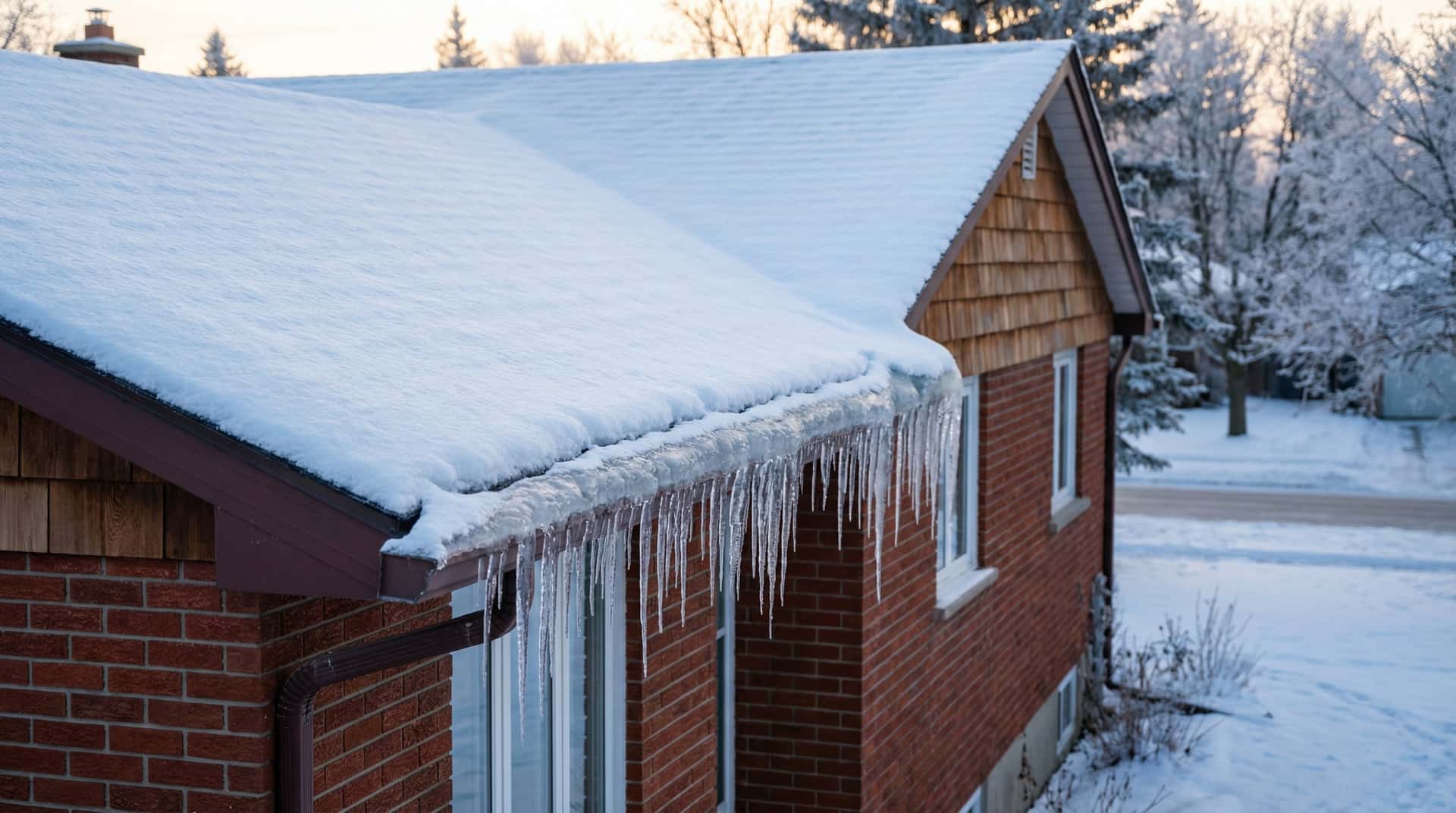
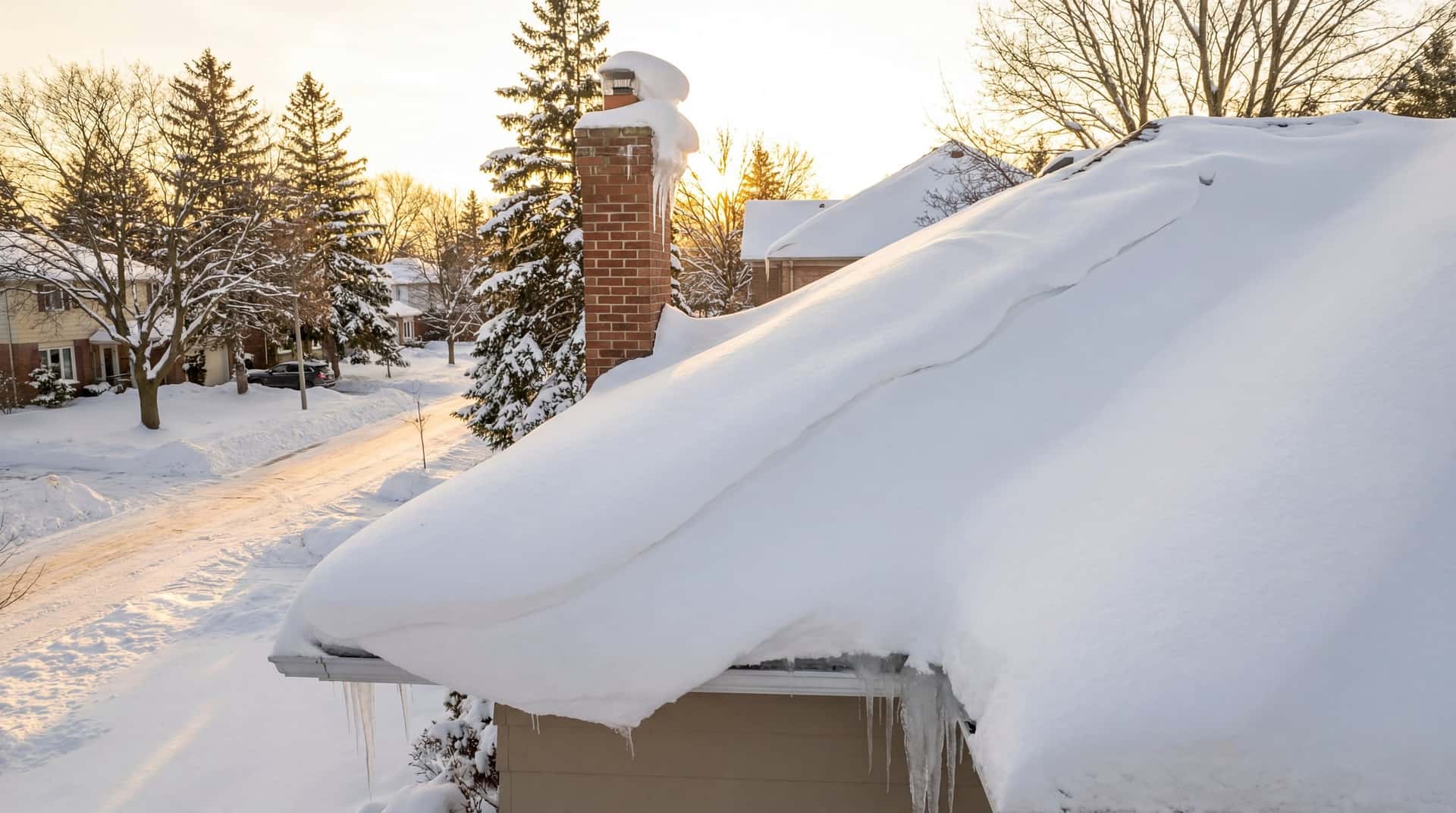
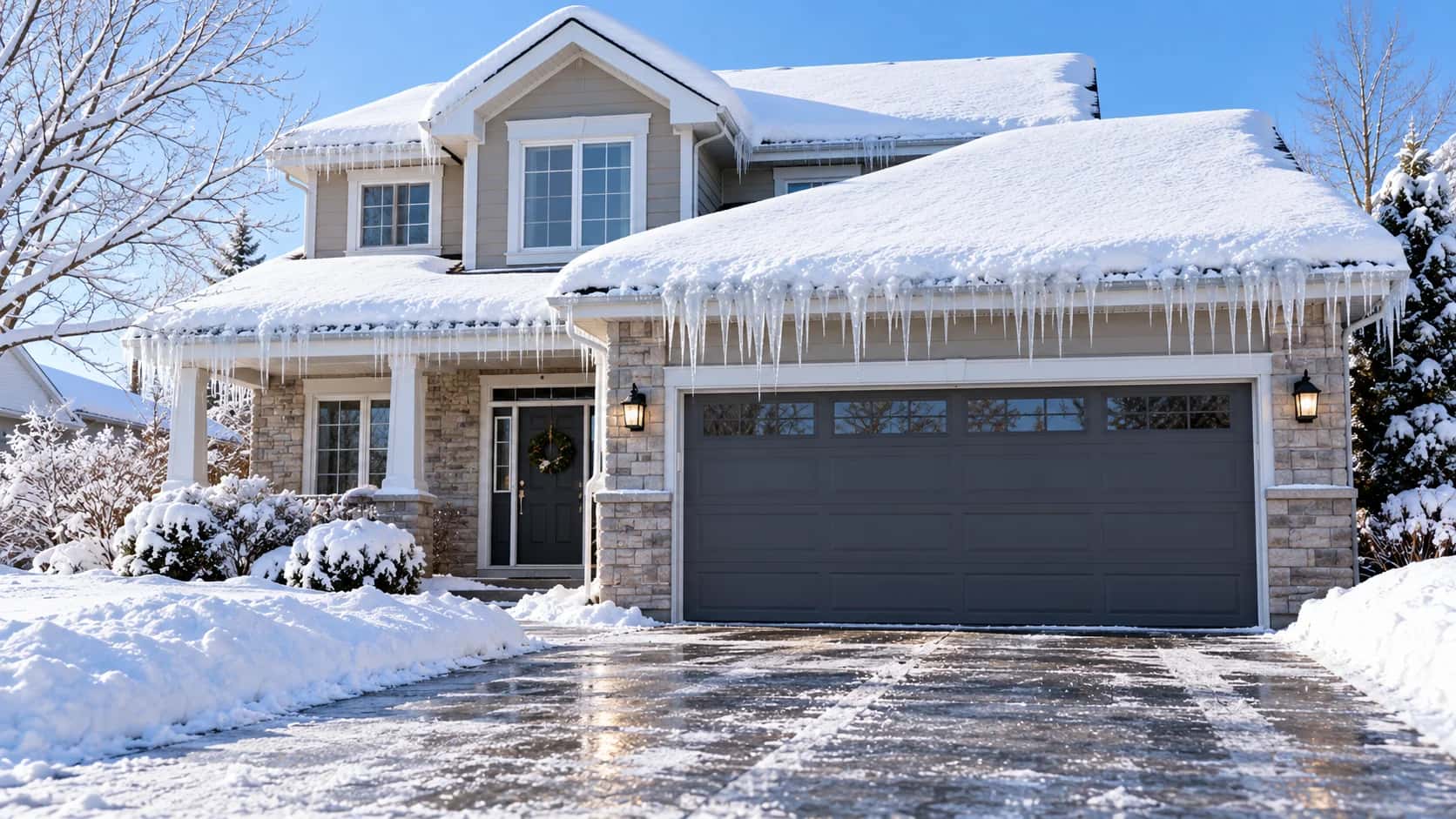
Blocked roof vents and a hot attic are a big part of the problem. When hot air tries to escape and gets trapped by blocked vents, it goes back down to the eaves, creates a freeze-thaw cycle, and forms ice dams at the bottom. Proper airflow prevents the attic from overheating, which is the root cause of ice dams.
The chain is short. A warm attic warms the roof deck, the plywood under the shingles. The snow touching that deck melts, even on a day that's below freezing outside, and the water runs down under the snow to the overhang. The overhang sits out past the heated part of the house, so it stays cold, and the water freezes there. Each round adds to the ridge until the next batch of meltwater has nowhere to go but back up under the shingles.
Vents Have to Breathe at Both Ends
An attic is meant to pull cold outside air in low, usually through the soffits, and let warm, damp air out high, near the peak. Block either end and the heat stays put. Insulation pushed into the soffit area will do it, and so will debris.
Canada's Keeping the Heat In guide gives the same instruction from the government side: make sure existing attic vents are working and not blocked by insulation, debris or other materials, and don't block the ventilation at the eaves. A baffle, a channel that holds insulation back from the underside of the roof deck, keeps that path open.
Air Leaks Feed the Same Problem
The federal guide puts just as much weight on air sealing. It says the best prevention for ice damming is to seal all attic air leaks and insulate thoroughly, and it warns against simply adding more vents, because vents won't fix air leakage. That lines up with the bare-patch sign: wherever warm house air is getting into the attic, the snow above it goes first.
For a wider look at getting the whole roof ready for heavy snow, see Homeowner.ca's guide to the Canadian snow-ready roof.