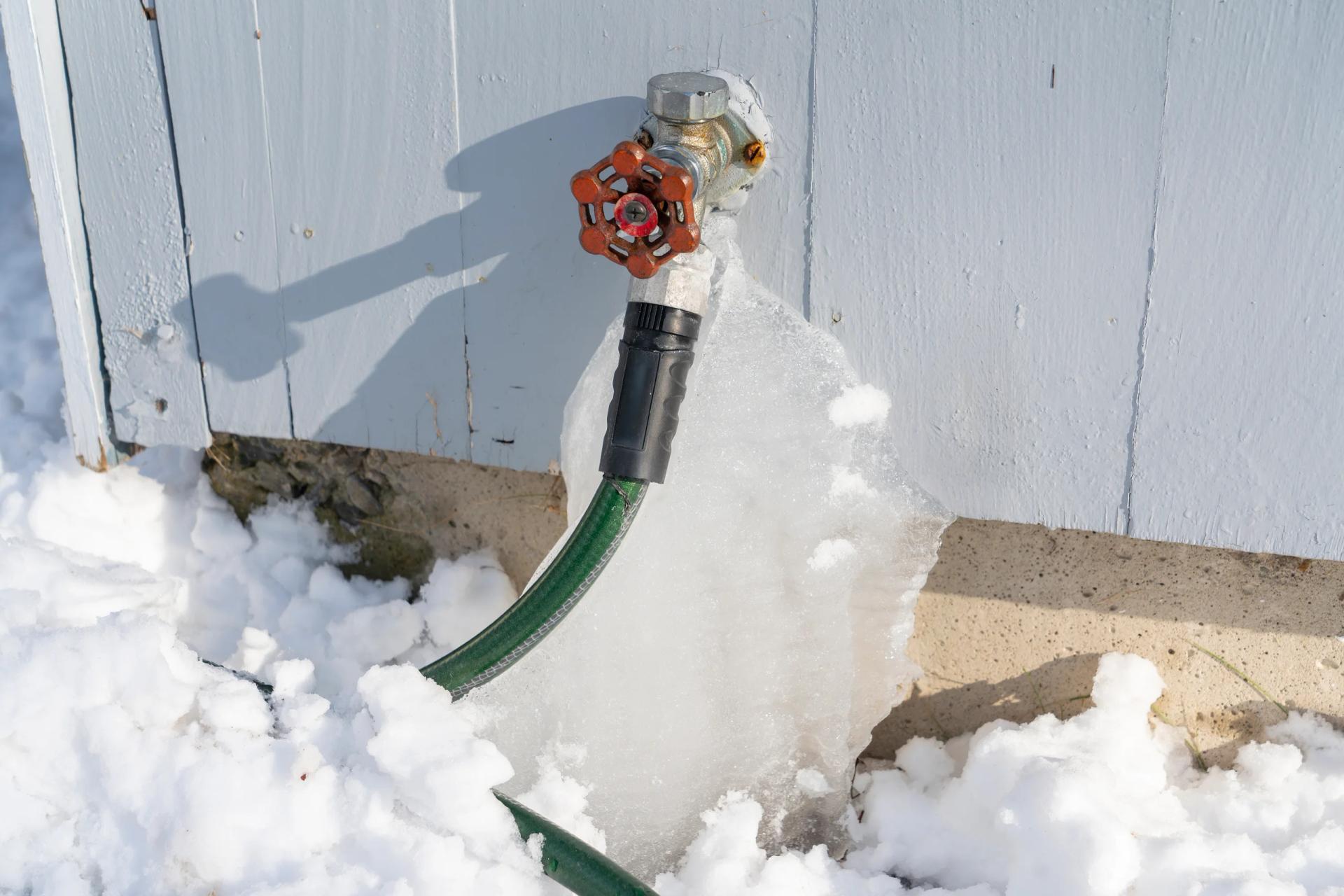
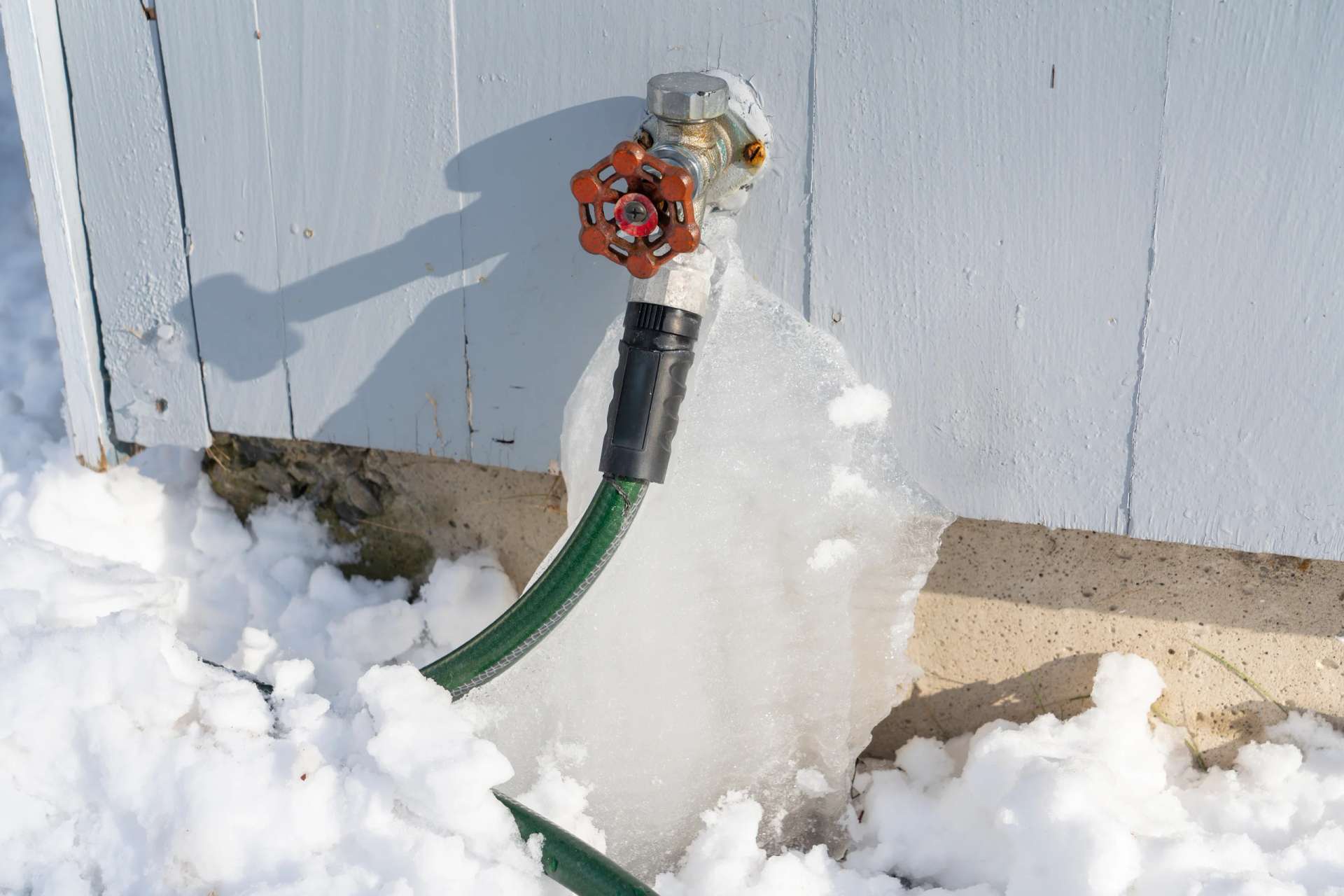
| Shut off and drain outdoor taps | Water left in the tap and its pipe freezes first | 10–20 min | A split pipe inside the wall that leaks when the tap is next used | Close the inside valve anyway, open the outside tap, and watch for drips once it thaws |
| Disconnect and store garden hoses | A connected hose traps water in the tap | 10 min | A frost-free tap can still freeze and burst | Free the coupling with warm tap water; never wrench it |
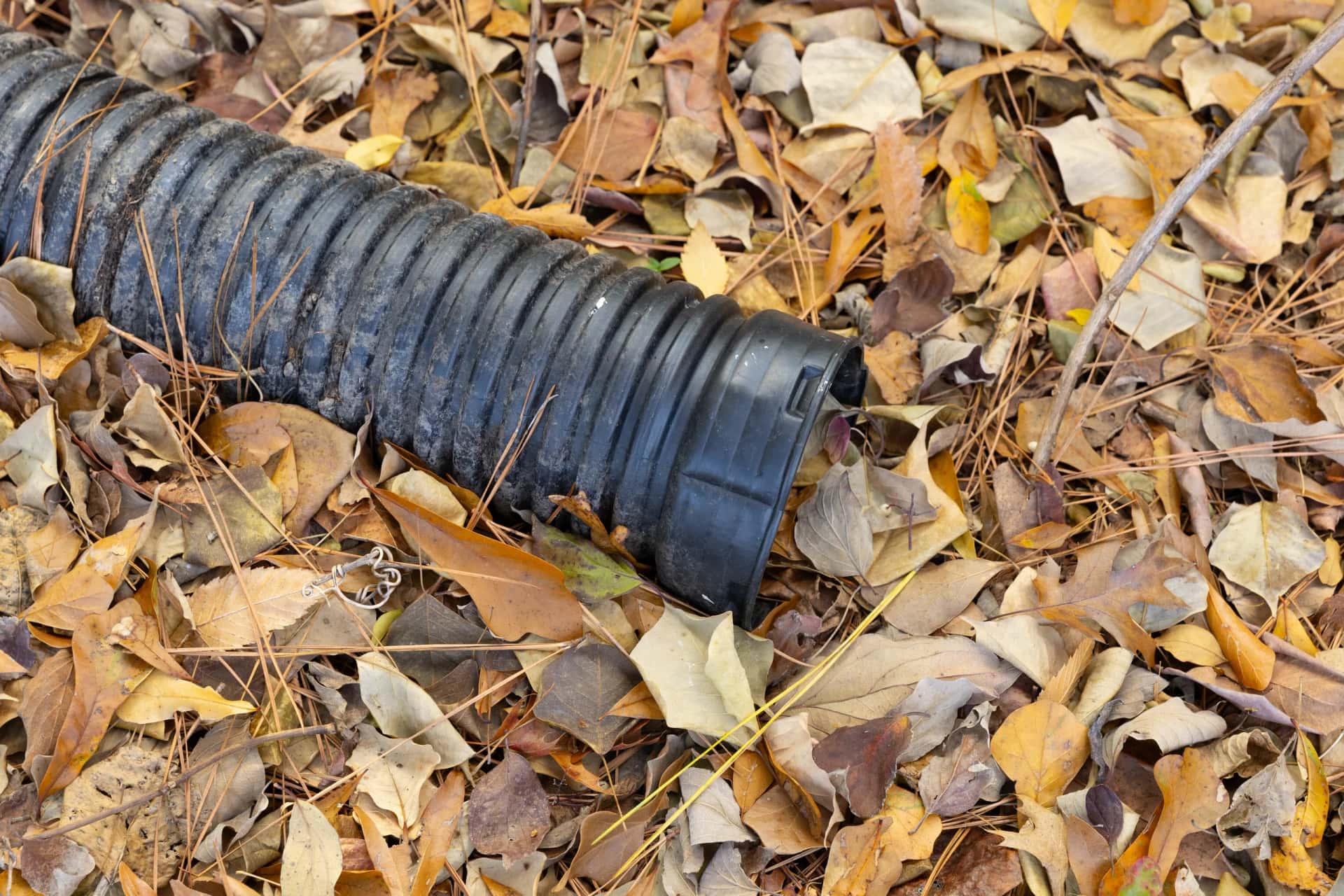
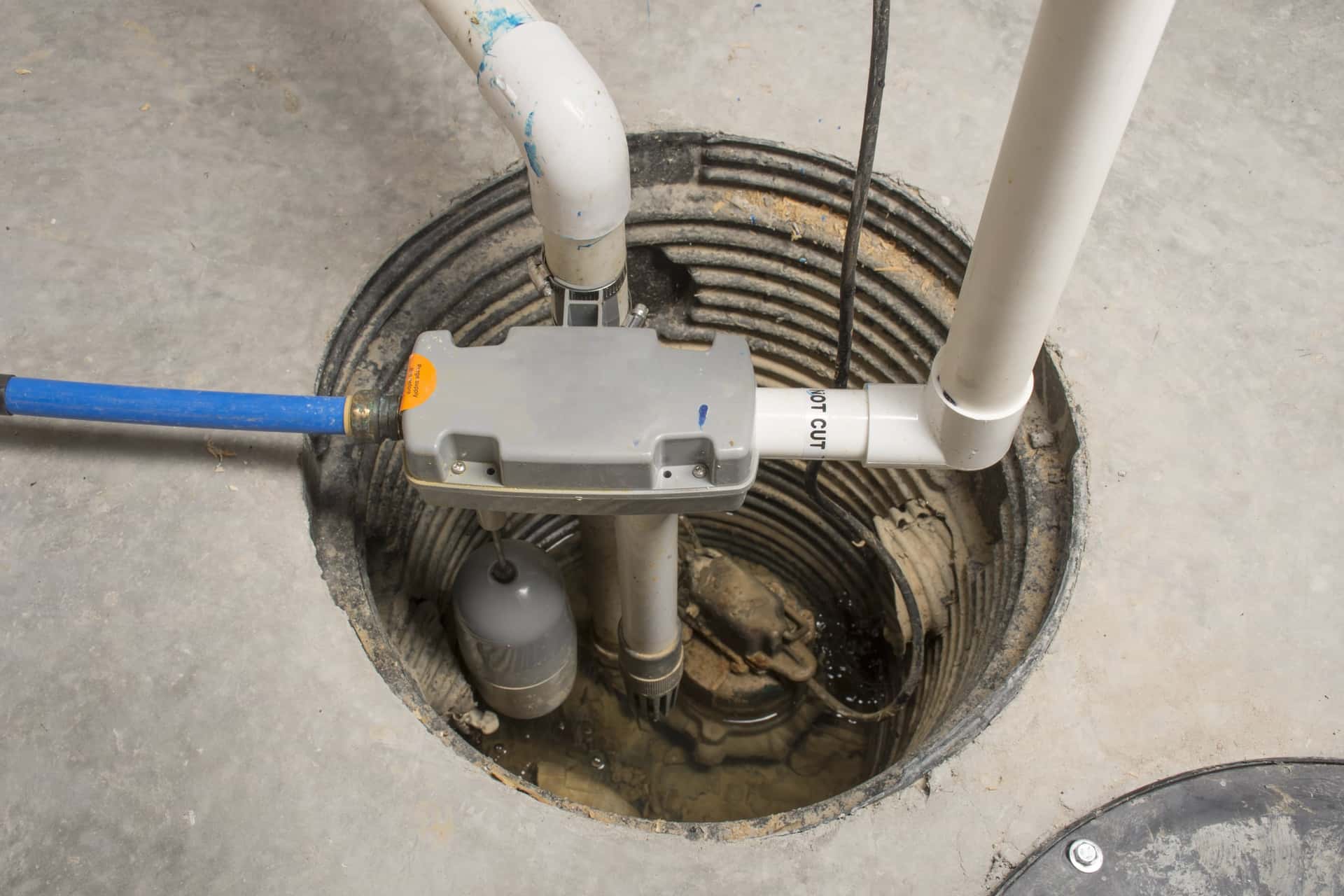
| Clear the sump discharge path | The outside hose freezes solid in the first deep cold | 15–20 min | A pump pushing against ice can overheat and burn out | Swap the hose for an elbow and splash pad; never unplug the pump |
| Book or finish the irrigation blow-out | Underground lines and the backflow device freeze in place | 30–60 min (usually a pro) | Cracked lines, heads and a damaged backflow assembly in spring | Call a contractor anyway; otherwise shut the system off and flag it for spring |
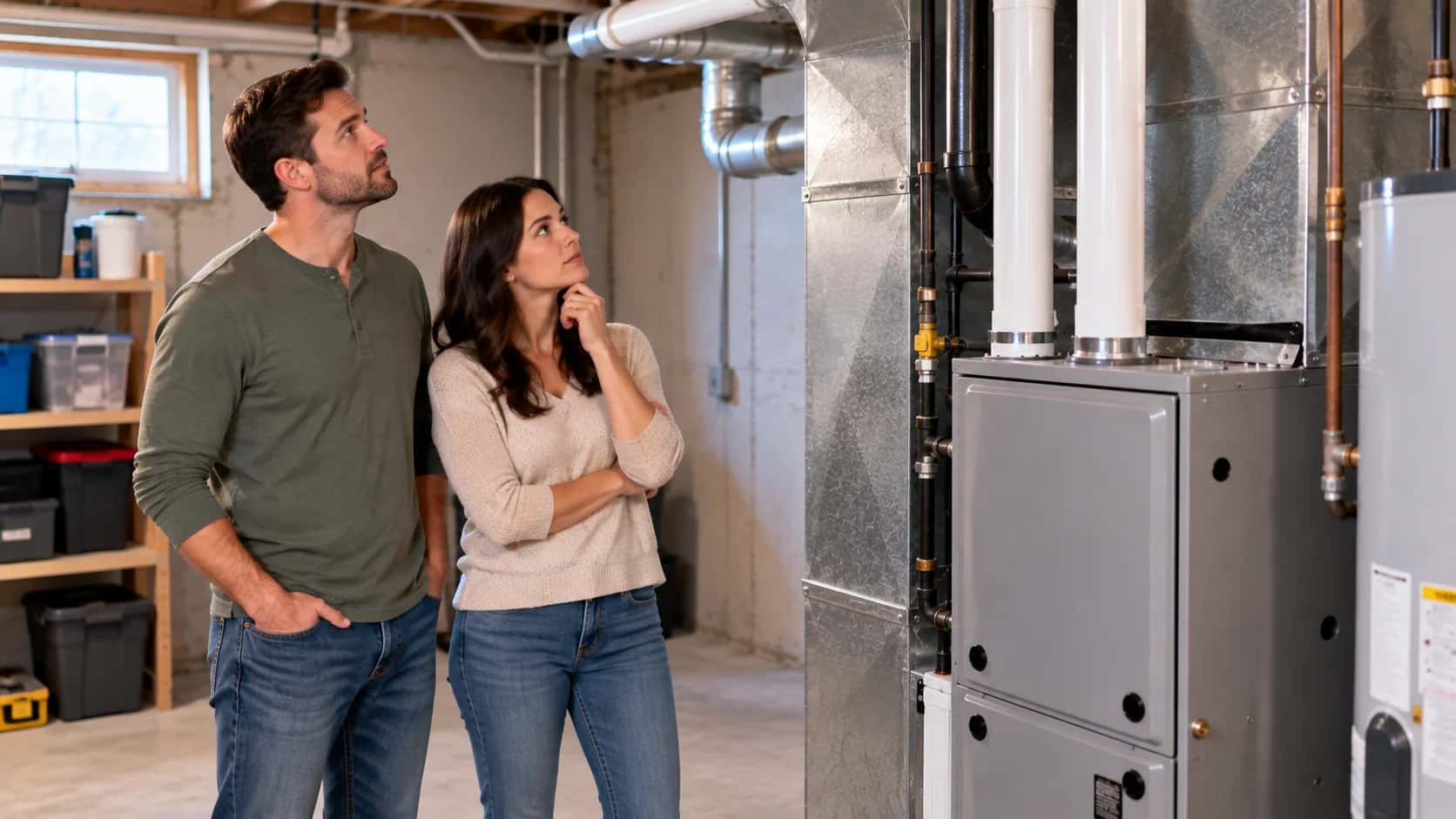
| Find and mark the gas meter and exterior vents | Low vents vanish under the first drift | 15 min | Blocked vents can stop a furnace or let carbon monoxide build up indoors | Brush them clear by hand; call the gas utility for ice on the meter |
| Mark driveway edges, beds and the curb stop | Edges and valves disappear under snow | 20–30 min (two people helps) | Plow or snow blower damage, and a shut-off valve no one can find | Set tall stakes in the snow; locate the curb stop from a summer photo |
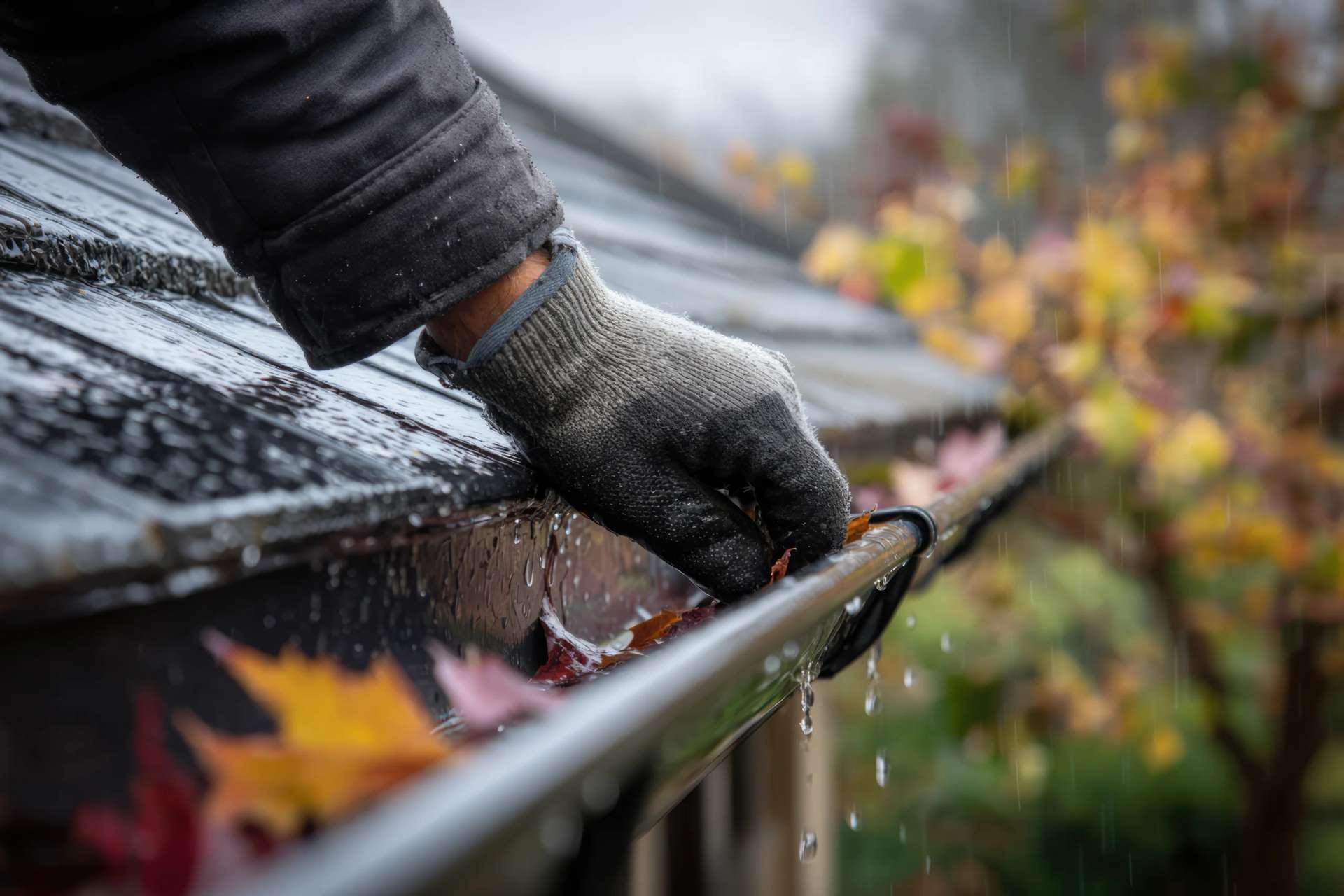
| Clear eavestroughs and extend downspouts | Ladder work on ice is unsafe | 1–3 hours (ladder, second person or a pro) | Meltwater spills against the foundation and freezes on walkways | Fit downspout extensions from the ground; leave the troughs for a thaw or a pro |
| Clear window wells and check covers | Leaves under snow trap meltwater against the window | 20 min | Water pooling at basement windows | Scoop out the snow, starting with any well at a bedroom window |
| Close ground-level gaps mice use | Snowbanks hide the gaps, and sealants prefer mild days | 45–90 min | Mice settling into walls, the garage and the basement | Stuff gaps from inside with steel wool now and caulk on a mild day |
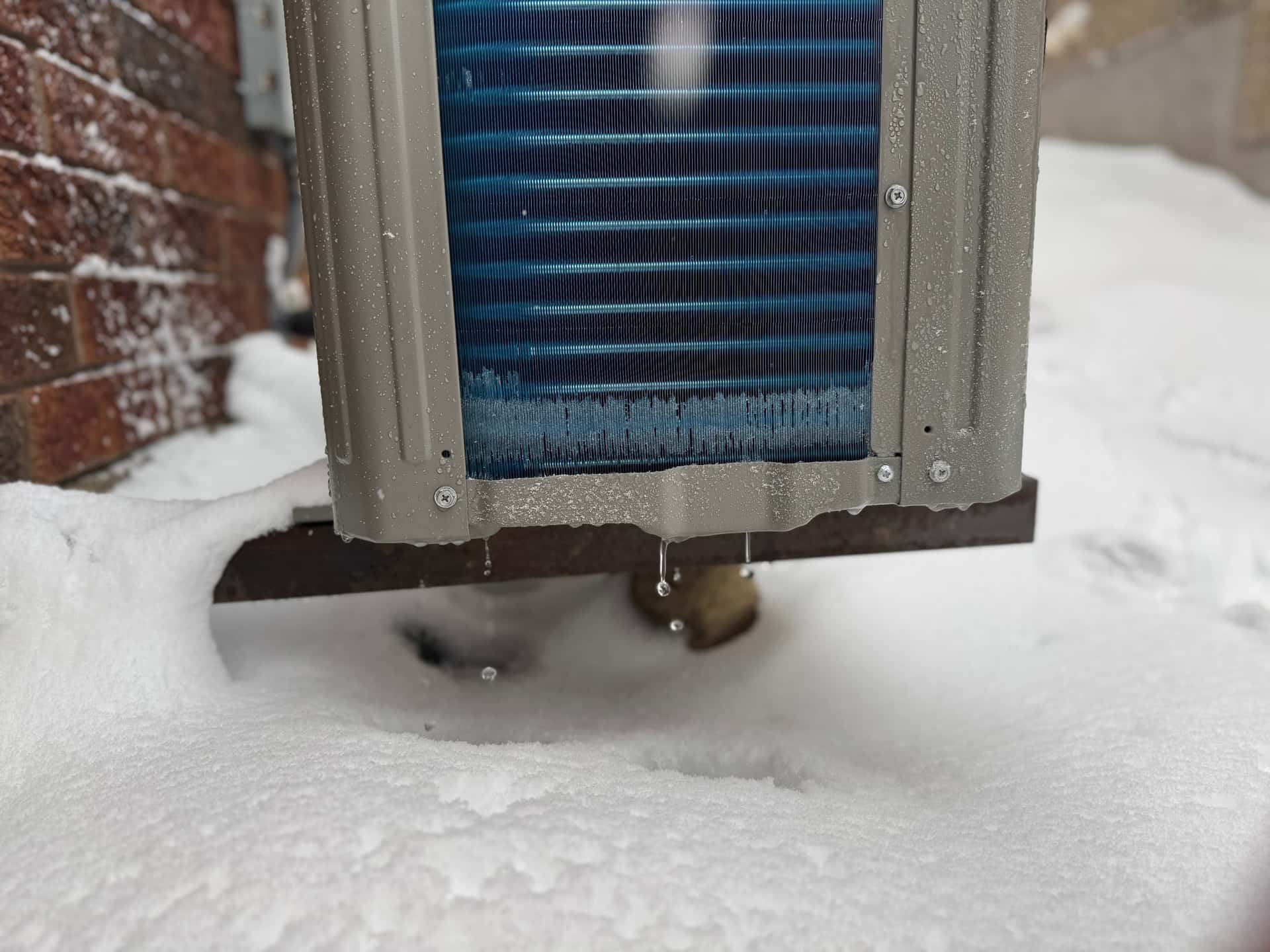
| Treat the AC condenser and heat pump differently | Snow and ice settle on and around outdoor units | 15 min | A wrapped heat pump can't breathe; a sealed condenser invites rust and rodents | Brush the condenser top; clear all around a heat pump after each snowfall |
| Drain and store rain barrels, pots and furniture | Anything holding water will freeze and split | 30–60 min | A cracked barrel, broken pots, weathered cushions | Tip the barrel to stop it refilling and drain it at the first thaw |
| Bring freeze-sensitive liquids indoors | Unheated garages and sheds drop below freezing | 15 min | Latex paint and water-based products ruined by freezing | Move them inside now and check the paint for chunks once thawed |
| Start the snow blower and stage tools | The first storm is when breakdowns surface | 30–45 min | A machine that won't start, or a broken shear pin mid-driveway | Test it on a calm day and book service early |
| Fix steps, handrails and exterior lights | Loose rails and dark steps get far riskier on ice | 30–60 min | Slips and falls on your property | Tighten rails now; use lighting, sand and ice melt until spring repairs |
| Take dated photos of the roof and exterior | Snow hides the roofline, foundation and yard | 15 min | No record of the home's condition before winter | Photograph what's visible and add any summer photos you already have |