Step 5: Look for water where it shouldn't be (5 minutes)
If your furnace is a high-efficiency condensing model, which you can usually tell by the white or grey plastic vent pipes rather than a metal flue, it produces water as part of normal operation. That water travels through a small trap and drain line, sometimes into a condensate pump that lifts it to a floor drain or laundry tub.
Natural Resources Canada lists the condensate drain among the items a contractor should check each fall, pointing out that a plugged drain can cause water damage in the house. Your job is the visible part: follow the clear or white tubing from the furnace to wherever it ends. Make sure the lines are connected, not kinked, and not dripping at the joints. If there's a condensate pump, check that its reservoir isn't brimming and that it's plugged in.
Then shine your flashlight on the floor under and around the furnace. A pass is a dry floor with no rust rings or mineral stains. Stop and call if you see pooling water, rust on the cabinet or the floor, or a pump that won't switch on. Lennox's owner manual adds a firm rule worth remembering: do not use a furnace if any part of it has been underwater, which matters in basements that took on water this summer.
Step 6: Walk the vent pipe, inside and out (8 minutes)
Venting is where this check earns its keep, so it gets the biggest share of your time. Start indoors. Follow the vent pipe from the top of the furnace to where it leaves the house, looking at every joint. On a condensing furnace, the Carrier manual specifies that vent and combustion air piping slope downward toward the furnace, so that condensation drains back rather than pooling. You're looking for pipe that is continuous, supported, and gently angled back toward the unit, with no gaps, cracks or sagging runs.
If your home has a metal vent connector running to a chimney, the same principle applies: joints should be snug, and the connector should never be pulled apart or resting on something. Soot, rust streaks or scorch marks around any joint are a clear signal to stop and call.
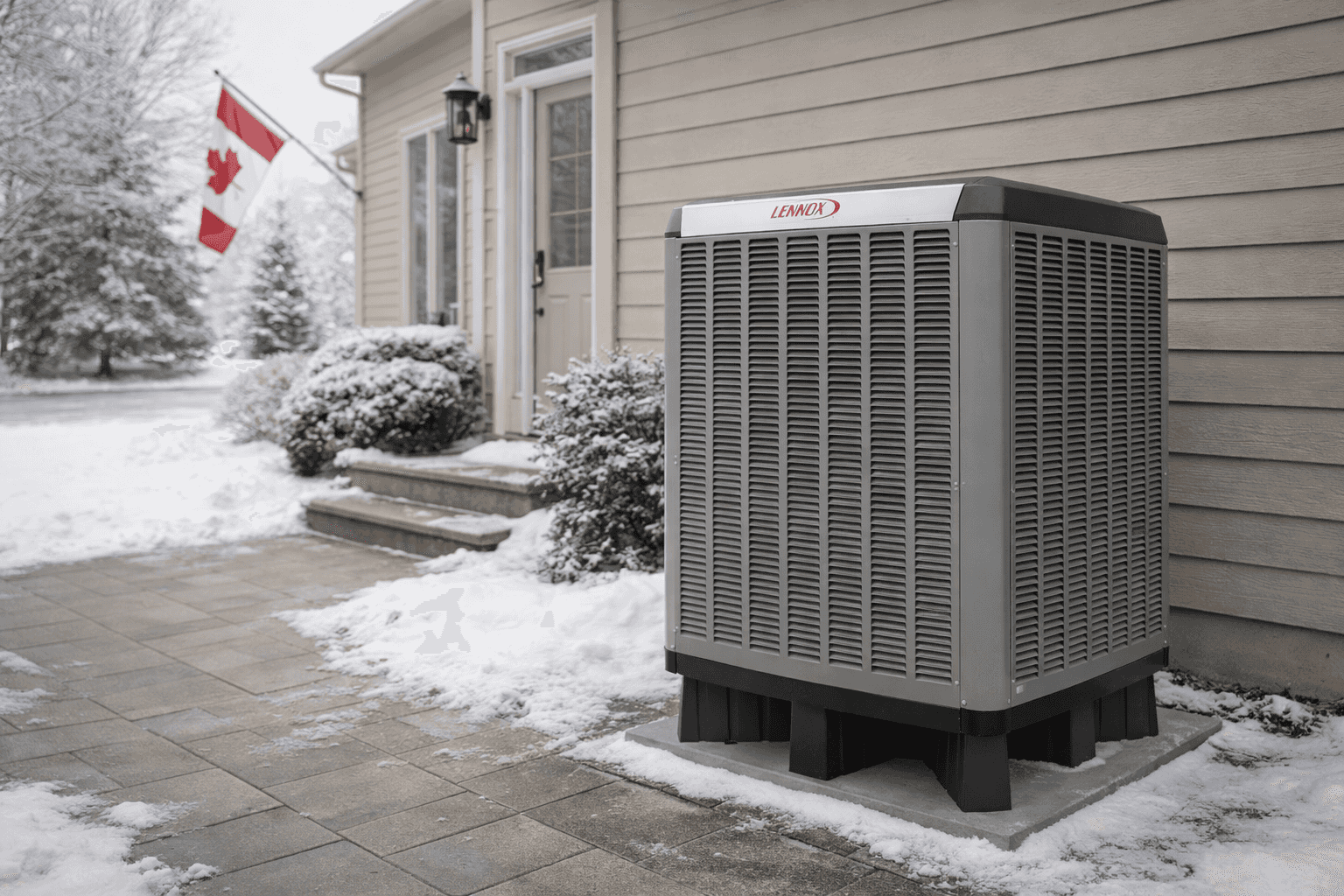
Now head outside with your flashlight. Many high-efficiency furnaces vent through the side wall of the house, and Enbridge Gas has warned that these exhaust vents often extend out of the side of a home as low as one foot above ground, where shovelling, snowblowing or heavy snowfall can bury them without anyone noticing. A blocked vent can let carbon monoxide build up indoors.
Look at both the exhaust and intake pipes (on many units they sit side by side). Clear away leaves, wasp nests, garden décor and anything you plan to stack there over winter. Manufacturer installation manuals commonly call for terminations to sit at least 30 centimetres (12 inches) above the highest expected snow level or grade, whichever is greater, so think honestly about how deep the drifts get in that spot.