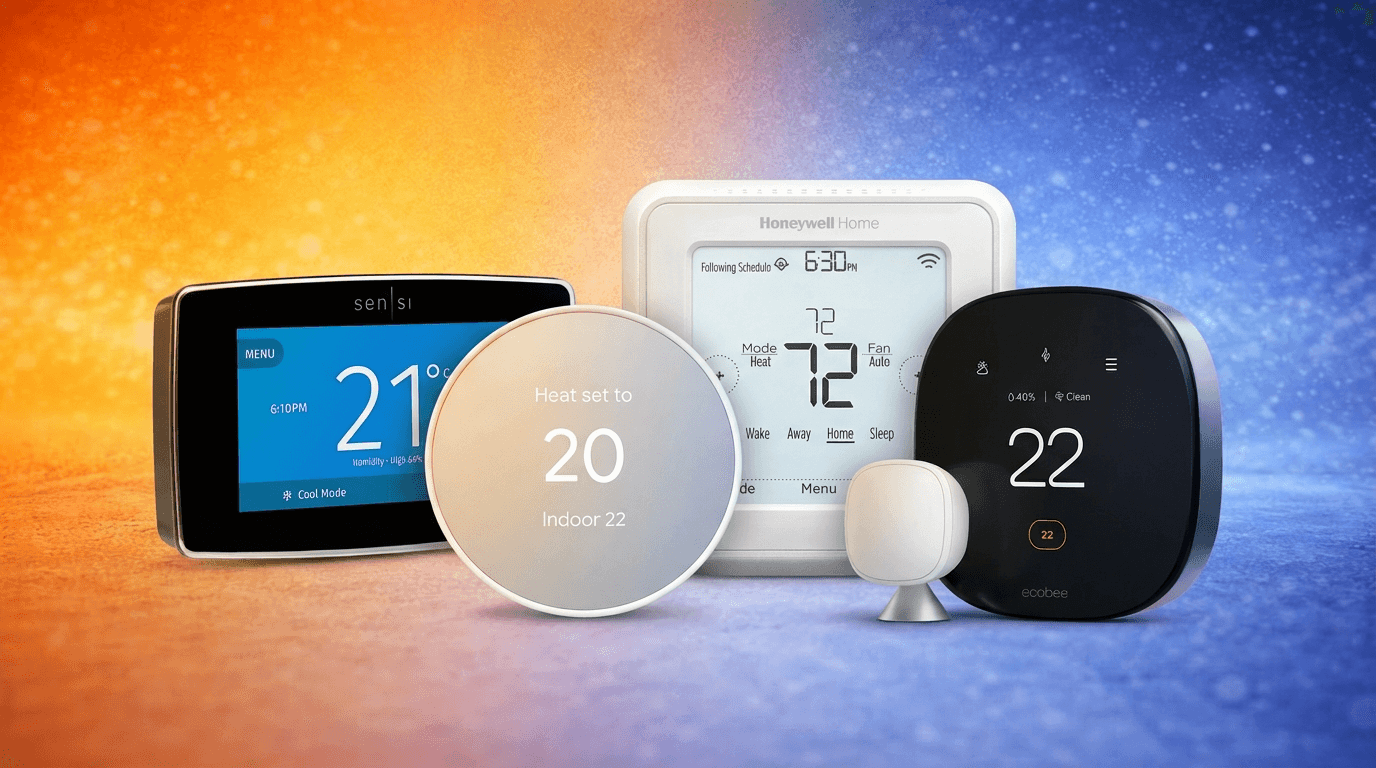
Strip away the app and a smart thermostat does three things a basic programmable thermostat can't. It adjusts the schedule for you, using occupancy sensors, your phone's location or learned patterns. It starts recovery early, working out how long your system needs to reach the next setpoint and firing it up in time. It also reports what the equipment did, including run time, and for heat pumps, how much backup heat ran.
Everything else follows from those three. The energy saving itself still comes from one physical fact: a house that is held cooler loses less heat. A smart thermostat doesn't change your furnace's efficiency or your heat pump's capacity. It changes when and how long the house sits at a lower temperature, and how the equipment behaves on the way back up.
What the ENERGY STAR Label Does and Doesn't Promise
The ENERGY STAR logo on the box is the closest thing to independent evidence most buyers will see, so it's worth knowing what's behind it. Under the ENERGY STAR smart thermostat criteria, each manufacturer runs a year of data from hundreds of its customers' homes through EPA-provided software. To qualify, heating run time must drop by at least 8% at the lower confidence limit of a weighted national average, and by at least 4% for the 20th-percentile home.
Three details matter for a Canadian reader. The sample is a U.S. national one, not Canadian homes in a Canadian winter. The metric is run time, not dollars. And for heat pumps, the amount of electric resistance heat used is a reporting requirement only: the label does not certify that a thermostat avoids backup heat.
Natural Resources Canada administers the program here and describes certified models as having been independently certified, based on actual field data, to deliver energy savings. That is a meaningful floor. It is not a forecast for your house.
Installed Is Not the Same as Configured
Utilities know that a rebated thermostat doesn't always make it onto the wall. In a jurisdictional review prepared for Enbridge Gas, the utility's in-service rate for self-installed smart thermostats was 84.15%, meaning its savings accounting assumes roughly one in six rebated units never goes into service. Being on the wall is only step one. A thermostat running factory defaults on the wrong equipment profile is installed, counted and still not doing its job.