This is the one that matters most, and it is the one that generic advice describes worst, because the number has never been the point.
When the foundation was excavated, the hole was larger than the house. The space between the wall and undisturbed earth was filled with whatever came out of the excavation, loosely returned. Utilities Kingston describes what that leaves behind: "The excavated area around your homes foundation is often disturbed through the construction process and thus backfilled with disturbed soil to fill the void. This soil is not nearly as compact as undisturbed soil and might serve as a preferential flow or drainage path for water near the foundation." The utility goes on to explain that the backfill forms a column of soil that may hold more water, or drain it straight along the foundation wall.
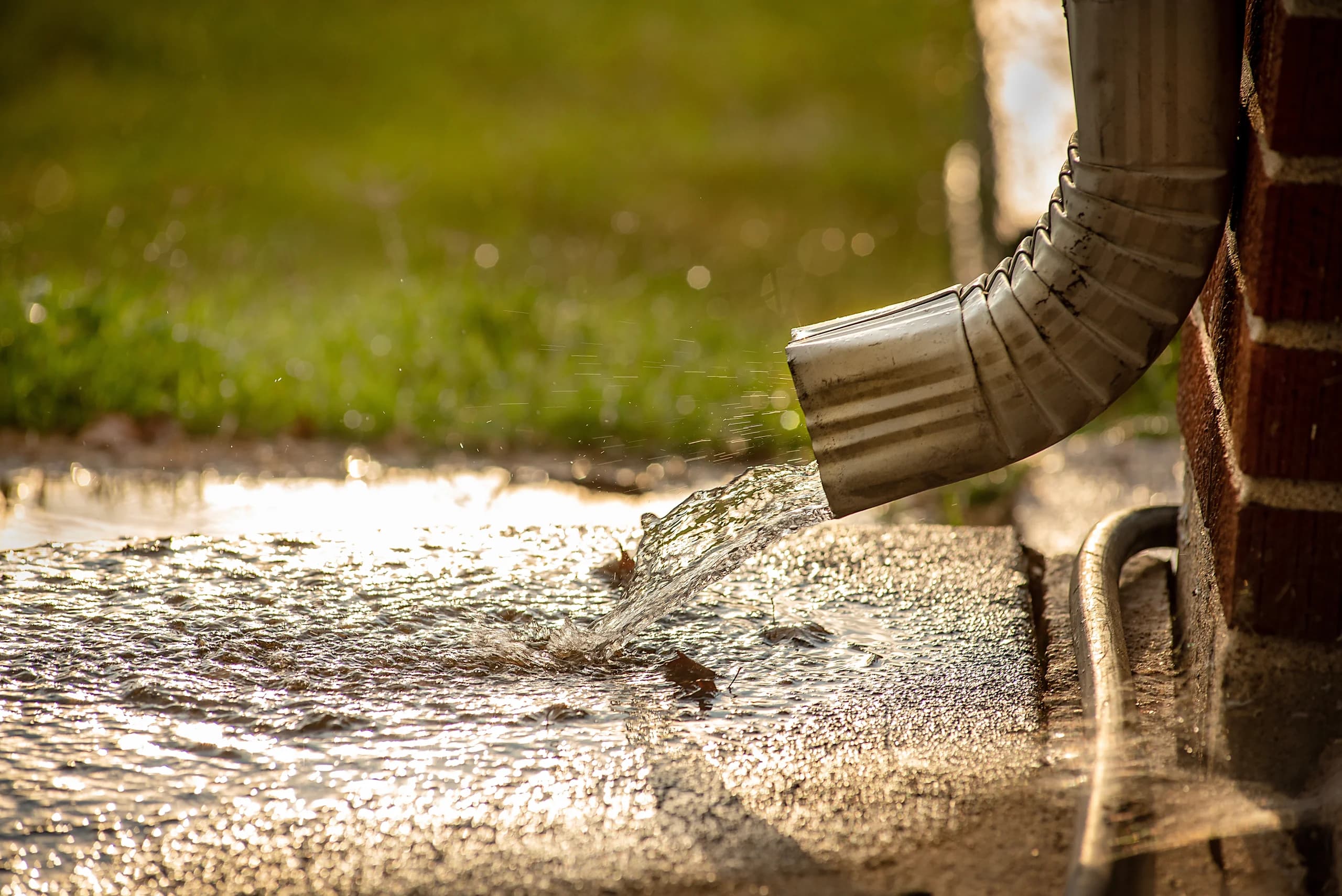
That is the whole mechanism. A downspout discharging within the backfill zone is not putting water on the lawn. It is putting it into the most permeable material on the property, in a column that runs from the surface to the footing, immediately against the wall.
The Canadian research literature frames the correction the same way. A 2021 review in Frontiers in Water lists the lot-scale measure as "downspout, foundation drain discharge extension beyond backfill zone," and describes the failure as surface water collecting in the backfill area adjacent to the basement wall and percolating into the porous zone. The unit of measurement in the underlying design intent is not metres. It is the width of the disturbed ground.
Because no homeowner can see where the excavation ended, the guidance converts it to a distance, and two metres is where most Canadian sources land. That figure addresses the backfill path. It does not address a high water table, a failed foundation drain, or a cracked wall, and no correction outside the house should be expected to.
The interior and exterior fix decision is a separate exercise, and worth running only after the outside has been corrected and tested through a real rain.