Your HRV or ERV is the quiet workhorse
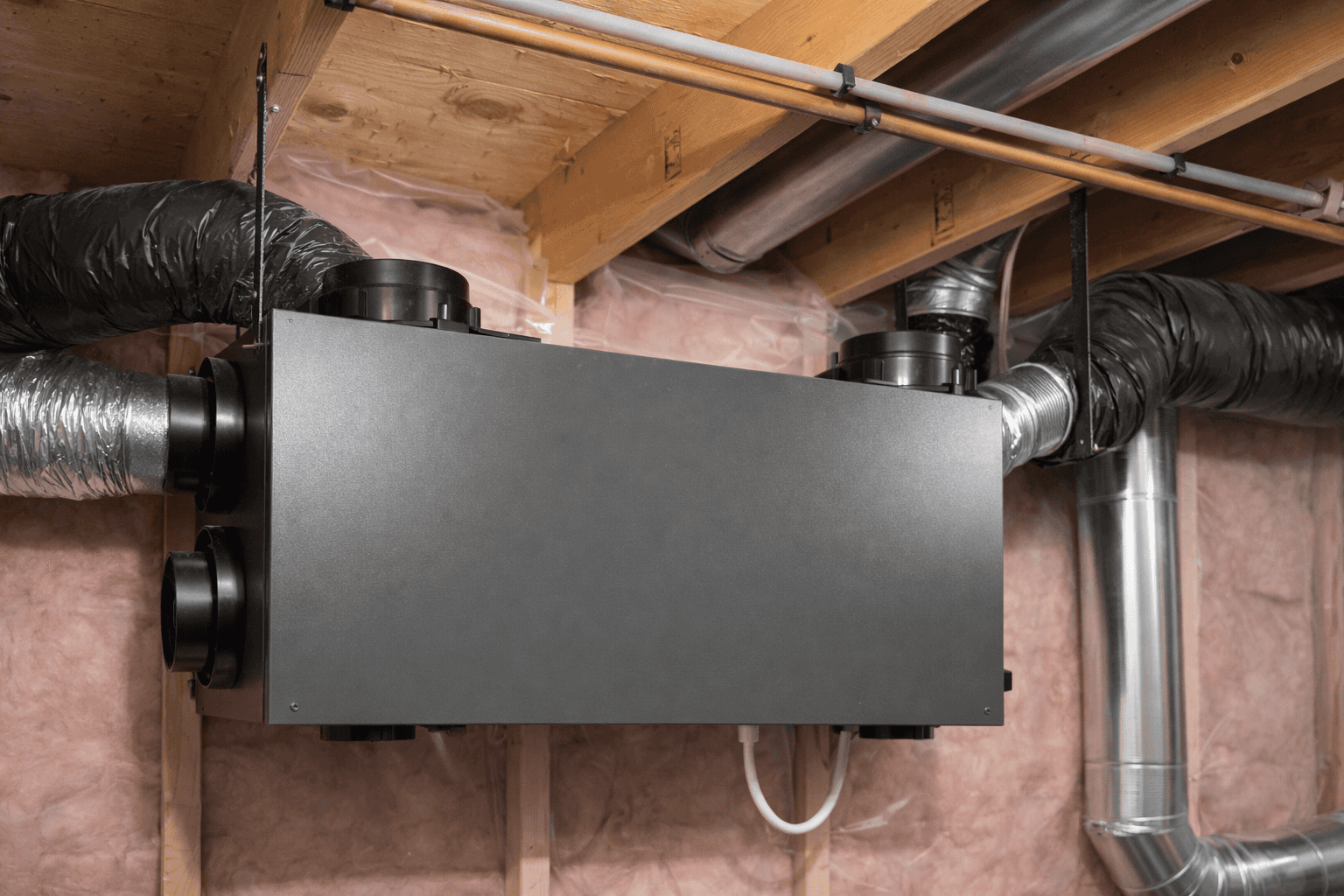
If your home was built or renovated in the last few decades, there is a good chance you already have a heat recovery ventilator (HRV) or energy recovery ventilator (ERV), usually a metal box near the furnace with two pairs of insulated ducts. It swaps stale indoor air for fresh outdoor air while recovering much of the heat, which is exactly what a tight winter house needs.
Health Canada describes HRVs as developed for airtight houses that need mechanical ventilation, and recommends running ventilation continuously at low to medium speed for most of the year. That matters because in the NRC Quebec City study, improving or adding mechanical ventilation lifted heating-season air exchange from 0.17 to 0.36 per hour, while median formaldehyde fell by 32% and carbon dioxide by 14%. No collection of houseplants has ever been shown to do anything comparable in a real home.
If your HRV is sitting in the basement switched off, or you are not sure how it works, our explainer on how HRV and ERV systems work in Canadian homes is a good next read. Natural Resources Canada's advice is simple: keep it running, clean its filters every one to three months, and book annual servicing with an accredited contractor.
Exhaust fans: short bursts, right at the source
Your kitchen range hood and bathroom fans are the next most useful tools, because they remove moisture and pollutants right where they are created, before they spread through the house. Run the range hood whenever you fry, sear or simmer, and let the bathroom fan run for a while after every shower.
There is one caution worth knowing in a very tight house. Health Canada notes that exhaust-only ventilation depressurizes a home, which can draw replacement air through wall cavities or the attic and, in the worst case, pull combustion gases back down a water heater flue or wood-burning chimney. Short bursts from code-sized fans are normal and helpful, but if your home has fuel-burning appliances and you notice drafts reversing or smells when a big hood runs, have a heating contractor check that the house has adequate make-up air.
Opening a window, briefly and wisely
On a mild, clear winter afternoon, opening a couple of windows for a few minutes is the fastest whole-house refresh you can get for free. The bigger the temperature difference between indoors and out, the faster air tends to move, and the field measurements show just how large the jump from an open window can be.
Before you do, check the outdoor air. Health Canada advises opening windows when outdoor conditions are good, and during wood-smoke or wildfire events the outdoor air can be worse than what you have inside. On those days, keep the windows closed and lean on filtration instead.