Ontario's Multi-Day Orange Air-Quality Warning Makes HVAC Recirculation and MERV-13 Filters a Homeowner Priority
What the Orange Warning Means for Your Home's Air — and the Moves to Make Before Filters Sell Out
By
Published: July 16, 2026
Updated: July 17, 2026
Credit: Shutterstock
Key Takeaways
•Orange-level warnings held across Ontario into a second day, and the smoke may not fully clear until Friday morning — long enough to make indoor air a home-management problem, not just an outdoor one.
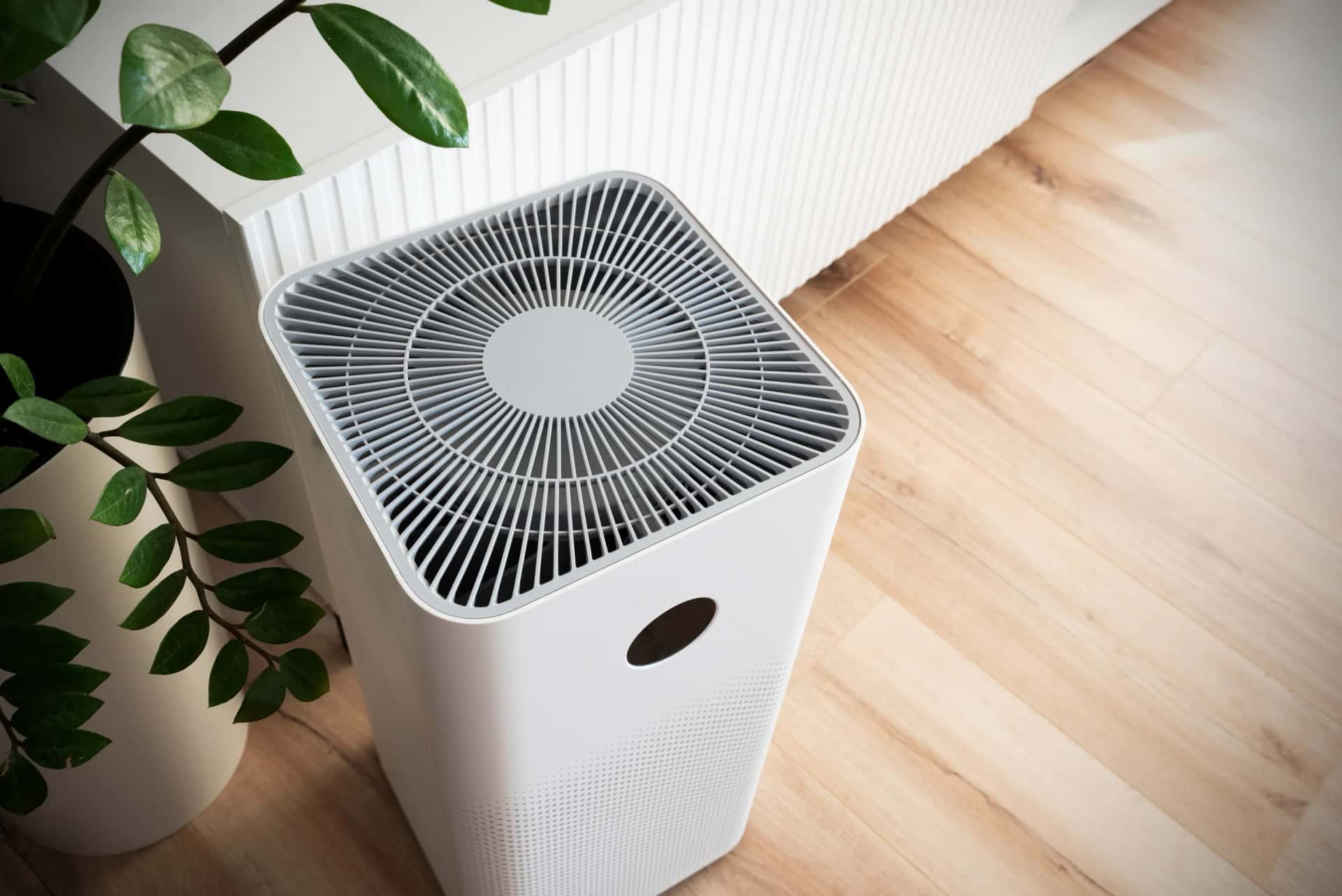
•The core home defence is a forced-air system in recirculation mode, running continuously behind a clean MERV-13 filter, with a portable HEPA purifier in the bedroom.
•Smoke events drain filter and purifier stock quickly; confirm what your system accepts and buy spares now.
Environment Canada maintained orange-level air-quality warnings across southern and northern Ontario on Thursday, a second-plus day of dense wildfire smoke drifting down from fires in the province's northwest. A day earlier, Toronto had recorded the worst air quality of any major city in the world, according to Global News; by Thursday morning only Detroit ranked ahead of it. The forecast has conditions lingering until Friday morning.
For a homeowner, a smoke event that runs this long is less a weather story than a test of the house itself. Staying inside is the advice. It is not the whole answer. Once smoke sits over a region for days, how much of it ends up in your living room depends on how your building is sealed and how your ventilation is set.
This is a plain-language explainer on what the orange warning actually signals, and on the handful of home-performance moves — recirculation, a MERV-13 filter, a bedroom purifier, a tighter envelope — that measurably cut indoor smoke while the alert holds. None of it requires a contractor. Most of it takes minutes.
Stay on top of Canadian homeowner news
What Ontario's Orange Warning Actually Signals
An Index That Switches to Fine Particulate
The Air Quality Health Index is colour-coded — yellow, orange, then red — by the level of risk, and during wildfire smoke it is recalculated on fine particulate alone, hourly, because smoke can drive fast spikes in those particles. That mechanism is spelled out by Environment and Climate Change Canada.
Orange is not a formality. On Thursday morning Environment Canada's Toronto reading sat at 10-plus, its "very high risk" band, with only partial relief forecast before the weekend.
The particle that matters here is PM2.5 — fine particulate small enough to travel deep into the lungs. Environment Canada warns that exposure can bring eye, nose and throat irritation, headaches and a mild cough, with wheezing, chest pain or a severe cough as rarer but more serious symptoms. It flags older adults, pregnant people, infants and young children, people with chronic conditions, and anyone who works outdoors as most likely to feel the effects. This is the same smoke risk Environment Canada's hotter-than-normal summer forecast had already flagged as a recurring feature of the season.
Why Being Indoors Isn't the Same as Being Protected
Indoor PM2.5 Follows the Building Envelope
Here is the reframe most people miss: going inside does not automatically leave the smoke outside. Health Canada's cleaner-air guidance is direct that indoor PM2.5 can still climb to levels that matter if no protective steps are taken, and it recommends sealing windows and doors, installing a high-quality filter, setting the HVAC system to recirculation, and limiting exhaust fans when they are not needed.
Read together, those steps describe a single idea. The house is a filter you can tune. A multi-day event simply means you have to tune it deliberately rather than hope for the best — the same conclusion homeowners reached when wildfire smoke last pushed Ontario indoor air toward HVAC decisions.
Switch Your Forced-Air System to Recirculate
Close the Fresh-Air Intake, Run the Fan Continuously
Most forced-air homes bring in some outside air by design — through a dedicated fresh-air intake, a heat- or energy-recovery ventilator, or an economizer-style setting on cooling equipment. During a smoke event, that path is the problem. You want it closed, so the system moves the same indoor air across the filter instead of pulling smoke in from outside. If you are unsure how your ventilator behaves, our primer on how HRV and ERV systems work walks through where that outdoor air actually enters.
Then set the thermostat fan to "on" rather than "auto," so air keeps cycling through the filter even when the system is not actively heating or cooling. This is exactly the playbook the City of Mississauga gave residents this week: use the highest-quality filter the system can support, run a certified portable air cleaner, set ventilation to recirculate when outdoor air is poor, and limit exhaust fans that can draw smoke indoors.
There is a complication worth naming, because this smoke arrived on the heels of a heat warning. When smoke and heat overlap, Health Canada's combined smoke-and-heat guidance says to prioritize staying cool, because overheating is the more immediate danger. If you run air conditioning or a heat pump, confirm it is recirculating indoor air rather than drawing fresh air in.

Important
Do not seal the house so aggressively that it overheats. If cooling fails during a heat spell, that risk outranks smoke exposure — keep the system running on recirculation and move somewhere cooler if the indoor temperature climbs.
Make the MERV-13 Filter Your Priority Purchase
The Rating Tells You What It Catches — Condition Tells You If It Still Works
MERV is a filter's efficiency rating, and it is the number to know this week. Health Canada recommends a filter rated MERV 13 or higher because it captures more of the fine particulate carried in smoke, and it cautions that smoke can overload a filter quickly, so keeping spare filters on hand matters during a multi-day event. A MERV-13 filter clogged grey is not protection. It is a restriction.
Two practical checks follow. First, compatibility: not every furnace can handle the added airflow resistance of a denser filter, so confirm your system supports MERV 13 before forcing one in. Second, condition: a filter installed clean at the start of the week may need replacing before the smoke clears. Keeping the equipment itself clean helps too, and our heat pump maintenance checklist covers the service basics that keep airflow strong when the filter is working hardest.
Add a HEPA Purifier Where You Sleep
Size It for Smoke, Then Point It at the Bedroom
A portable air cleaner is a supplement to the furnace, not a whole-home substitute, and it works best deployed room by room. Health Canada suggests sizing a unit so its clean air delivery rate can turn over at least two to three room volumes an hour in the space where you run it — a benchmark worth checking against the square footage on the box.
The bedroom is the highest-value target. It is where you spend the most continuous, unavoidable hours, often overnight while the AQHI is still elevated. A HEPA unit sized for the room, running through the night, does more good there than a larger machine parked in an open living area. For what to look for when supply is tight, our guide to the best air purifiers for wildfire smoke breaks down the features that actually matter.
Seal the Envelope, Then Check Before Supplies Tighten
Small Leaks, Long Event
Filtration handles the air already inside; sealing limits how much new smoke gets in. Weatherstrip doors and windows, and keep damper-equipped exhaust fans — range hoods and bathroom fans — switched off when they are not running, so they do not pull outdoor air through their vents. Controlling those leakage paths is the same principle the Canada Mortgage and Housing Corporation applies to building envelopes, scaled down to a single home during a single event.
Timing is the last variable. Relief is forecast for Friday morning, but the improvement looks partial — the index is expected to dip and then rebound Friday night — so the smart move is to treat this as an all-day, overnight problem rather than a morning-only one. Filters and purifiers are exactly the products that sell out during smoke events, and this one is running alongside ongoing heat warnings across southern Ontario that already have cooling gear in demand. Verify what your system needs now, while it is still on the shelf.
Run this five-minute check before the next smoke-heavy stretch:
Check
What to do
Why it matters
Thermostat fan
Set to "On," not "Auto"
Keeps indoor air cycling through the filter continuously
Fresh-air intake / HRV or ERV
Switch to recirculate or close the intake
Stops the system from drawing smoke-laden outdoor air inside
Ryan is the founder of Homeowner.ca and a proud Canadian homeowner based in Guelph, Ontario. Over his 25-year career in digital publishing, he has focused on transforming complex information into clear, practical guidance that helps people make confident, well-informed decisions.