Important
Before buying any battery-powered pool robot in Canada, ask the seller in writing which agency certified the unit and under what mark. A listing that advertises certifications without naming one has not answered the question.

It replaced a five-year corded incumbent and made the pool visibly cleaner while we did less
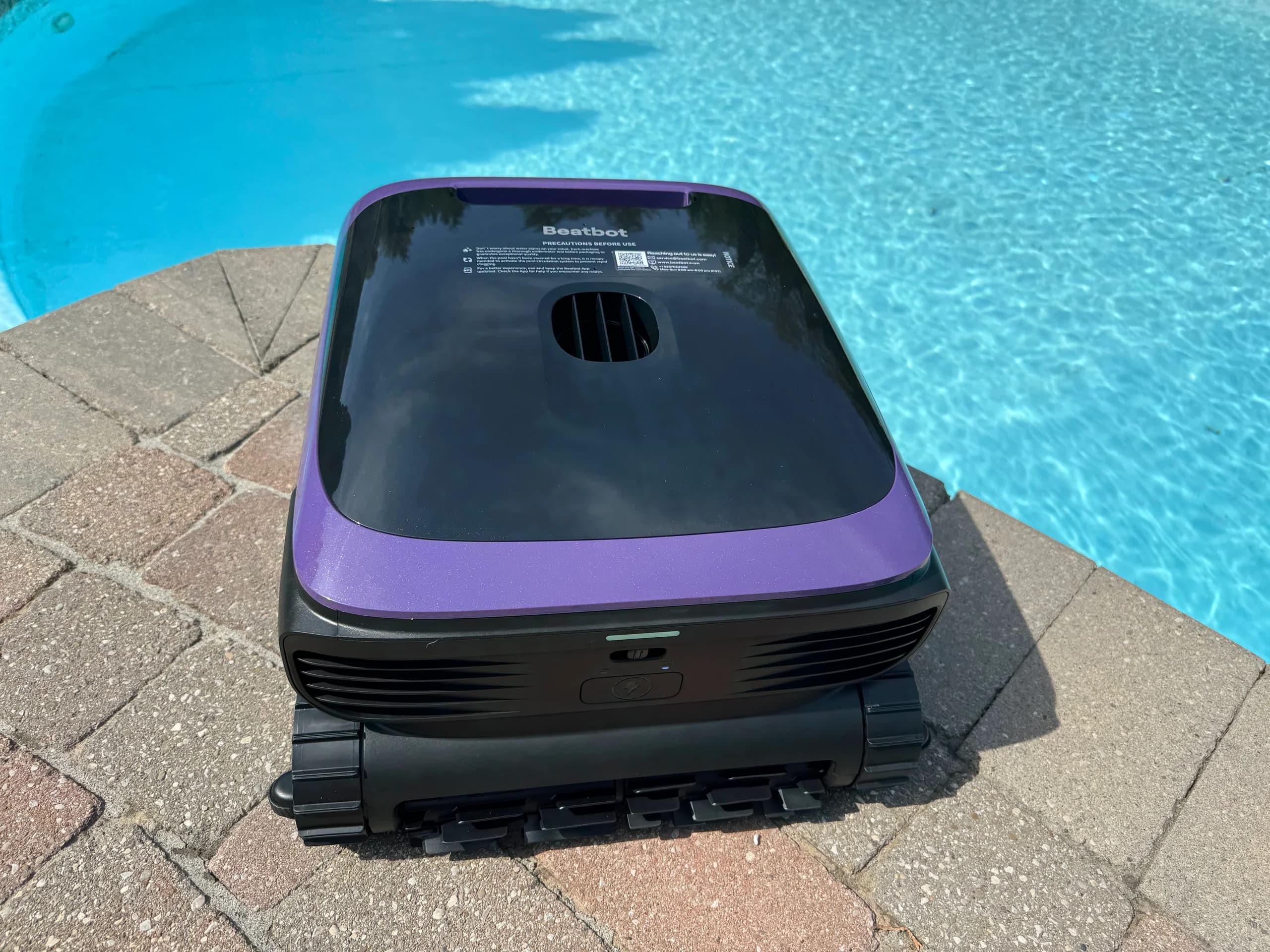
Credit: Homeowner.ca
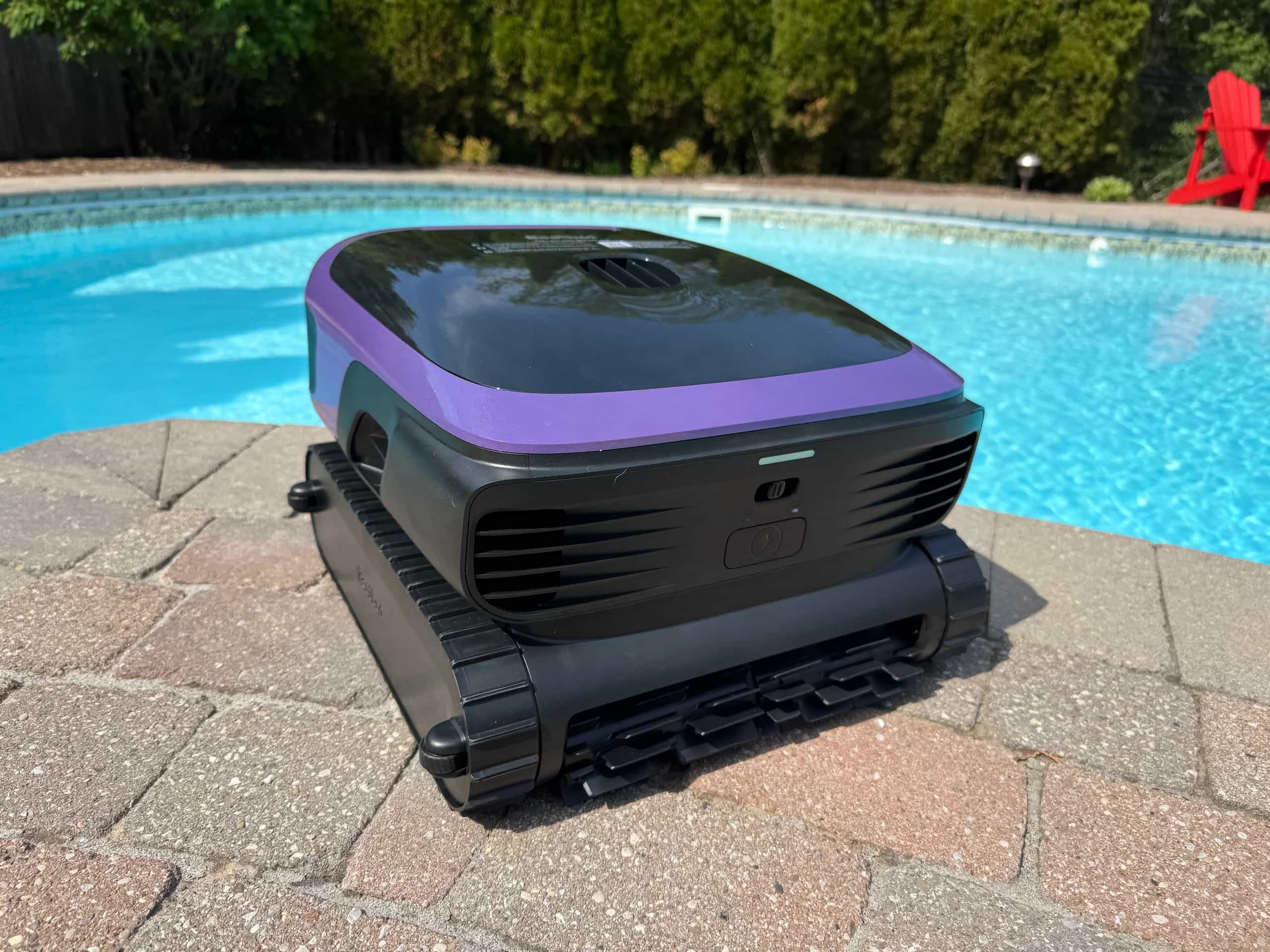
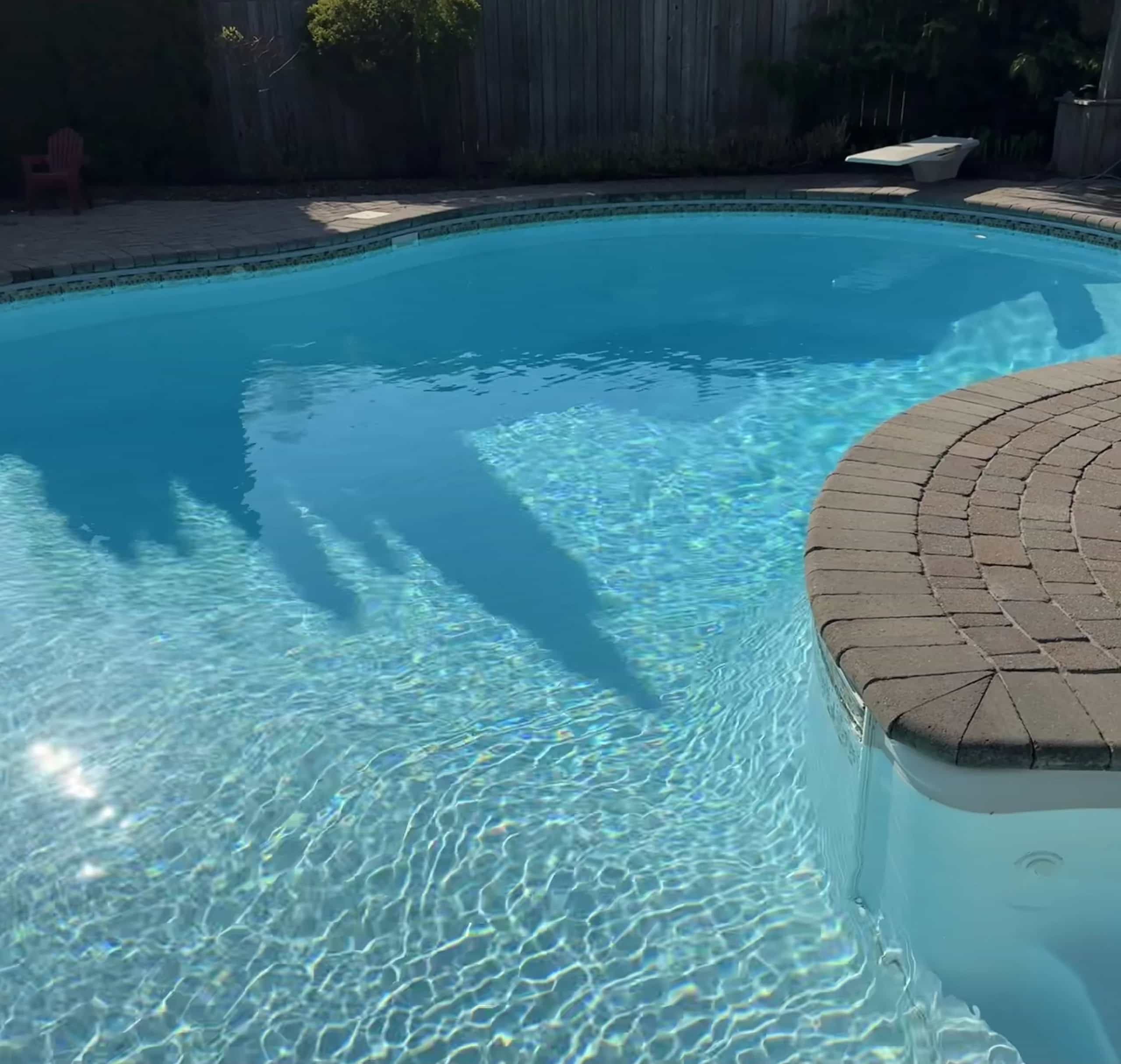
The Beatbot Sora 70 is a cordless, battery-powered robotic pool cleaner that runs the floor, the walls, the waterline and the water surface, and parks itself at the edge when it finishes. We bought ours at the end of May 2026 and have run it since — about three and a half months, which on a Canadian pool is a full season, on one kidney-shaped 20 by 40 saltwater pool.
We were not shopping. In May, the drive assembly on our five-year-old corded Polaris quit, out of warranty, and we had the usual choice: repair a machine we had spent five years working around, or replace it. We replaced it, and we deliberately went premium, optimizing for the inverse of everything that had annoyed us. No cord. Battery power. Started from a phone instead of a control box bolted to the fence.
That decision came with a second one attached. Beatbot is not an incumbent. It is a Shenzhen-based smart pool robotics company that arrived in North America across 2024 and 2025 through direct-to-consumer channels and a great deal of social video, and it is charging incumbent money. Going premium here meant going premium with a challenger.
So the question this season was supposed to settle is not whether a cordless robot can clean a pool. It is whether this particular machine, from this particular company, was worth replacing a known quantity with — on a pool whose real problem is fine sand, in water that eats hardware, in a country where nobody stays outdoors in February.
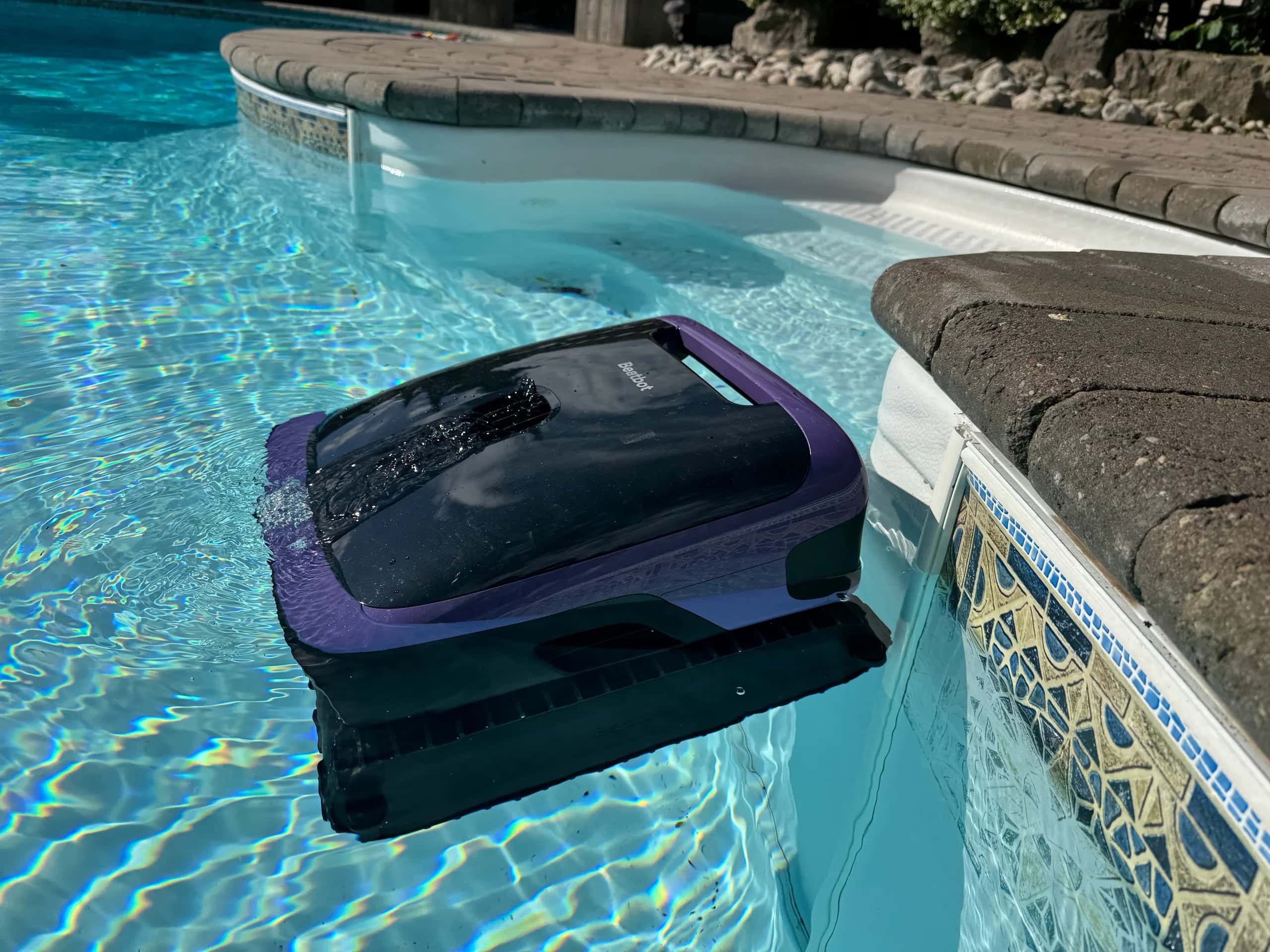
Start with the number, because it frames everything else. As of mid-September the Sora 70 is listed on Amazon.ca at $1,529.00 in Canadian dollars, in stock, sold by Beatbot Tech, with no strike-through price beside it. That is not a promotional figure waiting for a better week. That is the price.
For it, Beatbot specifies a 10,000 mAh lithium-ion battery rated for up to five hours of floor cleaning or up to seven hours on the surface, a 6 L debris basket behind a 150 µm filter, 6,800 GPH of suction, coverage of up to 300 m² per charge, a working depth from 0.7 to 11.5 feet, navigation by optimized S-shaped paths with ultrasonic obstacle avoidance across eighteen sensors, and a three-year warranty. Our pool is about 800 square feet. We are asking a quarter of what the machine is rated to do.
Two of those numbers matter more than the rest, and they matter in opposite directions. The 6,800 GPH figure lands squarely on the strongest published argument against this entire category: an independent reviewer who prefers corded machines puts typical cordless suction around 1,300 GPH and sets 4,000 GPH as the floor for a proper clean. By that author's own standard, the Sora 70 clears the bar with room to spare. The 150 µm figure is the one that constrains the machine, and on our pool it decides everything.
Who you are buying from is the other half of the decision at this price. Beatbot is a young challenger with real momentum and a short track record, and that combination is not the same risk as an established name charging the same money — it changes what a three-year warranty is actually worth, and what happens to parts availability in year four. That is the part of this purchase we are least certain about, and the part a season cannot resolve.
One thing we did not check and should have: the Canadian listing advertises fifteen global certifications without naming a single one, and Beatbot's own product page names none either. Ontario's Electrical Safety Authority tells buyers to contact the seller when a product description does not mention certification. It is a two-minute email and we skipped it.
Before buying any battery-powered pool robot in Canada, ask the seller in writing which agency certified the unit and under what mark. A listing that advertises certifications without naming one has not answered the question.
If you want the wider field rather than one machine, we cover it in our roundup of robotic pool cleaners in Canada.
The machine it replaced was a Polaris 9550 Sport, corded, about five years in our hands, and it did not fail gracefully. It failed the way corded robots fail.
The error codes tell the story better than we can. Leslie's troubleshooting table for this family of cleaners reads like our own maintenance history: short circuits in the traction motors, drive-motor overconsumption with the instruction to make sure the cable is not caught in the motor, and a communication error that sends you to check the connector pins in the power cable for corrosion. Every one of those is a cord problem wearing a different mask.
Owner communities have documented the mechanism precisely. In a 2024 Trouble Free Pool thread, an industry member explains that when the cable twists repeatedly the individual conductors stretch until the insulation breaks and they short against each other; in the same thread an owner in his eighth season reports rebuilding the controller-end connector twice. We replaced a power cable once ourselves. At the time it felt like bad luck. It was not bad luck. It was the design.
Salt sharpens all of it. Ours is a saltwater pool, and corrosion was a running background worry for five years rather than a single event. Industry guidance on saltwater cleaners describes a predictable failure order — motor seals first, then stainless fasteners, then the electronics gaskets, with a power cord trailing through saltwater every cycle counted as one more component salt attacks — and puts stowing a cordless unit dry between cycles at the top of the list of habits that extend service life. That is a fair description of the trade we made. We removed the one component that was always wet and always moving.
If the chemistry side of a salt system is new to you, our guide to how a salt cell makes chlorine and what to do when it fails covers the equipment this robot swims in.
Filtration and runtime were part of why we chose it. They are not what we noticed. What we noticed on the very first cycle was coverage.
This matters more than it sounds, because of the shape of our pool. A kidney-shaped 20 by 40 is precisely the geometry a tethered machine struggles with. Polaris rates the 9550 Sport for pools up to 60 feet on a 70-foot floating cable, with four-wheel drive, a tangle-reducing swivel and no app control at all — everything in that list except the pool length is an acknowledgement that the cord is the problem. The swivel exists because cords twist.
In practice the cord wrapped, and the machine stopped reliably getting around. Not every run. Enough runs. We were never confident the whole pool had been covered. We are not unusual in this: among owner reviews collected for the 9550 Sport, winding up the cord comes up as a standing complaint rather than an incident.
Cordless simply went everywhere. That is the whole observation, and it landed in one cycle. Independent testing supports the underlying capability — PCWorld measured 99 percent capture of test debris on the floor in floor-and-wall mode — but we did not need a number to see it. Five years of low-grade doubt about whether the pool had actually been cleaned ended in a single cycle.
Our pool is surrounded by a paver patio set with polymeric sand, and that sand is the reason a robot lives here at all.
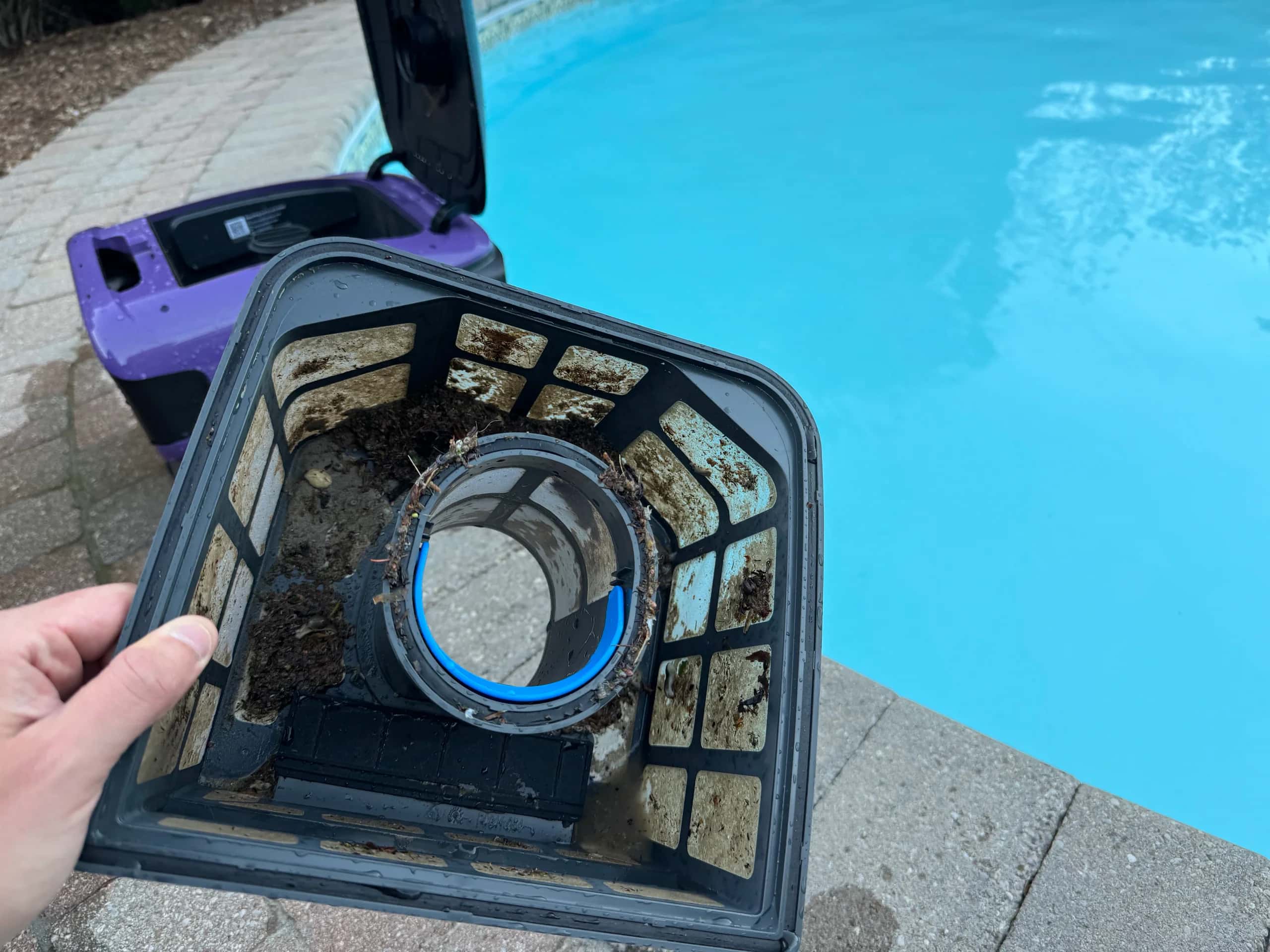
Polymeric jointing sand, according to Techniseal's technical data sheet, is graded sand mixed with a binder that cures in the joint, rated for joints from 1.5 mm to 1.3 cm wide and at least 4 cm deep, and sold on its resistance to weed growth, insect invasion and erosion. Ours resists those things imperfectly. Ants work through the joints all season, and every wind event and every rain event moves what they have loosened into the water. The basket tells us so. It comes up full, every single run. That is not the machine struggling. That is the machine doing the job we bought it for.
Here is the part that took us a while to understand. Fine sand is not one thing. The Canadian System of Soil Classification, maintained by Agriculture and Agri-Food Canada, puts fine sand between 0.25 and 0.1 mm — 250 to 100 microns — with very fine sand below that and silt smaller than 0.05 mm. A 150 µm filter sits inside the fine-sand band. It catches the coarse half of it and passes the rest.
That single fact reconciles the loudest disagreement about this machine. Canadian verified purchasers on the same Amazon.ca listing report that the stock basket "wasn't picking up the very fine dirt" they expected, that a finer filter has to be bought separately, and that the optional ultra-fine basket does get "the fine stuff the standard filter misses". Those owners are not wrong and neither are we. Their problem is silt. Ours is paver grit. The mesh that fails them is the mesh that was specified for us.
Which makes the useful advice conditional. If your debris is the stuff between paving stones, the basket that ships in the box is the right one. If your water goes cloudy with something you cannot see individual grains of, budget for the finer basket on day one. And we have not yet had a season with a real algae bloom, which is the case where filtration fineness stops being a preference and starts being the whole fight.
Filtration you cannot see is a broader problem than one robot, and the signs that your pool filter media is finished apply whatever is crawling around on the floor.
Our pool is surrounded by a paver patio set with polymeric sand, and that sand is the reason a robot lives here at all.
Polymeric jointing sand, according to Techniseal's technical data sheet, is graded sand mixed with a binder that cures in the joint, rated for joints from 1.5 mm to 1.3 cm wide and at least 4 cm deep, and sold on its resistance to weed growth, insect invasion and erosion. Ours resists those things imperfectly. Ants work through the joints all season, and every wind event and every rain event moves what they have loosened into the water. The basket tells us so. It comes up full, every single run. That is not the machine struggling. That is the machine doing the job we bought it for.
Here is the part that took us a while to understand. Fine sand is not one thing. The Canadian System of Soil Classification, maintained by Agriculture and Agri-Food Canada, puts fine sand between 0.25 and 0.1 mm — 250 to 100 microns — with very fine sand below that and silt smaller than 0.05 mm. A 150 µm filter sits inside the fine-sand band. It catches the coarse half of it and passes the rest.
That single fact reconciles the loudest disagreement about this machine. Canadian verified purchasers on the same Amazon.ca listing report that the stock basket "wasn't picking up the very fine dirt" they expected, that a finer filter has to be bought separately, and that the optional ultra-fine basket does get "the fine stuff the standard filter misses". Those owners are not wrong and neither are we. Their problem is silt. Ours is paver grit. The mesh that fails them is the mesh that was specified for us.
Which makes the useful advice conditional. If your debris is the stuff between paving stones, the basket that ships in the box is the right one. If your water goes cloudy with something you cannot see individual grains of, budget for the finer basket on day one. And we have not yet had a season with a real algae bloom, which is the case where filtration fineness stops being a preference and starts being the whole fight.
Filtration you cannot see is a broader problem than one robot, and the signs that your pool filter media is finished apply whatever is crawling around on the floor.
We run it two to three cycles per week. Not on a rigid schedule — around when we are swimming, and after weather. It takes five-plus hours on a charge and four to five to put it back, which means the natural rhythm is run it overnight or run it while we are out, and it is ready again by the next day.
The basket comes out after every single run and gets hosed off. A few minutes each time. That is the whole maintenance routine, and it is worth being blunt about how much smaller it is than what it replaced. Manual vacuuming has not stopped, but it has dropped far enough that the pole and hose are now the exception.
A clean-looking pool and a safe pool are different claims, and this machine only makes the first one. Health Canada is direct about it: even clear water can contain microorganisms, residential pools should hold 1 to 3 ppm of free chlorine, and water balance needs testing daily. Nothing about owning a robot changed our chemistry routine. It changed how much time we spend on the parts that are not chemistry.
Almost every cycle this season began on a phone. That is the direct answer to the Polaris, which had a seven-day timer you programmed with physical buttons at the control box, no app at all, and a setup routine awkward enough that we rarely changed it.
The app itself is the best-executed part of the product: several cleaning modes laid out plainly, simple enough that nobody in the house had to be taught it. Beatbot describes app control as remote navigation, one-tap retrieval, mode selection and a customizable quick button, which undersells how much of owning this thing runs through it.
The Apple Watch integration is the part we did not expect to care about. The robot is Wi-Fi connected, so when it surfaces at the end of a cycle it rejoins the network and pushes a notification to the phone and the watch. The pool tells you it is finished, wherever you are standing. Small thing. Genuinely slick.
There is a limit to all of it, and it is physics rather than a defect. While the robot is diving there is no connection at all — it has to be above water for the app or the watch to reach it, so mid-cycle you are watching, not steering. The Pool Nerd found the same thing, reporting that the connection drops the moment the robot submerges. Beatbot has clearly thought about the consequence: the machine ships with a hook, so if you do need to pull it up off the floor part-way through a session, you can.
What it does not do is run itself. There is no weekly scheduler, so every cycle this season started because one of us started it. Doing that from the couch is a real improvement on walking out to a control box. It is not the same thing as a machine that cleans the pool on Tuesdays whether you thought about it or not.
We bought in May. We have not closed the pool with this machine, stored it through a Canadian winter, or restarted it in spring, and that is a real gap in what we can tell you.
What we can pass on is the manufacturer's own position. Beatbot's own storage guidance says robotic cleaners should not run in freezing water, that the unit should be cleaned, dried and stored indoors with the filter removed, that it should be pulled after each cycle rather than left submerged because constant submersion wears the seals, and that a cleaner used in salt water should be rinsed with fresh water after use. The pulling-it-out part is already forced on us every cycle by the basket, so at least one of those habits arrived with the machine rather than with the advice.
The battery is the part we will actually be watching, because this category has a battery history. No recall notice names Beatbot or the Sora 70. But there is a Health Canada recall on the books: the Aiper Elite Pro GS100 was pulled jointly with the US Consumer Product Safety Commission in August 2023 because its battery could overheat if the charging cord was inserted incorrectly, with 49 units sold in Canada and no Canadian incidents reported, and about 5,000 Wybot units were recalled in April 2026 for the same class of lithium-ion fault. That is a category-level risk rather than a brand-level one, and it is why we intend to follow the storage instructions to the letter rather than improvise.
Ask us again in June. Spring is when equipment decisions get graded, and the problems that surface at pool opening are where a battery that sat in a cold garage for six months either shows up or does not.
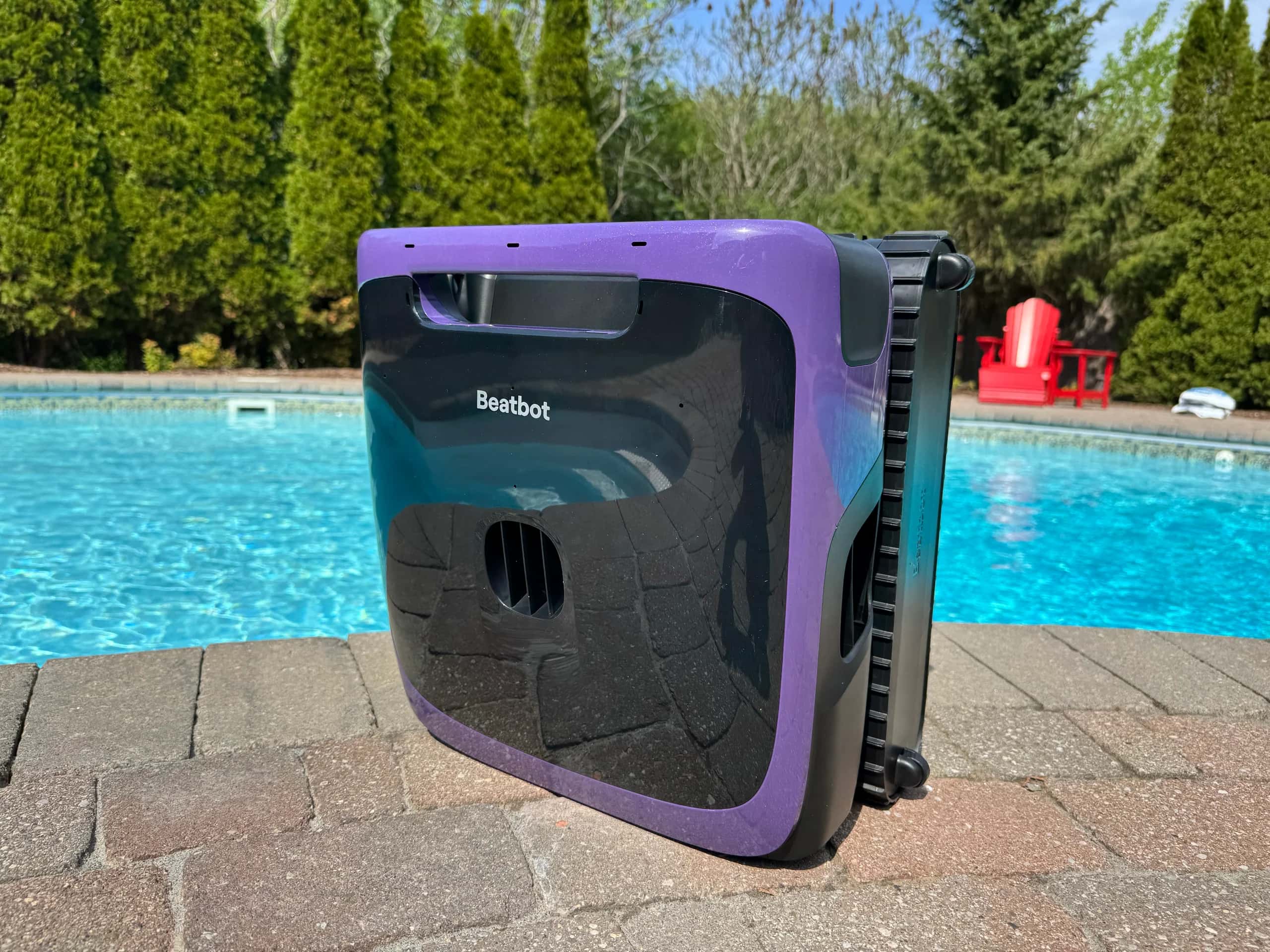
When the cycle ends, the machine climbs the wall and floats at the waterline, waiting. After five years of fishing a submerged unit off the bottom with a pole, this is a genuine small pleasure — and we are not alone in rating it. PCWorld, which weighed the robot at 23 pounds, calls the automatic climb-and-float retrieval probably the best argument for picking a Beatbot over another brand today.
It still has to come out of the water, though, and it is not a small device. The first pull is the heaviest, because a full basket holds water and that water comes up with it. If you are older, or smaller, or recovering from anything, that lift is a real consideration and you should try it before you buy. It is not a dealbreaker in this house. It might be in yours, and it is the one place this machine asks something of you every single cycle.
The machine it replaced asked the same thing and asked it worse: its manual tells owners to remove the cleaner after every cycle and to lift it by the Lift System rather than the floating cable — the same dead weight, off the bottom of the pool, with a cord attached.
The Sora 70's headline trick is that it also cleans the water surface. It floats along the top, pulls pollen and floating debris into the basket and cycles water through, and it is honestly great to watch. Our kids like seeing it swim across the pool. It works.
We have used it maybe a handful of times all season, and we are never going to use it much. We have two skimmers and they already do that job well. Our problem was never the surface. It was underneath it — the floor and the walls — and that is what we bought the machine for. We paid for a capability that is good, that functions as advertised, and that our pool does not need.
There is a technical caveat worth knowing if surface cleaning is your reason for buying: reviewers have found that the outward current the robot generates can scuttle more delicate floating items like flower petals or light leaves rather than collecting them. We cannot confirm or deny that from our own pool, because our surface load is pollen and it went in the basket.
If pollen season is your actual problem rather than sand, the damage pollen does to pool equipment and the routine that stops it is the better place to start than a robot's surface mode.
What changed is not a feature. It is the absence of a recurring doubt. For five years we ran a machine and then wondered whether it had actually been everywhere, and every year that doubt got more expensive — a cable, a repair, a drive assembly that finally ended the argument. This season we stopped wondering. The water is visibly cleaner on a pool whose debris problem did not improve, and the manual vacuum has become an exception. That is the trade, and at what this machine costs, with the basket that ships in the box, it was worth making.
We would not pretend the case is finished. Three and a half months is one season, and the things that kill this category are slow: battery capacity fading across multiple winters, a brand with a short history standing behind a three-year warranty in year three, and a machine that has never been closed up in October and woken in May. We have not fought a real algae bloom with it either, and that is the test where a 150 µm mesh stops being adequate and starts being the reason you are buying a finer basket. None of those has come due yet.
But the argument for waiting was never strong, and after a season it is weaker. The machine we replaced failed at the cord, and this one does not have a cord. If your pool is large, awkwardly shaped, salted, and fed grit by the yard around it, the case is about as clear as ownership evidence gets.
Buy
“It replaced a five-year corded incumbent and made the pool visibly cleaner while we did less.”
Large-pool owners fighting constant fine debris, especially on saltwater systems where corded units corrode.
Owners with good skimmers and no debris problem, who would be paying for waterline cleaning they will never use.
Where to buy: Amazon.ca — Beatbot Sora 70 Pool Vacuum Robot
As an Amazon Associate, Homeowner.ca earns from qualifying purchases, and we may earn a commission when you buy through other retailer links.
About the Author

Ryan is the founder of Homeowner.ca and a proud Canadian homeowner based in Guelph, Ontario. Over his 25-year career in digital publishing, he has focused on transforming complex information into clear, practical guidance that helps people make confident, well-informed decisions.