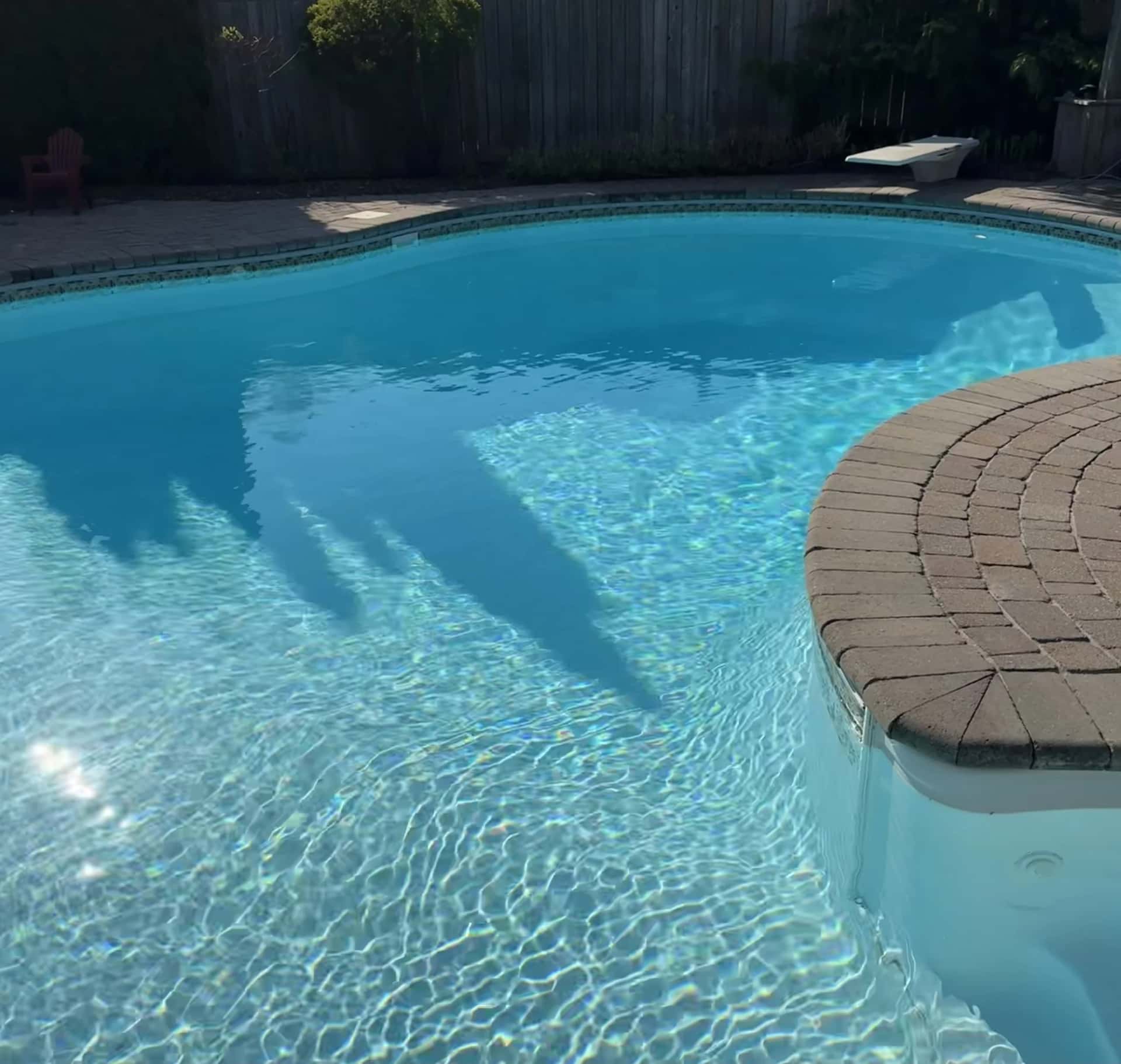
Every spring, pool owners fight the wrong enemy. They see the leaves, the blossoms, the fine yellow dust on the deck, and they reach for the skimmer net. That handles what they can see. It does almost nothing about the part that actually wears out equipment.
Pollen is the silent variable in spring pool care. It arrives in clouds, settles on the water as a film, and then does something most owners never realize: it passes straight through the filter and keeps circulating. It is finer than what a sand filter can catch. So while you're skimming the surface, the same fines are looping through your system again and again — driving up chlorine demand, settling into the dead spots where algae starts, and adding to the grit load that quietly grinds at your pump over a season.
I run a saltwater pool in Southern Ontario, and the oak pollen here peaks from late May into June. The first year, I watched my filter pressure climb more than five psi in a matter of days while my skimming seemed to do less and less. When I opened the pump strainer basket, it was packed — not with leaves, but with a dense, almost paste-like load of fines that was choking the flow to the pump before the water ever reached the filter. That's the moment the "hidden toll" stopped being a phrase and became a maintenance habit.
This guide reframes spring debris as one upstream systems problem instead of a chore checklist. Pollen is the hook, but it never travels alone — it arrives with leaves, blossoms, grit, and spring-rain runoff, and together they sit upstream of a single cascade: circulation, then equipment wear, then chemistry, then cost. Get the routine right at the top of that chain and everything downstream gets easier. Miss it, and you pay for it later — in a chlorine-burn scramble, a clarity battle, or the expensive one, a strained or scored pump impeller.
Here's the promise: by the end, you'll understand exactly why pollen is invisible to your filter, what it's costing your equipment, and the specific short routine — sequenced by how often each task actually needs doing — that stops the whole cascade before it starts.