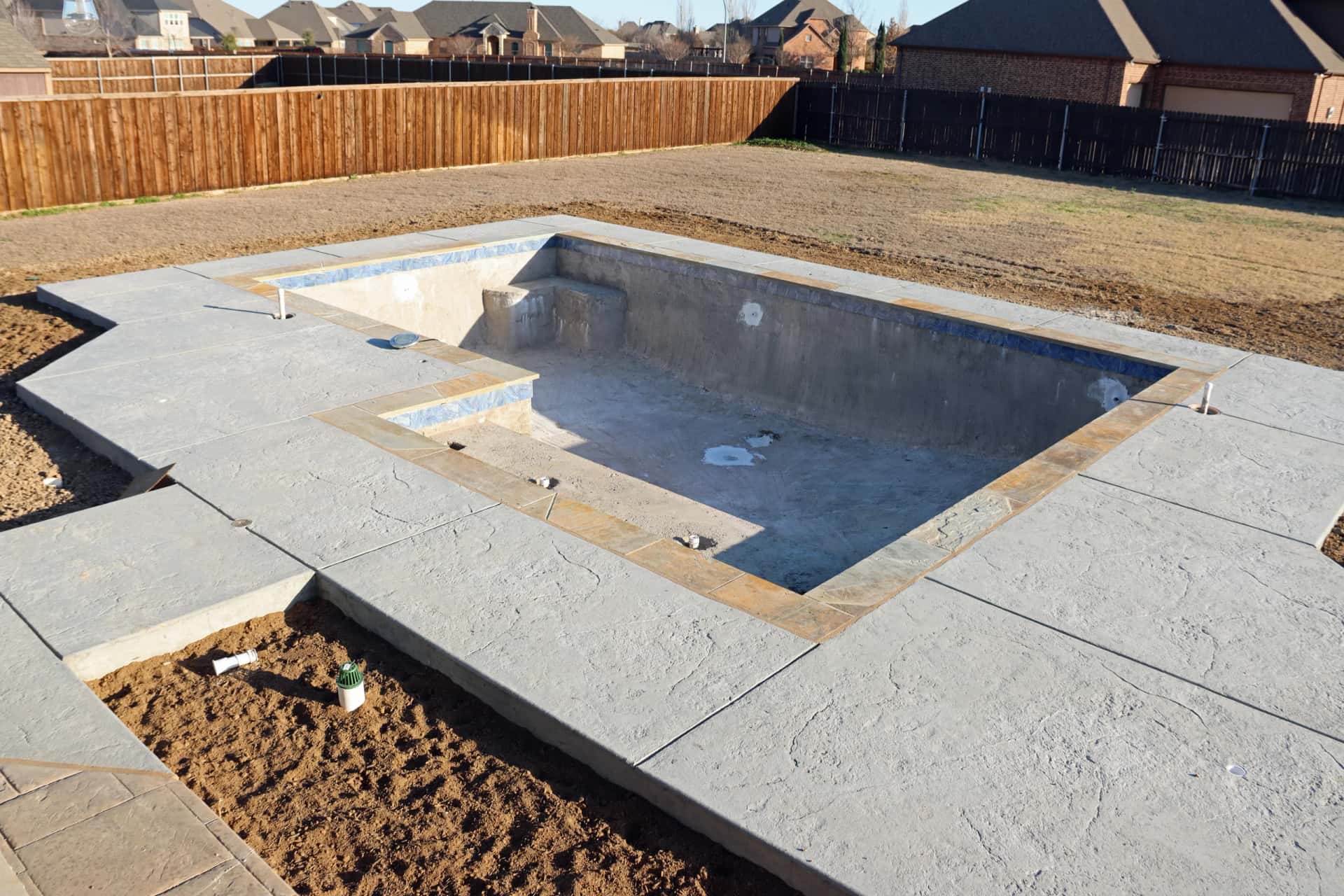
A meaningful share of pool owners do not build their pool. They buy a house that already has one. If that is your situation, the entire framework above still applies — but you do not get to choose the equipment, the layout, or the contractor. You inherit them, and the due diligence you do before closing is fundamentally different from the conversations a builder would have. This section is what we wish someone had handed us.
Figure Out How Old the Pool Actually Is
The simplest question — when was this pool installed? — is often harder to answer than expected. Sellers may not know; listings may guess. Install year matters because pool components degrade on predictable lifecycles, and age narrows the next decade of bills.
Three places to look: municipal building permit records (often searchable online), manufacturer date stamps on the original equipment (pumps, filters, heaters carry one on a sticker or plate), and service company invoices the seller can produce. If none exist and the equipment is more than a decade old, assume you are buying a pool that needs significant attention within five years.
Demand the Documentation
Pool service records are the single most useful piece of due-diligence material a seller can hand you. Ask for at minimum the past three years of: opening and closing receipts, any service or repair invoices, water test records if the seller used a service, and any insurance claims related to the pool. If the seller used a regular service company, ask for the company's name and contact — you can call that service directly and ask about the pool's history, which is often more candid than what the seller will volunteer.
A pool with three years of clean documentation is a known quantity, and that knowledge is worth a lot at the offer stage. A pool with no documentation is a question mark — and a question mark is a risk multiplier on your offer that you can either price in or negotiate around. Sellers who cannot produce records are not always trying to hide something, but they are often unaware of how much the records would help your decision.
Get a Pool-Specific Inspection, Not Just a Home Inspection
Standard home inspections in Ontario rarely cover pools in depth. Most inspectors note the pool's presence and visually check fencing, but do not pressure-test plumbing, evaluate equipment condition, or assess electrical bonding. Pools are widely considered out of scope of a residential inspection — a fact almost invisible to first-time pool buyers.
Hire a pool-specific inspector or pool service company for a separate inspection. Expect $200 to $500 in Ontario depending on whether the pool is open. A proper pool inspection covers equipment age and operating condition, plumbing integrity (often pressure-tested), liner or finish remaining life, electrical bonding compliance, fence compliance, and structural concerns. Schedule it for when the pool is open if at all possible.
Equipment Age and Lifecycle Position
Once you have the install date in hand, you can estimate where each major piece of equipment sits in its lifecycle. Pumps and filters typically run seven to ten years, sometimes longer with attentive care. Heaters can run fifteen to twenty years — ours made it to year seventeen before it needed replacement. Liners typically last seven to twelve years for vinyl, longer for fibreglass or plaster finishes that get regular renewal cycles. Covers, automation, and accessories have shorter cycles.
The financial implication is straightforward and worth saying out loud: a sixteen-year-old pool with original pump, filter, and heater is going to cost the new owner several thousand dollars in replacements within the next three to five years. That is not a deal-breaker — it is a budgeting reality and, importantly, a negotiating data point at the offer stage.
Plumbing and Leak History
Pools can leak in ways the seller may not have noticed — slow underground losses through plumbing or fittings, evaporation masking small leaks, regular top-up water hiding the trend over months or years. Ask explicitly: has this pool ever lost water at a rate beyond normal evaporation, and if so, when and how was it diagnosed? If the seller has been adding water more often than they used to, that is a clue worth pursuing. Our piece on common pool leak sources explains what experienced eyes look for when narrowing down where water is going.
Fence, Code, and Bonding Compliance
Cross-reference the existing fence against your current municipal bylaw. The most common gaps we see in inherited fences are: gates that are not self-closing, gates that latch on the outside instead of the inside, latches mounted low enough that a small child could reach them, and gaps under or between fence panels wider than the bylaw allows. None of these are unfixable, but all of them become your problem once the deed transfers, and some municipalities will not bind insurance or close a sale until they are corrected.
Separately — and this is the question almost no buyer asks and almost no inspector volunteers — ask whether the pool's electrical bonding meets current OESC Section 68 requirements. If the answer is "I don't know" or "I assume so," put it on the pool-specific inspector's list. Bonding gaps can usually be corrected; the cost of correction varies widely depending on whether the deck has to be cut to access pool reinforcing steel, or whether the issue can be addressed at surface level with visible bonding conductors and lugs.
Insurance and Disclosure
When you take possession of a pool, your home insurance changes meaningfully. You will be asked about the pool's depth, the type and condition of the enclosure, whether there is a diving board, and your liability coverage limits. Some insurers require a fence inspection before binding coverage; some require fence upgrades to current code; some require additional liability coverage that adds meaningfully to your annual premium. Get a written quote from your insurer before closing, not after — the cost is part of your ownership math and you do not want it to be a surprise on your first invoice.
The Maintenance Pattern You Are Inheriting
Two pools of the same age can be in radically different condition depending entirely on how the previous owners managed them. Did they test the water weekly or monthly? Did they cover religiously or rarely? Did they use a regular pool service or DIY? Did they close professionally each fall or take shortcuts? Most of this is conversational — the seller will tell you if you ask, and they are usually willing to talk about it because they are proud of what they did right.
The answers tell you what habits you are inheriting along with the equipment. A well-maintained sixteen-year-old pool can be in better shape than a neglected eight-year-old one, and the maintenance history is often the single most useful predictor of what your first three years of ownership will actually look like.