Yes. Health Canada classifies hardness as an aesthetic parameter, not a health-based contaminant. Hard water is generally safe to consume — the issues it creates are related to cleaning, appliances, and comfort, not safety.
A Canadian Homeowner's Guide to Spotting, Understanding, and Solving Hard Water Problems

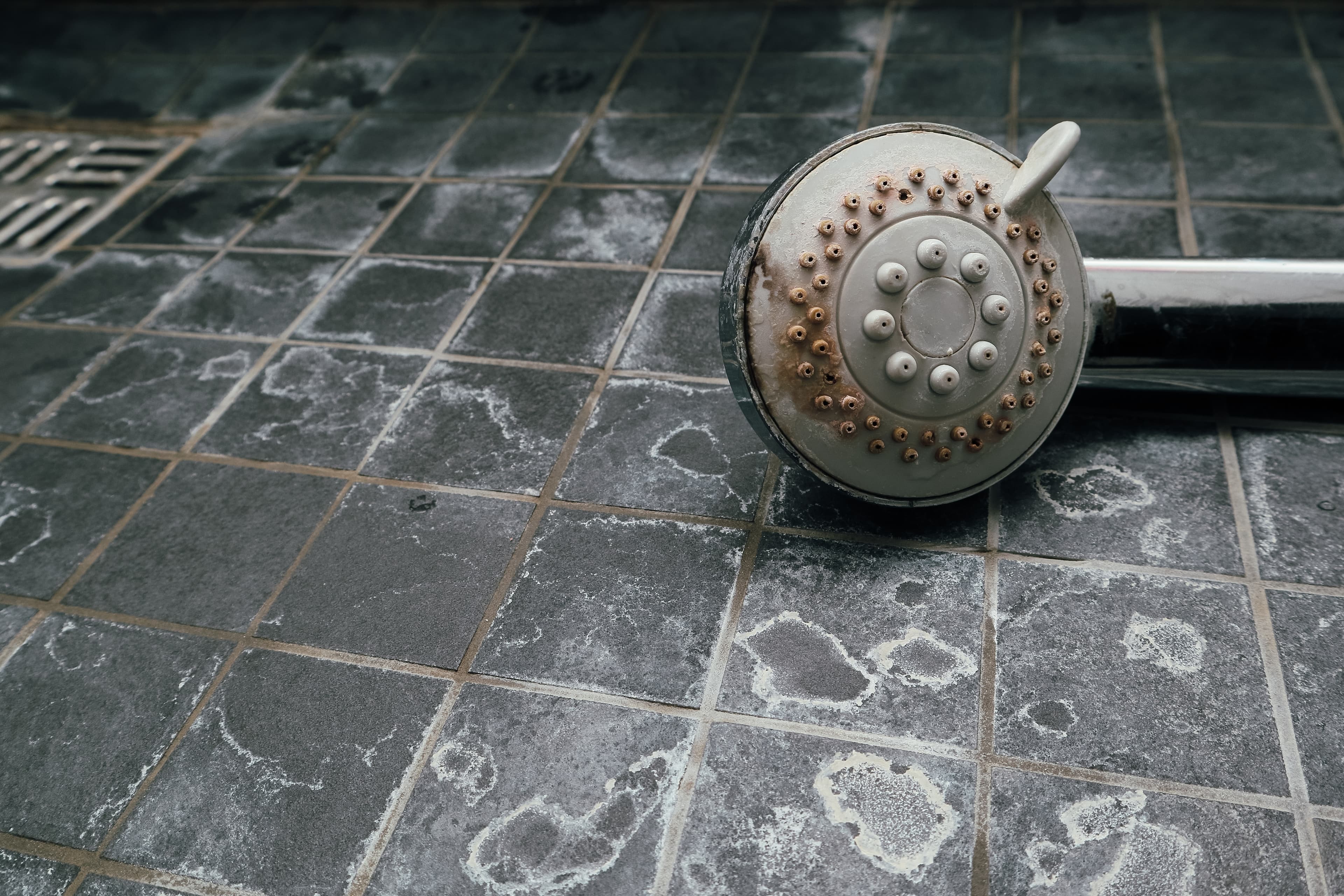
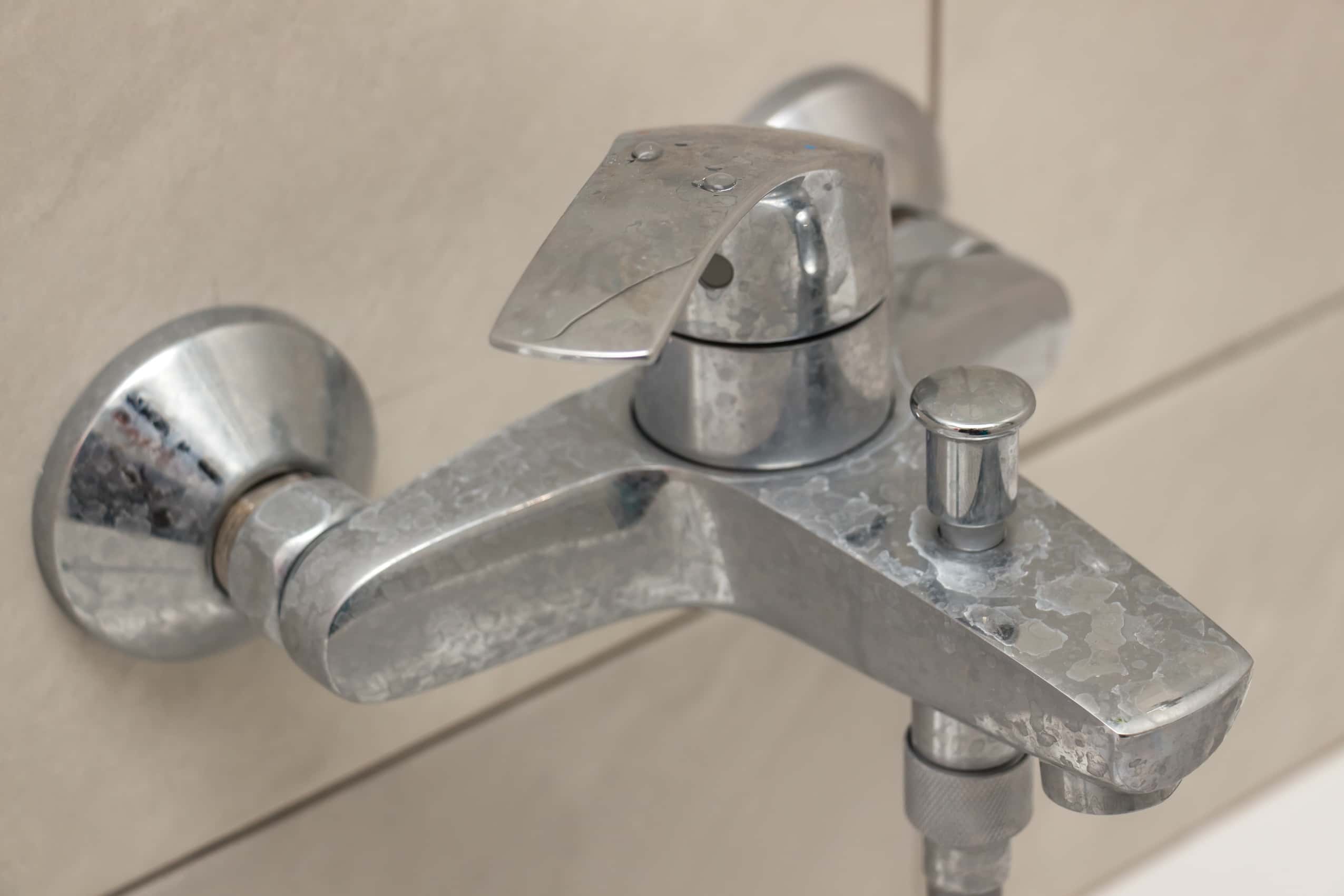
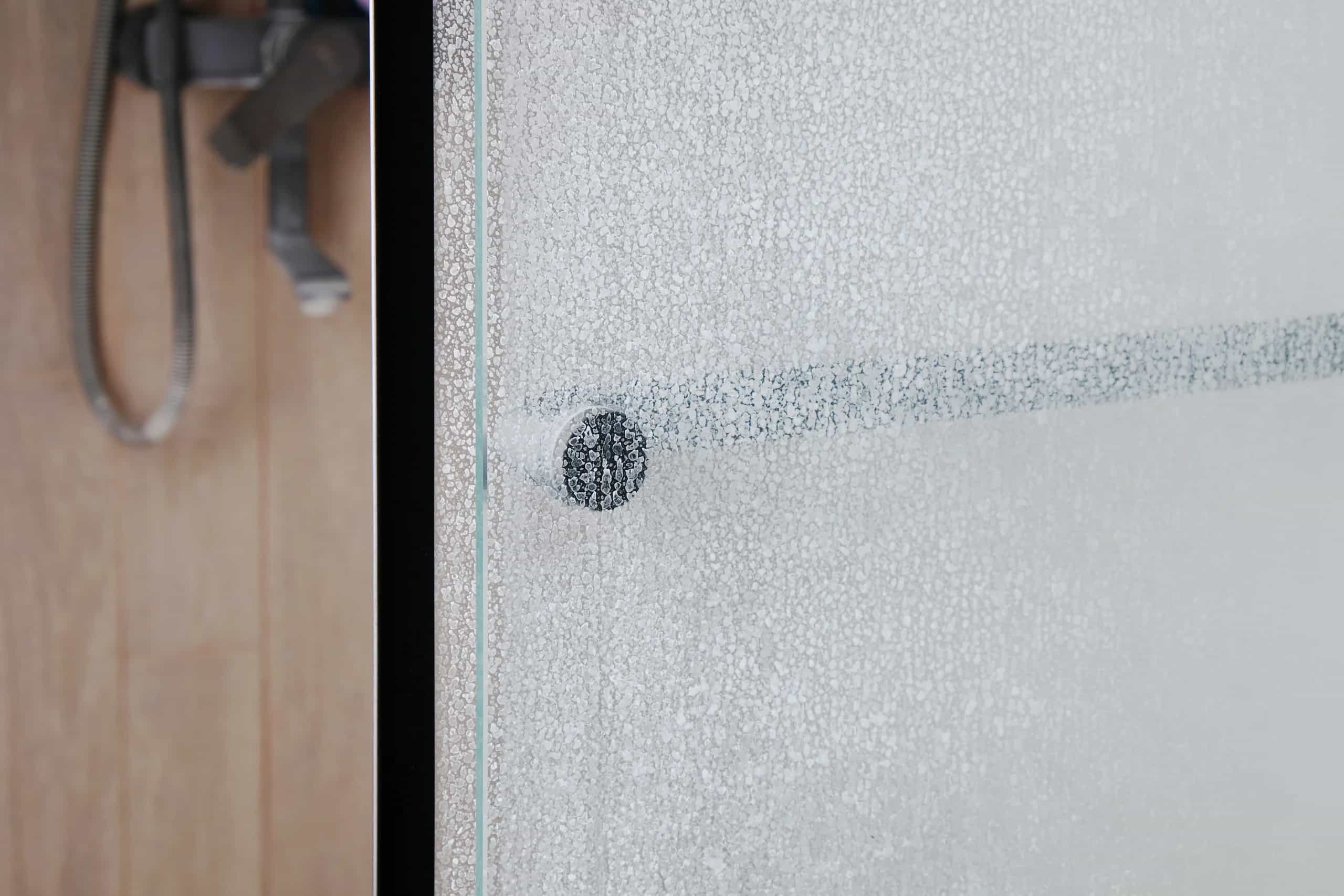
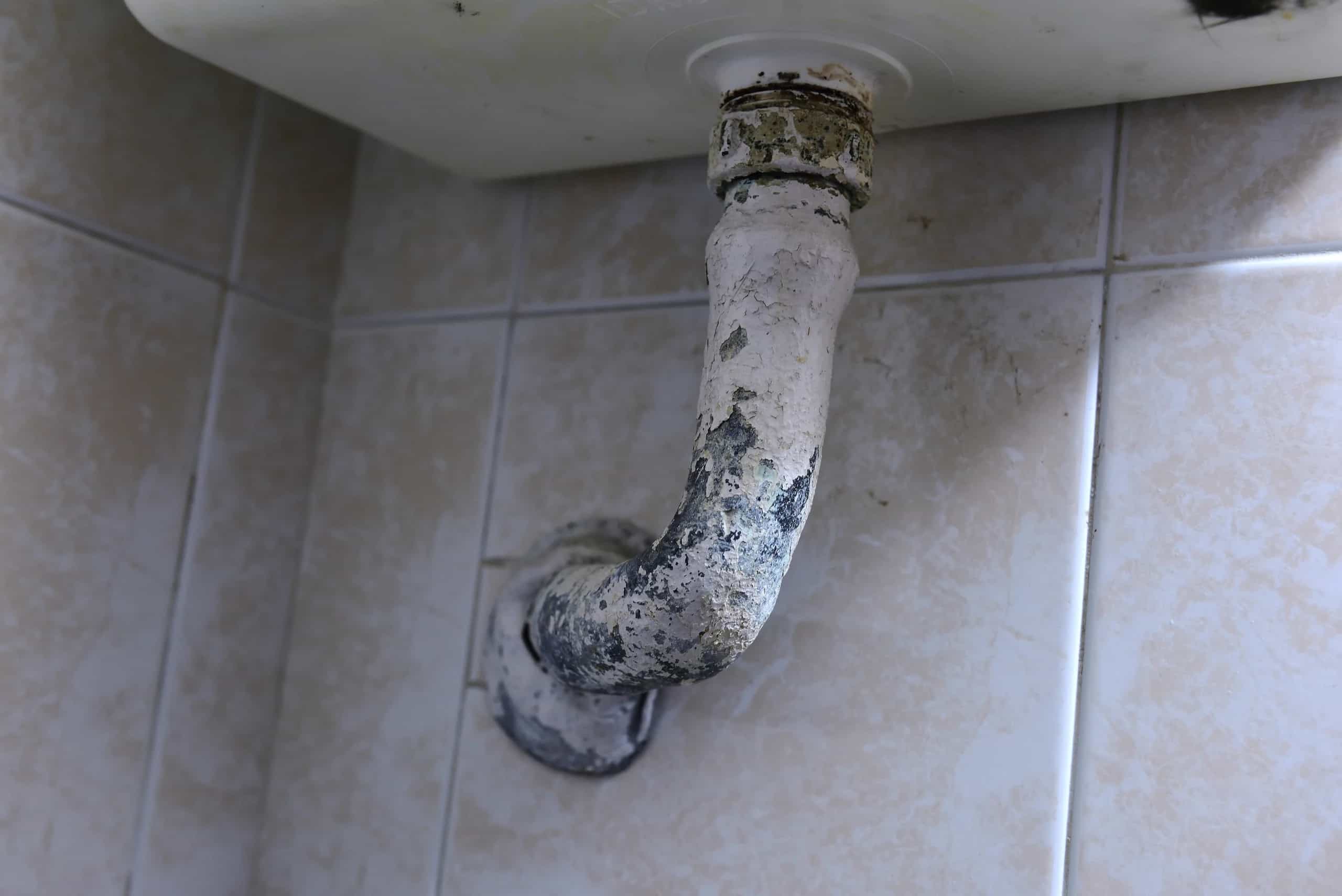
An image illustrating the effects of hard water on bathroom surfaces, highlighting the importance of water softening systems. (Credit: Shutterstock)
Hard water is one of those things most homeowners notice without naming. The white crust on the kettle. The soap that never quite lathers. The towels that feel stiff no matter how much fabric softener you use. You adapt. You scrub harder. You buy a different shampoo.
But here is the thing most people miss: hard water is not a cleaning problem. It is a chemistry problem. The calcium and magnesium dissolved in your water supply react with soap, coat your pipes, and slowly steal efficiency from every water-using appliance in your home. None of that changes until you change the water.
The good news is that Health Canada treats hardness as an aesthetic parameter, not a health-based contaminant — so there is no safety alarm here. The bad news is that "aesthetic" does not mean "free." Scale buildup, extra detergent, and shortened appliance lifespans add real dollars to your household operating costs every year. If you live in much of Ontario, the Prairies, or parts of Atlantic Canada, hard water is the default, and the signs below are probably already familiar.
This guide walks through the most common indicators that your home has hard water, explains why each one matters, and lays out the practical steps — from a five-minute diagnosis to a whole-home solution — that let you make a decision that fits your budget, your household, and your local water conditions.

Hard water is simply water with elevated levels of dissolved calcium and magnesium minerals. In Canada, hardness is measured as total hardness in milligrams per litre of calcium carbonate (mg/L as CaCO₃). This is the number you will see on your municipal water-quality report or a private lab test result, and it is the starting point for every decision downstream.
Canadian lab and information sites routinely classify water above roughly 120 mg/L as "hard," with values above about 500 mg/L described as unsuitable for domestic uses because of the scaling and soap performance problems they create.
Health Canada's draft operational guidance suggests that a hardness level around 80–100 mg/L strikes an acceptable balance between minimizing scale and maintaining pleasant taste. If your number is well above 100, the signs described below become progressively more visible — and more expensive.

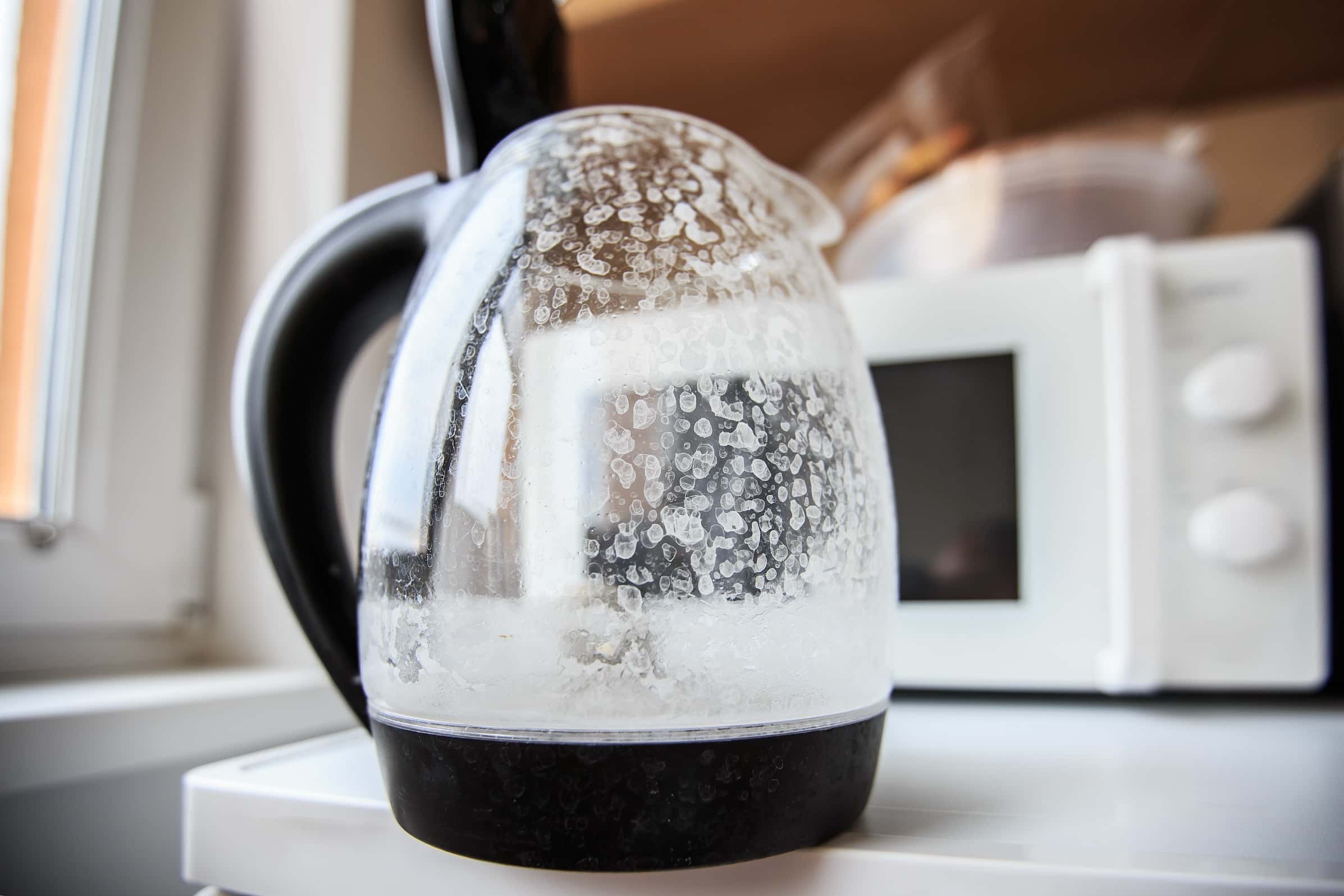
This is the signature hard-water calling card. That white or yellowish scale around the base of your faucet, on your showerhead nozzles, and at the waterline of your kettle is calcium carbonate depositing out of solution as water evaporates. It is not dirt. It will not respond to normal wiping. You need vinegar or a mild acid-based cleaner to dissolve it.
What makes this sign important is what it tells you about the places you cannot see. If scale is forming on the outside of your fixtures, it is also forming inside your pipes, your hot water tank, and your dishwasher's heating element. Technical guidance from Health Canada notes that this type of buildup can create frictional pressure losses inside pipe walls, slowly reducing water flow and pressure throughout your home.
Unscrew your showerhead and look inside. If the inlet screen is caked with white mineral deposits, your home's water is hard enough to be affecting every fixture and appliance connected to your plumbing.
Calcium and magnesium ions react with the surfactants in soap and detergent to form an insoluble residue — the sticky film you know as soap scum. This reaction has two consequences: your cleaning products work less effectively, and they leave a residue on every surface they touch, including your skin.
The practical result is that you need significantly more product to achieve the same cleaning result. A North American performance study on dishwashers found that using softened water allowed detergent use to be reduced by up to about 70% while maintaining or improving cleaning results. That is not a rounding error. For a typical Canadian household, the extra soap, shampoo, laundry detergent, and dishwasher pods add up to a meaningful annual cost that most people never attribute to their water.
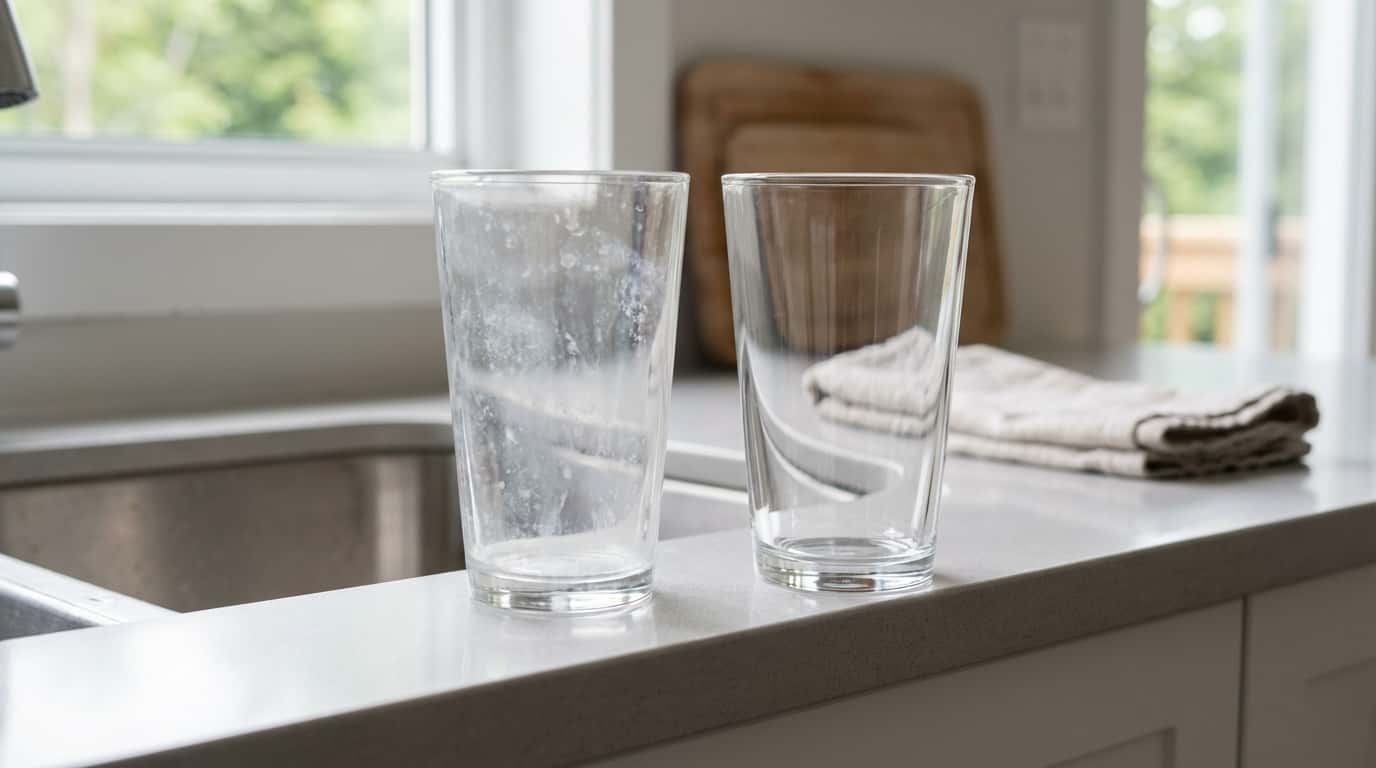
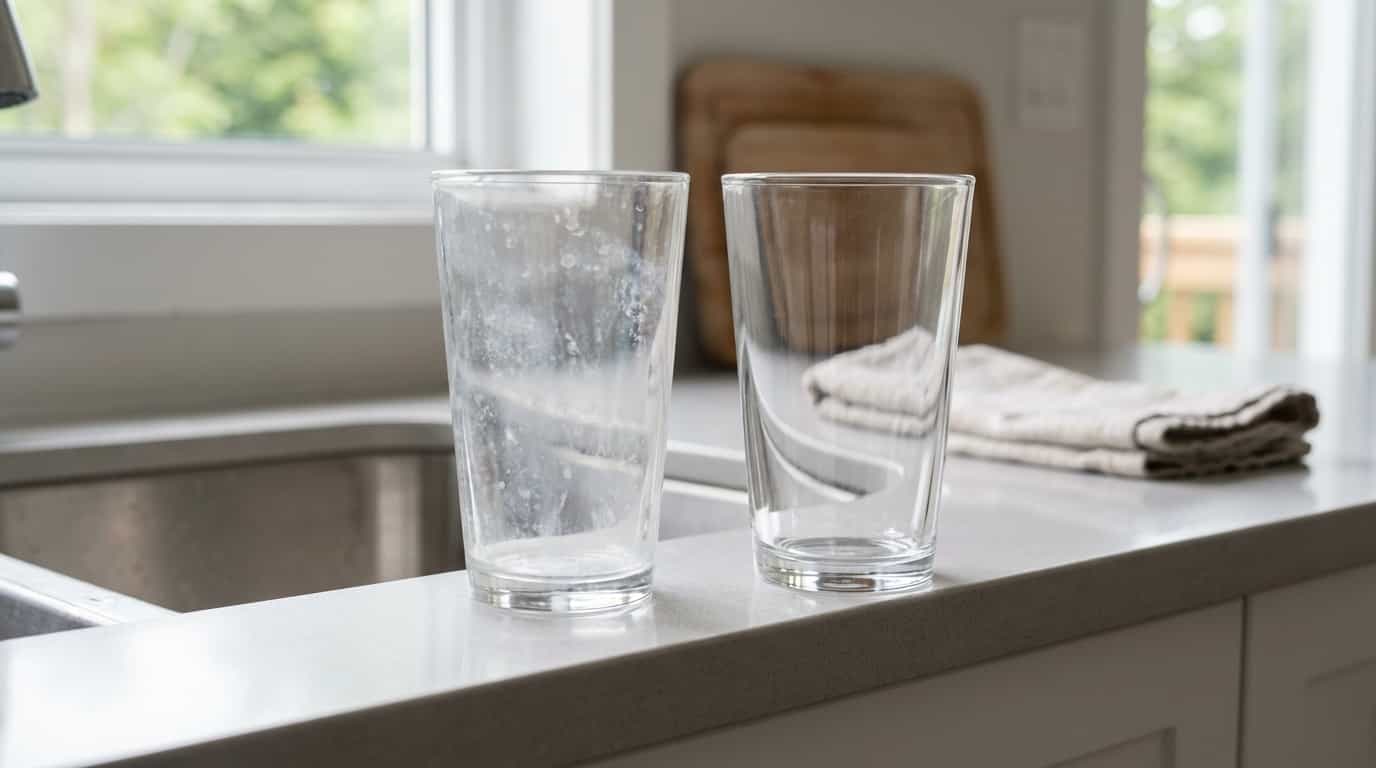
The filmy ring around your bathtub, the cloudy spots on your glasses, and the dull haze on your tile grout are all the same chemistry at work. You are not under-cleaning. You are fighting a reaction that starts before you pick up a sponge.
This is the sign that surprises people most. If your skin feels tight, dry, or itchy after showering — or if your hair is dull, difficult to manage, or weighed down no matter which products you use — the minerals in your water may be contributing more than you realize.
The mechanism is well studied. When soap interacts with hard water on your skin, the resulting residue is harder to rinse away than it would be in soft water. A study published in the Journal of Investigative Dermatology found that skin washed with hard water had significantly increased deposits of sodium lauryl sulfate — a common surfactant in body wash — compared to skin washed with softened water. Those deposits increased transepidermal water loss and caused irritation, particularly in people with existing skin-barrier vulnerabilities.
A broader systematic review and meta-analysis published in Clinical & Experimental Allergy pooled observational data from over 385,000 participants and found increased odds of eczema in children exposed to harder versus softer domestic water. The effect appears to be linked to how hard water interacts with cleansers on the skin's surface rather than the minerals themselves being harmful.
This does not mean hard water "causes" eczema. But if you or your children are already prone to dry skin or atopic dermatitis, the water you bathe in may be making it worse — and no amount of moisturizer addresses the root cause.
Hard water skin irritation is about how minerals interact with soap on your skin — not about the minerals being unsafe to drink. Switching to a gentler, low-pH cleanser can help reduce residue, but the most effective intervention is softening the water before it reaches the showerhead.

Scale does not just coat your faucets. It accumulates inside your water heater, dishwasher, washing machine, and any other appliance that heats or circulates water. The impact is cumulative, gradual, and expensive.
Industry and technical resources report that even a thin layer of scale — on the order of one millimetre — can reduce heat exchanger efficiency by roughly 7–10%, increasing the energy required to heat your water. That efficiency loss scales more or less linearly with thickness: two millimetres of buildup costs you roughly twice as much wasted energy. Over the typical 8–12 year lifespan of a water heater, unchecked scale accumulation can measurably increase your utility bills and accelerate element failure and tank corrosion.
If you have a tankless water heater, the stakes are even higher. Tankless units pass water over compact heat exchangers at high temperatures, which accelerates scale formation. Most manufacturers recommend annual descaling in hard-water areas — a maintenance step many homeowners skip until performance drops or the unit throws an error code.
When detergent reacts with hard water instead of dissolving into it, the resulting mineral-soap residue deposits onto fabric fibres during the wash cycle. This is what makes towels feel scratchy, sheets feel stiff, and colours fade faster than they should. You are not imagining that your clothes felt softer when you stayed at a hotel — hotels typically use softened water.
The fix is not more detergent. Adding more product to compensate for hard water just increases the residue left behind. Some homeowners switch to detergents formulated for hard water, which contain chelating agents that bind calcium and magnesium before they can react with surfactants. This helps, but it is a workaround rather than a solution.

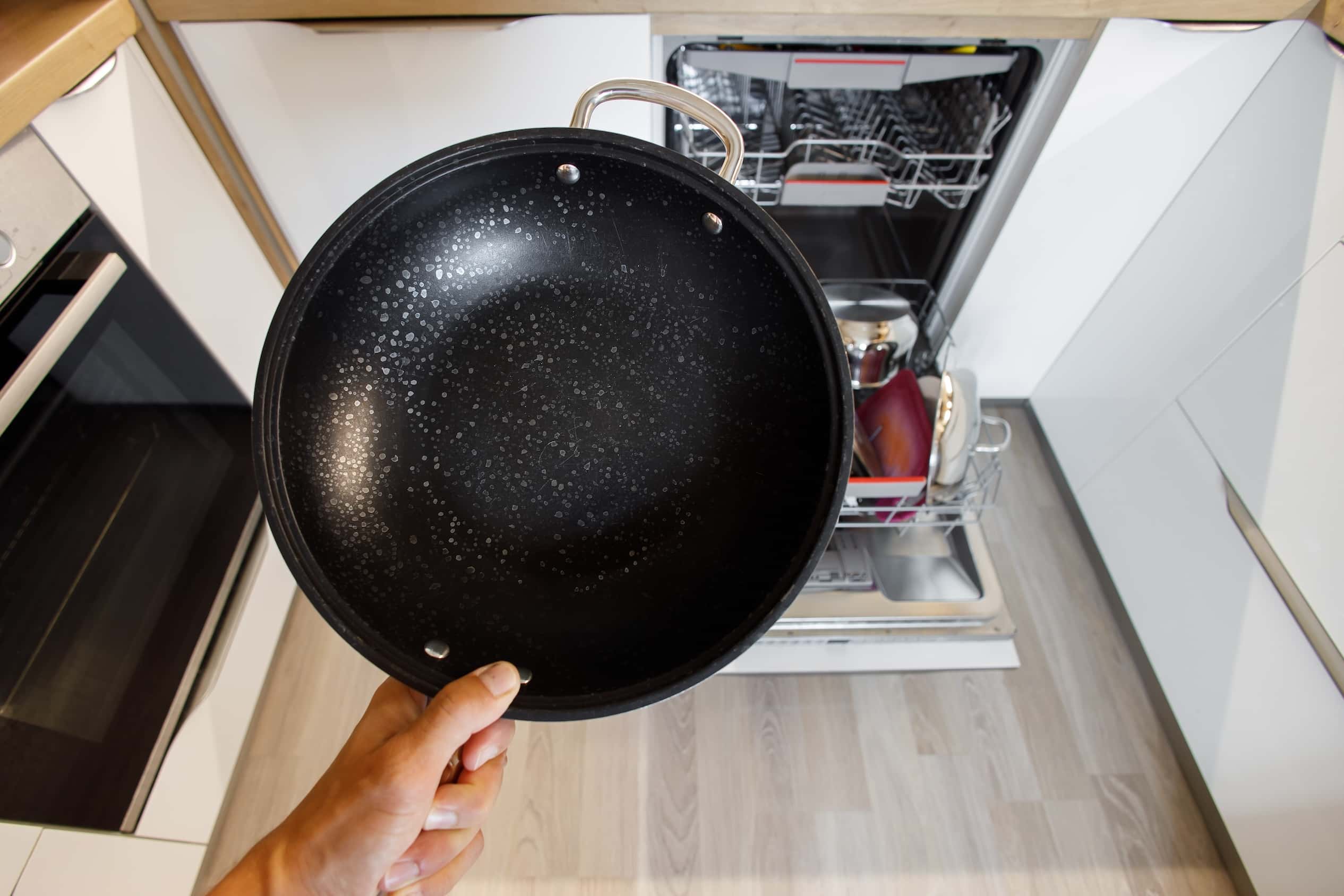
If your dishes come out of the dishwasher with a chalky white film or your glassware has a permanent haze that no amount of rinse aid eliminates, hard water is almost certainly the cause. The spots are calcium and magnesium left behind after the rinse water evaporates.
This is often the sign that pushes homeowners to investigate their water quality for the first time, because the visible evidence is so persistent and so clearly tied to the water itself rather than the machine or the detergent.
You do not need to guess. There are three straightforward ways to confirm your home's hardness level, and the first one is free.
Many Canadian municipalities publish annual drinking-water reports that include typical hardness ranges. York Region, for example, lists hardness by treatment plant. Your city or town likely does the same. Check your municipality's website or call their water department directly — they are required to make this information available.
The summary comparison table above gives you a rough sense of what to expect at different hardness levels. If you are seeing heavy scale on fixtures, persistent soap scum, and stiff laundry, your water is almost certainly above the 120 mg/L threshold.
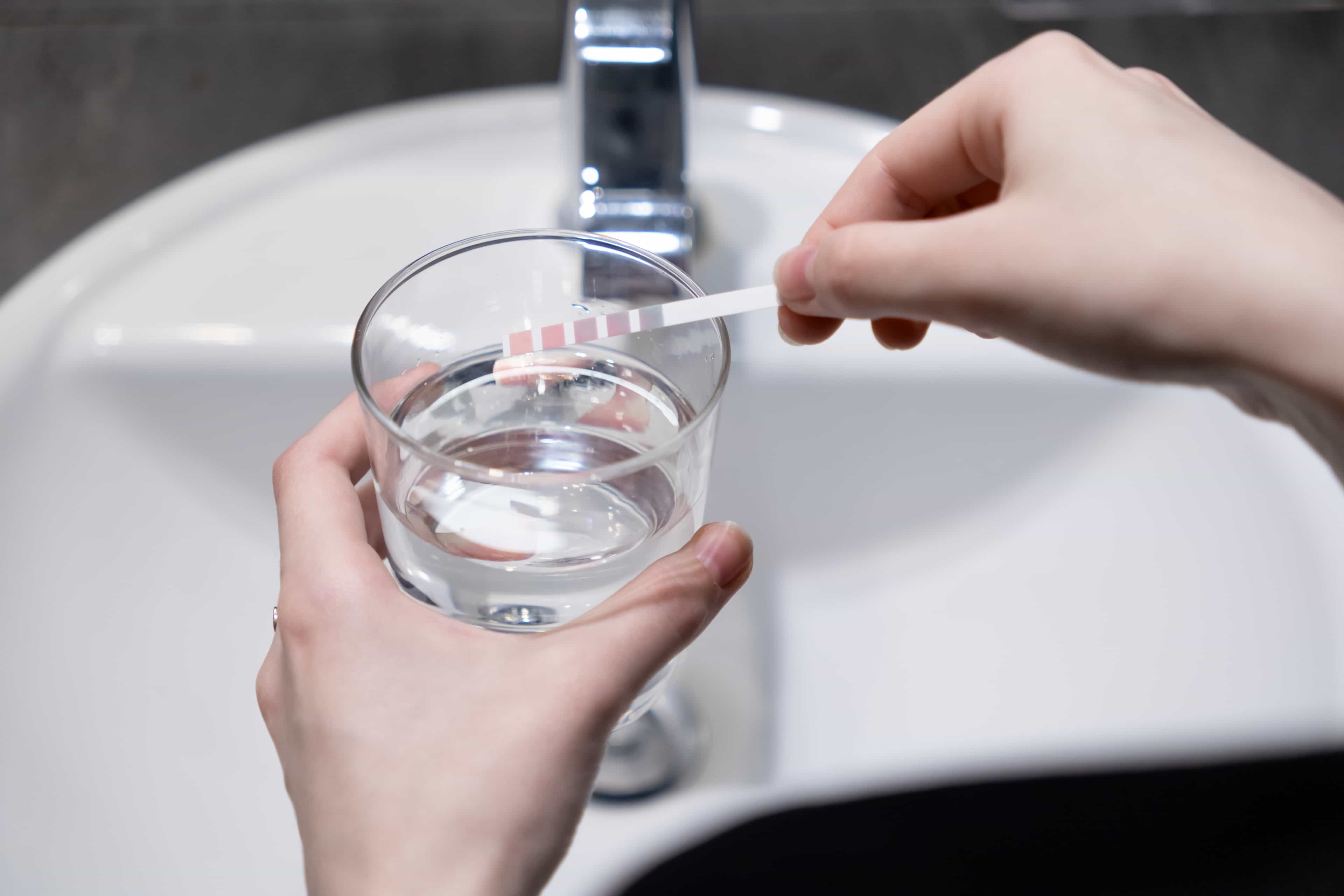
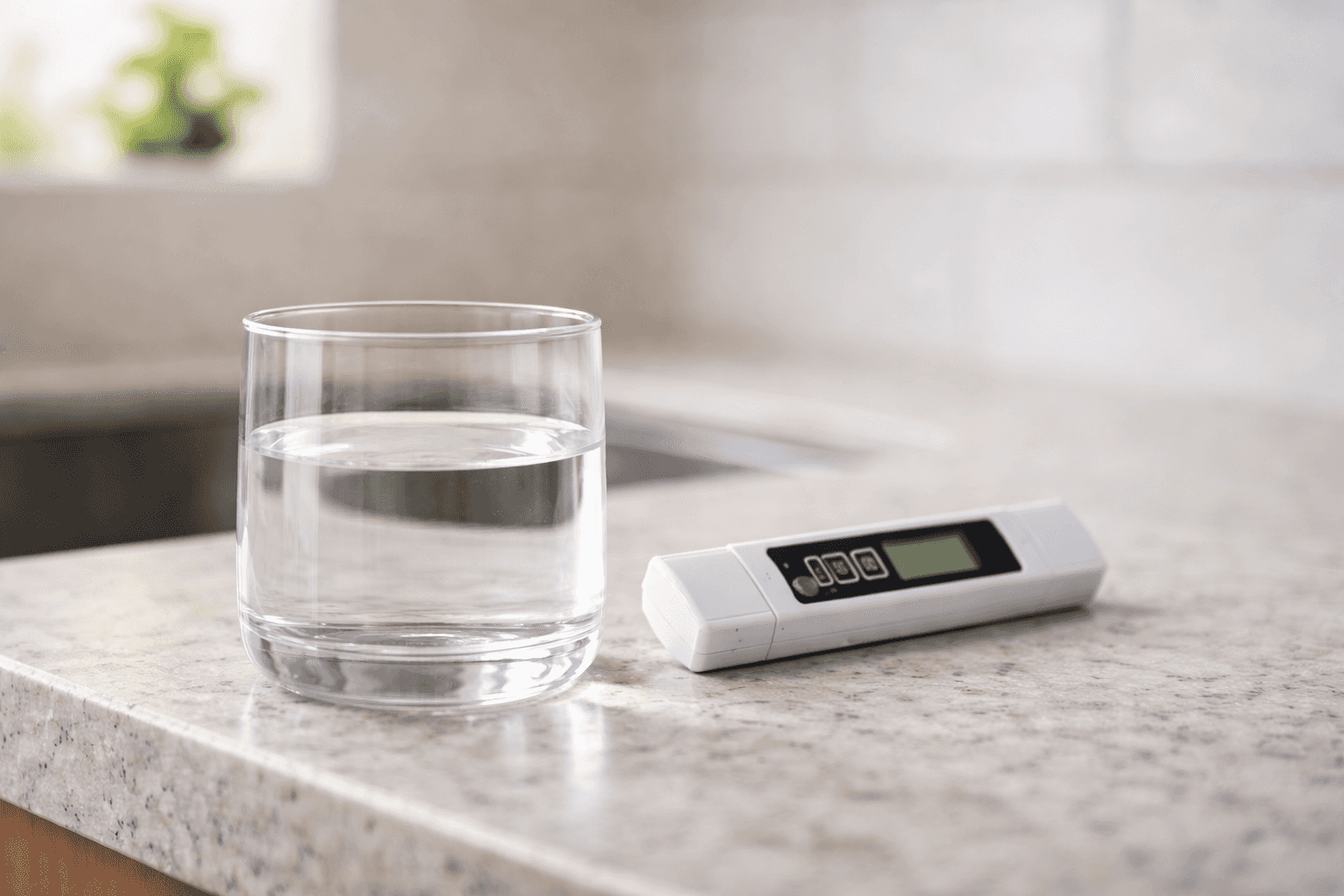
If you are on a private well, or if you want a precise number, a well water test through a certified lab will include total hardness alongside other parameters. Results are typically available within days. At-home test strips can also give you a ballpark reading, though lab results are more precise and more useful for sizing a treatment system.
Health Canada's guideline materials encourage homeowners on private wells to have their water tested for hardness. If you rely on well water and have never tested, a basic panel that includes total hardness is an inexpensive baseline that helps you make informed decisions about treatment.
Not every hard-water problem requires the same fix. The right solution depends on your hardness level, household size, budget, space constraints, and whether you have environmental concerns about brine discharge. Here is how the main categories compare.
This is the most established and effective whole-home technology. An ion-exchange softener works by swapping the calcium and magnesium ions in your water for sodium (or potassium) ions as water passes through a resin tank. The result is truly softened water — the hardness minerals are removed, not just conditioned.
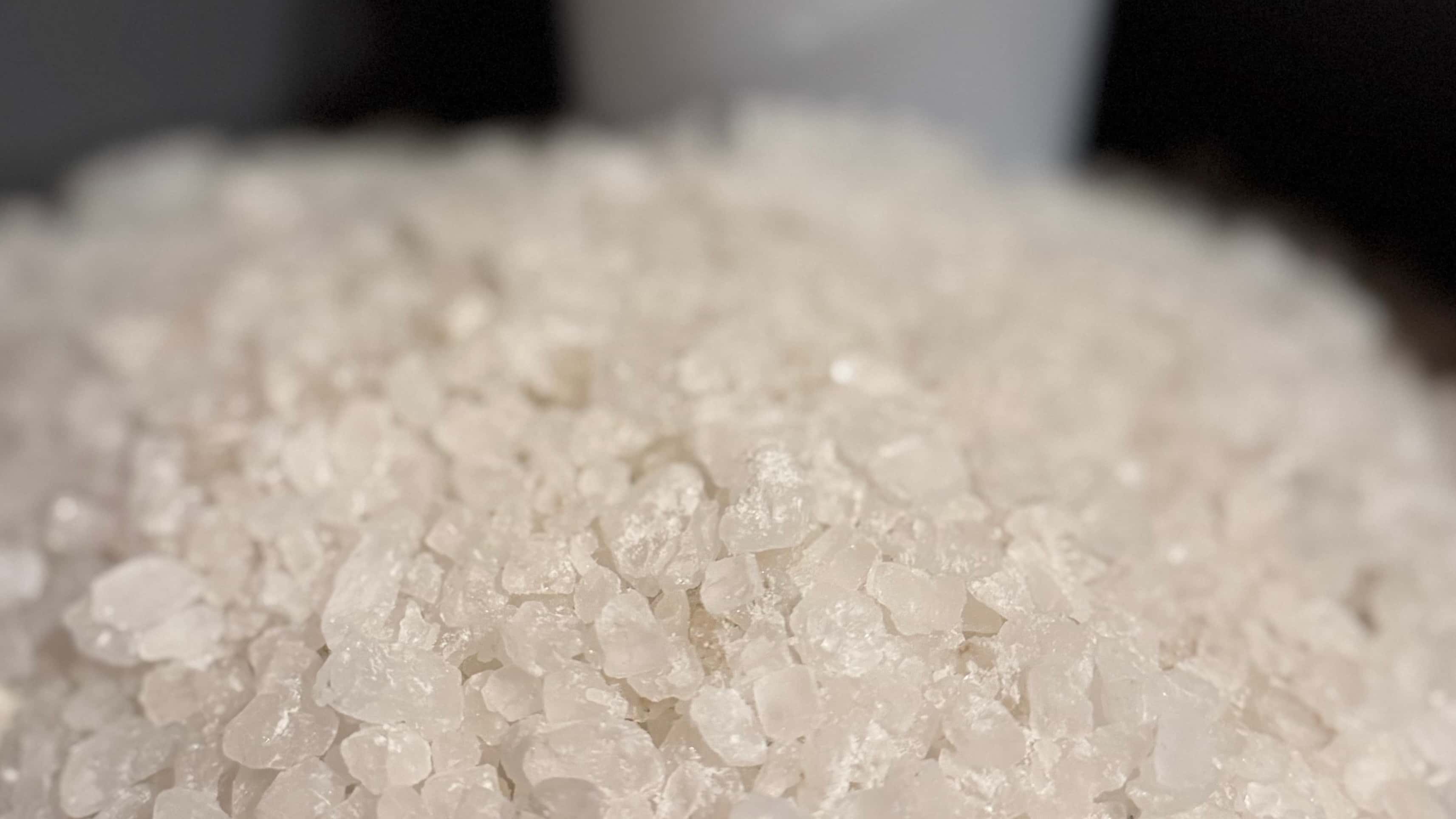
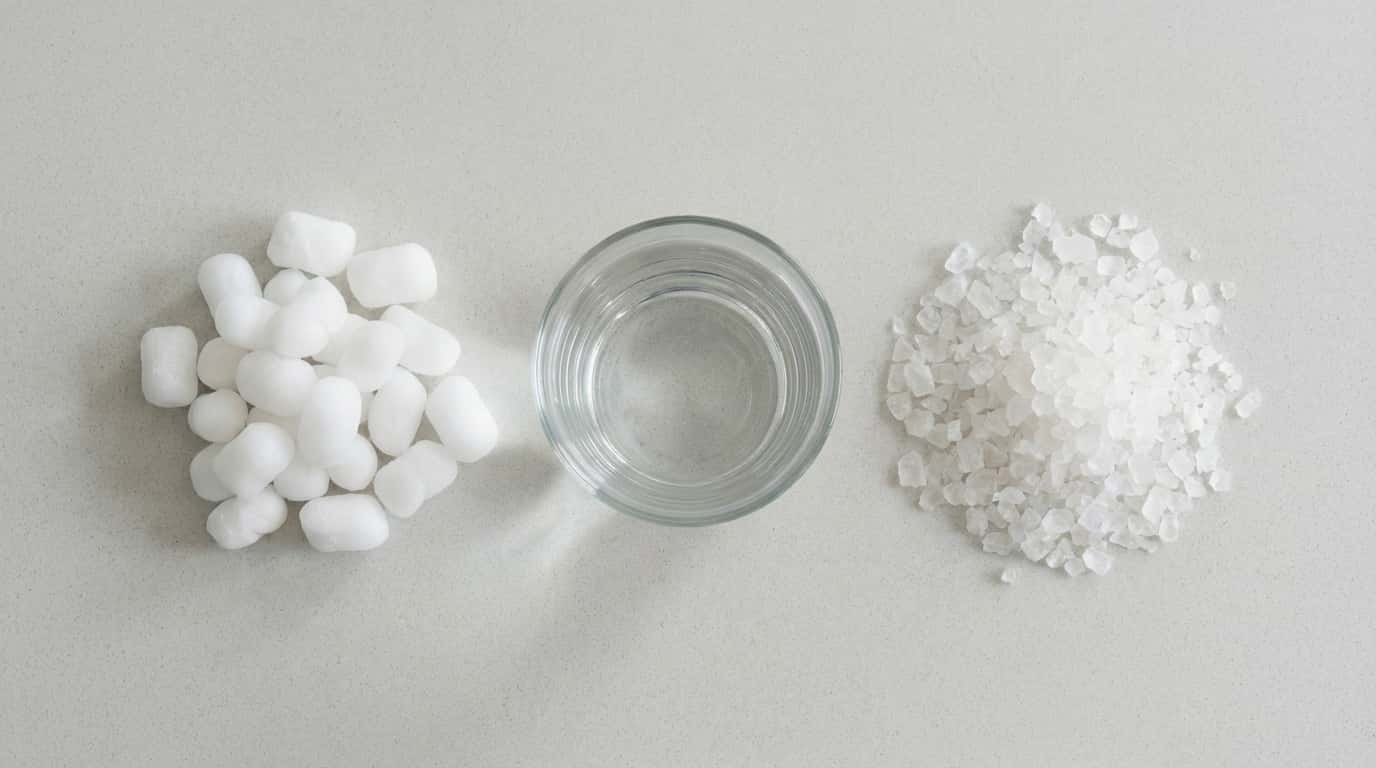
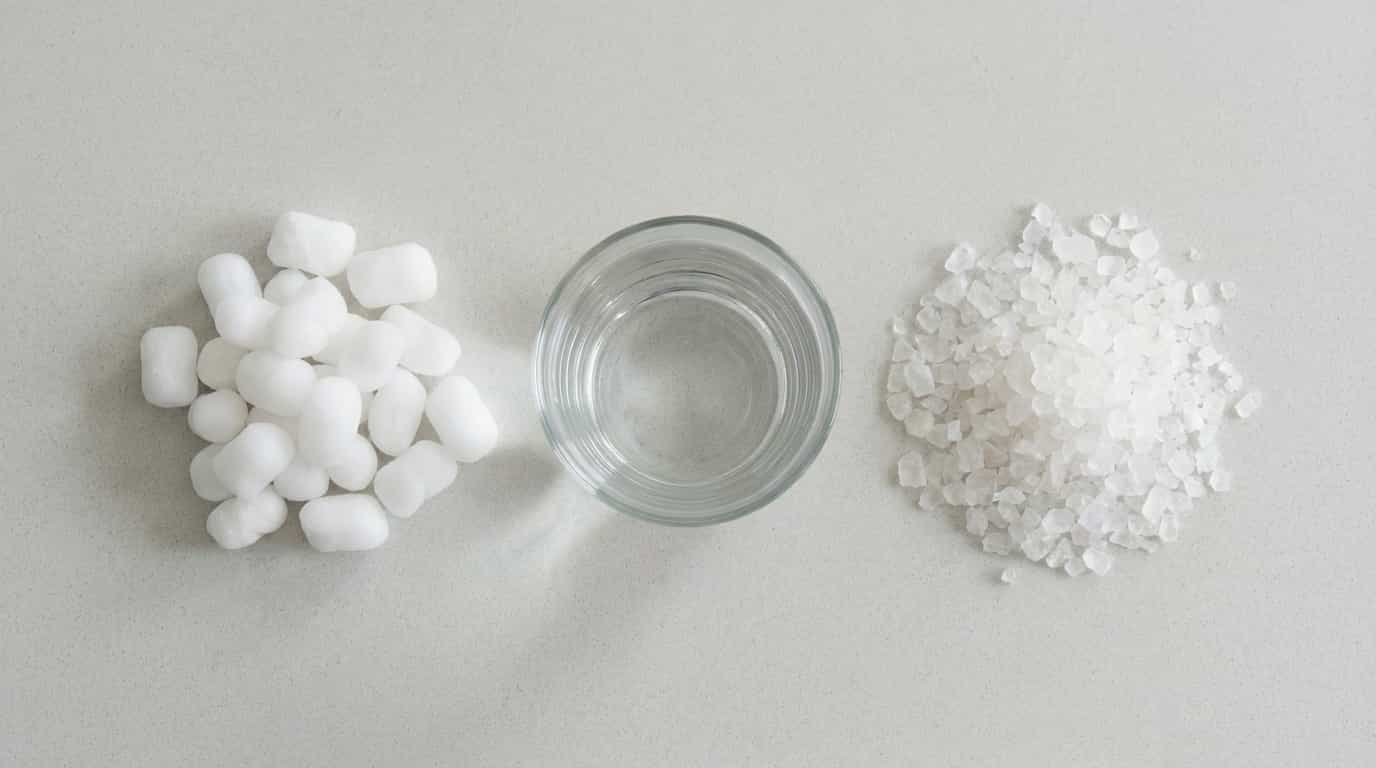
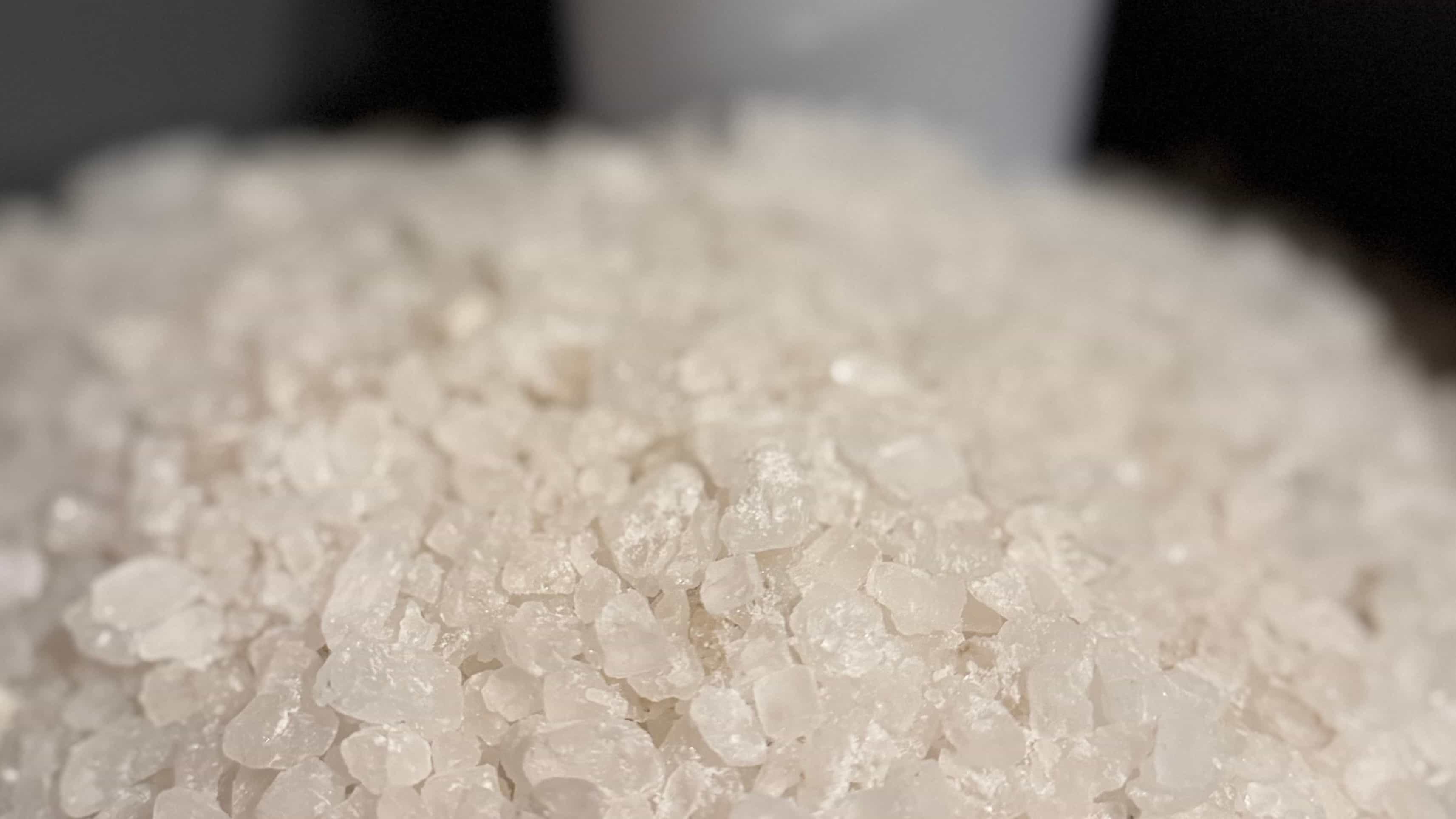
These systems require periodic salt replenishment. Canadian guidance emphasizes using high-purity salt — around 99.5% sodium chloride or higher — to minimize sludge buildup in the brine tank. Households with higher hardness levels and more occupants will regenerate more frequently, which means more salt consumption and more frequent top-ups.
The trade-off is brine discharge. Each regeneration cycle sends a concentrated salt solution to your drain, which eventually reaches the municipal wastewater system or your septic field. Some Canadian municipalities consider the environmental impact of softener brine because it adds chloride to surface waters. If you are in a region with chloride limits or sensitive receiving waters, check local guidance before installing a conventional softener.
If you already have a softener, knowing which salt type to use matters more than most homeowners realize. So does recognizing the signs it needs maintenance before performance drops.
Salt-free conditioners using template-assisted crystallization (TAC) technology do not remove hardness minerals from your water. Instead, they convert dissolved calcium and magnesium into microscopic crystals that pass through your plumbing without adhering to surfaces. The minerals are still there — your water still technically tests as "hard" — but the treated crystals are less likely to form scale on pipes and fixtures.
TAC systems require no salt, produce no wastewater, and need very little maintenance. They are a reasonable choice for households with moderate hardness that want to reduce scale without the ongoing cost and environmental considerations of a salt-based system. However, they do not eliminate the soap-scum reaction or the skin and laundry effects described above, because the minerals remain in the water.
Devices marketed as magnetic or electronic "water conditioners" claim to alter the behaviour of hardness minerals using magnetic fields or electrical pulses. The evidence for these devices is mixed at best. They do not remove hardness minerals, and independent research has not reliably demonstrated consistent scale-prevention performance comparable to ion-exchange softeners or TAC systems.
If you are considering one of these devices, approach the claims with caution. They should not be described as softeners, and for homeowners dealing with significant hard-water symptoms, they are unlikely to resolve the issue.
Choosing a hard-water treatment system is not about finding the "best" technology — it is about matching the right technology to your specific situation. Here is a decision framework built around the factors that actually matter.
Get a hardness test result in mg/L as CaCO₃. This is the single most important input. A household at 150 mg/L has different needs than one at 400 mg/L.
Are you primarily concerned about scale on fixtures and appliances? A TAC conditioner may be enough. Are you also dealing with skin irritation, soap-scum battles, and stiff laundry? An ion-exchange softener is the more comprehensive fix.
Larger families with higher water consumption will regenerate a softener more frequently, which increases salt costs and brine output. This is where the economics of TAC versus ion-exchange start to shift for some households.
Some municipalities restrict brine discharge. Some homeowners prefer a no-salt, no-waste approach on principle. If either applies, a TAC conditioner or a potassium-chloride softener (which replaces sodium with potassium in the ion-exchange process) are worth evaluating.
A whole-home system typically installs on the main water line, close to where water enters your home. It needs a drain for backwash or regeneration, access to an electrical outlet (for timed or metered regeneration), and enough floor space for the equipment. Most installations are handled by a plumber in a few hours. If your mechanical room is already tight — especially if you have a tankless water heater or other water treatment equipment — measure before you buy.
If you are on a private well, a water softener is often paired with other treatment — such as a sediment filter, iron filter, or UV disinfection system — depending on what your water test reveals. A softener alone addresses hardness, but well water often has additional parameters that need attention.

If you go the ion-exchange route, these are the upkeep items that matter most.
Check the salt level monthly. Open the brine tank lid and confirm salt is visible above the water line. If the tank is low, top it up with high-purity pellets or crystals — the type you choose affects how often you need to clean the tank. If you are unsure which salt is right for your system, our guide to choosing the right water softener salt breaks down the options by cost, efficiency, and long-term tank health.
Watch for salt bridges. A hardened crust of salt can form across the top of the brine tank, creating a hollow space underneath where there is no contact between salt and water. The system regenerates with unsalted water, and your hardness returns. Break up any bridge gently with a broom handle and verify the salt is loose and making contact with the water.
Clean the brine tank annually. Once a year, empty the tank, rinse out sediment and residue, and refill with fresh salt. This prevents sludge buildup that can clog the brine draw and reduce regeneration quality.
Note your water use patterns. If your household grows, or if guests increase your water consumption for a stretch, you may need to adjust the regeneration frequency — either through the system's timer or by switching to a metered (demand-initiated) cycle if your unit supports it.
Yes. Health Canada classifies hardness as an aesthetic parameter, not a health-based contaminant. Hard water is generally safe to consume — the issues it creates are related to cleaning, appliances, and comfort, not safety.
If you are on municipal water, check your city or town's annual water-quality report — most publish hardness values online. If you are on a well, have your water tested by a certified lab. At-home test strips can give a rough reading, but lab results are more accurate.
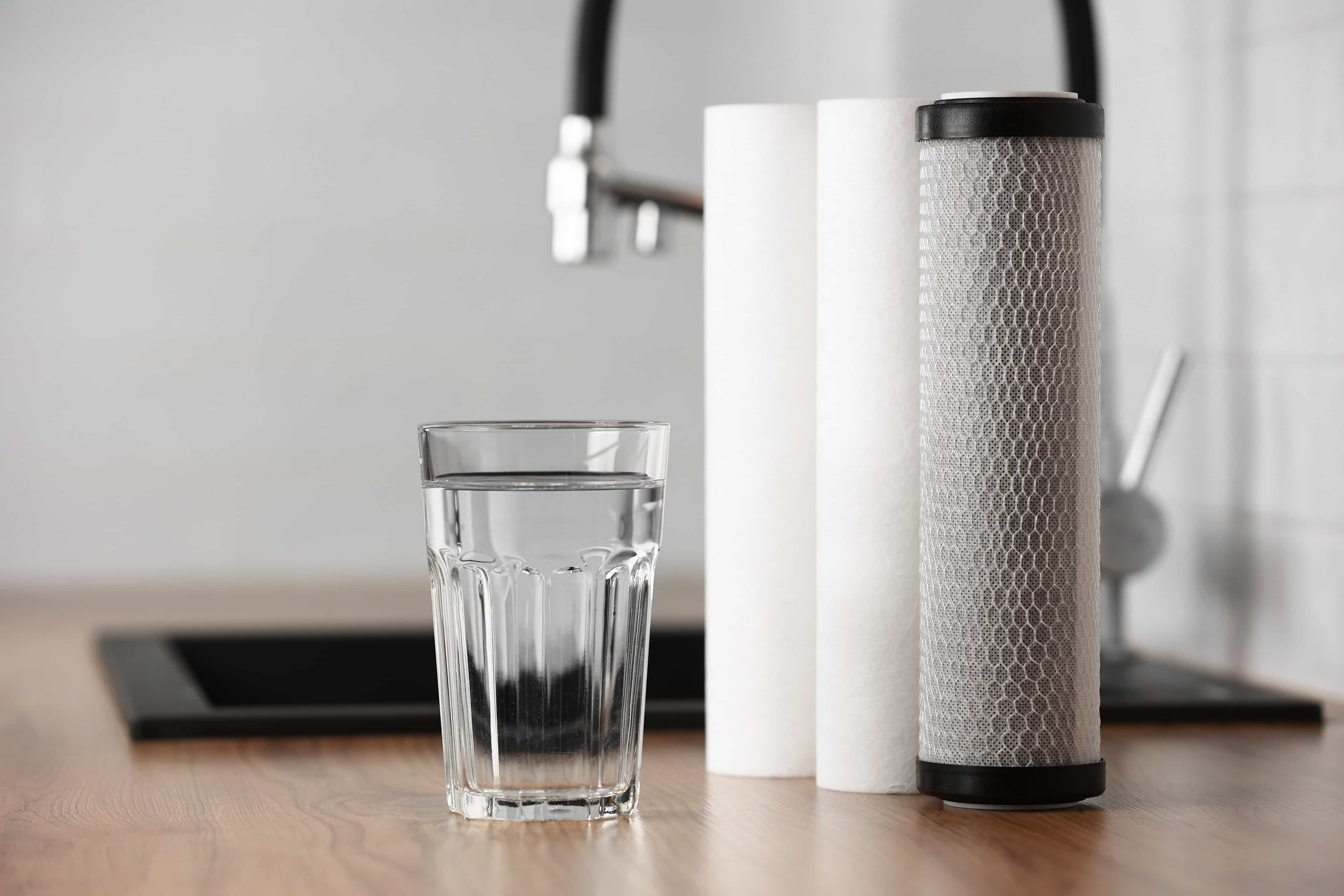
Standard carbon filters (like pitcher filters or fridge filters) do not remove hardness minerals. A reverse osmosis system will reduce hardness at a single point of use, but for whole-home softening you need an ion-exchange softener or a TAC conditioner. For a detailed comparison of filtration options, see our guide on reverse osmosis water systems.
The amount of sodium added is proportional to how much calcium and magnesium is removed. At typical hardness levels, the sodium increase is modest — roughly comparable to what you would find in a slice of bread per glass of water. If sodium intake is a concern, you can use potassium chloride instead of sodium chloride as the regeneration salt, or install a reverse osmosis system at your kitchen tap for drinking water.
Equipment costs typically range from $800 to $2,500 depending on capacity and features. Professional installation adds $200 to $600 in most markets. Ongoing costs include salt (roughly $50–$100 per year for a typical household) and occasional maintenance. Rental programs, which bundle equipment and service for a monthly fee, are also common in Ontario and other provinces.
Yes. Tankless units heat water at high temperatures across compact heat exchangers, which accelerates scale formation. Most manufacturers require annual descaling in hard-water areas to maintain warranty coverage and performance. A softener upstream of the unit is the best long-term protection.
TAC-based conditioners have shown effectiveness at reducing scale buildup on pipes and fixtures. However, they do not remove hardness minerals, so the soap-scum reaction and skin-related effects of hard water remain. They are a reasonable middle ground for households with moderate hardness that primarily want to protect plumbing and appliances.
A well-maintained ion-exchange softener typically lasts 10 to 15 years. The resin bed may need replacement before the rest of the system, particularly if the water supply contains iron or chlorine that degrades the resin over time. Annual maintenance and using the right salt are the two biggest factors in system longevity.
Softening only the hot water line is a common compromise that reduces salt use and protects the appliances most vulnerable to scale (water heater, dishwasher). However, it leaves cold-water fixtures, toilets, and the washing machine's cold cycle exposed to hard water. Whole-home softening provides the most complete protection.
The most common causes are a salt bridge in the brine tank, depleted or fouled resin, a failed timer or meter, or simply running out of salt. Start by checking the salt level and looking for a crust. If the basics check out, our guide on signs your water softener needs maintenance walks through the troubleshooting steps in detail.