Three detectors, ten kits
Five of the ten kits are the Radtrak3. Three are the RSKS. Two are the AT-100. There is no fourth option in the national market, and no kit in the set offers a detector its rivals cannot.
That changes the buying question. It is not which detector is best. It is which seller wraps the same detector in the best terms.
The same detector, a forty-point spread
The five Radtrak3 kits score 81, 81, 71, 68 and 41. Nothing about the plastic puck differs between them.
The sharpest example sits in the top three. Radon Environmental and the BC Lung Foundation sell the same detector at the same price, with the same prepaid return and the same lab window. Ten points separate them for one reason: in its help pages, Radon Environmental's FAQ says the report shows the average radon concentration alongside a plus-or-minus figure. The lung foundation's otherwise near-identical pages do not describe the report at all.
A buyer would very likely receive the same document from either. Only one seller has put that in writing.
Sticker price is not all-in price
The two cheapest listings are not the two cheapest tests.
The national lung charity's store lists the AT-100 at $44.95, the lowest sticker price in the set, and the Canadian Lung Association listing states that the return envelope is not prepaid. That envelope goes to a lab in Massachusetts. Its Quebec fulfilment partner puts the postage at roughly $15, and the shipping charge to the buyer is not shown before checkout. The kit lands in Band C.
Canada Radon follows the same pattern at $49.95, with its own estimate of $15 to $20 to mail the detector back.
Against that, the two genuinely all-in kits under $55 include postage both ways: RadonTest.ca's Essential at $49 and Evict Radon's study kit at $53.99.
Fast, cheap and documented rarely arrive together
The top two kits reach 81 by opposite routes. One is the cheapest in the set and the best documented, and it is also slow: the RadonTest.ca comparison page quotes 20 to 25 business days from the day the detector is mailed back. The other costs $14 more and quotes 7 to 14 business days once the lab has the detector.
Those two clocks start at different moments, which is its own lesson. A turnaround counted from mailing includes the postal leg. One counted from lab receipt does not. Radon Environmental adds one to two weeks of transit on top of its lab window, so the real gap is narrower than the table suggests.
At the slow end, the return instructions from Evict Radon tell participants to expect results within six to eight weeks. Two sellers publish no figure at all.
The report almost nobody describes
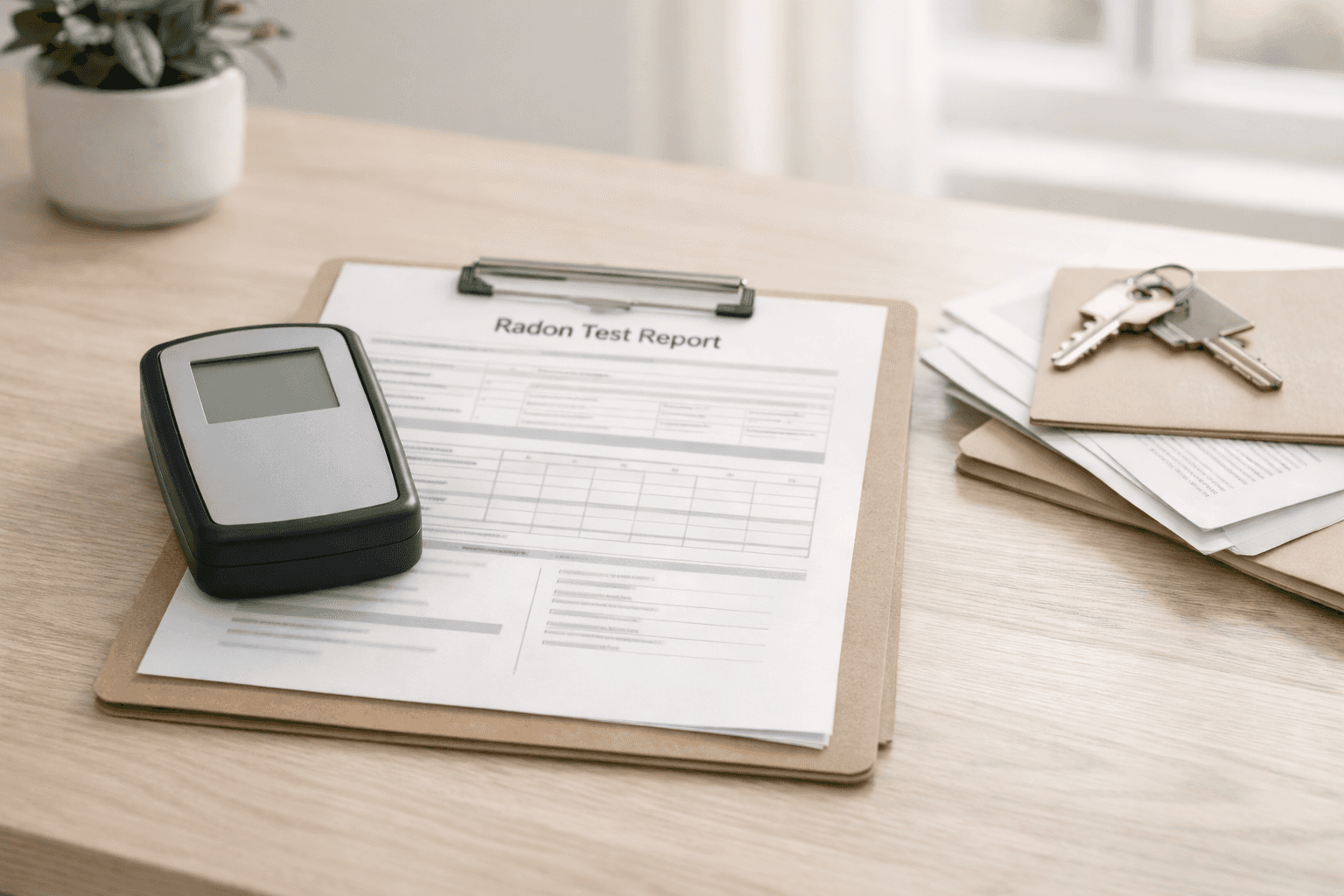
No listing describes all four report elements. Six of ten describe none.
That is the weakest line in the whole market, and it is the one that matters most afterward. A result of 180 becquerels per cubic metre reads very differently with an uncertainty of plus or minus 15 than with plus or minus 40. Readers working through a borderline number will want the guide to understanding radon test results.