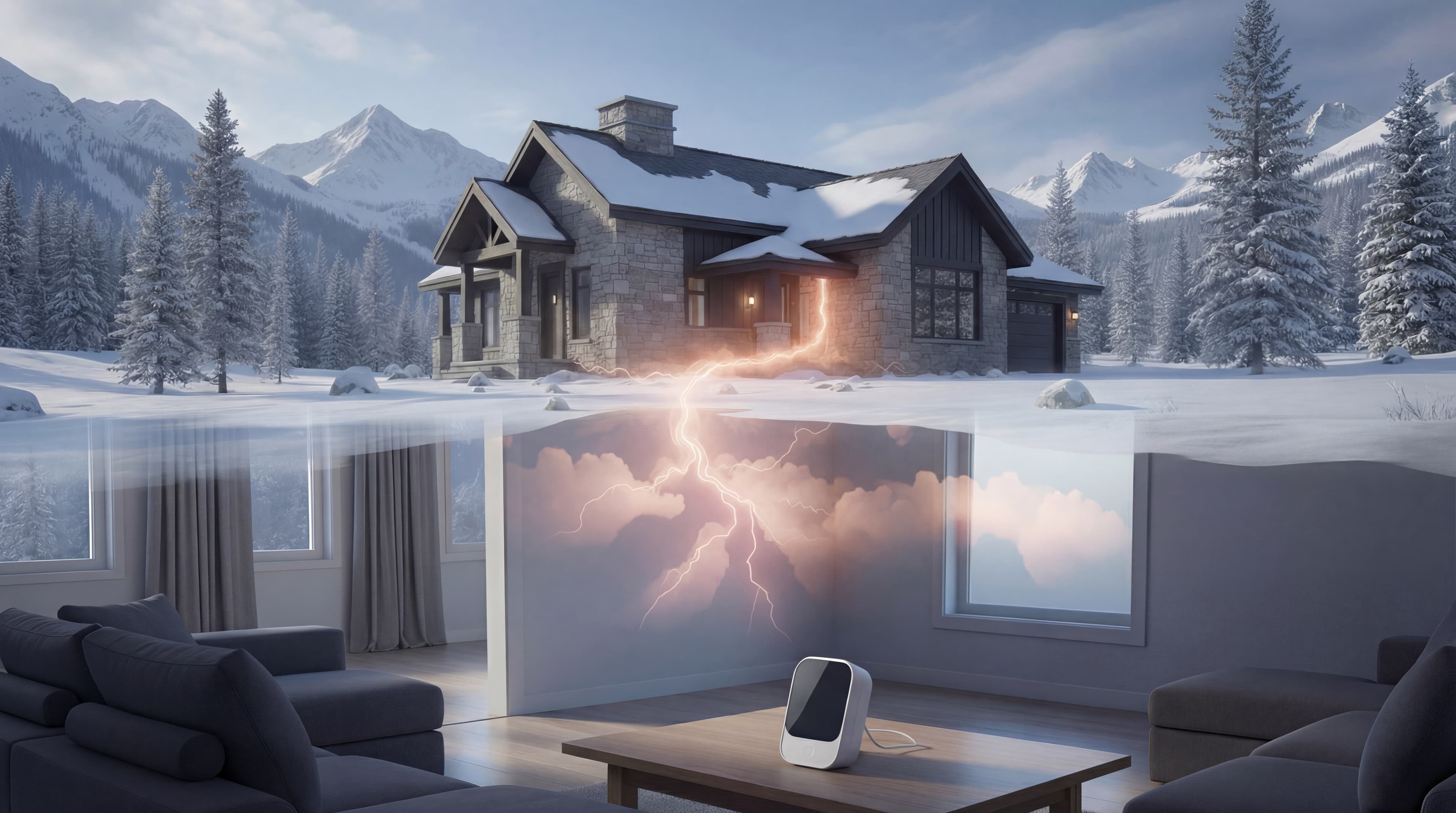
Radon is a naturally occurring radioactive gas produced by the decay of uranium in soil and rock. It is present everywhere in Canada and enters homes through foundation openings. You cannot see, smell, or taste it.
The Invisible Risk Beneath Every Canadian Home — And the One Test That Reveals It

Credit: Homeowner.ca
Most Canadians lock their doors at night, check their smoke detectors in spring, and insure their homes against fire and flood. But the single largest environmental health risk inside a Canadian home is one you cannot see, smell, or taste — and more than 90% of homeowners have never tested for it.
Radon is a radioactive gas that forms naturally in the ground beneath your house. It seeps through your foundation, accumulates in your living spaces, and — over years — damages the cells in your lungs. It is classified as a Group 1 carcinogen by the International Agency for Research on Cancer, placing it in the same category as asbestos and tobacco smoke. And unlike most carcinogens, it is present in every home in Canada. The question is not whether your home has radon. It does. The question is how much.
This guide is designed to give you the complete picture: what radon is, why it matters, how it gets into Canadian homes, where levels tend to be highest, and — most importantly — what you can do about it. Whether you are a first-time homeowner who has never heard of radon or a long-time homeowner who has been meaning to test for years, this is the resource that will take you from uncertainty to action.
Radon is a colourless, odourless, tasteless radioactive gas that occurs naturally from the breakdown of uranium in soil and rock. Uranium is a common element in the Earth's crust, which means radon is being produced continuously, everywhere, all the time. When it escapes into the open air, it dissipates harmlessly — outdoor concentrations are far too low to pose any health concern.
The problem begins when radon enters an enclosed space.
Canadian homes create a natural vacuum effect. The air pressure inside a heated house is typically lower than the pressure in the surrounding soil, which draws soil gases — including radon — inward through any available opening in the foundation. Once inside, the gas has nowhere to go. It accumulates. And unlike carbon monoxide, which triggers alarms, or mould, which produces visible growth, radon gives you no indication that it is there. The only way to detect it is to test for it.
Carbon monoxide is dangerous because of acute poisoning — you can feel the effects within hours. Mould is dangerous because it is visible and often accompanied by odour or respiratory symptoms. Radon operates on a completely different timeline. It is a chronic exposure risk, meaning the danger accumulates over years and decades of breathing it in. There are no headaches, no nausea, no warning signs. The first symptom of radon exposure is often a lung cancer diagnosis.
That is precisely what makes it so important to understand — and so easy to ignore.
The health case against radon is not speculative. It is one of the most studied environmental carcinogens in the world, and the science is unambiguous.
Radon itself is a gas, but as it decays, it produces solid radioactive particles called radon progeny (or "radon daughters"). These particles can be inhaled and lodge in the lining of your lungs. Once there, they continue to decay, emitting alpha radiation that damages the DNA in your lung cells. Over time, this damage can lead to uncontrolled cell growth — cancer.
The process is invisible and painless. You will not cough. You will not feel short of breath. The damage accumulates silently, which is why Health Canada describes the risk as dependent on both the concentration of radon and the duration of exposure over many years.
Long-term exposure to elevated radon is the leading cause of lung cancer in non-smokers and the second leading cause overall, after smoking. Health Canada estimates that radon exposure is linked to more than 3,000 lung cancer deaths in Canada each year — roughly 16% of all lung cancer deaths in the country.
To put that in perspective, radon-related lung cancer deaths exceed the combined toll of car accidents, carbon monoxide poisoning, and house fires annually in Canada. It is not a niche risk. It is a leading cause of preventable death in Canadian homes.
Radon is the only known health effect associated with radon exposure is lung cancer. There is no established link to other diseases. But lung cancer alone makes radon the most significant environmental health hazard in Canadian residential buildings.
If you smoke — or have smoked — your risk from radon exposure is significantly higher. The combination of tobacco smoke and radon creates a synergistic effect: the two carcinogens together produce a risk far greater than either one alone. Former smokers and current smokers living in homes with elevated radon should treat testing as urgent.
Health Canada's guideline is set at 200 Bq/m³, but the agency is clear that no level of radon is considered completely risk-free. Below the guideline, the risk is small — but it is not zero. The guideline is a risk-management threshold, not a safety guarantee. This is why testing matters even if you live in a region with historically low averages: the only number that matters is the one inside your home.
Understanding how radon gets in is the first step toward understanding how to keep it out — or remove it.
The basic physics are straightforward. During heating season, warm air rises inside your home and escapes through the upper levels (the stack effect). This creates a slight negative pressure at the lower levels, which pulls soil gas — including radon — inward through the foundation. The effect is strongest in winter, when windows and doors are sealed and heating systems run continuously, which is why radon levels are typically highest during the colder months.
Radon can enter through any opening where your home contacts the ground. The most common pathways are cracks in foundation floors and walls, construction joints where the floor meets the wall, gaps around service pipes and plumbing penetrations, floor drains and sump pits, support post openings, window casements at or below grade, and cavities inside walls that extend below the soil line.
Even homes with poured concrete foundations — which appear solid — have microscopic pores and hairline cracks that allow soil gas to migrate indoors. No foundation type is inherently radon-proof.
One of the most persistent misconceptions about radon is that if your neighbour's home tested low, yours will too. In reality, radon concentrations can vary dramatically between adjacent homes — even between units in the same building. The variation depends on localized soil composition, foundation condition, ventilation patterns, and dozens of other variables that are unique to each structure.
Health Canada states this directly: the only way to know the radon level in a home is to test, because levels cannot be predicted by the age, style, or location of the house alone.
Radon concentrations are generally highest in basements and crawl spaces — the areas closest to the soil source and typically the least ventilated. If you have a finished basement that you use as a family room, bedroom, or home office, this is the area most likely to have elevated levels. Upper floors can still have radon, but concentrations decrease as you move away from the ground.
This is important for Canadian homeowners specifically: we use our basements more than homeowners in most other countries. Finished basements are bedrooms, playrooms, home offices, and entertainment rooms. A space that is occupied four or more hours per day is considered a "normal occupancy area" by Health Canada — and it is where your radon test should go.

There is no region in Canada that is entirely free of radon. Uranium is a common element in the Earth's crust, and radon can be found in homes in every province and territory. But the prevalence of elevated levels varies significantly by geography.
Health Canada's Cross-Canada Survey of Radon Concentrations in Homes — the most comprehensive national study to date — estimated that approximately 6.9% of Canadian homes have radon levels above the 200 Bq/m³ guideline. That translates to roughly 1 in 14 homes, or hundreds of thousands of households nationwide.
More recent Health Canada outreach rounds this figure to approximately 7% of Canadian homes exceeding the guideline. Either way, the takeaway is the same: this is not a rare problem confined to a handful of geological hotspots. It is a widespread, measurable risk that touches every part of the country.
The Cross-Canada survey found that certain provinces and territories had notably higher percentages of homes above the guideline:
"Lower prevalence" does not mean "no risk." Even in provinces with the lowest overall averages, individual homes can — and do — test above the guideline. Regional averages tell you about geology. Your test result tells you about your home.
Some Canadian communities have strikingly high radon prevalence. Health Canada reports that in parts of New Brunswick and Manitoba, and in cities like Castlegar, British Columbia and Regina, Saskatchewan, more than 40% to over half of homes tested were above the 200 Bq/m³ guideline. These clusters are driven by localized geology — specific types of bedrock and soil that produce higher concentrations of uranium decay.
If you live in or near one of these communities, testing is not optional. It is essential. But even if you do not, the variability between homes means testing remains the only reliable way to know your exposure.
You can check whether your area has known elevated radon levels using our Radon Risk Lookup Tool, which maps known radon data across Canada to help you understand your regional context before you test.
Testing for radon is straightforward, inexpensive, and — critically — something any homeowner can do themselves. There is no need to hire a professional unless you prefer to. The process requires minimal effort: place a device, wait, and read the result.
Health Canada identifies two approaches to radon testing:
1. Do-it-yourself test kits. You purchase a device, place it in your home, leave it for a minimum of three months, and either read the result directly (electronic monitors) or mail the device to a laboratory for analysis (alpha track detectors). Costs typically range from $30 to $200 depending on the device type.
2. Hire a certified radon measurement professional. A C-NRPP (Canadian National Radon Proficiency Program) certified professional deploys and retrieves the device, handles the analysis, and provides a detailed report. This option costs more but removes all guesswork from placement and interpretation.
For a detailed comparison of what each option includes, what it costs, and when a professional test adds real value, see our guide: DIY Radon Test Kits vs Professional Radon Testing in Canada.
Radon levels inside a home fluctuate — hour to hour, day to day, season to season. Weather, wind, barometric pressure, HVAC operation, and even how often you open doors all affect the concentration at any given moment. A short-term snapshot (hours or days) can be wildly misleading.
Health Canada recommends a minimum 91-day test to smooth out these fluctuations and provide a reasonable estimate of your average annual radon level. Testing during the heating season (typically October through April in most of Canada) is preferred because indoor radon levels tend to be highest when homes are sealed up and the stack effect is strongest. A test conducted entirely during summer months may underestimate your actual annual exposure.
The ideal window to start a radon test is October or November. Set it up, forget about it, and check the result in January or February. Longer tests — up to 12 months — are even more accurate.
There are two broad categories of radon measurement devices:
Passive devices (alpha track detectors and electret ion chambers) require no power. You set them out, leave them for the test period, then send them to a lab for analysis. They provide a single average reading for the full test period. Alpha track detectors are the most common type used in Canada.
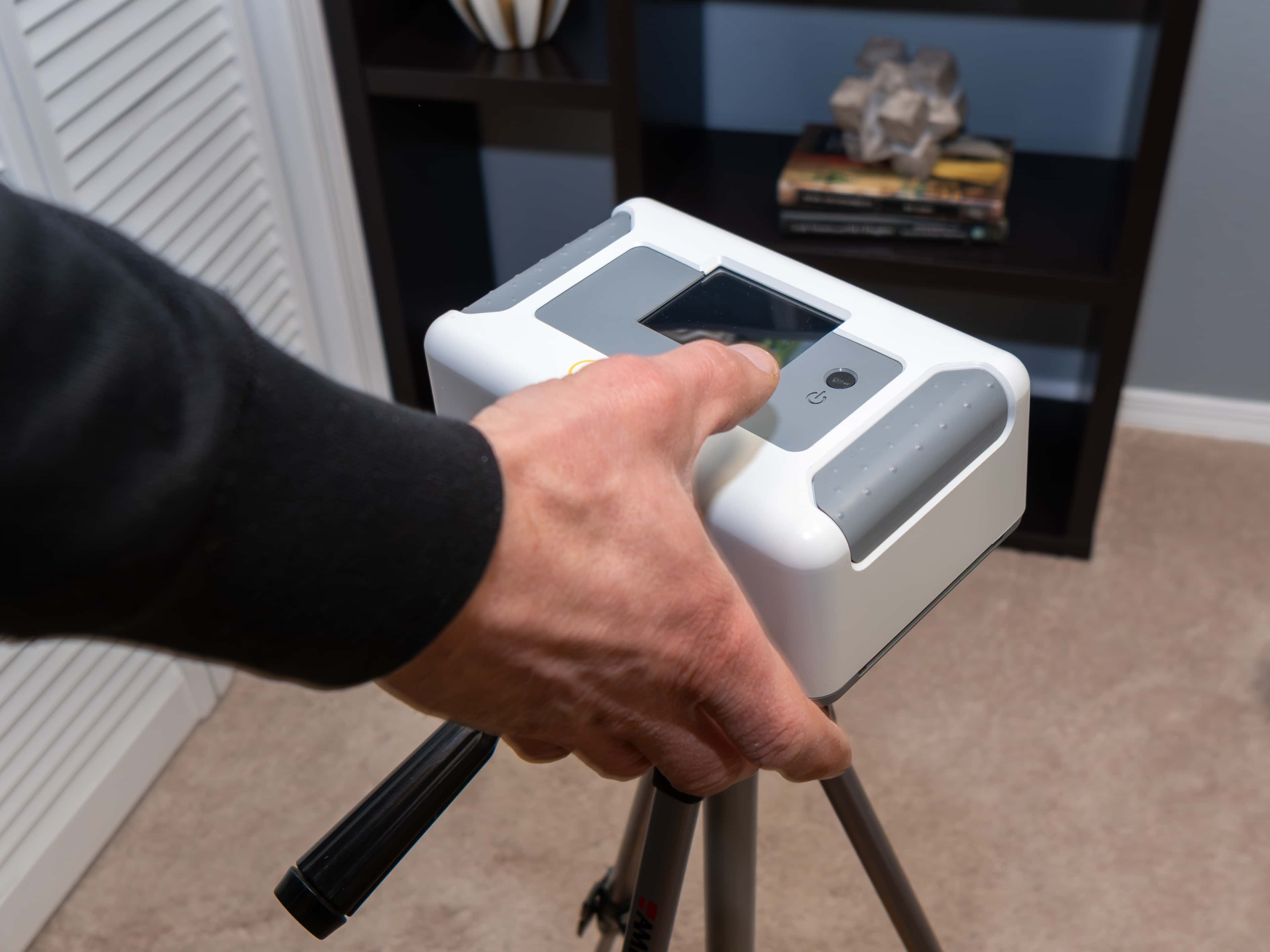
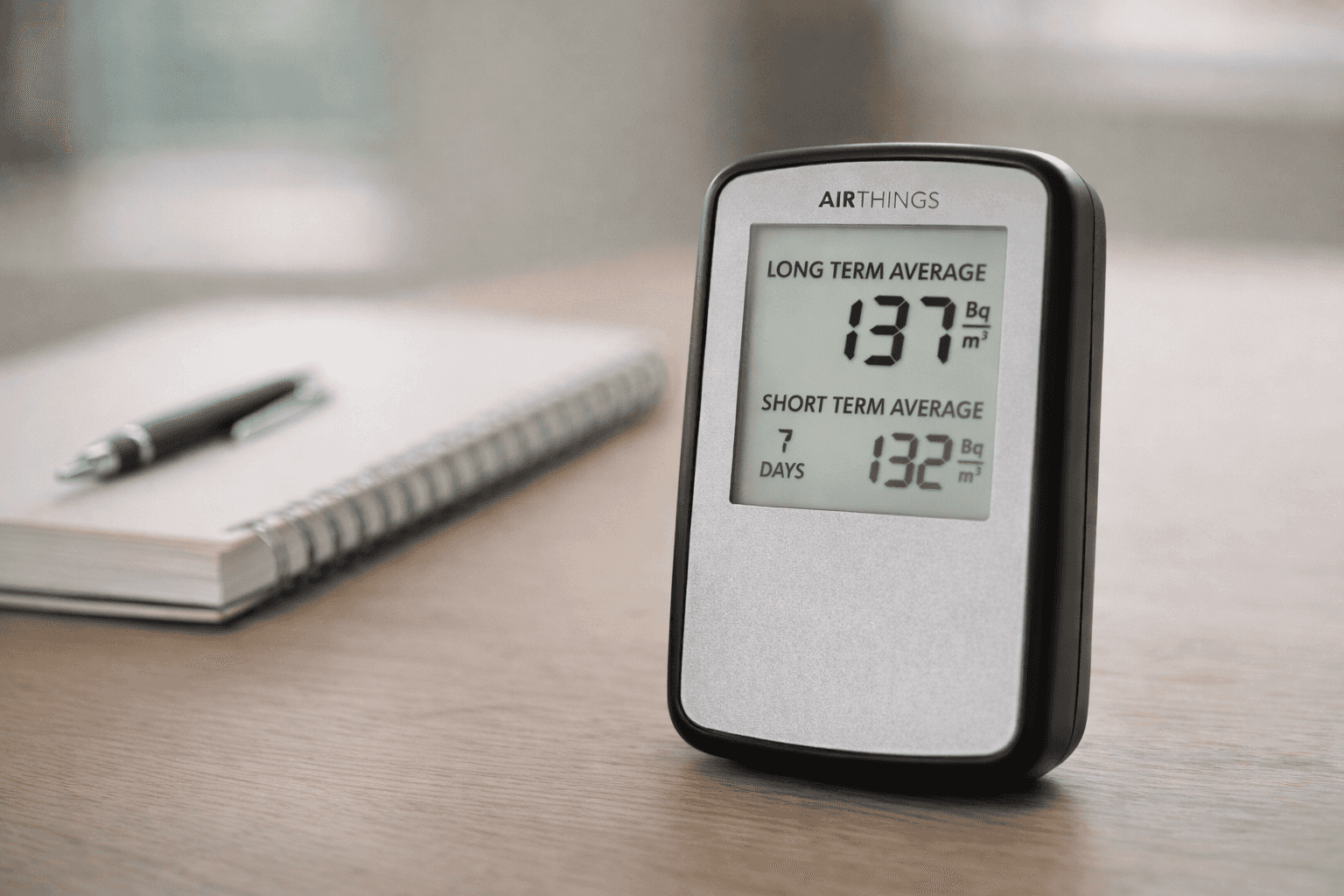
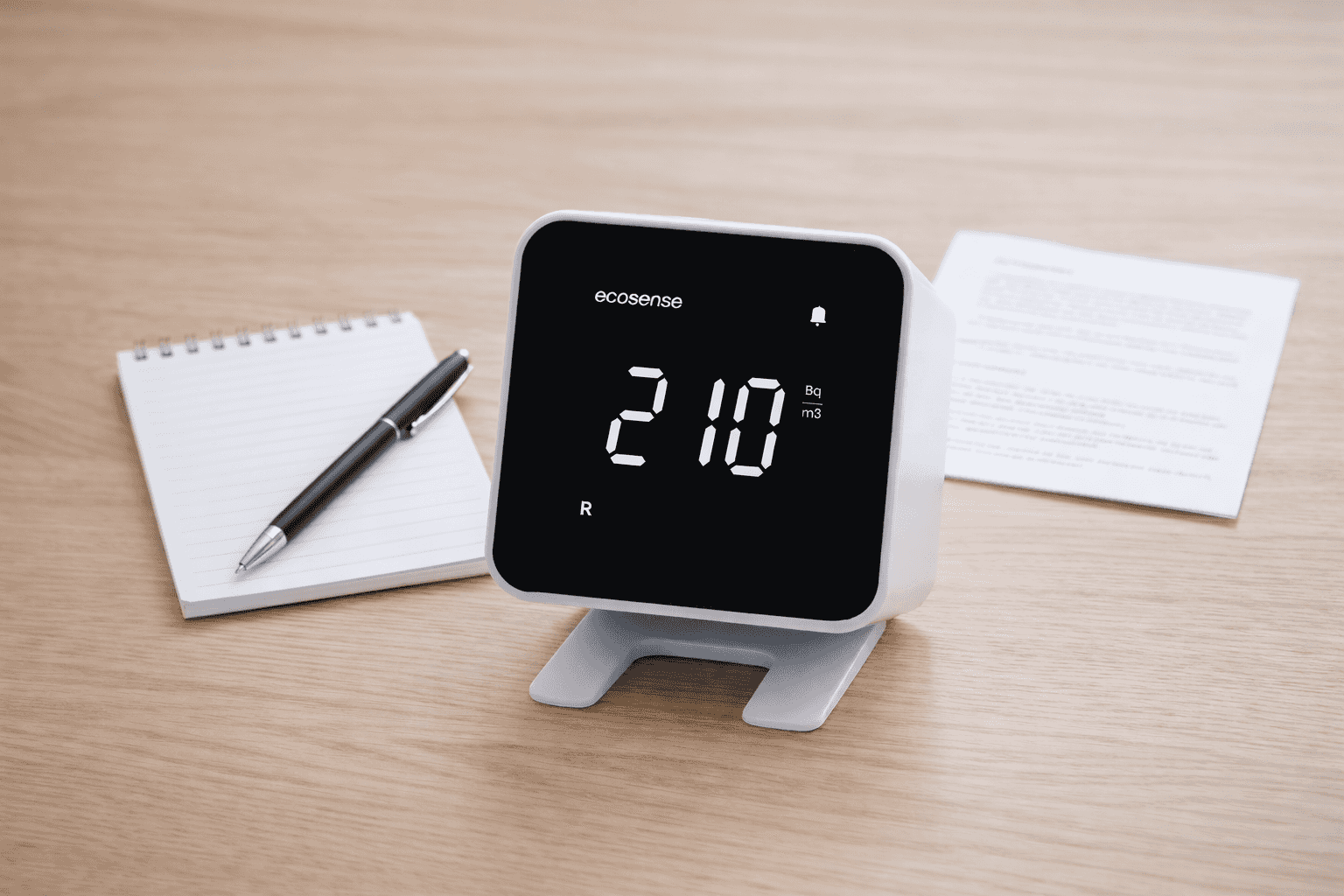
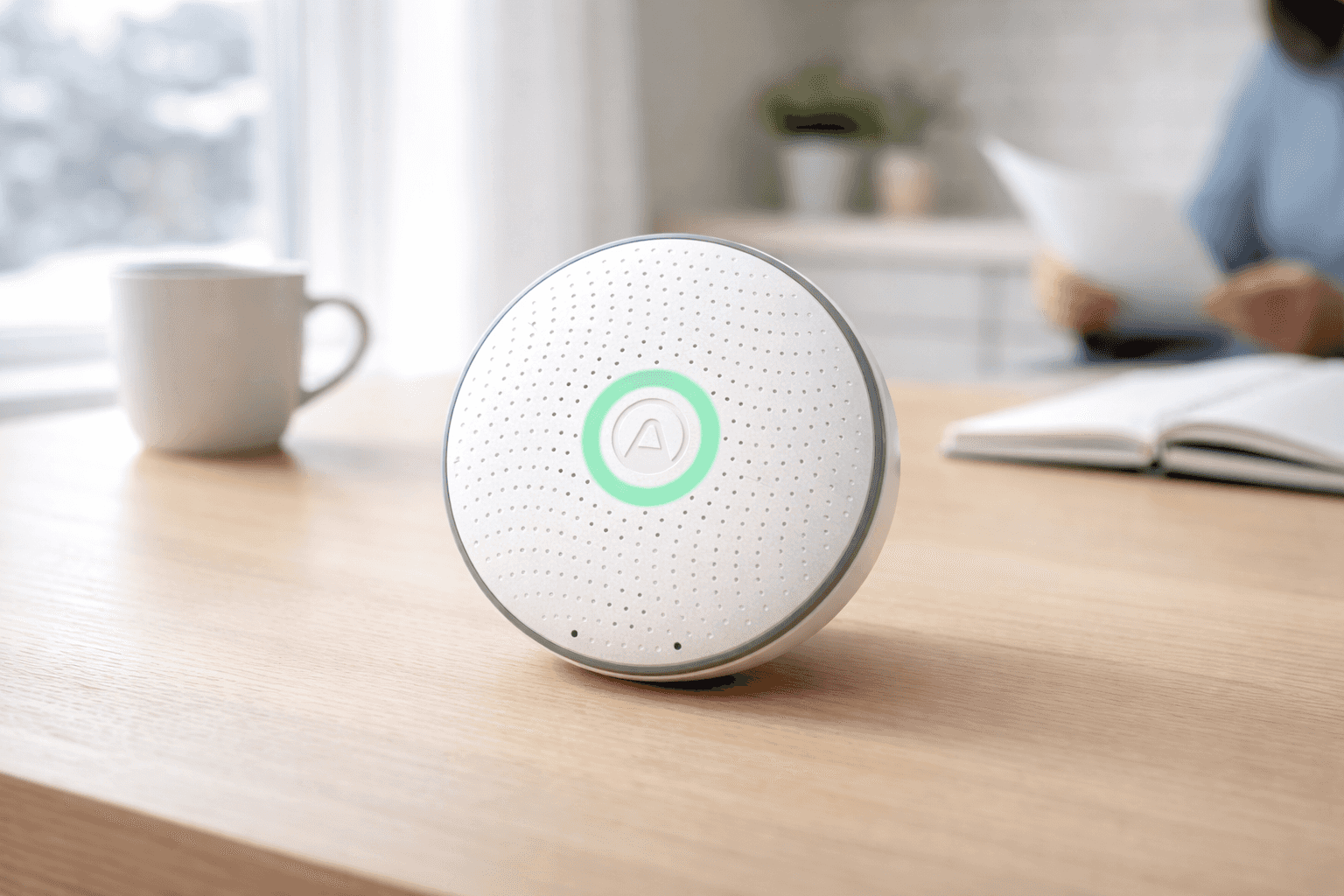
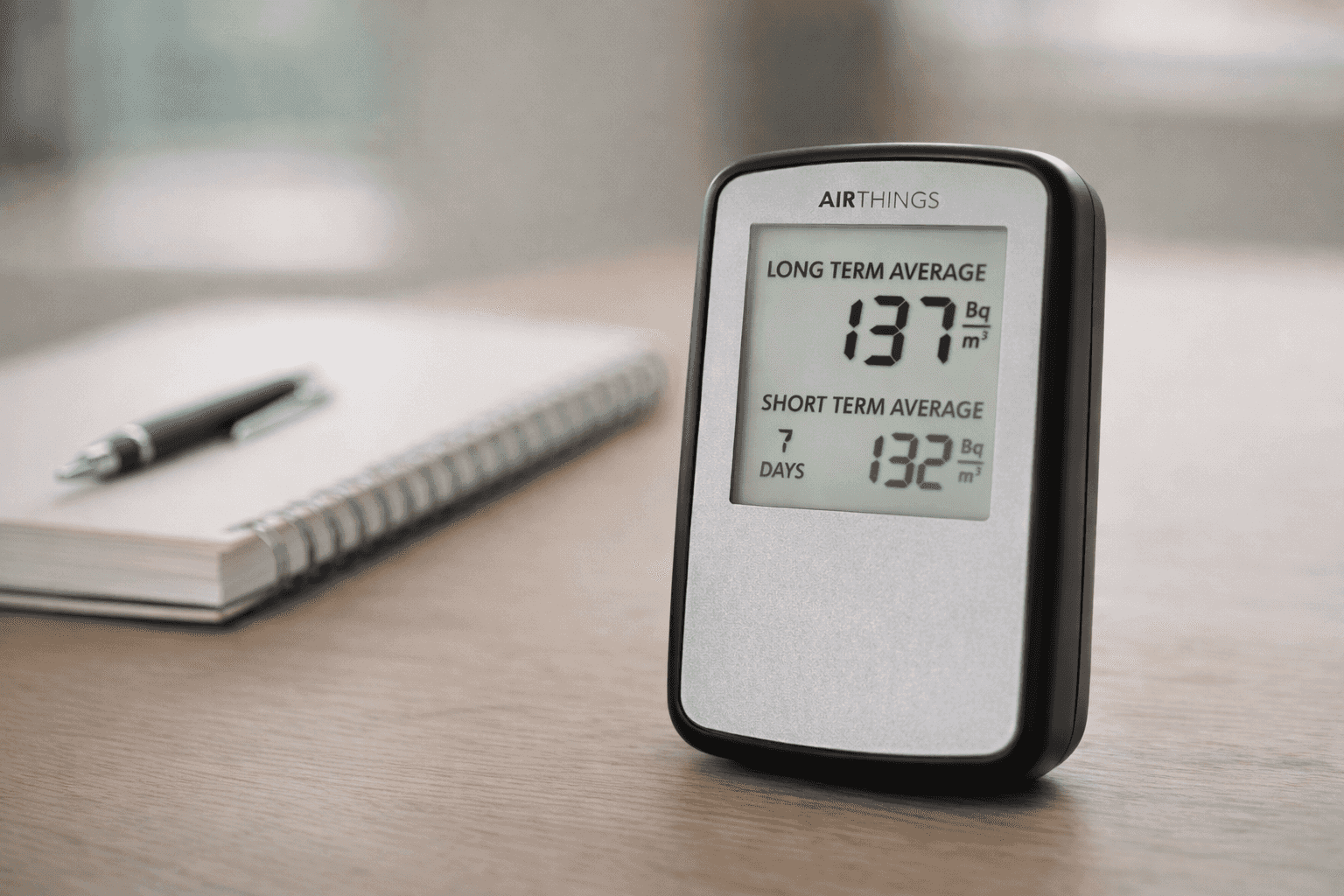
Active devices (electronic radon monitors, or ERMs) run on batteries or wall power and measure radon continuously, displaying real-time or near-real-time readings on a screen or smartphone app. They provide both short-interval readings and a long-term average.
If you choose an ERM, Health Canada recommends selecting one that has passed C-NRPP performance testing. Not all consumer devices meet this standard — some have even been recalled. A list of approved devices is maintained by C-NRPP.
For a side-by-side breakdown of the leading test kits and monitors available in Canada, visit our Radon Test Kit Comparison Guide.
Placement matters. The goal is to measure the radon concentration in the air you actually breathe, in the area where you spend the most time. Health Canada's placement guidance is specific: place the device on the lowest lived-in level of your home (the floor where someone spends four or more hours per day), in a room like a bedroom, family room, den, or home office. Set it at breathing height — between 0.5 and 2 metres above the floor on a shelf, end table, or dresser — and allow at least 10 cm of clearance for airflow around the device.
Equally important is knowing where not to place it. Avoid kitchens, bathrooms, laundry rooms, closets, and unfinished storage areas. Keep the device away from windows, doors, exterior walls, HVAC registers, heat sources, direct sunlight, and large electronics. And do not place it near known radon entry points like sump pits or exposed foundation cracks — this will produce an artificially high reading that does not reflect your actual breathing zone exposure.
For a deep dive into placement decisions — including sump pit proximity, HVAC considerations, and multi-level testing strategies — see our dedicated guide: Where to Place a Radon Detector in Your Home.

Once your test is complete, you will have a number — measured in becquerels per cubic metre (Bq/m³). Understanding what that number means is the difference between informed action and unnecessary anxiety.
The Government of Canada radon guideline establishes 200 Bq/m³ as the threshold for corrective action. If your long-term average radon level exceeds this number, Health Canada recommends you take steps to reduce it — ideally within one year, and sooner if the level is significantly above the guideline.
For reference, 200 Bq/m³ is equivalent to approximately 5.4 picocuries per litre (pCi/L), the unit used in American radon literature. If you encounter radon information from the United States, note that the EPA action level is 4 pCi/L (approximately 148 Bq/m³) — lower than the Canadian guideline.
Health Canada is clear that no level of radon is considered completely risk-free. The 200 Bq/m³ guideline is a risk-management threshold — it represents the point at which the health benefit of mitigation clearly justifies the cost and effort. But reducing radon at any level reduces your risk.
If you used an electronic radon monitor, you may have seen daily or hourly readings that spiked well above 200 Bq/m³ — sometimes dramatically. This is normal. Radon levels fluctuate constantly. A single high hourly reading does not mean your home has dangerous radon levels. Only the long-term average (minimum 91 days) should be used to evaluate your home against the guideline.
Similarly, short-term readings can also be misleadingly low. A reading taken during a warm stretch when windows are open does not represent your annual exposure. This is why Health Canada specifies a minimum test duration during the heating season.
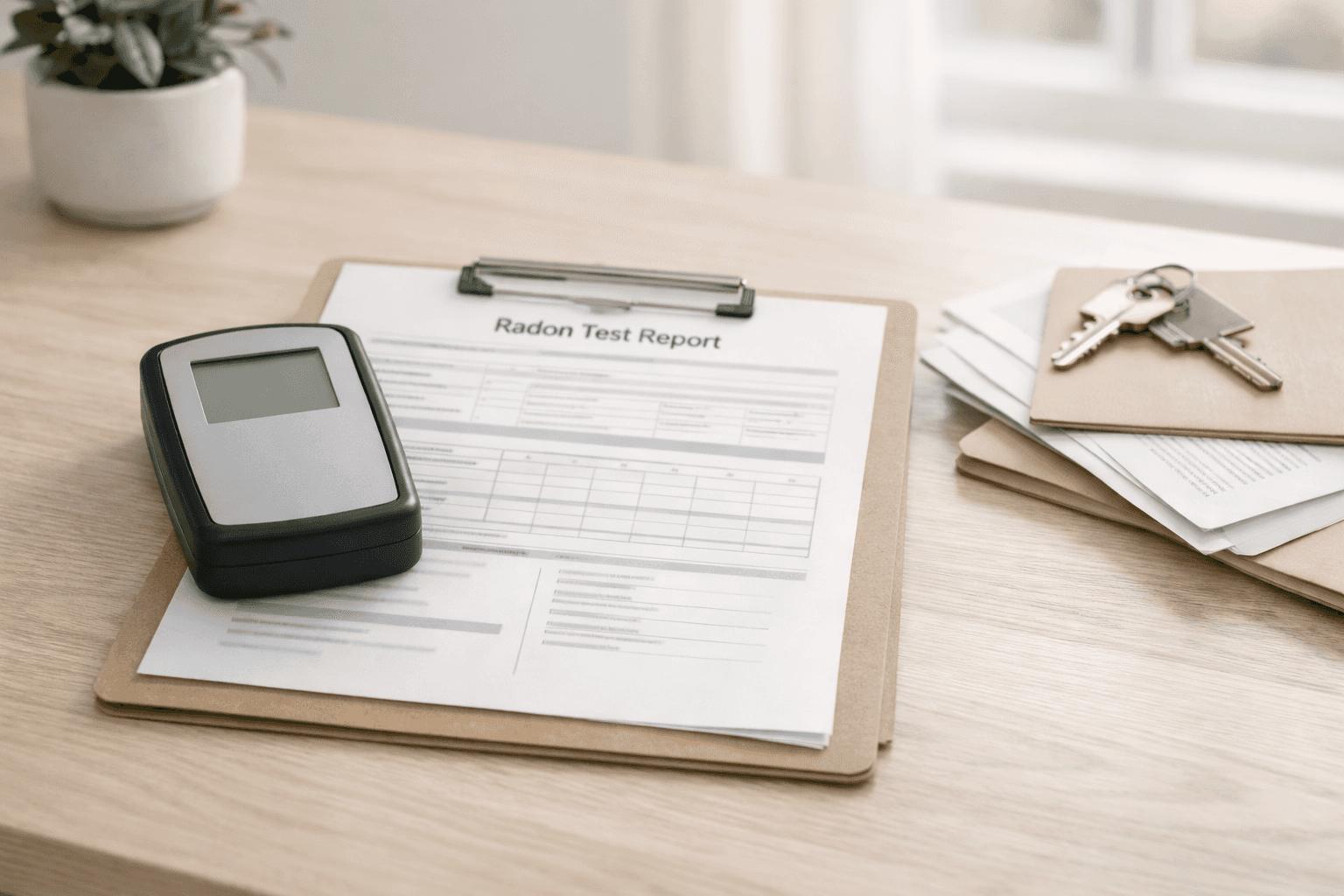
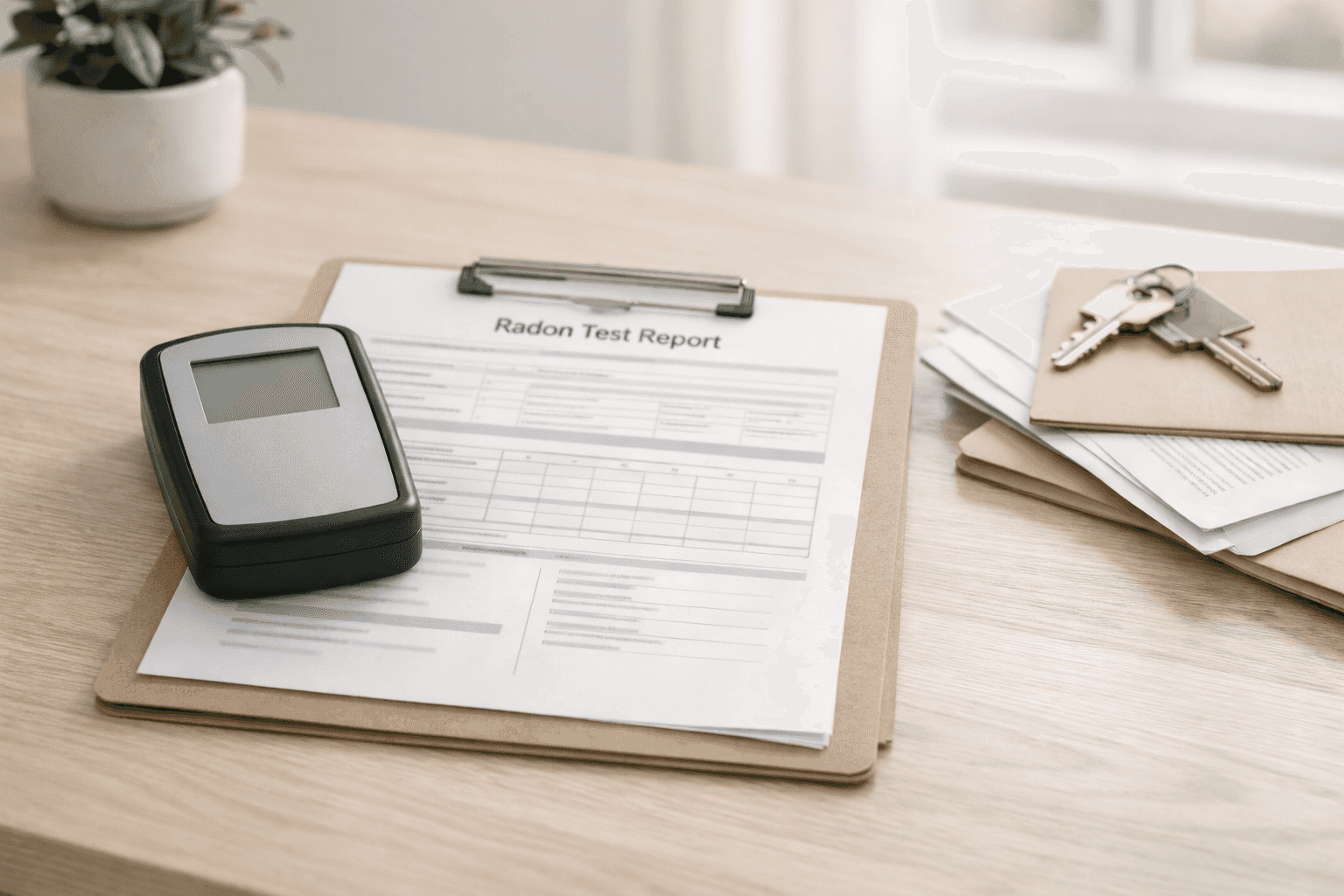
For a comprehensive breakdown of how to read your results — including borderline readings, seasonal adjustment, and when to retest — see our guide: Understanding Radon Test Results.
A reading above 200 Bq/m³ is not an emergency in the acute sense — radon is a chronic risk, not an immediate one. But it does require action, and the timeline depends on how far above the guideline your reading falls.
The standard approach to radon reduction in Canadian homes is called active soil depressurization (ASD), also known as sub-slab depressurization. Here is how it works:
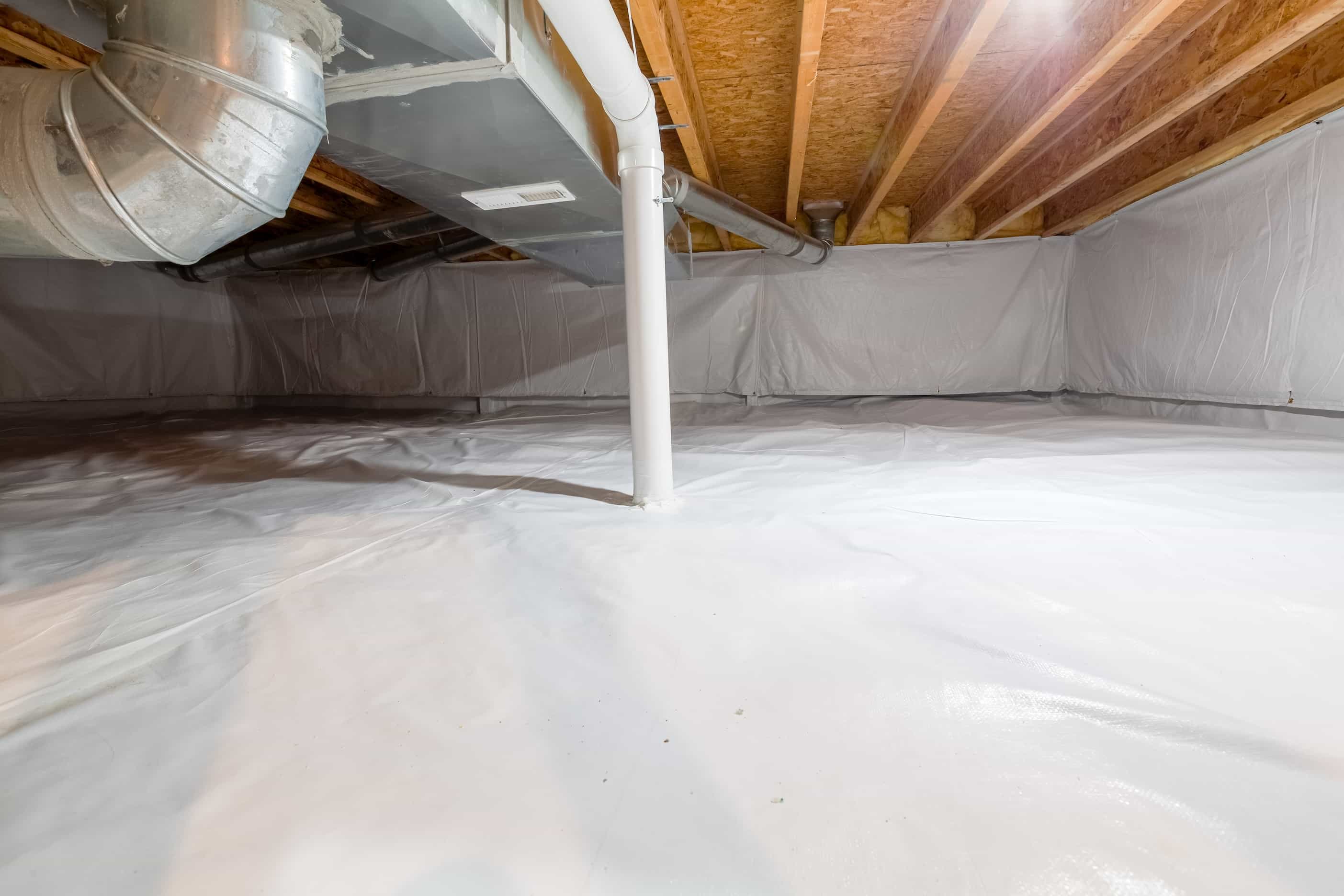
A certified radon mitigator drills a small hole through the basement floor slab, inserts a pipe, and connects it to a fan that runs continuously. The fan creates a zone of negative pressure beneath the slab — essentially reversing the pressure differential that was pulling radon into your home. The soil gas, including radon, is vented through the pipe and exhausted above the roofline, where it dissipates harmlessly into the outdoor air.
It is the same principle as a kitchen range hood, applied to the soil beneath your foundation. The system is quiet, uses about as much electricity as a light bulb, and — once installed — runs continuously with minimal maintenance.
In Canada, a typical ASD radon mitigation system costs between $2,000 and $3,500, depending on the complexity of the installation and your home's layout. Larger homes, homes with multiple foundation types, or homes with finished basements that limit access may cost more. The installation itself typically takes one day.
This is not a speculative investment. A properly installed ASD system routinely reduces indoor radon levels by 80% or more. For a home testing at 400 Bq/m³, that means bringing the level down to 80 Bq/m³ or below — well under the guideline.
For a detailed cost breakdown — including factors that affect pricing, what to ask a mitigator, and how to evaluate quotes — see our guide: How Much Does a Radon Mitigation System Cost in Canada?
The mechanics of ASD systems — and the variations used in different home types — are worth understanding before you hire a contractor. Different foundation configurations (slab-on-grade, full basement, crawl space, walkout) require different installation approaches, and the details affect both cost and performance.
Our full technical guide covers the system types, how contractors evaluate your home, and what a proper installation looks like: How Radon Mitigation Systems Work.
This is not a general contracting job. Radon mitigation is a specialized trade, and the quality of the installation directly determines whether the system works. Health Canada recommends hiring a C-NRPP certified radon mitigation professional. C-NRPP certification requires specific training, examination, and ongoing professional development — it is the national standard for radon work in Canada.
Before hiring a mitigator, ask three questions: (1) Are you C-NRPP certified for mitigation? (2) Will you provide a post-installation test to confirm the system's effectiveness? (3) What warranty do you offer on the installation? A credible professional will answer yes to all three without hesitation.
After your system is installed, you need to verify that it is actually working. Health Canada recommends a short-term post-installation test (conducted by the mitigator) to demonstrate immediate effectiveness, followed by a long-term test during the next heating season to confirm sustained performance.
Our guide on post-mitigation testing covers the timeline, what results to expect, and what to do if the system underperforms: Radon Follow-Up Testing After Mitigation.
The guidance above applies to most Canadian homes — single-family detached houses with basements. But several common situations create unique radon considerations.
Since 2010, Canada's National Building Code (NBC) has included radon provisions requiring a radon rough-in in new residential construction. This means a sealed pipe stub is installed through the foundation slab during building, making it straightforward to add a fan and complete a mitigation system later if testing reveals elevated levels.
However, "rough-in" is not "mitigation." The pipe alone does not reduce radon — it simply makes future mitigation easier and less expensive. Every new home should still be tested after occupancy. Health Canada recommends testing the first heating season you are in the home, then retesting after two years (as the building settles and soil conditions around the new foundation stabilize).
The adoption and enforcement of these code provisions varies by province and municipality. Some jurisdictions have adopted more stringent requirements than the NBC minimum, while others have been slower to implement them.
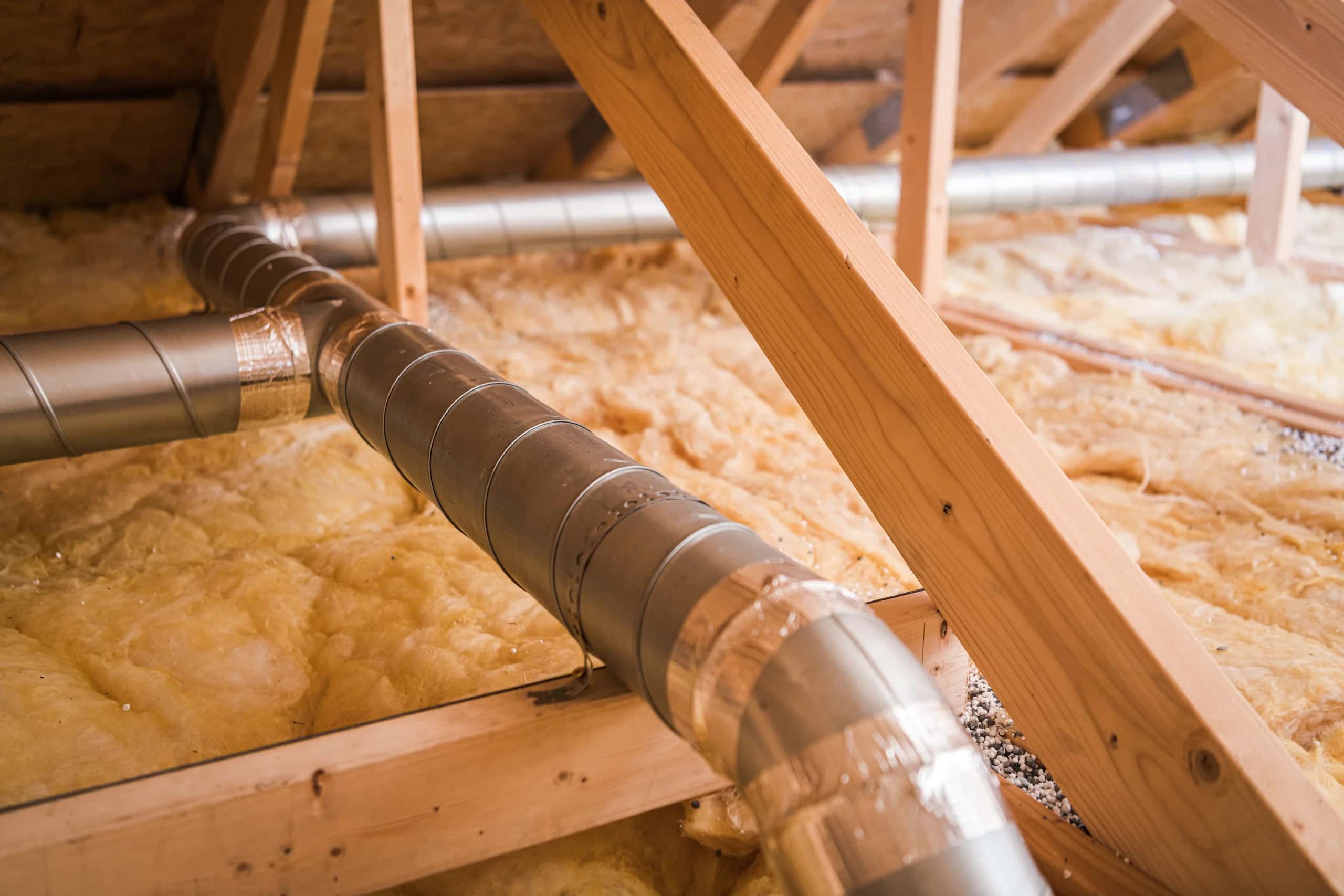
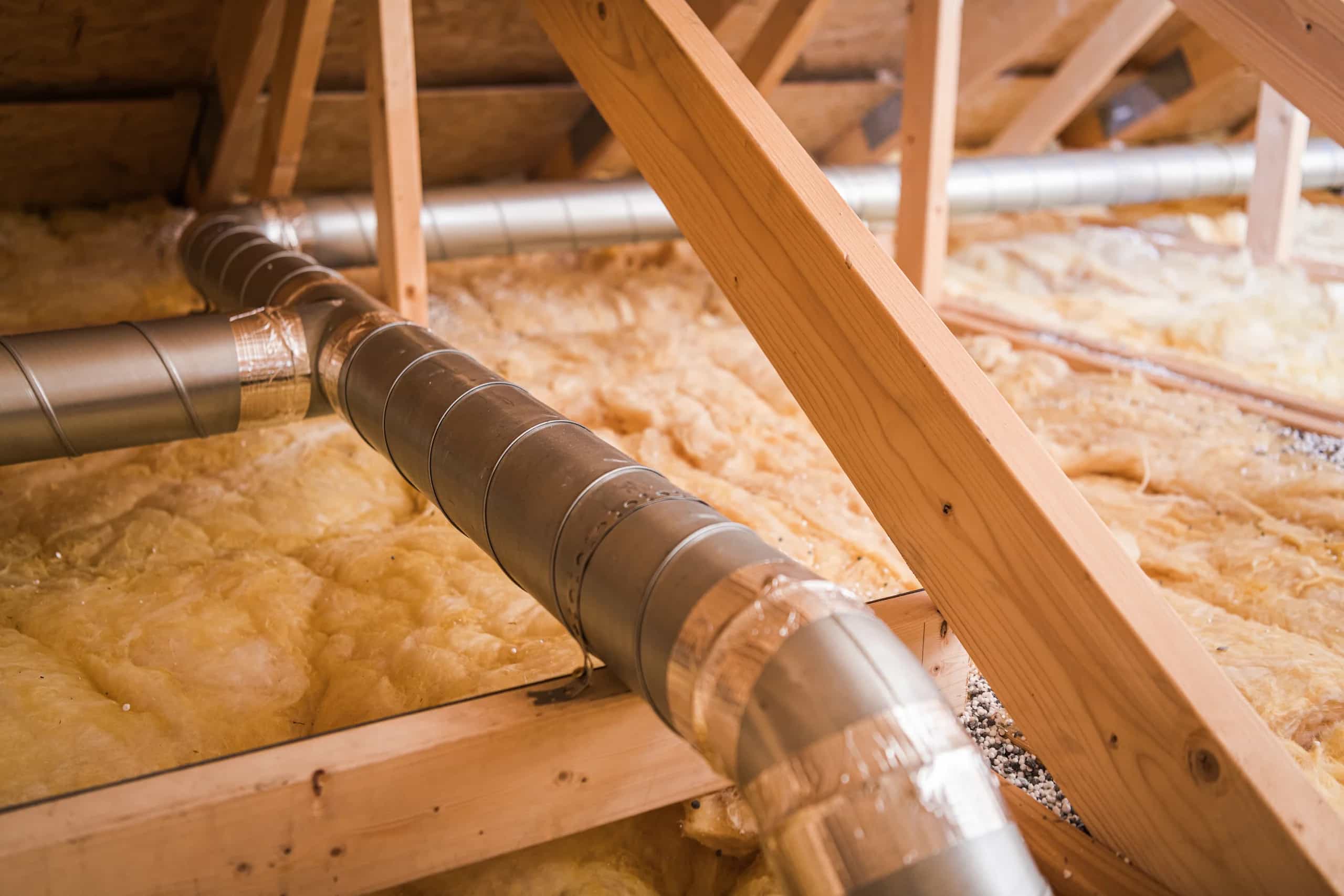
This is an increasingly important issue as Canada pushes toward energy efficiency through programs like the Greener Homes Grant. When you upgrade insulation, seal air leaks, install new windows, or improve your building envelope in any way, you are reducing air exchange with the outside. That is excellent for your energy bills — but it can increase indoor radon concentrations by trapping more soil gas inside.
Health Canada specifically warns that energy retrofits can affect radon levels and recommends testing both before and after any major retrofit project. If you are planning or have recently completed an energy retrofit, a radon test should be part of your post-project checklist.
Homes with HRV (heat recovery ventilator) or ERV (energy recovery ventilator) systems have a built-in advantage here — these systems provide continuous fresh air exchange while recovering heat, which helps dilute indoor radon. But they are not a substitute for proper soil gas management if your foundation is leaking radon. For more on how these ventilation systems work, see our guide on HRV & ERV Systems.
If you live in a condominium or apartment above the second floor, your radon risk is generally lower — but not zero. Health Canada recommends that all homes be tested, including units in multi-storey buildings. Ground-level and below-grade units (common in Canadian condos with underground parking) are most likely to have elevated levels, but radon has been found at significant concentrations on upper floors in some buildings.
In multi-unit buildings, radon mitigation is a building-wide decision, not an individual unit decision. If your test shows elevated levels, your condo board or property management company needs to be involved in the response. This can add complexity — but the testing itself is no different.
There is currently no legal requirement in any Canadian province to test for or disclose radon levels during a home sale. But this is changing in practice, if not yet in law. Buyer awareness is increasing, and radon testing is becoming a more common component of the due diligence process — particularly in known high-radon areas.
If you are selling: having a recent radon test result available can be a selling point. If the result is below the guideline, it removes a concern. If it is above the guideline and you have mitigated, the mitigation system itself adds value. Disclosure proactively is almost always better than having a buyer discover elevated levels during their own testing.
If you are buying: consider making radon testing part of your conditions of purchase, or plan to test immediately after closing. A long-term test started in your first heating season gives you the data you need to make an informed mitigation decision before the issue becomes entrenched.
For a detailed breakdown of how radon intersects with real estate in Canada — including what to ask for, how to negotiate, and how testing timelines fit with closing dates — see our guide: Radon Testing for Home Sales in Canada.
Radon can dissolve in groundwater and enter your home when you run the tap, shower, or operate a dishwasher. For homes on municipal water, this is generally not a concern — treatment and distribution dilute radon to negligible levels. But homes on private wells, particularly deep wells in areas with uranium-bearing bedrock, can have measurable radon in their water supply.
The primary risk from waterborne radon is not ingestion — it is inhalation. When radon-rich water is agitated (running a shower, filling a sink), radon escapes into the air and contributes to indoor airborne concentrations. Health Canada notes that waterborne radon typically contributes less to indoor levels than soil gas infiltration, but it can be a secondary source worth investigating if your air test comes back elevated and your home is on a private well.
If you are on well water and concerned, testing your water separately is the first step. For more on what well water testing covers — including contaminants beyond radon — see our guide: Well Water Testing in Canada.

Radon testing is not a one-time task. Like changing furnace filters, inspecting your roof, or testing smoke alarms, it should be part of the ongoing rhythm of home maintenance. The difference is that radon testing happens on a longer cycle — but ignoring it entirely carries a far greater health cost.
Test your home if you have never tested before. This is the single most important action. Regardless of your home's age, location, foundation type, or what your neighbours have found, a test gives you a number — and the number tells you whether action is needed.
Retest after major renovations. Any work that changes your foundation (basement finishing, underpinning, sump pit installation, exterior waterproofing), your building envelope (new windows, added insulation, air sealing), or your ventilation system (new furnace, HRV installation, bathroom exhaust changes) can alter indoor radon levels in either direction. Test during the next heating season after the work is complete.
Retest after installing a mitigation system. A short-term post-installation check confirms the system is working, but Health Canada recommends a follow-up long-term test during the next heating season. After that, retest every five years to confirm the system is still performing as expected.
Retest after two years in a new home. New construction settles over time, and the soil around a new foundation compresses and changes. A test in your first heating season gives you a baseline, and a retest after two years confirms whether the baseline holds.
A radon test kit costs as little as $30. A long-term electronic monitor costs $200–$300 and can be reused indefinitely. Even professional testing typically costs under $300. Set against the cost of radon-related lung cancer treatment — or the loss it represents — the return on investment is difficult to overstate.
More than 90% of Canadian homeowners have never tested their homes for radon. If you are reading this guide, you are already ahead of the curve. The next step is the simplest one: buy a test, place it, and wait.
Not sure which test kit or monitor to choose? Our Radon Test Kit Comparison Guide evaluates the leading options available in Canada — including C-NRPP approved electronic monitors and mail-in alpha track kits — so you can choose the right test for your situation and budget.

About the Author
Ryan is the founder of Homeowner.ca and a proud Canadian homeowner based in Guelph, Ontario. Over his 25-year career in digital publishing, he has focused on transforming complex information into clear, practical guidance that helps people make confident, well-informed decisions.
Radon is a naturally occurring radioactive gas produced by the decay of uranium in soil and rock. It is present everywhere in Canada and enters homes through foundation openings. You cannot see, smell, or taste it.
Yes. Long-term exposure to elevated radon levels is the leading cause of lung cancer in non-smokers in Canada. Health Canada links radon to over 3,000 lung cancer deaths annually — more than car accidents, CO poisoning, and house fires combined.
Health Canada's guideline is 200 Bq/m³ — above this level, corrective action is recommended within one year. However, Health Canada also states that no level of radon is completely risk-free. Reducing radon at any concentration reduces your health risk.
Purchase a do-it-yourself radon test kit or electronic radon monitor, or hire a C-NRPP certified measurement professional. Place the device on the lowest lived-in level of your home for a minimum of 91 days during the heating season (October to April).
DIY test kits range from approximately $30 to $60 for alpha track detectors that are mailed to a lab. Electronic radon monitors (ERMs) cost $200 to $300 and can be reused. Professional testing typically costs under $300.
You can absolutely test yourself. DIY testing is straightforward and Health Canada provides clear placement guidance. A professional test adds value in complex situations — multi-level homes, real estate transactions, or when you want a formal report. Our DIY vs professional testing comparison (linked in the testing section above) breaks down the full trade-off.
On the lowest level of your home where someone spends four or more hours per day — typically a finished basement bedroom, family room, or home office. Place it at breathing height (on a shelf or table), away from windows, doors, exterior walls, and HVAC vents. Our detector placement guide (linked in the testing section above) covers multi-level strategies and edge cases.
Radon levels fluctuate daily and seasonally based on weather, ventilation, and other factors. A 91-day minimum smooths out these fluctuations and provides a realistic estimate of your average annual exposure. Shorter tests can be misleadingly high or low.
A reading of 180 Bq/m³ is below the Health Canada guideline of 200 Bq/m³, so corrective action is not required under the guideline. However, Health Canada states that no level is completely risk-free. You may choose to reduce levels further, especially if the reading is close to the guideline. Consider retesting to confirm the result — our results interpretation guide (linked in the section above) covers borderline scenarios in detail.
The Canadian National Radon Proficiency Program. It is the national certification body for radon measurement and mitigation professionals in Canada. C-NRPP also tests and approves radon measurement devices. When hiring a radon professional, confirm they hold current C-NRPP certification.
A typical active soil depressurization (ASD) system costs between $2,000 and $3,500 in Canada. Installation usually takes one day. Costs vary based on home size, foundation type, and accessibility. Our mitigation cost guide (linked in the mitigation section above) provides a full breakdown by home type.
Yes. A properly installed ASD system routinely reduces indoor radon levels by 80% or more. A home testing at 400 Bq/m³ can typically be brought below 80 Bq/m³. Post-installation testing confirms effectiveness.
Yes. New homes can have elevated radon just like older homes. Since 2010, Canada's National Building Code requires a radon rough-in pipe in new construction, which makes future mitigation easier — but the rough-in alone does not reduce radon. New homes must still be tested.
Yes. Insulation upgrades, air sealing, and new windows reduce air exchange, which can increase indoor radon concentrations. Health Canada recommends testing before and after any major energy retrofit. Homes with HRV or ERV systems have an advantage since these provide continuous ventilation while recovering heat.
A home with a known radon problem and no mitigation could deter buyers. However, a home with a tested result below the guideline — or a home with an installed and verified mitigation system — can actually be a positive selling point. Proactive testing and disclosure is better than leaving it for the buyer to discover.
Ground-level and below-grade units can have elevated radon. Upper-floor units generally have lower levels but are not immune. Health Canada recommends testing all homes, including condos. In multi-unit buildings, mitigation is typically a building-wide project requiring involvement from the condo board or property manager.