The Traditional Wall: Why Plastic Against Concrete Is Rated High
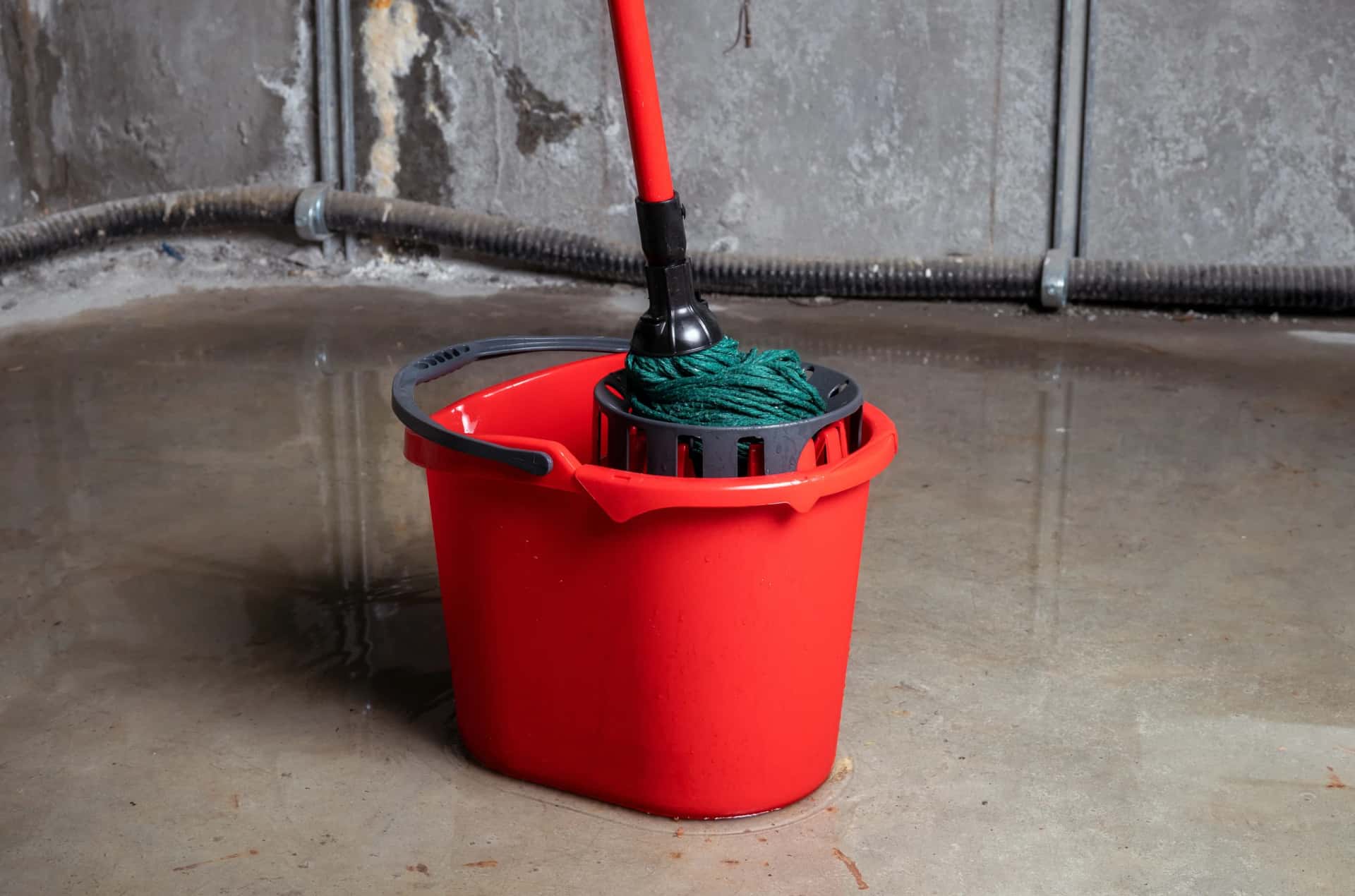
This is the wall many older Canadian basements already have, and the evidence against it is unusually consistent. NRCan records that plastic was once the material of choice, but where air and moisture got into the insulated wall, condensation formed on the plastic and caused wetting and mould issues. It now recommends house wrap from grade down to the floor so minor moisture can dry inward or out through the above-grade concrete.
Building Science Corporation's field experience was worse: its builder consortium judged internally insulated frame walls and blanket insulation unsuitable because of mould, decay and odour problems.
Measured data points the same way. In field monitoring of eight interior basement systems, the wall with plastic on both sides held 80 to 100 per cent relative humidity at the concrete. None of the eight walls failed, but only because indoor humidity stayed low. That is a narrow margin to build a finished room on.
Do not confuse two different sheets. The plastic against the concrete is the problem. The code-required vapour barrier on the warm, room side of the insulation is a separate layer and still required.
Rigid Foam Board: The Default Interior Choice
NRCan's preferred interior method glues and seals rigid board of at least RSI 1.76 (R-10) to the foundation, then adds a framed wall with batts. It specifies moisture-resistant board only, such as extruded polystyrene or Type IV expanded polystyrene, and says the result reduces thermal bridging well and needs no additional moisture barrier against the concrete.
The rating is low to moderate rather than low because the assembly is only as good as its sealing. Gaps behind the board let air reach the concrete. And if the foam is a low-permeance layer, the model code limits how much insulation can sit on its room side, so the foam's inner face stays warm enough to avoid condensation. That ratio rule is worth a five-minute conversation with your building official before you pick foam thickness and stud depth.
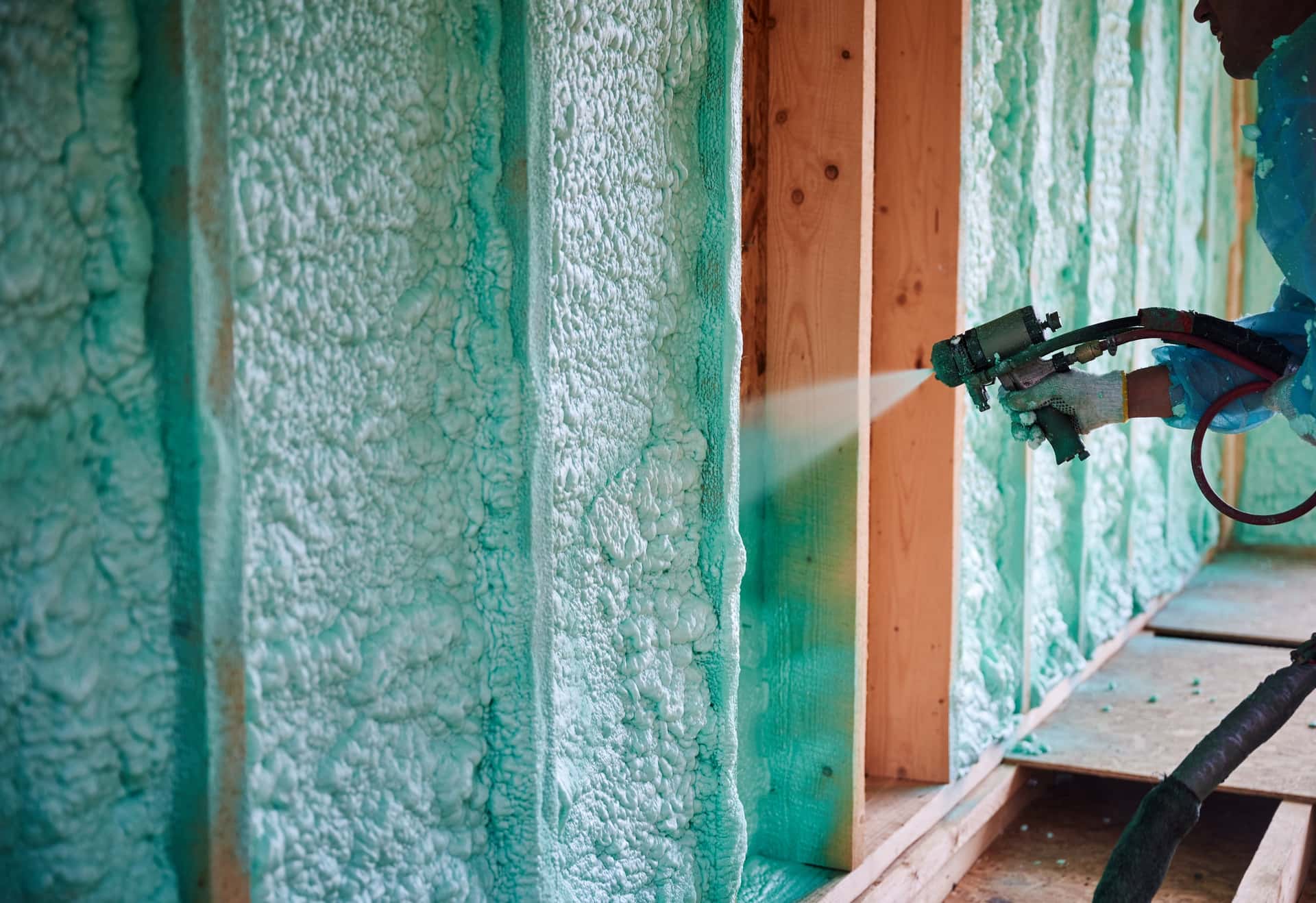
Closed-Cell Spray Foam: Lowest Interior Risk, With Rules
Building science ranks this as the least risky interior approach because the foam bonds to the concrete and leaves no air space to condense in. The U.S. Department of Energy's Building America summary states that closed-cell spray foam provides the best moisture control of all interior foundation insulations. NRCan adds that it should be applied only by a certified installer and can help control dampness on basement walls.
Two Canadian rules travel with it. First, foam exposed to living space needs a thermal barrier; Alberta municipal safety-codes guidance names 12.7 mm gypsum board as an acceptable cover. Advice you may read about leaving foam exposed comes from U.S. codes. Second, on rubble and stone walls NRCan caps spray foam at RSI 2.1 (R-12), because more insulation pushes the masonry into damaging freeze-thaw cycles.
For a deeper look at foam types and installation, see the spray foam insulation guide.
Mineral Wool and a Smart Vapour Retarder: Good Material, Wrong Position
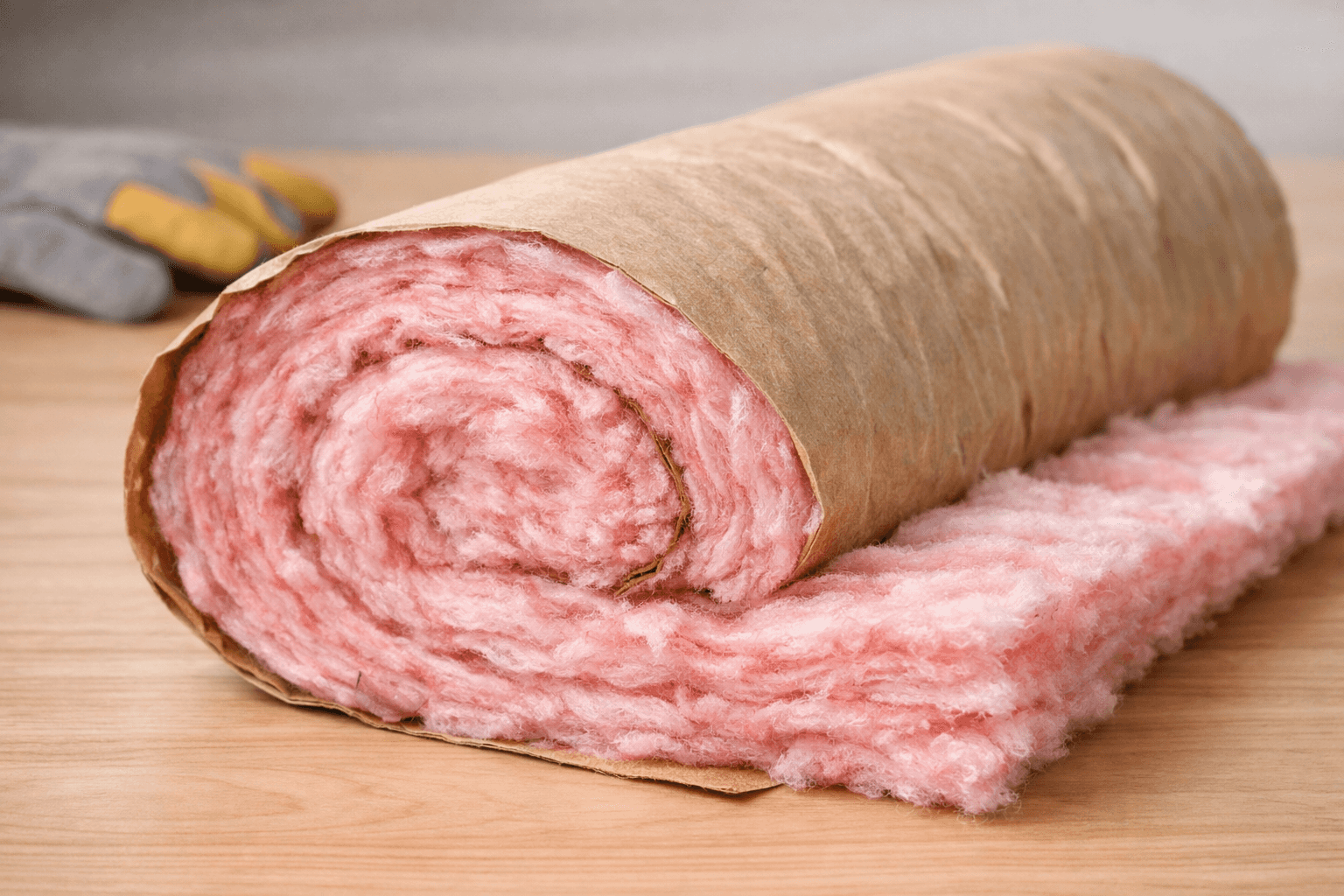
Mineral wool tolerates moisture well. The weakness is air. Fibrous insulation of any kind lets indoor air move through it, and against basement concrete that air finds the coldest surface in the house. The same Department of Energy summary advises against fibreglass batts or cellulose in contact with foundation walls for exactly this reason.
A smart retarder is a membrane whose permeance changes with humidity, intended to let a wall dry. Under the model code it counts as the vapour barrier only if it meets the 60 ng/(Pa·s·m²) dry-cup limit. NRCan's guidance pairs a smart retarder with a spray-foam backing layer, not with fibrous insulation directly on concrete. No Canadian Tier 1 source rates the mineral wool and smart retarder combination against interior concrete, so the moderate-to-high rating is a building-science judgment, not a measurement. Mineral wool shines as cavity fill behind a foam layer, or as rigid board on the outside of the wall, where NRCan lists it.
Exterior Insulation: Best Performance, Narrowest Window
Every source agrees that outside is best. NRCan says so, and adds that exterior insulation lets you see and repair cracks, eliminates freeze-thaw stress and keeps frost away from the footings. The NRC's exterior insulation field study found exterior systems gave moisture protection comparable to drainage membranes and avoided the construction-moisture problems of permeable interior systems at the above-grade part of the wall.
The window is the problem. Excavating an occupied house just to insulate rarely makes sense. When you are already digging for waterproofing, drainage or a foundation repair, the case changes completely. Plan the insulation into that job, with protective covering from the top of the board to at least 100 mm below grade and flashing at the top.