Realistic expectations, the 2026 tax rules, and where provincial help fits
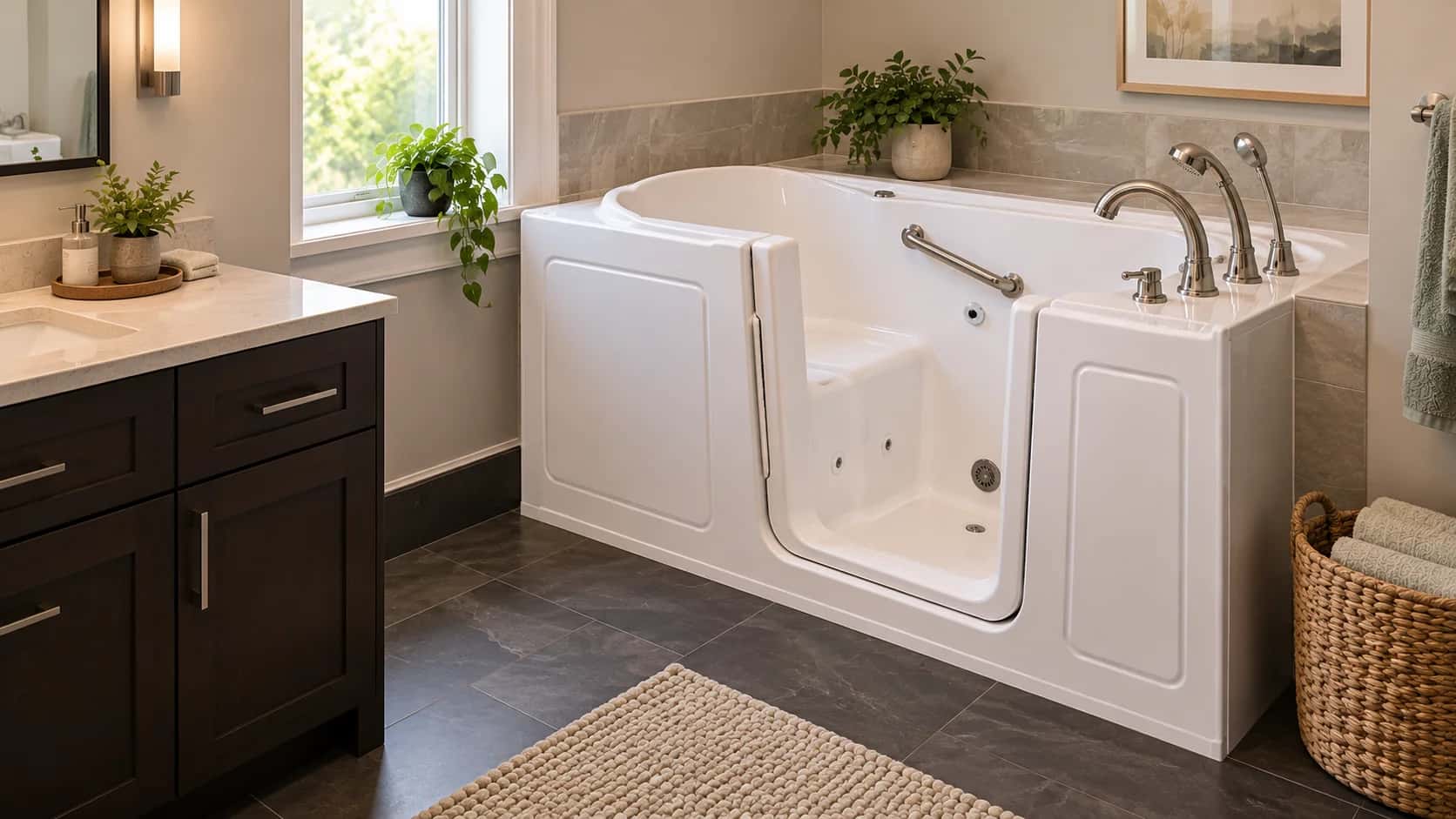
Let's be candid about pricing: no Canadian government agency publishes walk-in tub prices, and the numbers you see online vary wildly depending on who is publishing them. As a rough, illustrative starting point, one Canadian aging-in-place directory, Senior Care Path, lists installed prices of about $5,000 to $8,500 for a soaker model, $8,500 to $14,000 for hydrotherapy models and $10,000 to $18,000 or more for bariatric and wheelchair-accessible designs, while describing those figures as illustrative for 2026. Its sister page on accessible showers puts a barrier-free shower base at roughly $3,000 to $6,000 and a full roll-in conversion at $6,000 to $12,000. Some dealers quote well above those ranges for made-to-order therapeutic tubs. Treat every online number as a conversation starter; the only price that matters is the written one that follows an assessment of your bathroom.
What pushes a price up is usually hidden behind the walls. Removing the old tub, rebuilding surrounding walls or tile, adding a dedicated electrical circuit for jets or a heater, adjusting drains, and sometimes upgrading the water heater can each add a line to the quote. We will come back to every one of those in the questions below.
Now for the help. The Home Accessibility Tax Credit (HATC) is the federal credit most families will look at first. A qualifying individual, meaning someone 65 or older or eligible for the Disability Tax Credit, or an eligible family member supporting them, can claim up to $20,000 a year in eligible renovation expenses. Walk-in tubs are not a grey area here: Finance Canada's 2026 report on federal tax expenditures names walk-in bathtubs, alongside wheelchair ramps, wheel-in showers and grab bars, as examples of eligible expenditures.
What the credit is worth has changed, though. The HATC is calculated at the lowest federal income tax rate, which Finance Canada confirms dropped to 14 per cent for 2026. That makes the maximum federal credit $2,800 on $20,000 of eligible expenses, not the $3,000 still quoted on many websites. It is also a non-refundable credit, so it reduces federal tax you owe rather than arriving as a cheque, and it is not a discount on the tub.
The second change is just as important. Starting with the 2026 tax year, an expense claimed under the Medical Expense Tax Credit can no longer also be claimed under the HATC. That change came through the federal budget implementation bill, which received royal assent on March 26, 2026, according to Parliament's LEGISinfo record. Some government web pages and many tax guides still describe the old double claim, so if a salesperson tells you that you can "claim it twice," that advice is out of date for 2026. Deciding which credit fits your situation is a conversation worth having with a tax professional.
Provincial help varies widely. In Ontario, for example, the Home and Vehicle Modification Program helps people whose disability affects their mobility with home modifications such as bathroom rearrangement, though applicants must first use any other available funding and some households may be asked to contribute. Ontarians 70 and older with modest incomes may also look at the refundable Ontario Seniors Care at Home Tax Credit for eligible medical expenses.
Programs elsewhere in Canada work differently, and we have mapped them in our guide to walk-in tub tax credits and rebates in Canada for 2026, province by province.
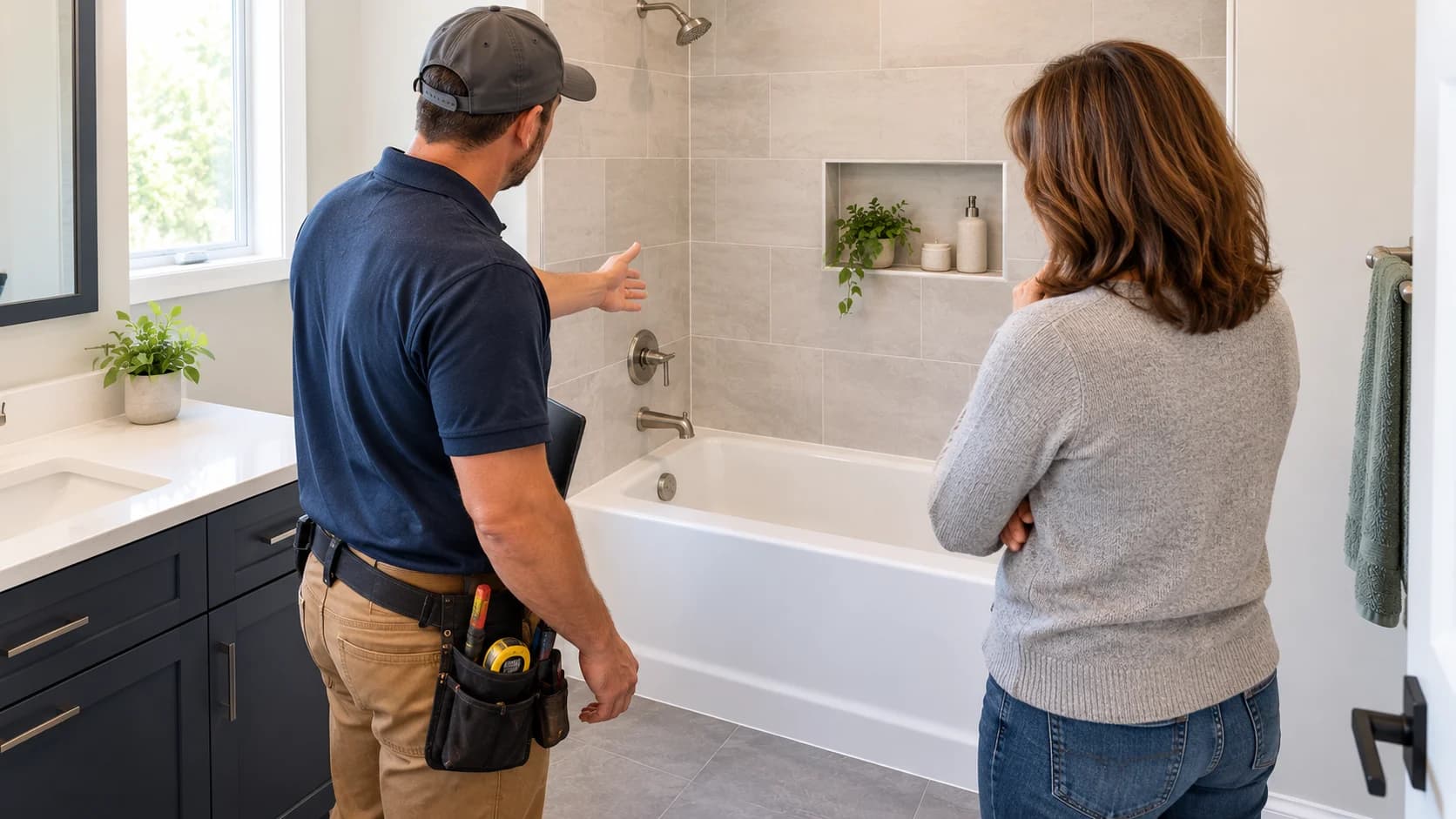
With a sense of the budget and the credits in hand, you are ready for the part that protects both: the questions to ask the person who comes to measure your bathroom.