This is the criterion where the common assumption is wrong. A mini-split is more efficient, so it is often assumed to be the lighter electrical load. For one small room it usually is not.
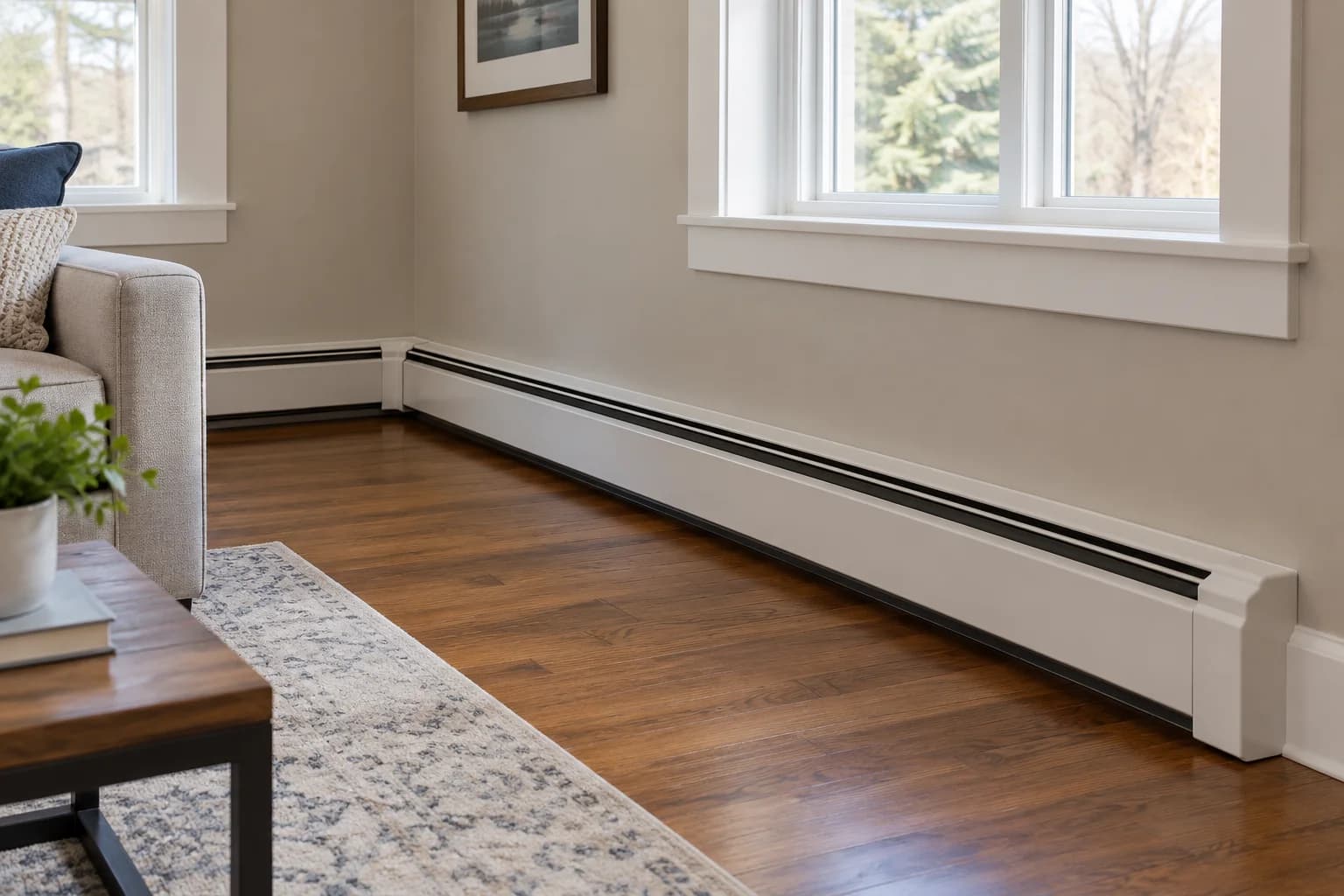
The baseboard circuit
A 1,500 W baseboard at 240 V draws 6.25 A. The Canadian Electrical Code's heating rules, as summarized in an industry road map to Section 62 of the 26th edition, shape the job in three ways. Heating circuit conductors must be used solely for heating. In a dwelling, two or more space heaters may share a branch circuit rated up to 30 A. And a line-voltage thermostat must be rated for the full current of the heaters it controls.
Electric heat is a continuous load, which limits how full a circuit can be. Where a breaker is marked for continuous operation at 80%, the load cannot exceed 80% of the circuit rating, as a Canadian column in IAEI Magazine explains. In practice a 15 A circuit carries 12 A and a 20 A circuit carries 16 A. At 240 V that is 2,880 W and 3,840 W.
The practical consequence: if the house already has a 240 V heating circuit with spare capacity, a new baseboard may be able to join it. If not, it needs a new two-pole breaker and a run of cable.
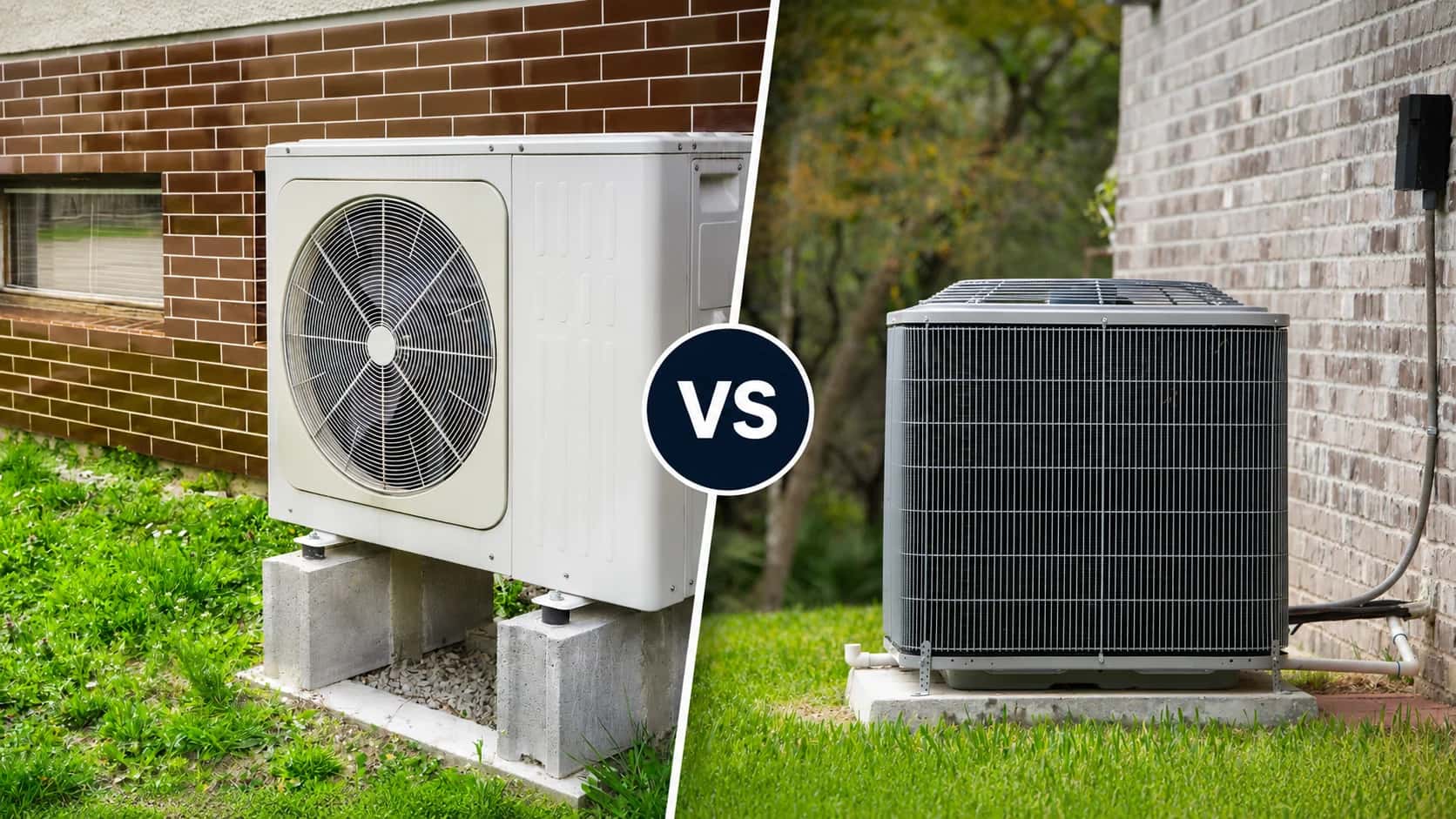
The mini-split circuit
A mini-split needs its own circuit. The example unit above lists a minimum circuit ampacity of 14 A and a 15 A maximum breaker, and the list record for the other shows about 2.16 kW of input at -15°C, roughly 9 A at 240 V. It also needs a disconnect switch outdoors, within sight of the unit and within 3 m of it.
Compare the two at the panel. The 1,500 W baseboard adds 6.25 A. The mini-split adds about 9 A at full output in the cold. The mini-split delivers far more heat for those amps, about 3.8 kW against 1.5 kW, but if the room only needs 1.5 kW, the extra capability is not what the panel calculation sees.
How each enters the service calculation
When an electrician checks whether your service can take a new load, electric space heating is counted at 100% of the first 10 kW and 75% of the balance, and air conditioning at 100%, as the City of Vancouver's load calculation worksheet for the 2024 Code lays out.
A heat pump is treated less generously than many expect. In Ontario, the Electrical Safety Authority's bulletin on demand factors states that the heat pump nameplate rating is taken at 100%, plus any supplemental electric heating loads. So a mini-split with a baseboard as backup is counted as both, unless the two are interlocked so they cannot run at the same time.
The amperage verdict, then, is conditional. Per unit of heat, the mini-split is far lighter: matching its 3.8 kW at -15°C with resistance heat would take about 16 A. But for a room that needs less than roughly 2 kW, the baseboard is the smaller addition to a tight panel. And in a cold city where the mini-split needs a baseboard behind it, the panel has to carry both.