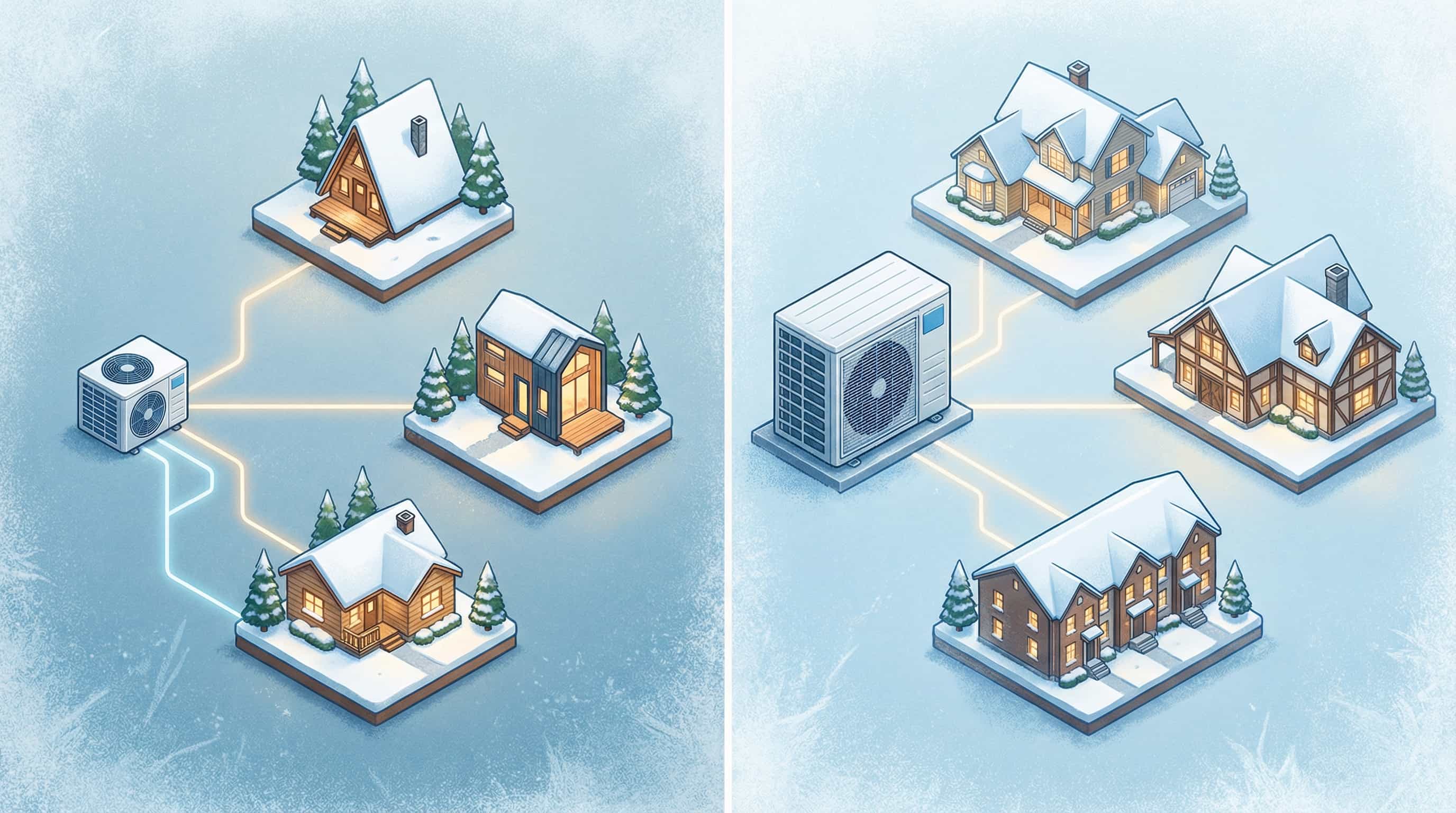
No. Defrost is an automatic winter function that melts frost off the outdoor coil. It can look dramatic, but short, self-ending cycles that clear ice are a sign the system is working normally.
A Homeowner’s Winter Guide to Understanding the “Whoosh,” the Steam, and the Real Red Flags

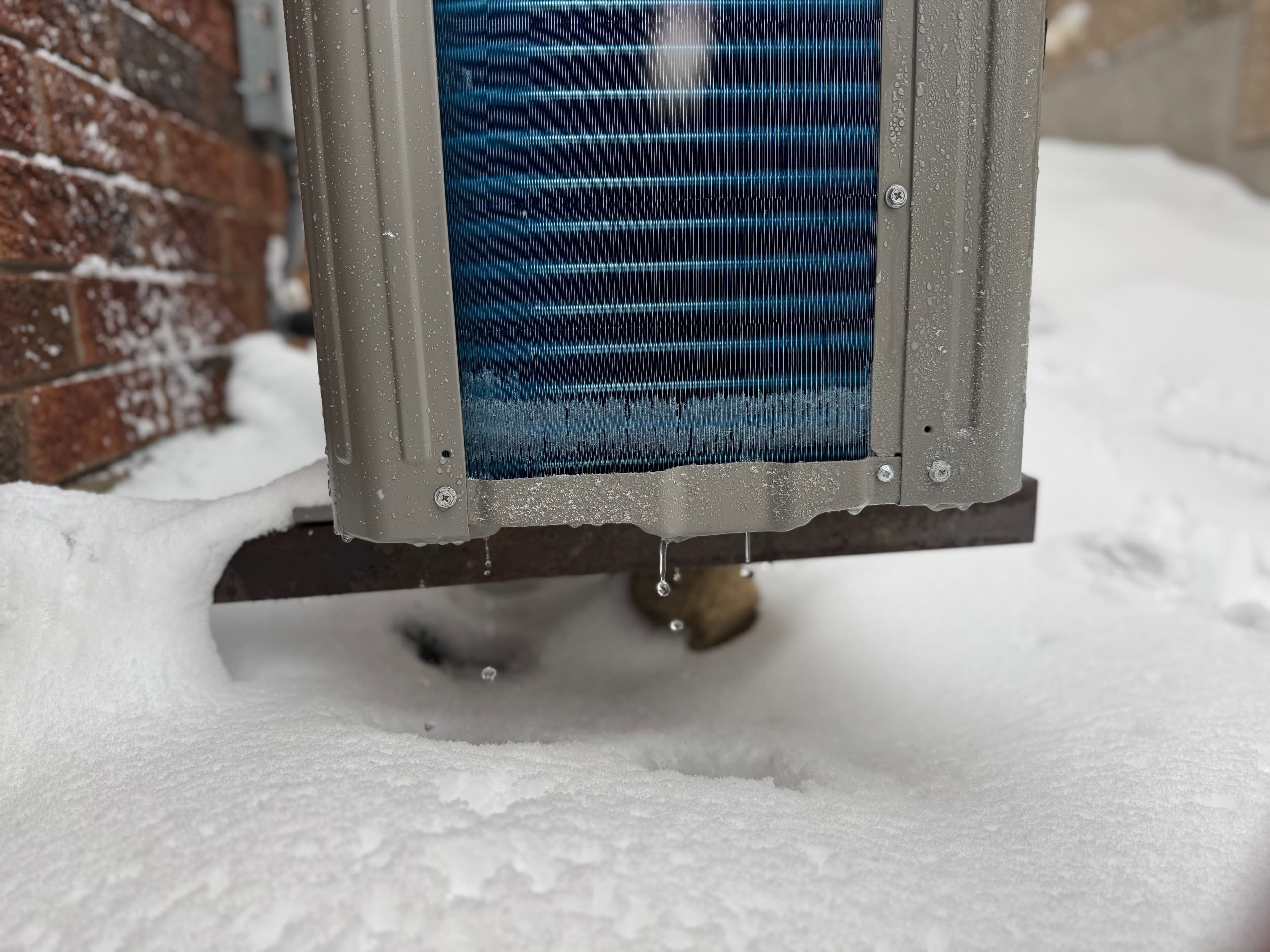
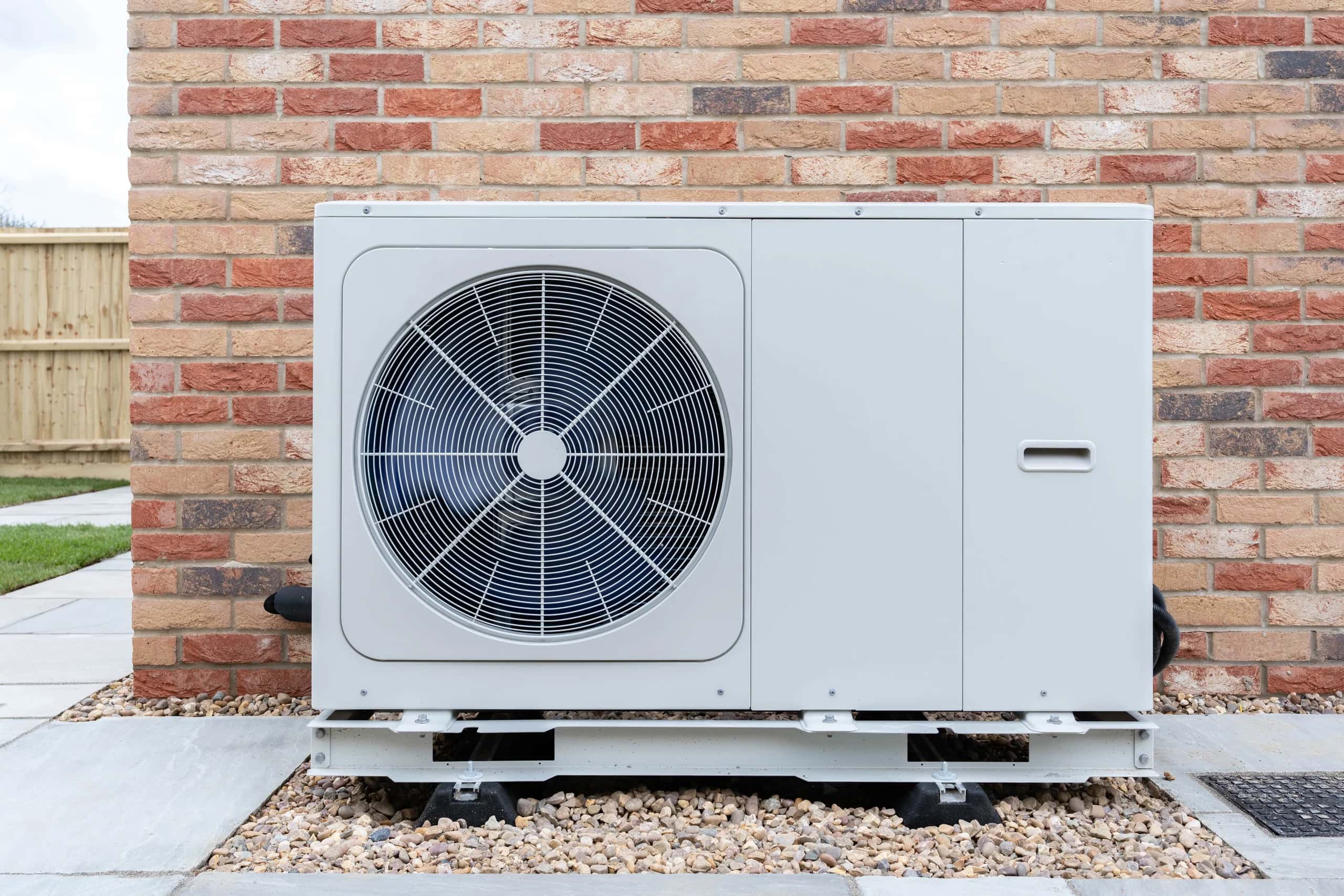
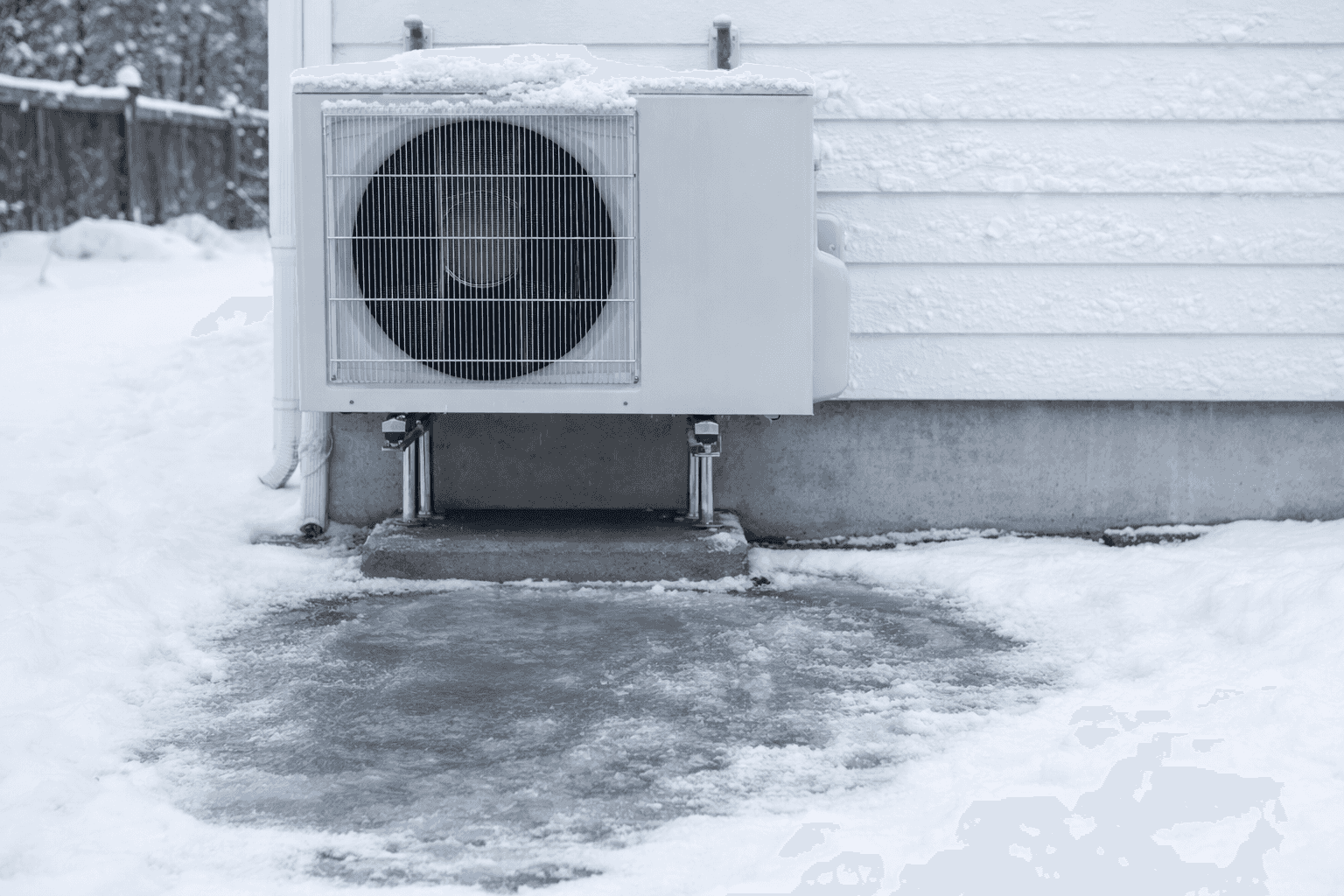
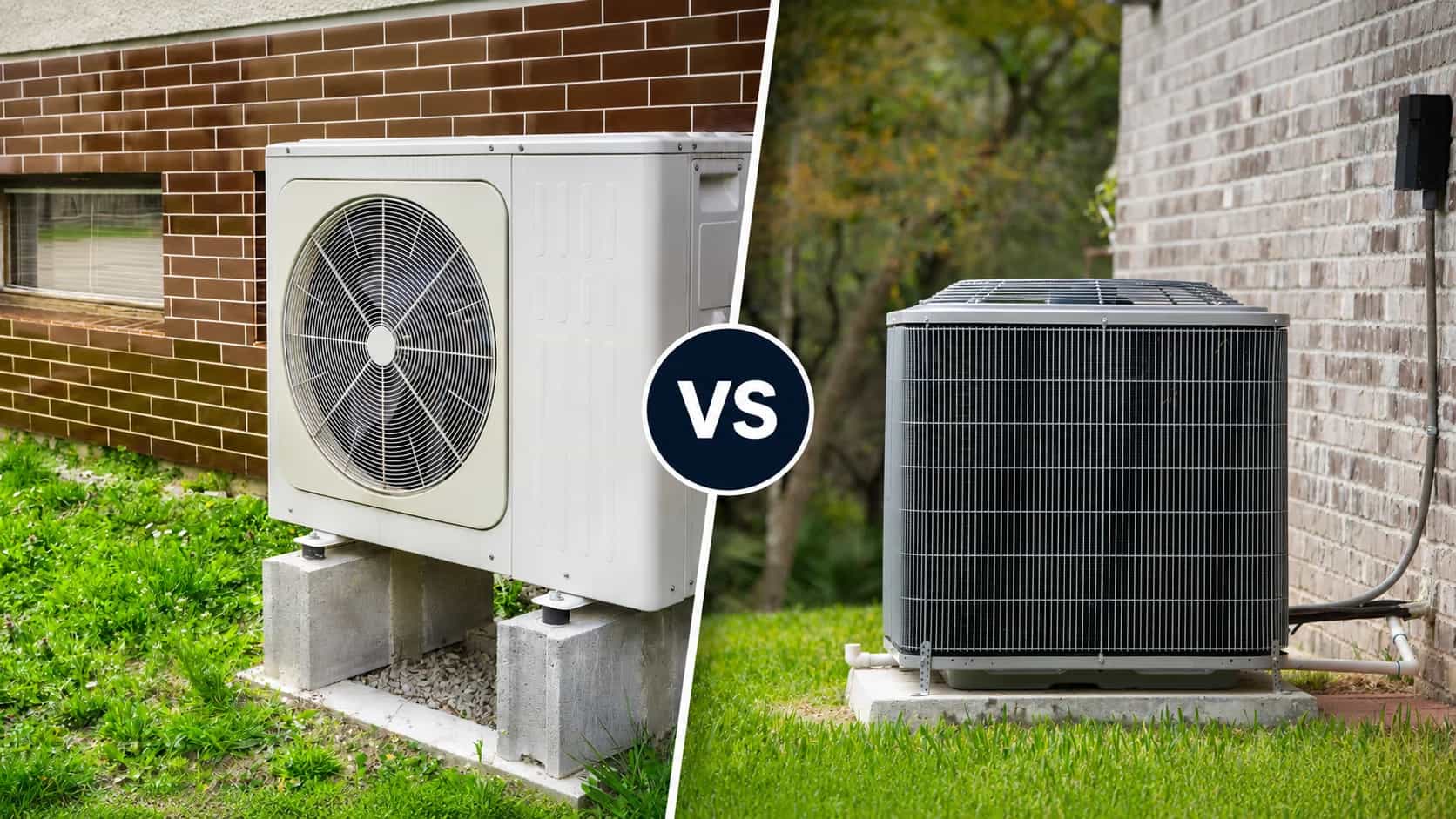
Outdoor heat pump hums amid ice and snow, where defrost timing separates normal efficiency from trouble. (Credit: Homeowner.ca)
If you’ve ever watched your outdoor heat pump on a cold day and thought, “Why is the fan off… and why is it steaming?” you’re not alone. Defrost cycles can look dramatic: a sudden whoosh, the outdoor fan stopping, a plume of mist, and sometimes a short period where indoor air feels less warm. For many homeowners, that’s the moment you start wondering whether the system is wasting power—or failing.
Here’s the key idea: defrost isn’t a bug. It’s a feature that keeps the outdoor coil from becoming a frosty, ice-insulated block. When frost coats the coil, the heat pump can’t absorb heat from outdoor air as effectively, and the system has to work harder to deliver the same comfort; in Lennox’s explanation of the defrost cycle guidance, that frost layer is specifically described as acting like insulation that reduces efficiency and strains the unit.
At the same time, defrost can become wasteful—or signal a real fault—when it’s happening too often, running too long, or failing to clear ice. That’s where homeowners get stuck: what’s “normal winter behaviour,” and what’s “call for service” behaviour?
This article gives you a practical framework that doesn’t require gauges, apps, or technical training. You’ll learn what defrost is, what normal looks like (with realistic ranges), what patterns suggest waste, and a step-by-step method to spot problems—especially in Canadian conditions where snow, wind, and freeze-thaw cycles can make or break performance.

A heat pump’s outdoor coil runs cold in heating mode because it’s pulling heat out of outdoor air. In humid winter conditions, that cold coil can collect frost, and frost buildup is a heat-transfer killer.
To deal with that, the system periodically runs a defrost cycle. In HVAC.com’s overview of defrost mode guidance, a defrost cycle is described as the heat pump temporarily reversing operation so hot refrigerant flows through the outdoor coil to melt frost or ice.
What that means in homeowner terms:
Defrost is most noticeable on damp, near-freezing days—exactly when frost forms easily. That can include temperatures above 0°C, which surprises a lot of people.
Homeowners tend to notice three things: how long defrost lasts, how often it happens, and what it looks/sounds like. Those are also the easiest signals to track.
Typical duration (how long it lasts). In Lennox’s homeowner guide to defrost cycles guidance, a normal defrost event is commonly described as lasting roughly 5–15 minutes. In real life, you’ll see variation based on equipment, coil size, and how much frost has accumulated.
Typical spacing (how often it happens). In HVAC.com’s explanation of winter defrost behaviour guidance, defrost cycles in winter are often described as occurring about 30–90 minutes apart, influenced by temperature, humidity, and system design.
Normal indoor signs. In many homes, a defrost cycle feels like:
Normal outdoor signs. You’ll often see and hear specific cues, and Solenery’s Canadian-focused defrost cycle guide guidance highlights a few that matter for homeowners: the outdoor fan may stop, you may hear a noticeable whoosh as the system shifts modes, and you may see steam or mist rising as ice melts—this is normal and not smoke.
“Normal” doesn’t mean “invisible.” A good defrost cycle can look intense outdoors and still be working exactly as designed.
A common misconception is that defrost should only happen below 0°C. In reality, frost can form whenever the coil is cold enough—especially if humidity is high.
In Lennox’s discussion of defrost timing guidance, defrosting at temperatures around the mid-single digits Celsius (roughly the low‑40s Fahrenheit) is described as not unusual. That’s a big deal for places like coastal British Columbia, parts of the Maritimes, and shoulder-season conditions across southern Canada where “damp cold” is common.
Canadian climate also affects how frequently you should expect defrost. In Solenery’s Canada-specific benchmarks guidance, an example pattern is that around −5°C with high humidity, defrost every 45–60 minutes can be typical, while around −15°C with drier air, cycles may stretch to roughly 90 minutes or more.
What to take from that:
If you want a quick “is this plausible?” check, compare the day’s conditions to how frost forms on car windows: damp near-freezing weather usually creates more frost than deep, dry cold.
Some defrost is the cost of doing business in winter. The question is whether your system is defrosting because it needs to—or because it’s following a crude schedule.
Timer-based (time–temperature) defrost can be wasteful. In HVAC.com’s description of older defrost controls guidance, some heat pumps are set to “check” for defrost on fixed intervals (often 30, 60, 90, or 120 minutes). In certain designs, that can lead to defrost initiating even when the coil isn’t significantly frosted, which burns energy sending heat outdoors and may increase reliance on backup heat indoors.
Demand defrost reduces unnecessary cycles. Modern cold-climate systems often use sensors and logic to defrost only when frost is actually detected, and in NeutralX’s heat pump selection guide guidance, demand defrost is presented as a feature that can reduce defrost-related energy waste by roughly 15–25% in freezing, humid conditions common in areas like coastal B.C. and southern Ontario.
Clear “this is not normal” patterns. Homeowner-focused troubleshooting often boils down to frequency, duration, and outcome, and Today’s Homeowner’s defrost mode guide guidance flags problem behaviours like defrost running continuously, occurring every 10–20 minutes, or leaving the outdoor unit frozen solid—patterns that can also drive up energy costs.
Here’s a compact set of benchmarks you can keep on your fridge.
The most dangerous “waste” isn’t a single extra defrost cycle—it’s a pattern that leaves the unit ice-bound. That can stress components and can eventually lead to no-heat events when you need the system most.
You don’t need tools to learn a lot about defrost. You need a short observation window and a place to write notes.
Choose a “good test day.” Pick a day that matches the conditions where you’re worried: damp cold, snowfall, or near-freezing temperatures.
Run a quick observation cycle.
What matters most is whether the defrost cycle accomplishes its job. In HeatPumps.ca’s winter troubleshooting guidance guidance, light frost can be normal, but thick ice or patterns of persistent buildup that don’t clear point to a problem that should be investigated.
Track patterns, not one-offs. One longer defrost on a wet day isn’t automatically bad. A repeating pattern (especially frequent, long, or ineffective defrost) is what you act on.
If you want to be systematic without getting technical, write down just three numbers: start time, end time, and minutes since the last defrost. After a day or two, the pattern becomes obvious.
In Canada, defrost performance is often limited by the environment around the outdoor unit, not the refrigeration circuit itself. Snow management and drainage are the two big levers.
Keep the unit clear of snow and drifting. In New Brunswick Power’s heat pump maintenance guidance guidance, homeowners are advised to keep the outdoor unit clear of snow and to check after each snowfall, because snow buildup can starve the unit of air—leading to freezing issues and even fan motor failure.
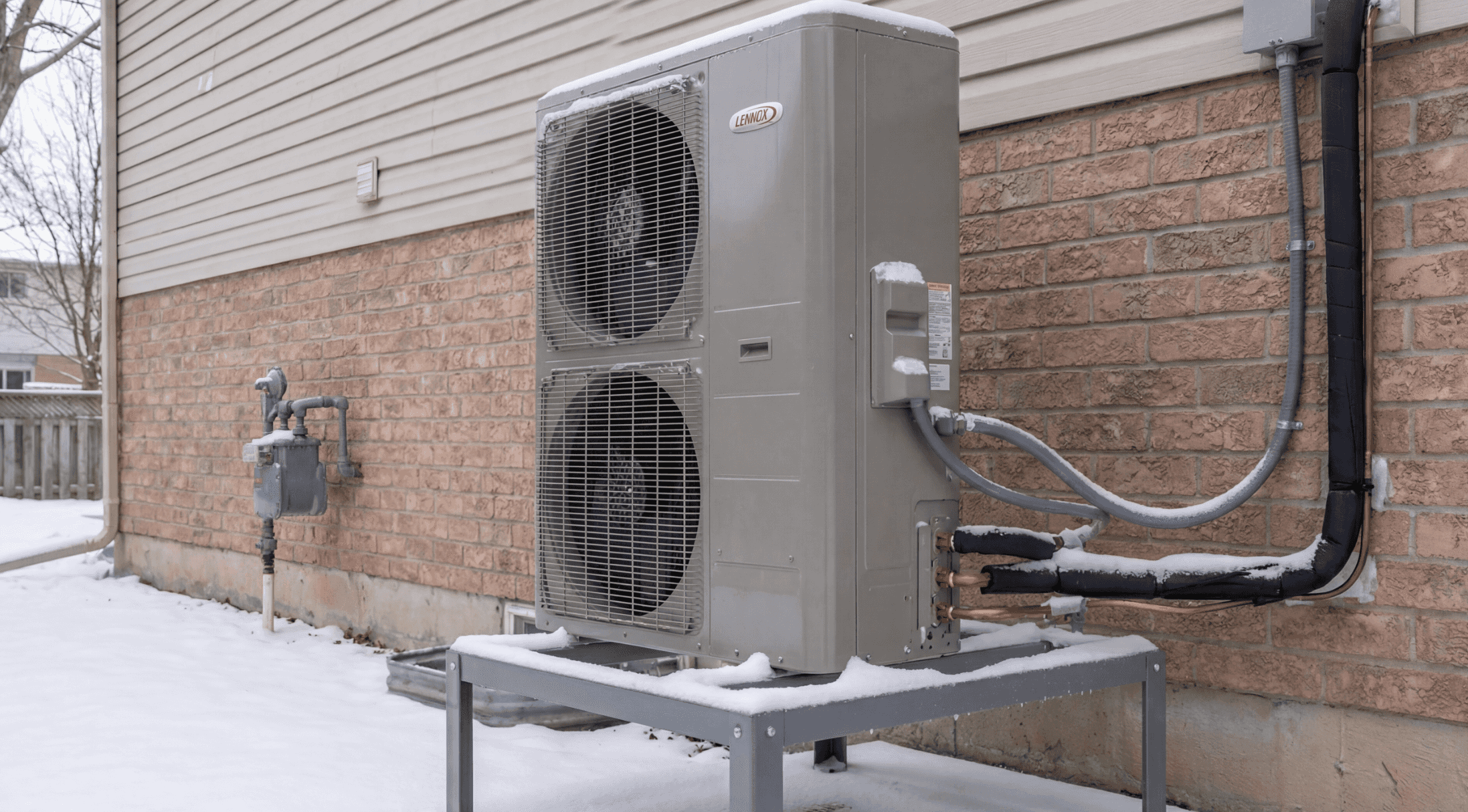
Raise the unit so snow and meltwater don’t trap it. Installers in snowy climates focus on elevation and drainage for a reason. In AirGreen’s Quebec winter protection advice guidance, placing a central heat pump outdoor unit on a solid raised base (often 30–40 cm off the ground) is recommended to prevent snow accumulation and to ensure proper drainage during defrost, and a shelter can help as long as it’s not fully enclosed.
Use “snow height” as your planning reference. A practical national guideline is to size elevation to your yard’s reality rather than a generic minimum, and in NeutralX’s outdoor unit placement guidance recommendations, elevating the unit about 18–24 inches above expected snow accumulation is suggested, along with maintaining clearance for airflow and making sure defrost meltwater can drain away.
A simple homeowner checklist that matches those principles:
A “cute little fence” or tight enclosure can backfire. The goal is wind and snow shielding without choking off airflow.
If defrost seems excessive, the most helpful approach is to separate symptoms from causes and start with the causes you can actually influence.
In HeatPumps.ca’s overview of frequent defrost causes guidance, common culprits include malfunctioning defrost sensors, a faulty or sticking reversing valve, poor drainage that allows meltwater to refreeze at the base, restricted airflow from snow/debris, and a dirty outdoor coil.
Here’s how to translate that into homeowner action without crossing into risky DIY:
Homeowner-safe checks (you can do these):
Pro-level checks (don’t DIY these):
Frequent defrost can be a symptom of a real mechanical issue, but it’s also a symptom of a simple airflow problem. Always rule out snow and blockage first because it’s fast, free, and common.
A heat pump covered in thick ice isn’t just inefficient—it can stop heating entirely. The safest homeowner response is to avoid sharp tools and avoid forcing anything.
In New Brunswick Power’s “heat pump and ice” guidance advice, homeowners are told to shut off power and melt excessive ice gently with hot water, explicitly avoiding picking at ice with tools because that can damage the coil, and to call a technician if the unit still can’t produce heat in mild temperatures after restoring power.
A safe version of that approach:
Never chip ice off with a screwdriver, hammer, or shovel. Outdoor coils are thin, delicate, and expensive to repair.
Homeowners sometimes assume a heat pump is a shoulder-season appliance. In much of Canada, that’s no longer true—especially with cold-climate models.
In Natural Resources Canada’s heat pump basics guidance, cold-climate air-source heat pumps are described as being adapted for Canadian conditions and able to operate well below freezing, down to around −30°C.
That lines up with practical regional advice. In Hydro‑Québec’s heat pump tips guidance, high-efficiency models are discussed as remaining very efficient down to about −25°C or −30°C, and southern/central Québec are described as typically experiencing fewer than 15 days below −20°C each winter—meaning the heat pump can cover most of the heating season, with backup heat reserved for the harshest stretches.
Why this matters for defrost:
If you’re shopping or planning an upgrade, ask specifically about cold-climate rating and demand defrost—those two features heavily influence winter comfort and operating cost.
A lot of “defrost anxiety” is really a comfort-control issue. The heat pump is doing what it should, but the thermostat strategy makes it feel worse.
In Nova Scotia Power’s homeowner Q&A on heat pumps guidance, homeowners are encouraged to run heat pumps at a steady, comfortable indoor temperature—often around 18–21°C—because frequent thermostat adjustments can make the system work harder, and it’s also noted that winter covers aren’t strictly required as long as any cover used is designed to prevent snow/ice buildup while still allowing adequate airflow.
Practical takeaways that help specifically during defrost:
Many winter performance complaints disappear when the outdoor unit has clear airflow, a good drainage path, and the thermostat isn’t being bumped up and down all day.
If you only remember one section, make it this one. You’re trying to answer three questions:
A Canada-specific set of homeowner thresholds can help you choose your next step. In Solenery’s guidance on when to call a technician recommendations, red flags include the unit staying in defrost for 20 minutes or more, ice that doesn’t melt between cycles, or defrost cycles recurring every 20–30 minutes.
Use this simple rubric:
Green light (observe, no action):
Yellow light (reduce waste and re-check):
Red light (call for service):
If you suspect electrical issues (burning smell, tripped breakers, unusual noises beyond the normal whoosh), turn the system off and contact a professional rather than “testing” it further.
No. Defrost is an automatic winter function that melts frost off the outdoor coil. It can look dramatic, but short, self-ending cycles that clear ice are a sign the system is working normally.
Many residential systems complete a defrost cycle in well under 20 minutes. If you’re regularly seeing very long cycles or it seems stuck in defrost, treat that as a service signal.
Expect the interval to change with weather. Damp, near-freezing conditions can trigger more frequent defrost than dry, colder air. What matters most is that the unit returns to heating and clears ice effectively.
Yes. Many systems stop the outdoor fan during defrost while they send heat to the outdoor coil to melt ice.
It’s usually steam or mist from melting frost/ice, especially when the air is cold. If you ever smell burning or see signs of electrical trouble, shut the system off and call a professional.
During defrost, the system temporarily prioritizes melting ice outdoors. Depending on your setup, indoor heat output may dip briefly and backup heat may take over to maintain comfort.
Yes. Frost can form on the outdoor coil even when outdoor air is above freezing, particularly when humidity is high.
It often shows up as defrost that happens too frequently, runs too long, or seems to run on a timer regardless of visible frost—especially if it drives heavy backup heat use.
It’s usually not required. If you use a cover, it must prevent snow/ice buildup without blocking airflow. Fully wrapping or enclosing the unit can create airflow problems and worse icing.
Check the outdoor unit for drifting and clear snow away from all sides so the heat pump can breathe. Snow blockage is one of the fastest ways to trigger frequent defrost and heavy icing.
Defrost produces meltwater. If that water can’t drain away, it refreezes and can build an ice dam that interferes with airflow and encourages repeated icing.
If the unit is frozen solid, defrost runs unusually long, cycles happen very frequently, or ice doesn’t clear between cycles, it’s time to call—those patterns often point to sensors, controls, drainage, or mechanical issues that need professional diagnostics.