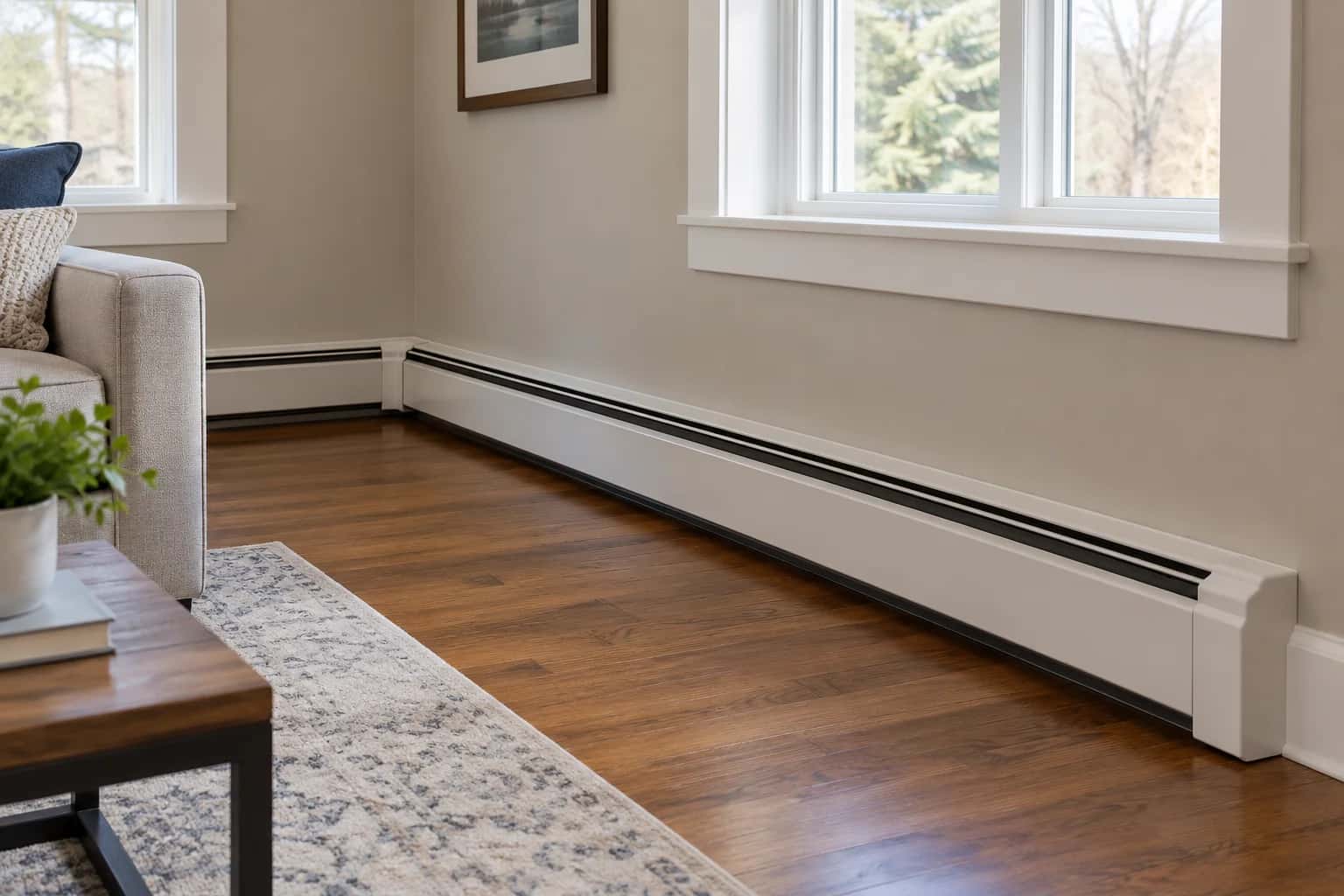
The furnace problem
Here is the fact that reshapes the comparison: a gas furnace or boiler does not heat your home during a power outage. The burner may be fuelled by gas, but the igniter, controls, inducer fan and blower all run on electricity. No power means no heat, whatever the fuel.
That matters because a furnace is usually hard-wired. A portable generator on extension cords cannot reach it, so cords-only setups protect food and charge phones, but they do not keep the house warm. Getting heat from a portable means a transfer switch, which means an electrician.
Heat pumps raise the stakes further. Electric heating loads, including heat pumps with electric backup strips, draw far more power than a gas furnace blower, and a typical portable will not carry them. If your home relies on electric heat, read our guide to what to expect from a heat pump in a Canadian winter before sizing anything.
Critical loads come first
Start with a short list of what must stay on, not a wish list. For most Canadian homes in winter, that means heat (furnace or boiler controls and blower, or hydronic circulation pumps), water (a well pump, plus a sump pump if the basement takes on water in a thaw), the fridge and freezer, any medical device powered from the wall, and a few circuits for light, phone charging and internet.
Public Safety Canada advises households to make an outage plan for electrically powered medical devices and refrigerated medicines, and it notes that a full freezer keeps food frozen for 24 to 48 hours with the door closed. That window is useful. If your critical list is short and you can live with a cold house for a day, a smaller setup may be enough. If someone in the home depends on powered equipment or heat for health reasons, the tolerance for a failed start or an empty tank drops to zero.
Matching capacity to the list
A typical large portable delivers 7,500 to 8,000 running watts. That covers a gas furnace, the fridge, a freezer, a sump pump and lights through a 6- to 10-circuit transfer switch, as long as you manage what runs at once. A well pump's start-up surge can be the limiting factor, so ask your electrician to check it.
An air-cooled standby unit of 18 to 26 kW can cover most or all of an average home. It can also be configured to shed lower-priority loads automatically. Sizing a standby unit properly is its own exercise, built from essential loads, panel capacity and heating demand. That calculation belongs to your installer, not to a product page.