Once you know what causes the trips, setting up a display that stays lit through a wet evening becomes a fairly relaxed afternoon's work. Think of it as a walk around the yard with a few questions in mind, rather than a rigid procedure.
Before anything gets plugged in
Start with the outlet. Test the GFCI, check that the cover closes over a plugged-in cord, and note which outdoor receptacles you can use for the heavier props. Then lay out every light set and cord on a dry surface, read the labels, and set aside anything marked indoor-only, uncertified or damaged. Unwind cord reels completely before use, since ESA's factsheet on extension cords points out that cords left coiled on a spool can trap heat.
While you build the display
Plan your cord routes before you stake anything down, keeping cords out of walkways and away from the front steps where visitors will be walking in the dark. Group lights into short runs, put the fog machine on its own cord, lift every connection into an enclosure and off the ground, and give each one a drip loop. Use clips and ties instead of staples. If you are tempted to make some of this permanent, read up on how fixed outdoor lighting differs from seasonal sets.
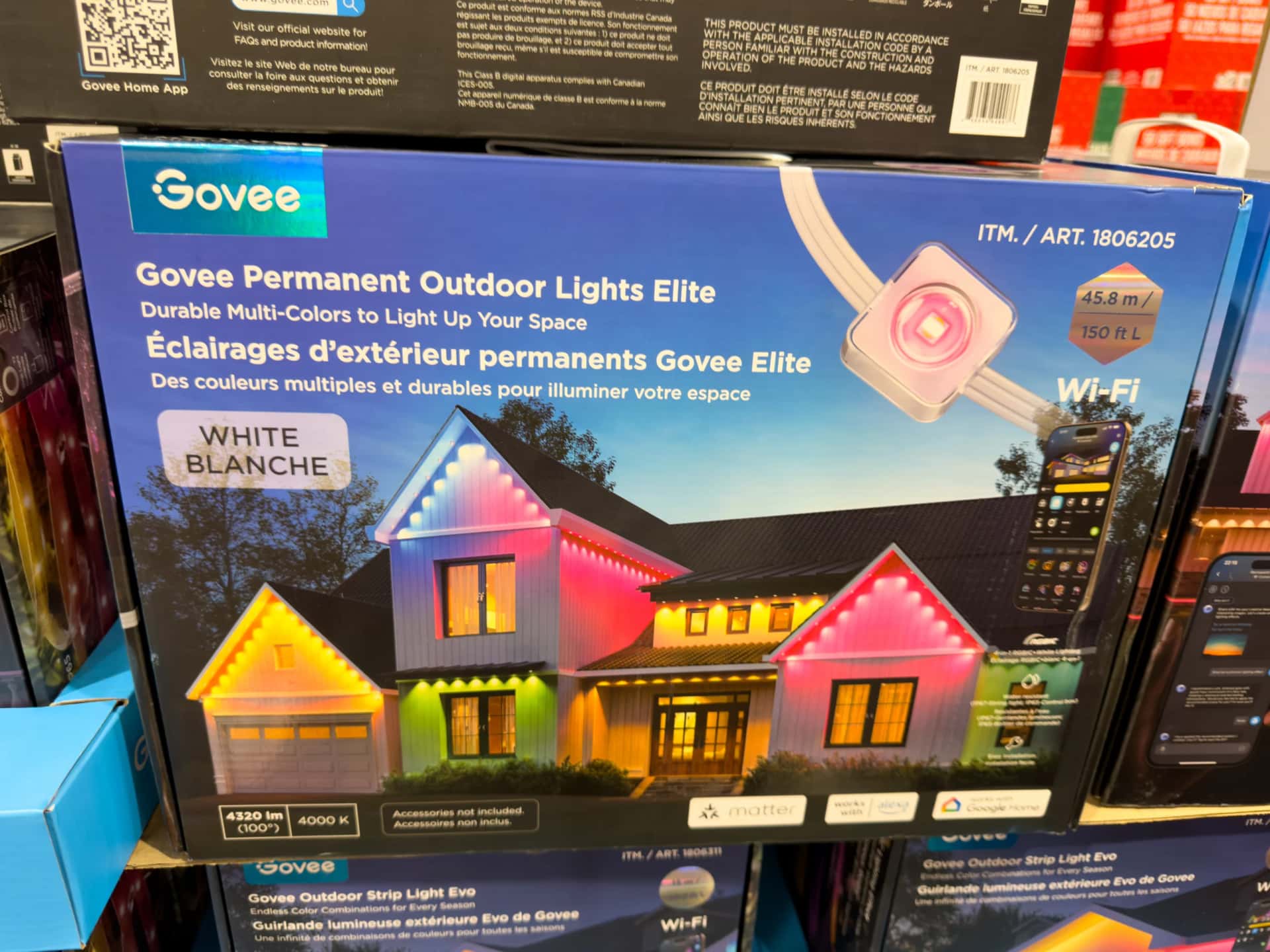
Our guide to permanent Christmas lights for Canadian homeowners covers how those systems are wired and certified differently from seasonal strings.
On the night, and after
Use an outdoor-rated timer so the display shuts itself off at a sensible hour, and turn everything off before bed or when you leave the house. If the GFCI trips, unplug everything, reset it, and plug the runs back in one at a time; the run that trips it again is the one hiding the wet connection or damaged set. After Halloween, dry everything thoroughly before storing it, and coil cords loosely so the jackets do not kink.