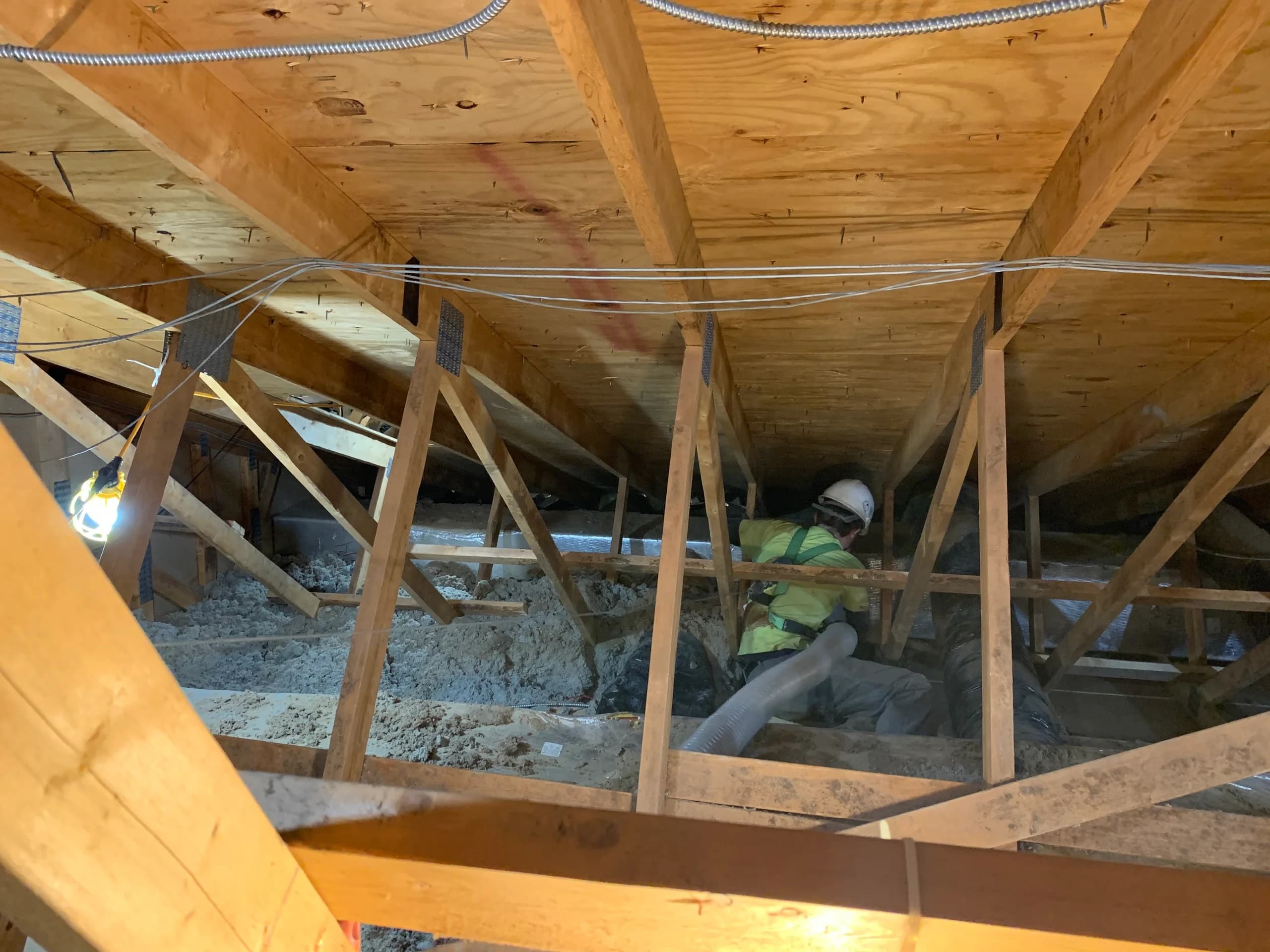
Sometimes the tell arrives late — a crew that has no baffles on the truck, an installer who cannot say how many bags are coming, insulation already running into the soffits at nine in the morning. What you do in the next hour matters more than what you conclude afterward.
Work through it in this order.
Step 1: Pause the work, on site, immediately. Ask the crew lead to stop and explain what you are seeing. Most genuine problems at this stage are supervision failures rather than fraud, and a crew that has already blown half an attic cannot undo it. Time is the only thing on your side.
Step 2: Photograph the condition before anything changes. Get the eaves, the rafter bays, the depth at three or four separate points, the bags stacked on the driveway, and the label on a bag. Timestamped photos taken during the work are the difference between a documented dispute and a disagreement about memory.
Step 3: Put the concern in writing the same day. One short email to the company owner naming the specific contract term at issue — baffles, bag count, air sealing, settled depth — and asking for a written response. Do not argue the remedy yet. Establish the record.
Step 4: Request a revised written scope before agreeing to any change. If the fix requires different work or different materials, that is a change to the contract, and it should be signed as one. This is also where an estimate-overrun cap protects you, because a change you did not agree to in writing cannot legitimately expand the price.
Step 5: Hold payment against the outstanding items, not the whole invoice. Pay for the work that was completed correctly. Withhold an amount proportionate to what remains unresolved, and say so in writing. Ontario's Construction Act establishes a statutory holdback of 10 per cent on contracts under which a lien may arise, and every province and territory has comparable lien legislation with its own percentages and release timing — so confirm the rule where you live before the final invoice arrives rather than after. Refusing to pay anything invites escalation; paying in full ends your leverage completely.
Step 6: Decide on the walk-away criteria you set in advance. Reasonable people disagree about depth and finish quality. They do not disagree about disturbing suspected asbestos, burying live knob and tube, or covering pot lights that are not rated for it. If a safety condition is being ignored after you have raised it in writing, the job is over, and the remaining question is a documentation question rather than a negotiation.
Verification, once the crew is gone, is the same three numbers you started with. Count the empty bags against the agreed number. Check the settled depth at several points across the attic rather than at the hatch, because federal guidance specifies the agreed minimum depth throughout the attic — not at the one place that is easy to reach. Compare the dated before-and-after photos. If those three things reconcile, the job is what you bought.