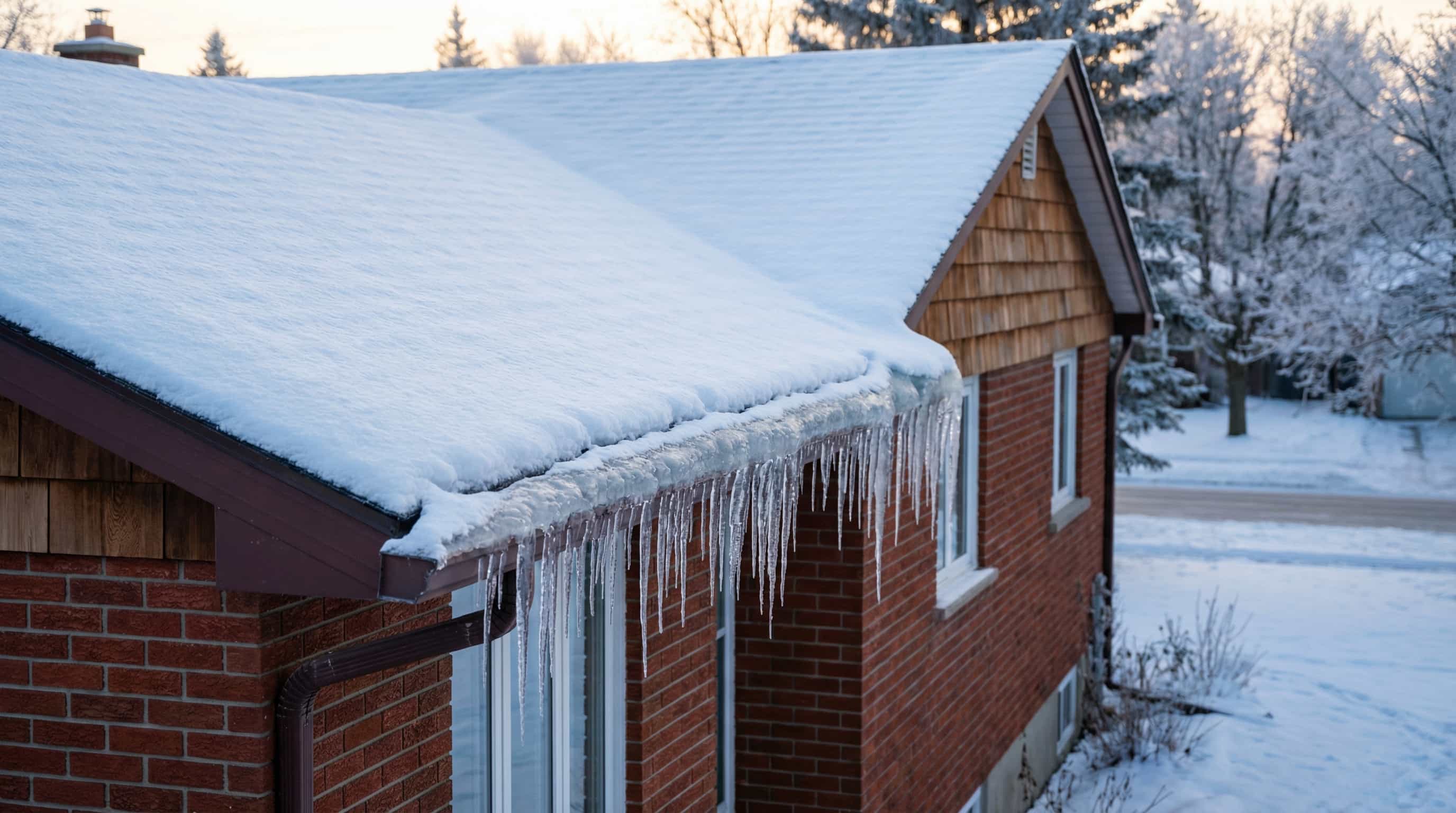
In winter, attic ventilation mainly helps keep the roof deck uniformly cold and provides a drying pathway for small amounts of moisture that reach the attic. It’s not meant to “heat” the attic or make it comfortable—cold and dry is the goal state.
Keep Your Roof Colder, Your Attic Drier, And Your Winter Repairs Boring

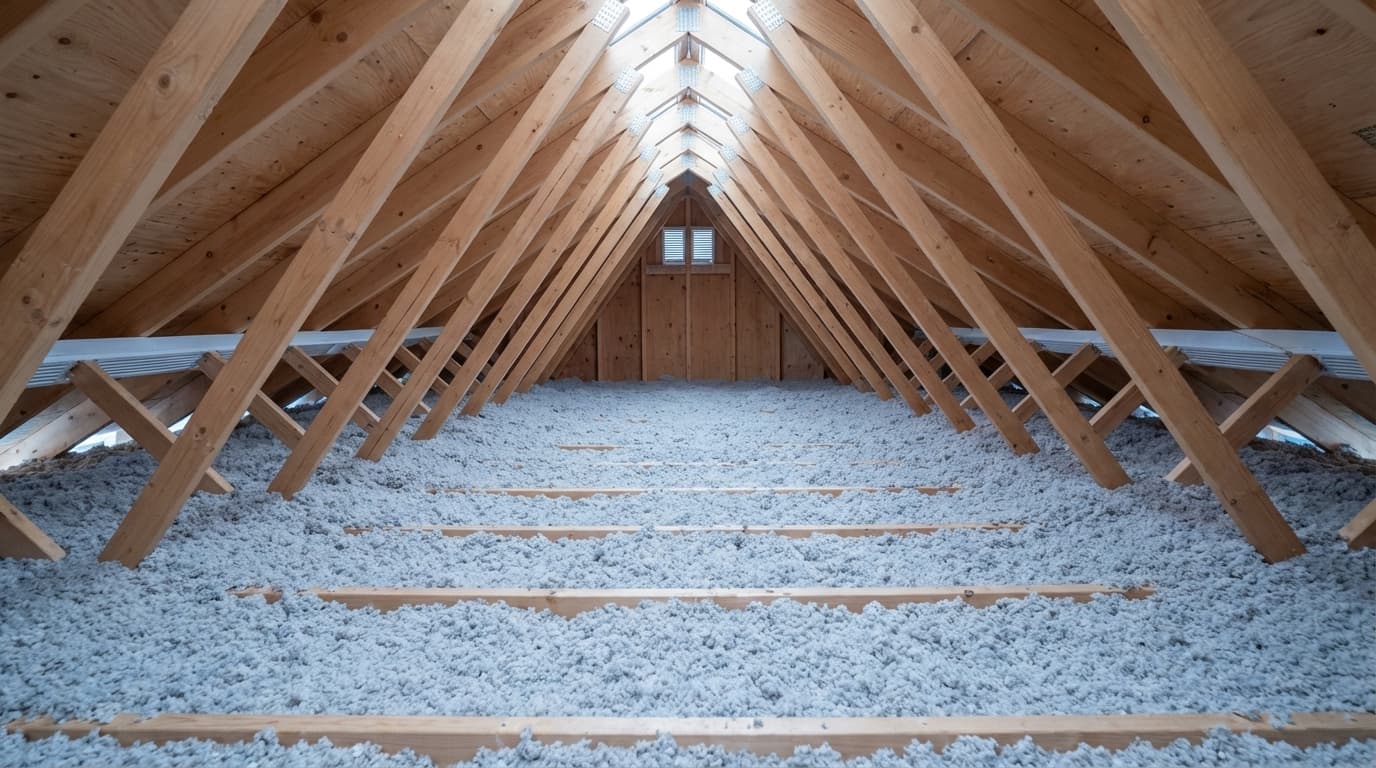
Bright, tidy attic hides the real win: sealed leaks and dry airflow that stop ice dams. (Credit: Homeowner.ca)
If you own a home in a cold Canadian climate, your attic is quietly doing year-round work. In summer, it’s a heat buffer. In winter, it becomes a boundary layer between a warm, humid interior and a roof deck that’s often below freezing. When that boundary layer is poorly managed, you get the classic cold-climate problems: ice dams, attic frost, damp insulation, and that slow-creeping “why does the upstairs feel drafty and expensive to heat?” feeling.
Attic ventilation is often talked about like a single feature—“Do I have enough vents?”—but that framing misses what actually matters. In winter, the performance goal is simple: keep heat and moisture from the house out of the attic, and keep the roof deck uniformly cold so snow doesn’t melt unevenly and refreeze at the eaves. Ventilation helps with the second part, and it helps manage residual moisture, but it’s not a substitute for the first part.
This guide is written for homeowners who want practical, cold-climate-specific guidance. You’ll learn what attic ventilation actually does in winter, how ice dams form, how insulation and ventilation must work together (without blocking airflow), and how to assess and improve your setup using a step-by-step approach.
You do not need to be a building scientist to get this right. But you do need a system mindset: diagnose first, fix in the right order, and focus on the few details that drive most outcomes.

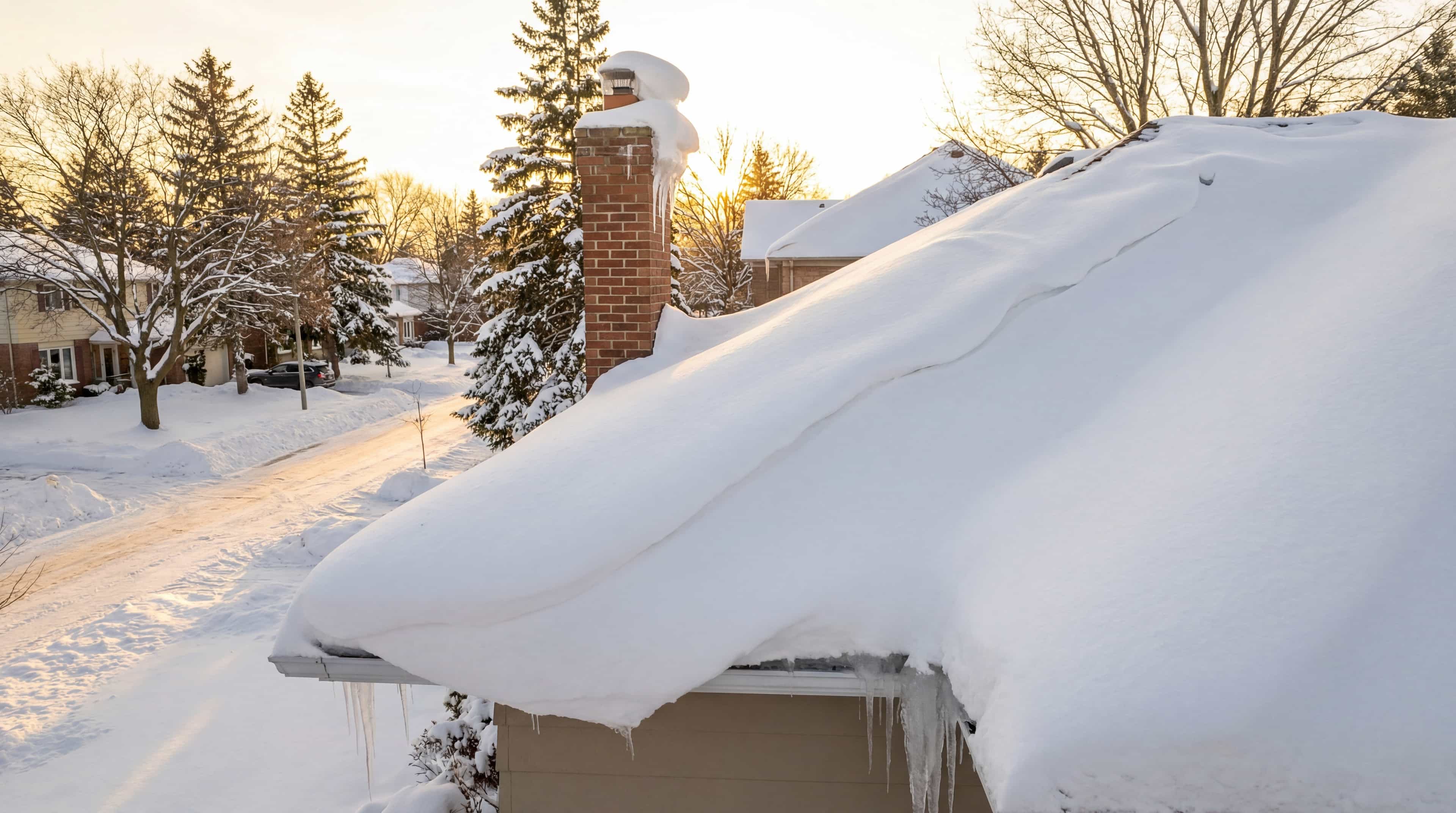
Ice dams are not a roofing “mystery.” They’re a heat-loss and roof-temperature-uniformity problem that shows up on your shingles. Guidance from the Building America Solution Center explains that in cold, snowy climates, roof assemblies should be designed around a three-part strategy—air sealing, sufficient insulation, and ventilation—because the most common trigger is heat escaping into the attic and warming the roof deck unevenly.
Here’s the storyline:
When you see thick icicles, you’re often seeing a symptom, not the core cause. The core cause is almost always the roof being too warm in specific locations.
Use this table to translate what you see into what to check first. You’ll notice the theme: most symptoms point back to heat and moisture getting where they shouldn’t.
If you have active water staining or dripping, treat it as urgent: stop water entry first (temporary control if needed), then do the root-cause attic work once conditions are safe.
The most reliable way to think about attic ventilation is as the third lever, not the first. In Canada, Natural Resources Canada’s Keeping The Heat In guidance emphasizes that preventing ice damming starts with sealing attic air leaks and insulating thoroughly so the attic and roof stay cold in winter.
That “keep it cold” line is the key mental model: the attic is not meant to be semi-conditioned space. Your job is to keep conditioned air (warm, moisture-laden) inside the living envelope.
If you’re choosing where to spend effort: air sealing is usually the highest-leverage work because it reduces both heat loss and moisture transport.
In winter, moisture moves into attics primarily by air movement (warm air carrying water vapour), not by vapour diffusion through drywall. That’s why small gaps around a plumbing stack, a recessed light, or an attic hatch can create outsized issues. Once moist air hits cold sheathing, condensation or frost follows.
That’s also why “I have lots of insulation” is not a guarantee. If warm air is bypassing the insulation layer, the roof deck can still warm, and moisture can still reach cold surfaces.
Attics can contain hazards: exposed electrical junctions, low-clearance framing with nails, and potentially hazardous legacy insulation. If you suspect vermiculite or other asbestos-containing materials, stop and consult qualified professionals before disturbing anything.
In cold climates, the best-performing vented attics behave like a controlled pathway:
The point is not to “dry out” a wet attic through brute-force airflow. The point is to maintain a cold roof deck and give any residual moisture a way out without turning the attic into a wind tunnel that undermines insulation.
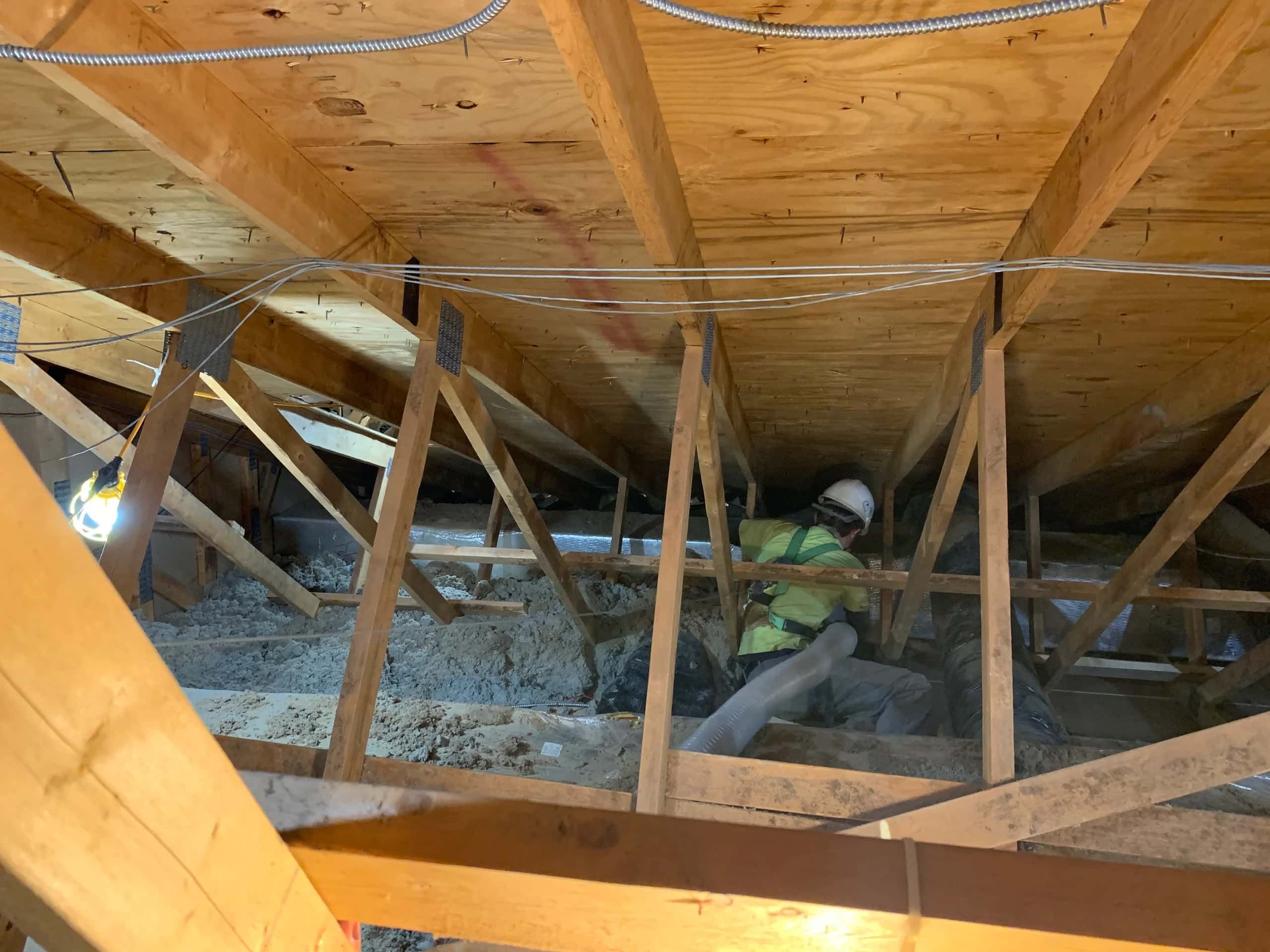
A practical detail that matters: you need a clear air channel above the insulation at the eaves. The Building America Solution Center describes using baffles to keep insulation out of soffit vents and to maintain an air gap—often about 50 mm (2 inches)—between the top of insulation and the underside of the roof deck so cooling air can move from soffits toward ridge vents.
Think less about “more vents” and more about “balanced, unblocked pathways.”
A high exhaust strategy without enough intake can pull conditioned air from the house into the attic through leaks. That can worsen moisture problems if air sealing is weak.
Many cold-climate attic issues come down to one detail at the eaves: insulation pushed right into the soffit area. When insulation blocks the intake, your ridge vent (or roof vents) can’t do the job you think they’re doing.
A homeowner-friendly way to picture it:
That’s why baffles (vent chutes) are not optional details in cold climates. They protect airflow, protect insulation effectiveness near the eaves, and protect the roof deck from warm spots.
If you only inspect one thing in your attic before winter, inspect the eaves for airflow. A continuous ridge vent is meaningless if soffit intake is choked off.
The best attic upgrades start with a clear diagnosis. You’re trying to answer three questions:
One simple diagnostic method described by Natural Resources Canada is to observe your roof after the first light snow or heavy frost and note where snow melts first, then check what’s directly beneath those warm patches—often knee walls, exhaust ducts, plumbing vents, skylights, or a leaky attic hatch.
That same guidance also highlights that complicated roof shapes—valleys, dormers, large overhangs—tend to be more prone to ice damming because they create more opportunities for thermal bridging and air leakage. In other words: the more “roof geometry,” the more your attic details matter.
You can do a lot with just a flashlight and patience, but a few tools help:
Photos are underrated. A 30-second snapshot of each problem area saves you hours later when you’re buying materials or explaining issues to a contractor.
Use this rubric to decide whether you need minor tuning or a more serious retrofit plan.
If you score “High Risk” on moisture evidence, prioritize fixes that stop moist air entry (air sealing + proper exhaust venting) before adding more insulation.
You don’t need to renovate your roof to improve winter performance. Most homeowners get strong results by working in phases.
High-impact targets:
This phase is about stopping the “warm humid air pipeline” into the attic.
High-impact targets:
This phase is about making ventilation do what it’s supposed to do.
High-impact targets:
This phase is about maintaining a cold roof deck by reducing heat flow.
If you’re hiring work out, ask contractors how they will protect soffit intake airflow while adding insulation. The answer tells you whether they understand cold-climate attic performance.
Most people don’t discover attic issues because they love crawling through blown insulation. They discover them because something visible happens: icicles, stains, mould smell, or a sudden “why is my ceiling dripping?” moment during a thaw.
A Saskatchewan winter reminder reported by Global News relays SGI Canada’s warning that poor attic ventilation can let warm air build up and lead to condensation, while also contributing to snow melt that refreezes at the eaves and forms ice dams.
What’s useful about that framing is that it connects the two major winter attic failure modes:
If you only “solve the ice” (for example, by raking snow off the roof) but ignore attic heat and moisture movement, you’re treating symptoms. The long-term fix is in the attic.
Snow removal can reduce short-term risk, but it doesn’t replace fixing the attic. If you’re repeatedly raking the same roof areas every winter, that’s a diagnostic clue.
Some attic work is DIY-friendly. Some is “DIY-able but risky.” And some is best handled by pros because it intersects with fire safety, roof integrity, or complex airflow paths.
Consider professional help if:
If a pro’s plan is “add more vents” without a clear air-sealing and soffit-intake plan, you’re likely paying for hardware, not outcomes.
In winter, attic ventilation mainly helps keep the roof deck uniformly cold and provides a drying pathway for small amounts of moisture that reach the attic. It’s not meant to “heat” the attic or make it comfortable—cold and dry is the goal state.
A cold attic is normal and usually desirable in cold climates. What matters is whether the living space is sealed and insulated so heat stays inside the conditioned envelope, while the attic remains outside that envelope.
Sometimes ventilation is part of the problem, but ice dams are most often triggered by heat escaping into the attic through air leaks and inadequate or uneven insulation. Venting helps, but it’s rarely the only fix.
Localized icicles often point to localized heat loss—an attic hatch, a bathroom fan duct run, a knee wall, or thin insulation over a specific room. Roof geometry and sun exposure can also create uneven melt patterns.
Air sealing blocks air movement (and the moisture carried in that air). Insulation slows heat flow. You typically need both: insulation without air sealing can still allow warm, moist air to bypass the insulation layer.
Adding insulation helps, but adding it over major air leaks can trap moisture problems and leave heat-loss pathways intact. It’s usually smarter to air seal first, then insulate, then confirm ventilation pathways remain open.
In the attic, look at the eaves where the roof meets the exterior wall line. If insulation is packed tight to the roof deck with no visible baffle channel, intake is likely blocked. You may also see “thin” insulation over top plates where airflow and space constraints collide.
Baffles (vent chutes) keep insulation from blocking soffit vents and maintain a clear air channel along the underside of the roof deck. In cold climates, they’re one of the most important “small details” for preventing ice and moisture issues.
Not automatically. A ridge vent needs adequate, unblocked intake (usually at soffits). A ridge vent without intake can underperform and may even encourage air to be pulled from the house through leaks.
Sometimes they help, but wind-driven gable venting can be unpredictable and may not create uniform airflow along the roof deck. Many cold-climate attics perform best with a consistent low-to-high pathway (soffit intake to high exhaust).
Frost usually means moist indoor air is reaching cold surfaces in the attic. It can melt during warm spells and wet insulation and wood. Treat it as a sign to improve air sealing and verify exhaust fans are venting outdoors properly.
Valleys, dormers, and overhangs create more transitions, corners, and framing interruptions. Those details increase the chance of thermal bridging and hidden air leakage paths, which makes roof temperatures less uniform.
It can happen, but consistent melt lines are useful diagnostic clues. They often line up with knee wall transitions, duct runs, or insulation gaps—places where attic performance is typically weaker.
Focus on safety first: avoid climbing onto icy roofs. Short-term measures like roof raking from the ground can reduce load and meltwater. Long-term prevention is an attic project: air sealing, insulation, and functional ventilation pathways.
Ventilation can help keep the roof deck cold and reduce ice-dam risk, but heating costs are usually driven by air leakage and insulation performance. If your attic is leaky or under-insulated, those upgrades typically deliver more comfort and savings.
Hire help when the work involves fire-safety clearances (chimneys/flues), complex roof assemblies, unsafe electrical conditions, persistent moisture/mould, or when access is limited (tight attics, half-storey knee-wall systems).
You’re looking for fewer warm roof patches after light snow, reduced icicle/ice-dam formation at known trouble spots, less attic frost, and more consistent indoor comfort—especially on windy, cold days.
It can if intake and exhaust aren’t balanced or if air sealing is poor. In some cases, more exhaust can increase the pressure difference that draws warm house air into the attic through leaks, raising moisture risk.