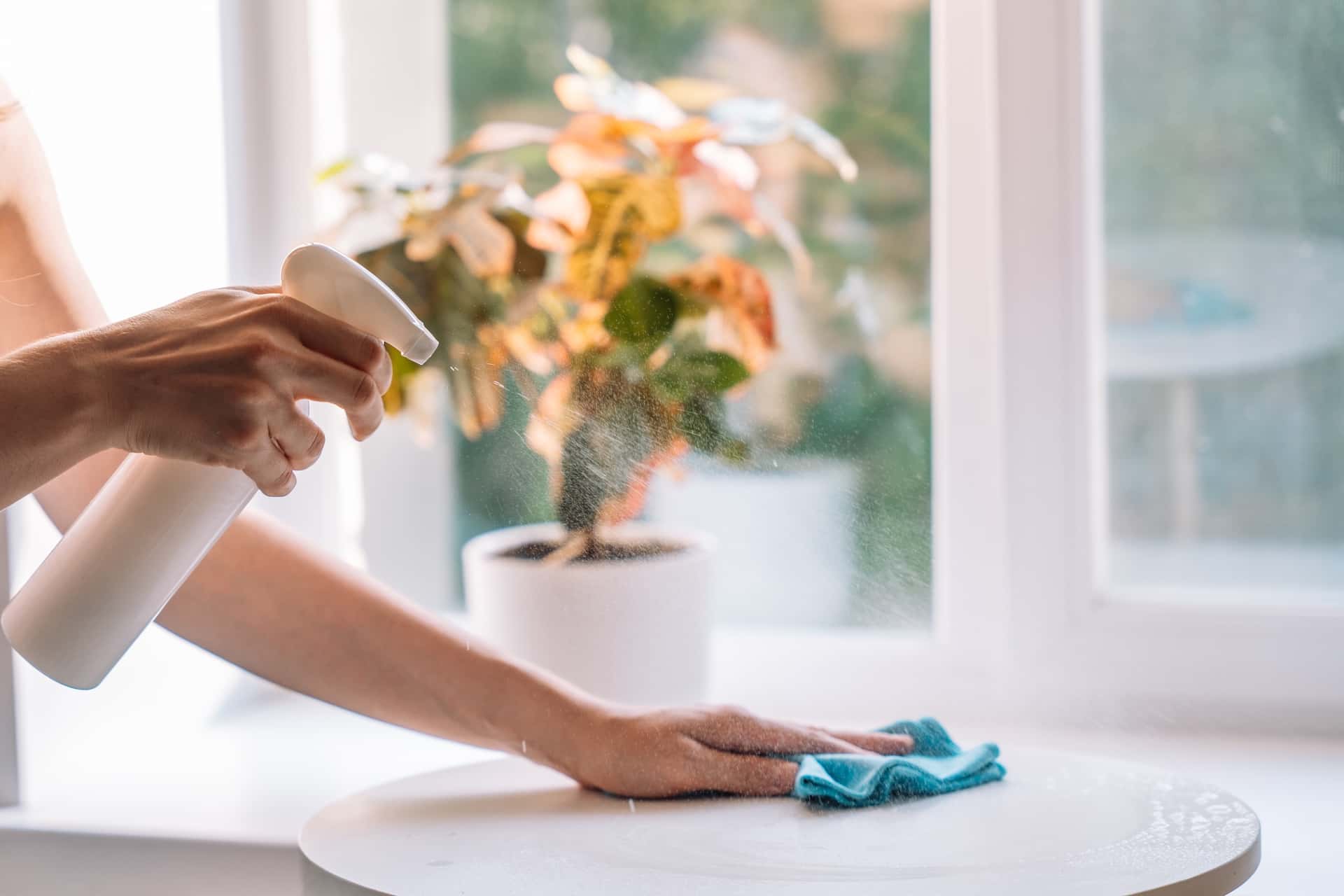
You probably already have a bottle of white vinegar sitting in your kitchen cupboard. Maybe you reach for it when a recipe calls for a splash, or maybe it just lives behind the olive oil, quietly gathering dust. But that unassuming jug — typically around $3 for a litre — can quietly replace a surprising number of the specialty sprays, pods, and powders crowding the shelf under your sink.
Standard Canadian household white vinegar contains roughly 5% acetic acid, a concentration that British Columbia's invasive species protocol references specifically for dissolving calcium carbonate deposits. That same gentle acid is what makes vinegar so effective against mineral scale, soap scum, grease film, and stubborn odours throughout your home.
If you live in a part of Canada with hard water — and many areas of Ontario and the Prairies qualify, where dissolved calcium and magnesium cause that familiar white crust on kettles and faucets — vinegar is especially useful. Health Canada's drinking water guidelines note that household pipes and utensils can develop scale buildup in hard-water areas, particularly when water is heated.
One important thing to say up front: vinegar is a cleaner, not a disinfectant. In Canada, products that claim to kill germs on surfaces require a Drug Identification Number, and vinegar does not carry one. Health Canada's biocides guidance makes that distinction clear. So think of vinegar as your everyday maintenance companion — brilliant for dissolving buildup, freshening surfaces, and cutting through film — and reach for a DIN-approved product when true disinfection is what you need.
Here are 25 ways that one bottle earns its keep.
Advertisement — Article Continues Below
Remove Winter Salt Stains from Boots and Entryway Tile
Canadian winters mean road salt, and road salt means white, crusty stains on leather boots, suede shoes, and entryway tile. Vinegar dissolves those salt deposits without damaging the material underneath.
For leather and suede boots, mix a 1:1 solution of white vinegar and water. Dip a soft cloth into the solution, wring it out so it is damp but not dripping, and gently wipe the salt-stained areas. Let the boots air dry away from direct heat, then apply a leather conditioner or waterproofing treatment to restore protection.
For entryway tile or stone (not natural stone like marble or limestone), wipe with the same 1:1 solution and a mop or cloth. The vinegar dissolves the salt residue that regular mopping often just pushes around.
This is one of those uniquely Canadian applications — if you have ever watched a pair of good boots slowly turn white over a single slushy commute, you know how satisfying it is to wipe that away with something you already have in the kitchen.
Advertisement — Article Continues Below