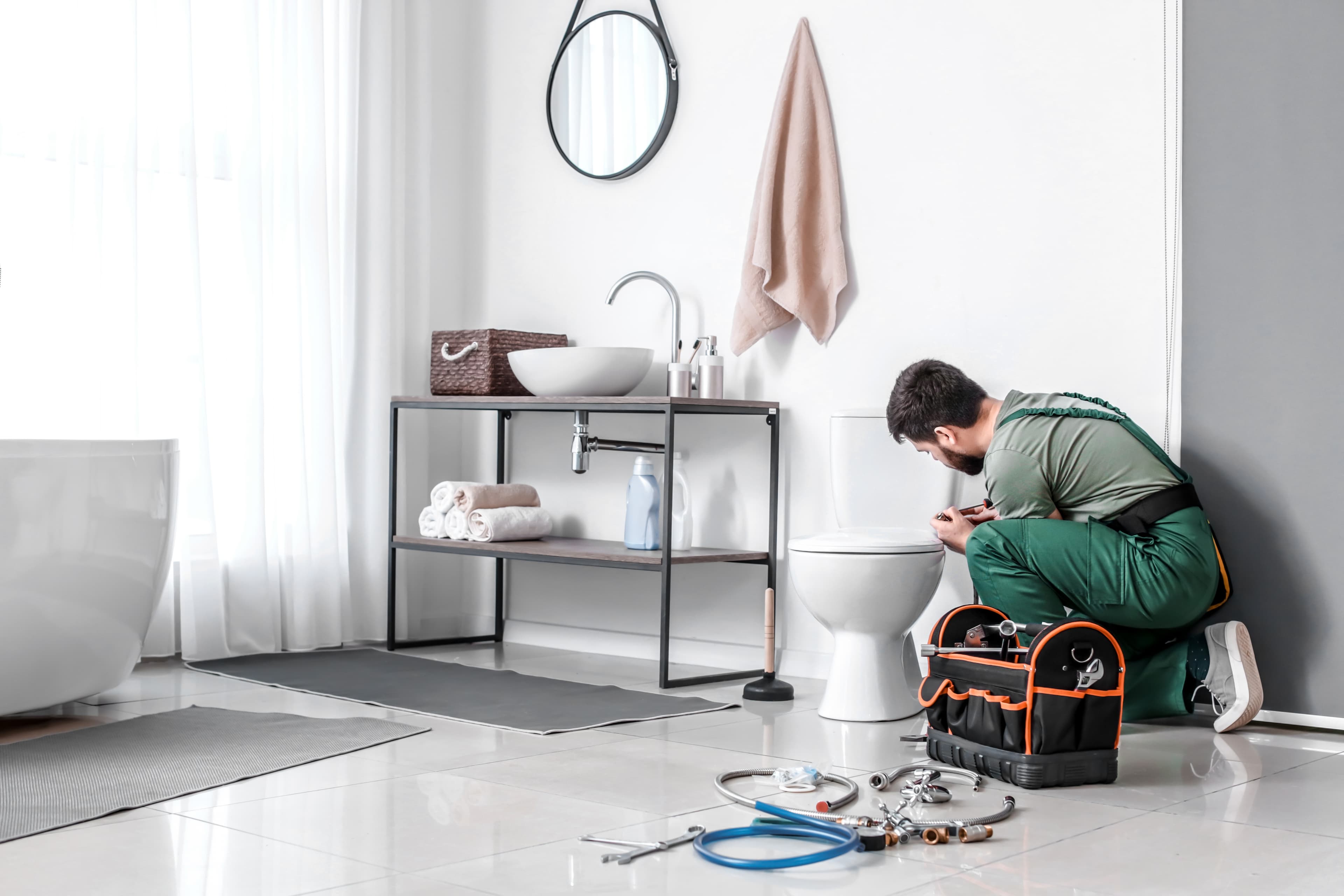
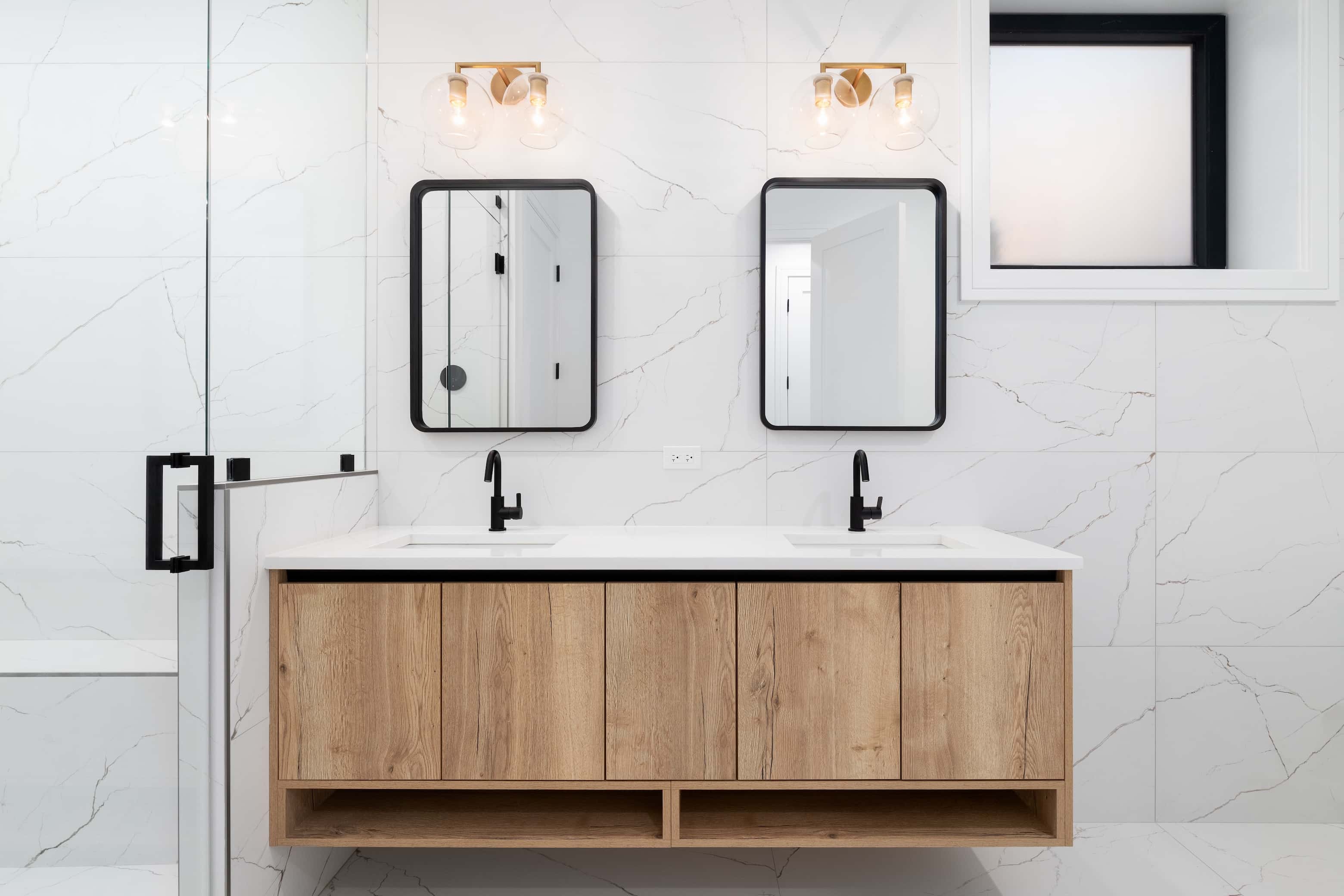
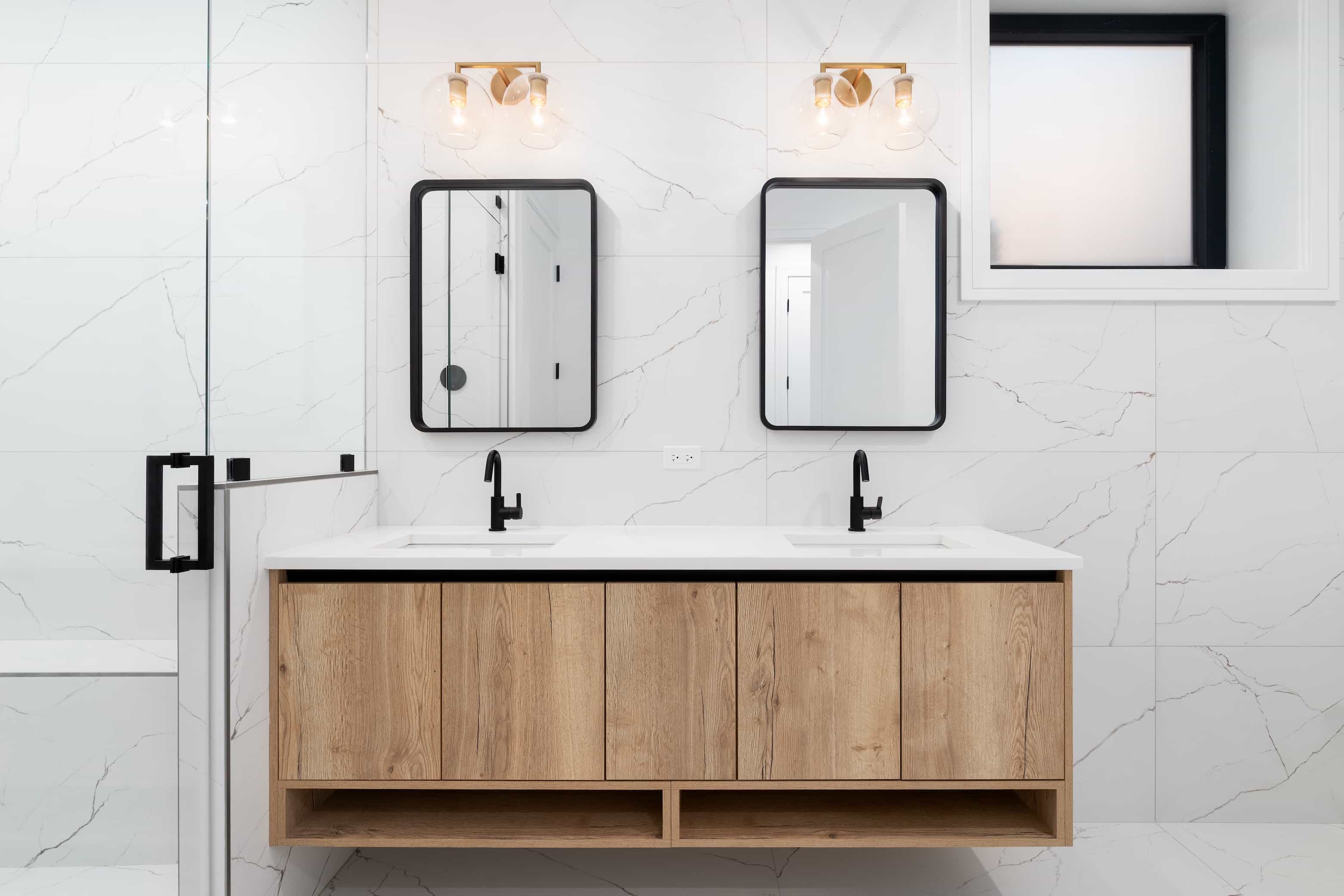
Small bathrooms don’t fail because they’re small. They fail because the “working zone” (where you stand, turn, dry off, bend down, and reach) gets eaten up by deep fixtures, swing-clearance conflicts, and storage that lives exactly where your feet need to go.
A good renovation plan starts with a simple principle: protect the movement path first, then add storage around it. That flips the usual approach (pick a vanity, then “make it fit”) and it’s how you get a bathroom that feels calmer every single day—without expanding the footprint.
This list focuses on options that have measurable day-to-day payoffs: fewer items on the counter, fewer obstacles around your feet, less twisting and reaching, easier cleaning, and a layout that won’t feel “wrong” as needs change (kids, aging parents, injuries, resale timelines).
You’ll see a consistent “choose X when…” pattern throughout. That’s intentional. In small baths, most decisions are trade-offs—depth versus clearance, open shelves versus visual clutter, tub convenience versus shower usability. The goal is to help you pick the version that fits your household and your space, not chase a one-size-fits-all “perfect” bathroom.