Relining is often genuinely necessary. That has to be said first, plainly, because the pattern catalogue below is easy to misread as a reason to refuse remediation.
A chimney fire burns at roughly 2000 degrees Fahrenheit. That heat melts mortar, cracks tiles, collapses liners and damages outer masonry, and displaced mortar gives flames a path to the wood frame of the house. The Ontario Municipal Fire Prevention Officers Association puts the stakes in one line: one chimney fire may not harm a home, a second can burn it down. For a factory-built metal chimney the rule is harder still — once damaged by a chimney fire, it must be replaced rather than repaired. And because chimney fires frequently happen without anyone noticing, a competent inspector is hunting for the physical signs one already occurred: puffy creosote with rainbow-coloured streaks, warped damper or connector metal, cracked or collapsed flue tiles, a discoloured and distorted rain cap, creosote flakes on the roof or ground, damaged roofing material, cracks in exterior masonry, and smoke escaping through mortar joints.
So the test is never whether a reline was recommended. The test is what the recommendation is built on. Six patterns should slow you down.
- A deficiency asserted without photographs or a scan you can see. WETT's own description of an inspection report is that it includes measurements, photographs and detailed documentation. A finding with none of these falls short of the certifying body's own account of normal output.
- No citation of what was breached. A real deficiency names the specific clearance, the manufacturer's installation instruction, or the code provision it fails. "Not to code" is not a finding.
- A price that expires today. Urgency pricing on a safety recommendation is a sales technique, and a genuine hazard justifies shutting the appliance down, not signing quickly.
- Resistance to a second opinion. A defensible finding survives another qualified set of eyes, and the technician who welcomes that is telling you something.
- Personnel you cannot verify. If the individual is not in the directory and the company will not name who attended, the credential behind the finding does not exist as far as you can establish.
- Repairs bundled into the inspection fee. The inspection is a diagnosis. Combining diagnosis and remedy in one undifferentiated price removes your ability to take the diagnosis elsewhere.
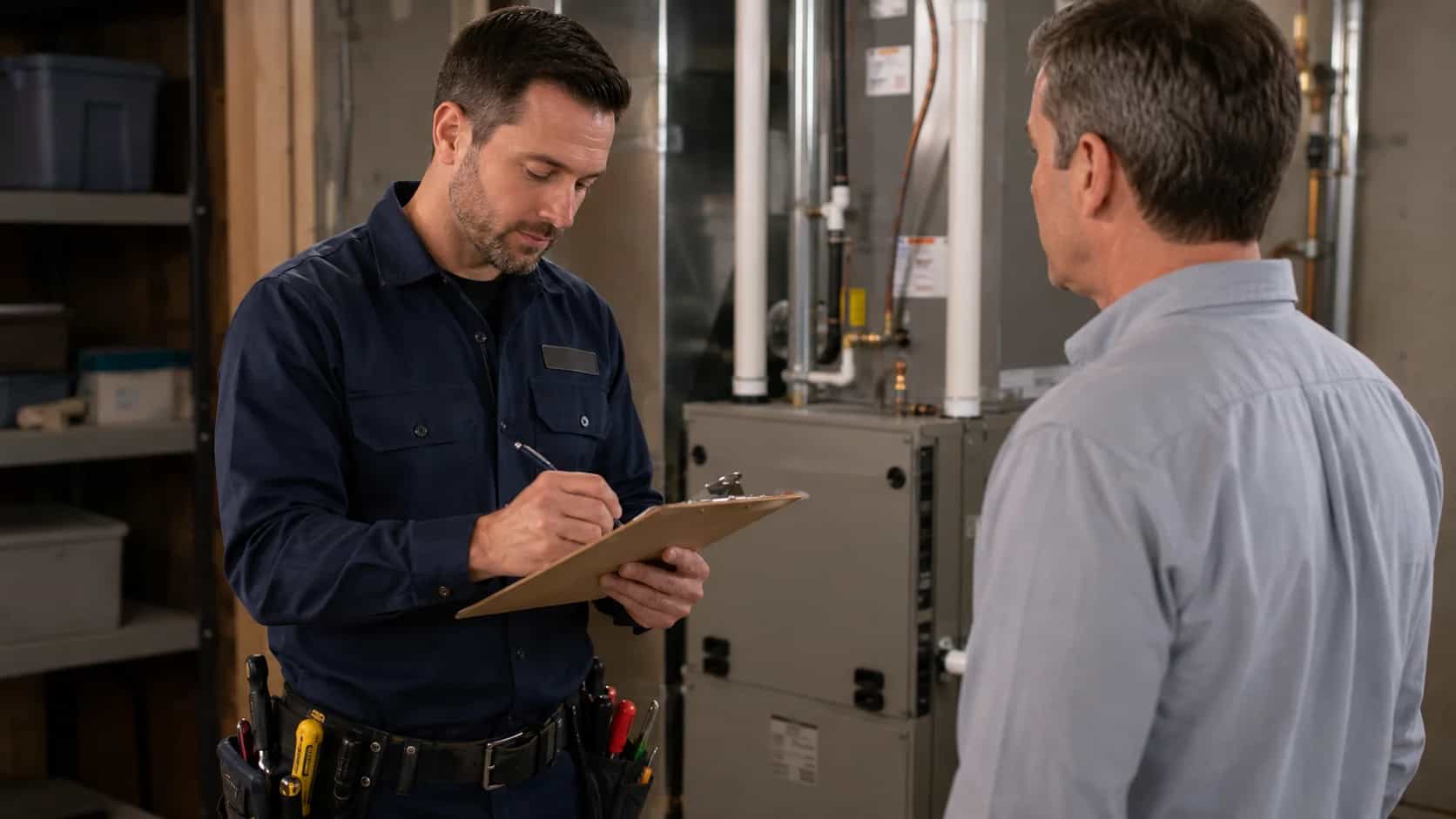
The correct response to any of these is the same, and it is not confrontation. Ask for the finding in writing, with the photograph, the measurement, and the provision cited. A technician who has found a real problem will provide all three without friction. One who cannot will usually stop pressing.
That said, the evidence standard cuts both ways. WETT's own material states the report insurers rely on includes measurements, photographs and detailed documentation, and that where deficiencies are found insurers may require repairs or upgrades before granting coverage. If the evidence is there, the recommendation is probably sound, and delay is the expensive option. Meanwhile, if a system has a confirmed problem, stop using it — WETT's plain advice is that an appliance you are concerned about should not be used until you are assured it is working properly.
The structure of this decision — evidence first, scope in writing, remedy priced separately — is the same one that protects budgets in any major outdoor build where materials and scope drift after signing.