Up to $1,500 toward the cost of professional radon mitigation. The program is administered by the Canadian Lung Association under the name Lungs Matter: Home Radon Mitigation Grant Program.
A Practical Guide to the Lungs Matter Program — and How It Fits With Provincial Funding

Credit: Homeowner.ca
Most homeowners discover the Lungs Matter Grant the same way. They get a high radon test result, start phoning C-NRPP mitigation contractors, and someone says, "by the way, there's a grant." Then the search begins. And the search usually ends in confusion — different provinces, different amounts, different income tests, vague timelines.
Here is the cleaner version. The Lungs Matter: Home Radon Mitigation Grant Program is run by the Canadian Lung Association. It offers up to $1,500 toward a professional radon mitigation system. It is available across Canada. And it is structured as a needs-based grant — not an automatic rebate — which means meeting every qualification on paper does not guarantee you receive funding.
The program also stacks. In Nova Scotia, Saskatchewan, and Manitoba, provincial Lung associations run their own parallel programs with their own dollar amounts and rules. In Ontario, new homes carry a separate radon coverage layer through the statutory warranty. Knowing which layer applies to your situation — and the order in which to pursue them — is most of the work.
This guide walks through the actual eligibility tests, the three documents that decide most applications, the sequence to follow, and the stacking opportunities that homeowners routinely miss. Confirm details on each official program page before you submit anything; funding cycles and thresholds change.
The Lungs Matter: Home Radon Mitigation Grant Program is administered by the Canadian Lung Association. The headline number is up to $1,500 toward the cost of a professional radon mitigation system, paid out after the application is approved and the work is arranged with a certified contractor.
A few framing points matter before you go further.
First, this is a grant, not a rebate. Funding is limited and allocated based on need. Meeting the eligibility criteria is necessary, not sufficient. The program literature is explicit that decisions are final.
Second, the grant is not retroactive. If the mitigation has already been completed when you apply, you are not eligible. This is the single most common reason applications are turned away — homeowners who tested, panicked, hired a contractor, finished the work, and only then looked for support.
Third, the average mitigation cost in Canada is roughly $3,000 for a typical sub-slab depressurization system. The grant covers about half. Read the program for what it is: a partial offset that pulls mitigation into reach for moderate-income households, not a free system. For broader context on how radon affects Canadian homes and what the mitigation decision actually involves, our hub guide on understanding radon in Canadian homes covers the testing, threshold, and remediation landscape.
The Canadian Lung Association is a national charity, but several provincial lung associations operate independently. The Lung Association of Nova Scotia and Prince Edward Island (LungNSPEI) is no longer affiliated with the national CLA and runs its own separate program. The Manitoba Lung Association operates its own version of Lungs Matter. Lung Saskatchewan runs a related but distinct program called Caring Breaths. The application process and dollar amounts differ in each case — covered later in this guide.
The Lungs Matter Grant has two entry doors. You only need to walk through one of them.
If you have been diagnosed with lung cancer, you are eligible to apply regardless of household income. The program prioritizes lung cancer patients because radon is the second-leading cause of lung cancer in Canada after smoking, and reducing exposure during treatment matters at a different level than primary prevention.
You will need documentation of the diagnosis as part of your application package.
If no one in the household has a lung cancer diagnosis, eligibility shifts to household income. The total household income — meaning everyone on the home's title combined — must fall below the provincial median that the program tracks. Priority goes to low-income households within that range.
Provincial thresholds at the time of writing:
A few practical notes. The number is total household income, which means if two adults are on title, both incomes count and both are required to submit a CRA Notice of Assessment. If one adult is on title and the other is a partner or boarder who is not on title, the program looks at the title holder. Confirm the current threshold on the official program page — these figures are revised periodically.
A household above the provincial threshold is not eligible under the income path, even if the radon level is very high. Priority does not equal first-come, first-served — it equals lowest income within the eligible band.
The application form is short. What it requires is not. Three documents drive the outcome.
Your most recent Notice of Assessment from the Canada Revenue Agency. If two people are on the home's title, both NOAs must be submitted. The NOA confirms household income against the provincial threshold.
This is not a tax return — it is the assessment document the CRA mails back after processing your return. You can also download it through CRA My Account. If yours is missing, request a replacement before starting the application; the program will not process incomplete submissions.
A test report of at least 90 days, conducted with a kit certified through the Canadian National Radon Proficiency Program (C-NRPP), showing a radon concentration above 200 Bq/m³.
The 200 Bq/m³ figure is not arbitrary. It is Health Canada's action level — the threshold at which mitigation is recommended for Canadian homes. Levels between 200 and 600 Bq/m³ should be addressed within two years, and levels above 600 Bq/m³ within one year.
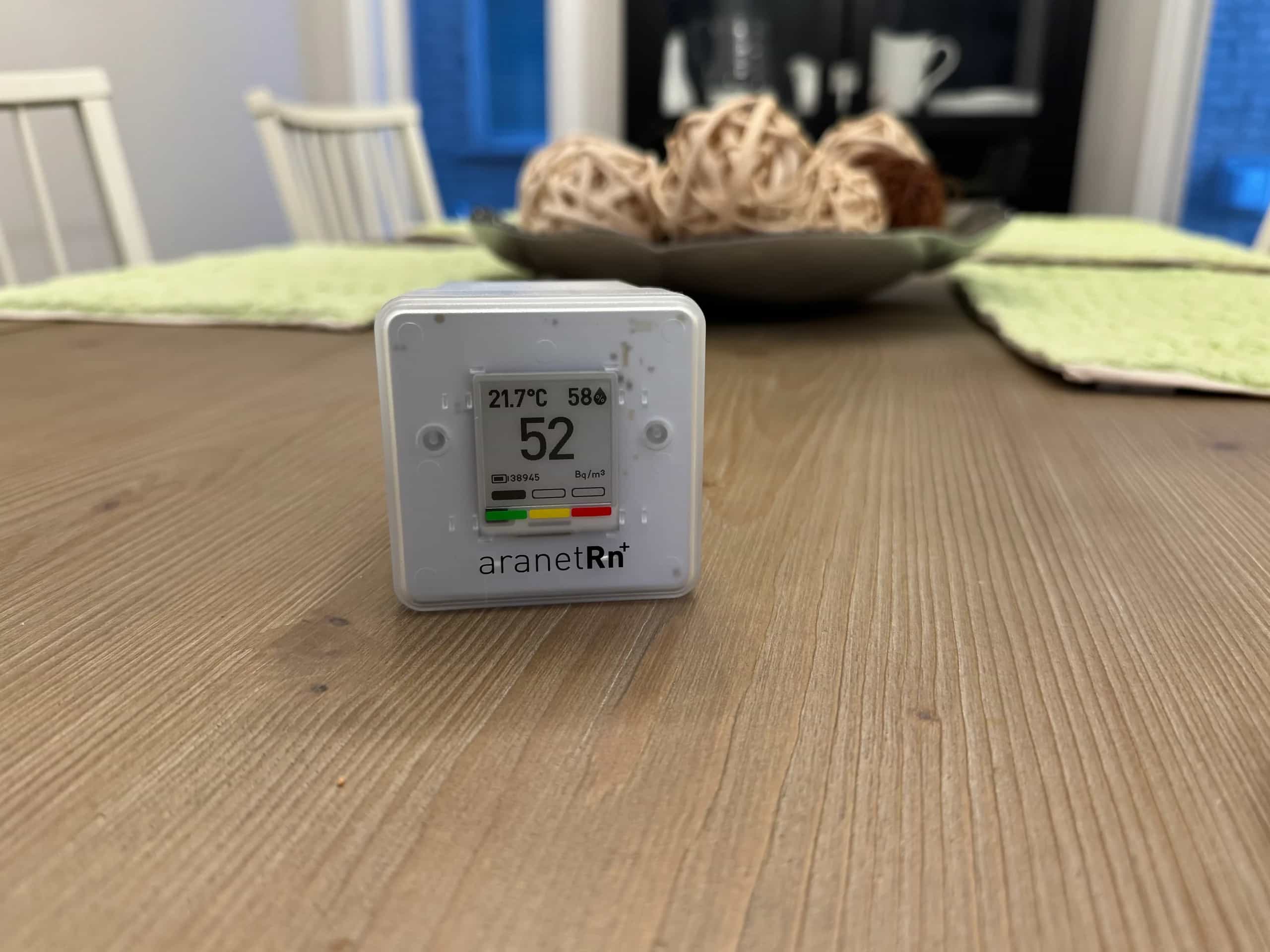
A critical detail: consumer-grade digital monitors do not qualify for the application, even though they are popular and convenient. The grant requires a certified long-term passive kit submitted to an accredited lab. If you have only a digital monitor reading, you will need to test again with a qualifying kit before you can apply. Our companion piece on how accurate consumer radon monitors are in Canada explains why the two test types diverge — and when each one is appropriate.
A written quote from the mitigation contractor who will be performing the work. The contractor must be certified for mitigation through C-NRPP — not just licensed as a general contractor, and not a radon measurement professional who does not also hold mitigation certification.
The quote should specify the proposed system type, fan model and depressurization approach, materials, labour, and warranty. You do not need to commit to that contractor at the application stage, but you do need a real quote on the contractor's letterhead.
Save every document as a PDF before uploading. Phone photos of NOAs and quotes get rejected more often than people realize. Use a scanning app if you do not have a flatbed.
The sequence matters. Doing these steps out of order is the second-biggest reason applications stall.
Step 1: Test for radon properly. Long-term, 90-plus days, using a C-NRPP-certified passive kit placed on the lowest level of the home you regularly occupy. Testing is best in winter, when windows stay closed and radon concentrates more reliably.
Step 2: If the result is above 200 Bq/m³, find a C-NRPP-certified mitigation professional. The Take Action on Radon find-a-pro directory lists certified pros by province.
Step 3: Request a written quote from the contractor for sub-slab depressurization, or whichever method they recommend after inspecting the home. Ask for the fan model spec and confirm the contractor is C-NRPP-certified for mitigation, not just measurement.
Step 4: Pull together your supporting documents. NOAs for everyone on title, the test report from the lab, the mitigation quote, and, if applying under the diagnosis path, your lung cancer documentation.
Step 5: Submit the application through the Canadian Lung Association's online form. There is no paper alternative.
Step 6: Wait for the decision before scheduling the install. This is the rule that catches people. The grant cannot be applied to work that is already complete, so even if your contractor has next-week availability, you have to hold until the CLA approves the application.
Step 7: Once approved, schedule the mitigation. Coordinate with the contractor. Keep all receipts and any post-installation radon test reports — provincial programs, covered below, often require these for separate reimbursement steps.
Some homeowners apply to provincial programs (Saskatchewan's Caring Breaths, Nova Scotia's Radon Reduction Grant) at the same time. Where the rules allow stacking, this can meaningfully reduce out-of-pocket cost. Read each program's terms — some explicitly disqualify applicants who receive other funding for the same work.

Most rejections do not come from ineligibility. They come from the paperwork.
The patterns are predictable. Applicants test with a digital monitor instead of a long-term passive kit, and the lab report shows a different test type than the program accepts. Applicants get a quote from a general HVAC contractor or a radon measurement pro who is not certified for mitigation. Applicants submit a tax summary instead of the Notice of Assessment. One title-holder submits their NOA and the other forgets. The mitigation gets installed during the wait period, making the application moot.
There is also the funding-availability problem. The CLA states funding is limited and decisions are final. In practical terms, this means earlier in a program cycle is better than later, and very high radon levels appear to receive priority within the eligible pool — though the formal weighting is at the CLA's discretion. If your test result is in the 200–300 Bq/m³ range, document your case carefully; applicants with readings several times higher may move first.
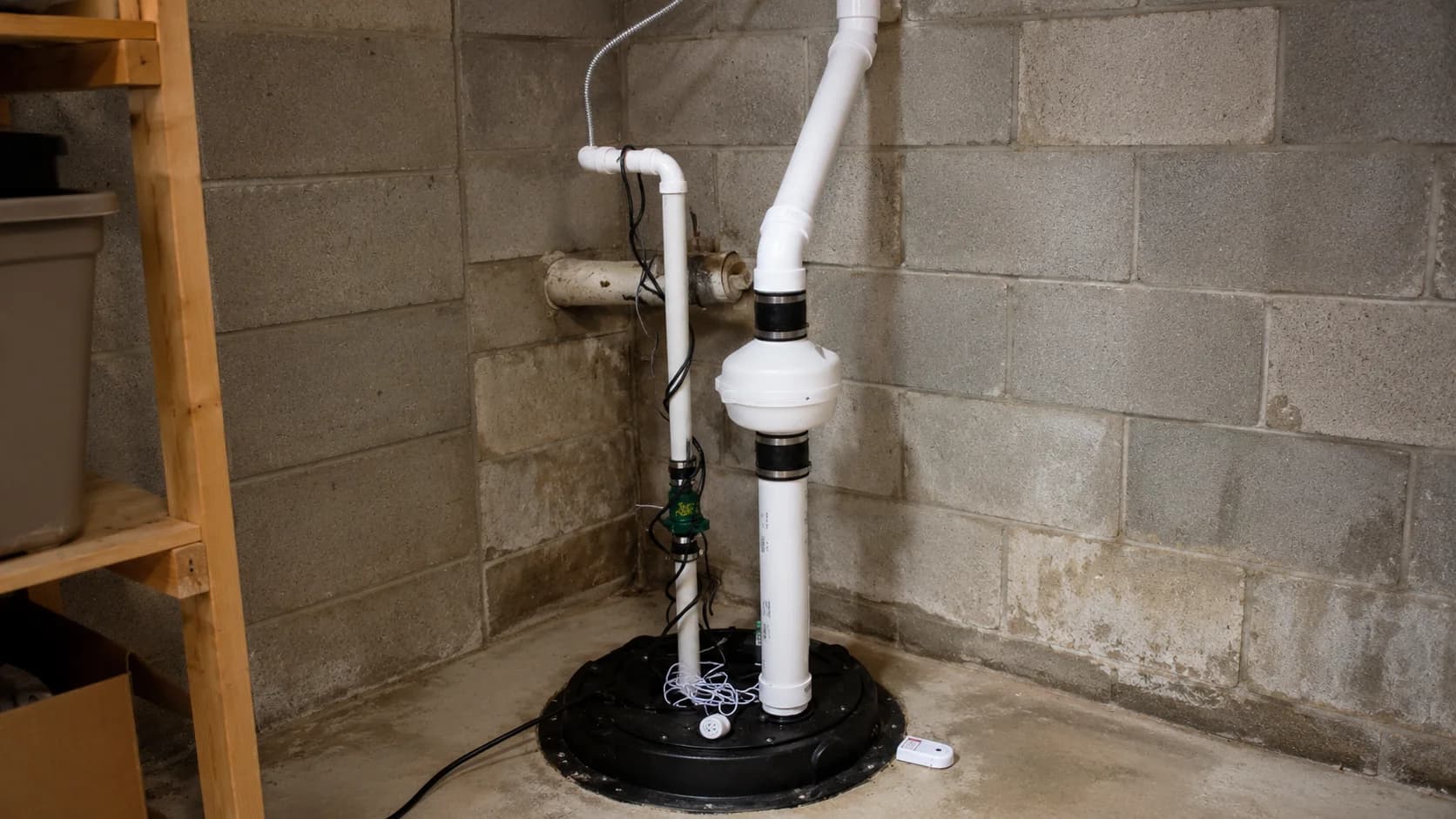
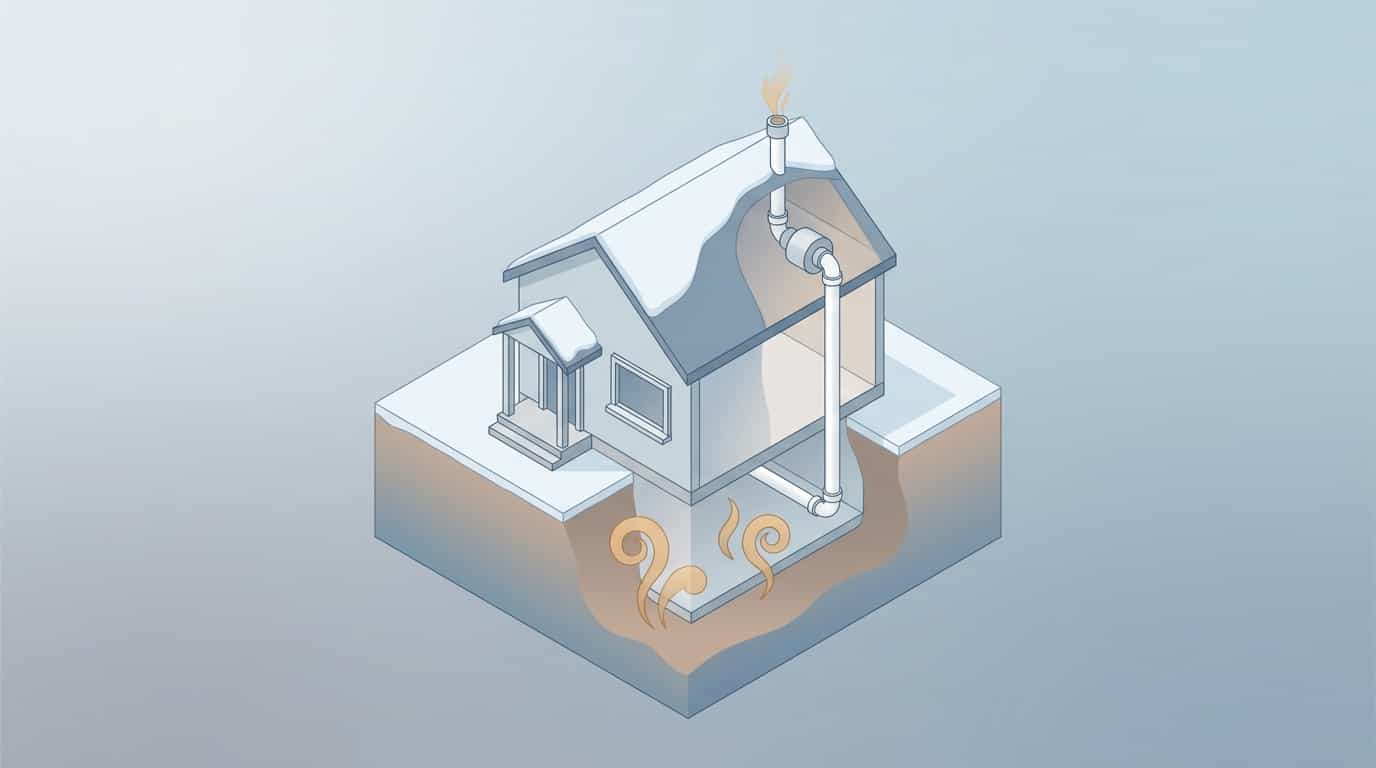
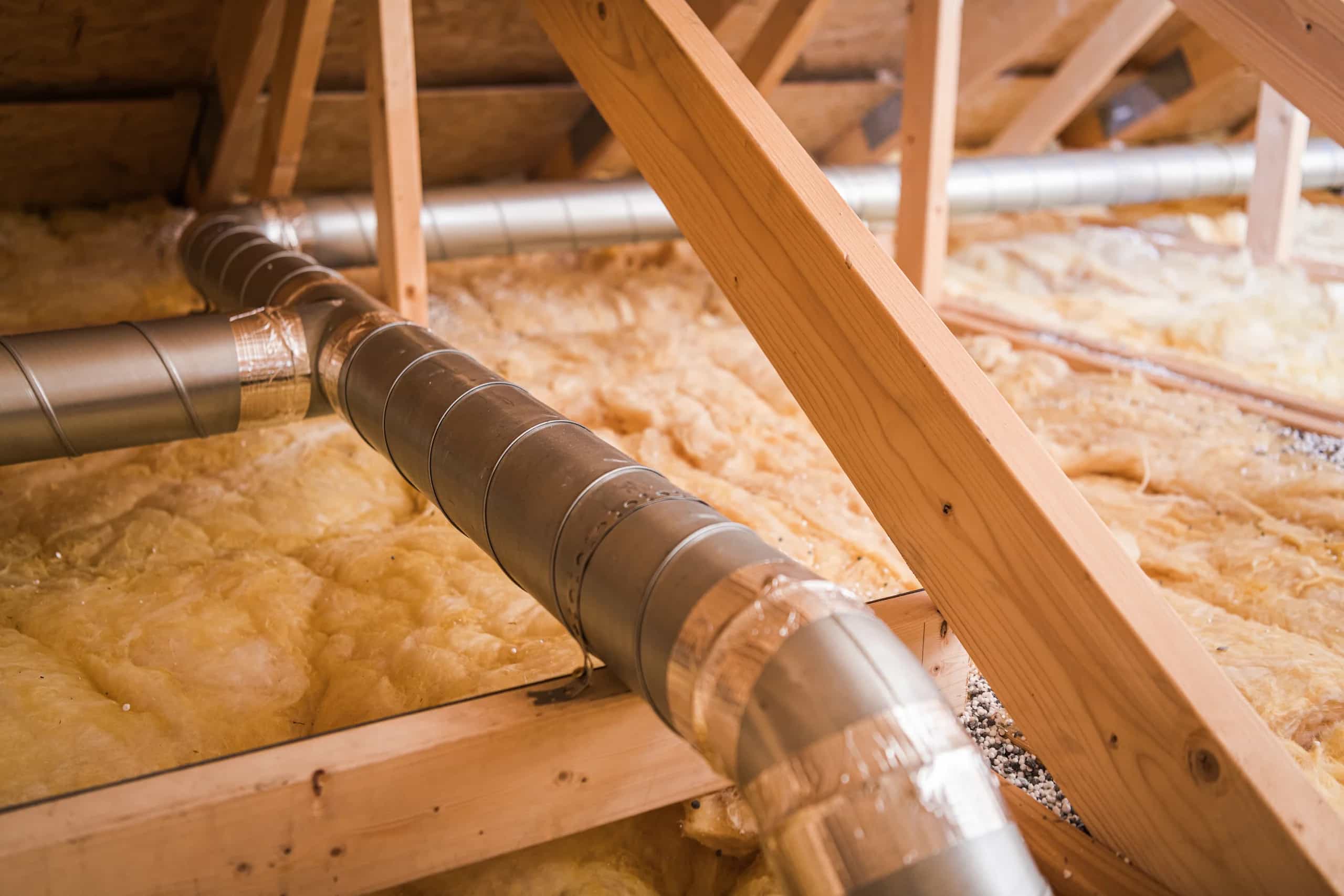
The grant funds professional installation of a radon mitigation system, which in most Canadian homes means sub-slab depressurization. A pipe is run through the basement slab, sealed at the floor, and connected to a small inline fan that vents radon-laden soil gas from beneath the foundation to the outdoors — typically up through the roofline or out an exterior wall.
The fan is the active component. It runs continuously, drawing soil gas out before it can migrate into the living space. Most systems reduce radon by 80% or more, often into the range of 50 to 100 Bq/m³ — well below the action level and far closer to outdoor concentrations.
For grant purposes, two things matter.
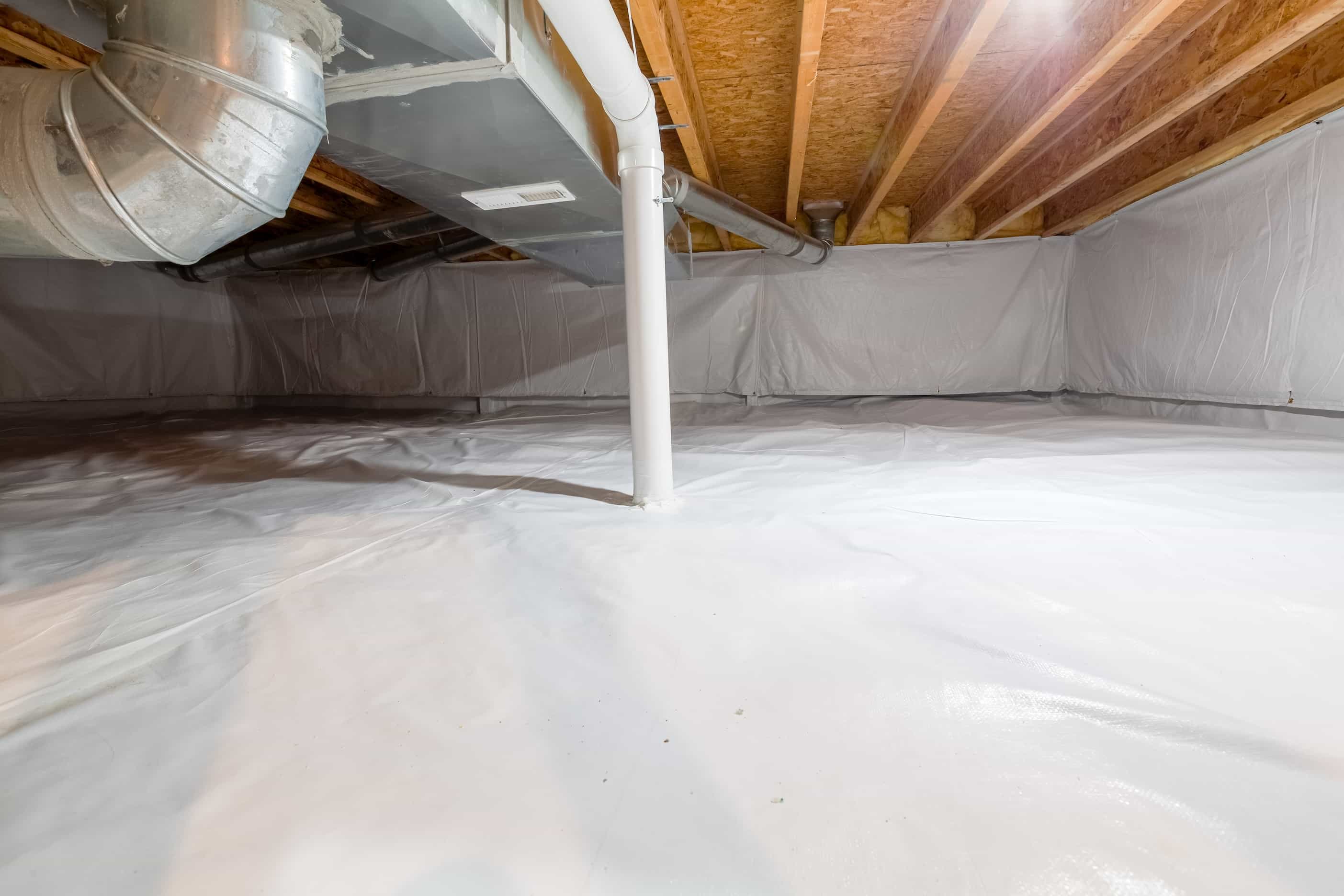
The system must be installed by a C-NRPP-certified mitigation professional. A DIY install or a non-certified contractor disqualifies the application. And the fan and system design are the contractor's call, not yours. The grant does not specify a model or brand. The contractor selects the fan based on home size, foundation type (slab, crawlspace, mixed), soil permeability, and target depressurization.
This is one of the reasons the application requires a quote, not a receipt. The CLA is funding a properly designed mitigation system installed by a qualified pro — not reimbursing a tool purchase. If you are curious about the engineering side, our deeper dive on how radon mitigation systems work walks through the design choices.
The contractor selection is the consequential decision the homeowner actually makes. The grant is fixed. The quote, and the long-term performance of the system, are not.
Things to evaluate when comparing C-NRPP-certified mitigation pros:
Certification verification. Confirm the certification number on the C-NRPP find-a-professional directory. Mitigation certification is distinct from measurement certification. For the grant, you need a mitigation pro.
Scope of the quote. A good quote names the system type, the fan model and its rated flow and pressure, the routing path (interior basement-up versus exterior), the penetration sealing approach, warranty terms, and whether a post-installation test is included.
Post-installation testing. A reputable contractor includes — or at minimum recommends — a follow-up long-term test after installation to confirm the system is working. This is how you actually know mitigation succeeded. Our guide on radon follow-up testing after mitigation explains the timing and what readings to expect.
Warranty. Most C-NRPP pros warranty their work for one to five years on labour and pass through the fan manufacturer's warranty, which is typically five years. Read what is covered: workmanship, fan replacement, and any re-test costs if levels remain above target.
Quote variance. If quotes from three certified pros range from $2,500 to $5,500, the spread is meaningful. The low end usually reflects a simpler home (single slab, accessible perimeter). The high end usually reflects mixed foundations, crawlspace work, or longer interior vent runs. Confirm what is driving the price before assuming the cheapest is best.
This is the section most homeowners miss. The Lungs Matter Grant is national, but several provinces add a separate funding layer on top.
The Manitoba Lung Association runs its own version of the Lungs Matter program — historically the original — at up to $1,500. Manitoba residents apply through the Manitoba branch rather than the national CLA portal. Eligibility mirrors the national rules (lung cancer diagnosis or low-to-moderate income), and the same C-NRPP test and quote documentation applies. The Manitoba branch notes that applications are assessed monthly by a grant committee based on need and available funding.
Lung Saskatchewan runs the Caring Breaths Financial Assistance Program. Radon mitigation reimbursement is up to $500, or up to $1,000 if a household member has been diagnosed with lung cancer. Applicants must be Saskatchewan residents, the mitigation must have been done by a C-NRPP-certified pro on the applicant's single-detached primary residence, and expenses must be claimed within 12 months. Note that this is structured as a reimbursement — receipts are required, quotes and estimates are not accepted — so the order of operations differs from the national grant.
LungNSPEI (Nova Scotia and Prince Edward Island) operates a Radon Reduction Grant Program with mitigation grants up to $2,500 — the most generous amount in the country. It is funded by the Government of Nova Scotia and targets low-income Nova Scotia households. The program also distributes free C-NRPP test kits to eligible households who cannot afford to test first. Importantly, LungNSPEI is no longer affiliated with the national CLA, so Nova Scotia and PEI residents apply only through LungNSPEI — not through the national Lungs Matter portal.
Ontario homeowners with newly built homes have a path that does not appear on any of the lung association pages. The Tarion new home warranty includes radon coverage of up to $50,000 per home, for the full seven years of warranty coverage from the original possession date. This applies to homes built under the Ontario New Home Warranties Plan Act, where a 90-plus-day C-NRPP test shows levels above the Health Canada guideline.
If you bought a new build in Ontario within the past seven years and your radon level is above 200 Bq/m³, the Tarion path typically beats any grant — it can fund the entire mitigation system. The submission goes to your builder and Tarion together. This is not stacking with the CLA grant; it replaces it for eligible new-build owners.
BC has no province-wide grant beyond the national Lungs Matter program, though regional pilots have run. The Regional District of the Central Okanagan piloted $500 grants in partnership with Take Action on Radon. Watch for municipal or regional programs in higher-radon BC areas — they tend to be small, time-limited, and underadvertised.
Always read each program's terms before stacking. Most do not explicitly forbid combining grants, but some — particularly reimbursement programs — disqualify applicants who have already received full funding from another source for the same work.
A blunt framing the marketing materials do not provide.
Take Action on Radon's research puts the average mitigation cost across Canada at roughly $3,000, with significant variation by home type. Simple single-foundation homes can come in closer to $2,000. Mixed-foundation homes, exterior routing, and crawlspaces can push past $4,500. Our deeper breakdown of radon mitigation system costs in Canada walks through the cost drivers by foundation type and region.
Stacked against a $3,000 system, the Lungs Matter Grant offsets about half. If you live in Nova Scotia and stack a $2,500 LungNSPEI grant, the household out-of-pocket can fall to near zero. If you live in Saskatchewan and combine Caring Breaths with Lungs Matter where allowed, the offset improves further. If you bought a new build in Ontario and qualify under Tarion, the system can be fully covered.
The point of running the math is this: the grant alone is not the whole answer for most households, but combined with provincial layers and treated as one input to the broader mitigation budget, it materially changes the affordability picture. A homeowner who tests in winter, qualifies on income, applies before installation, and stacks the available provincial support can frequently reduce out-of-pocket cost by 50 to 100%.
Confirm current dollar amounts and rules on each official program page — these change with funding cycles. And do the application before the install. That single rule, more than any other, decides whether the math works at all.
About the Author
Ryan is the founder of Homeowner.ca and a proud Canadian homeowner based in Guelph, Ontario. Over his 25-year career in digital publishing, he has focused on transforming complex information into clear, practical guidance that helps people make confident, well-informed decisions.
Up to $1,500 toward the cost of professional radon mitigation. The program is administered by the Canadian Lung Association under the name Lungs Matter: Home Radon Mitigation Grant Program.
It is a grant, not a rebate. The distinction matters because rebates are typically applied after the fact against work already done; this grant cannot be used to reimburse mitigations that are already complete. You must apply and be approved before installation begins.
Total household income must fall below the provincial median tracked by the program. Thresholds range from $74,600 in New Brunswick to $112,700 in Alberta. Both adults on a home's title must submit a CRA Notice of Assessment.
Yes. A lung cancer diagnosis qualifies regardless of household income. You will need documentation of the diagnosis as part of the application package.
No. The grant requires a long-term (90-plus-day) test from a C-NRPP-approved passive kit submitted to an accredited lab. Consumer-grade digital monitors are useful for ongoing awareness but do not qualify the application. If you only have a monitor reading, you will need to run a qualifying long-term test before applying.
The Canadian National Radon Proficiency Program certifies radon measurement and mitigation professionals. The grant requires both your test kit and your mitigation contractor to hold the relevant C-NRPP certification. The two certifications are separate — make sure your contractor is certified for mitigation, not only for measurement.
Processing times vary with funding availability. Plan for several weeks at minimum, and budget for the wait before scheduling installation. Do not start the work until you receive a written decision.
No. Mitigations that have already been completed are not eligible. The grant is forward-looking only.
No. The Lung Association of Nova Scotia and Prince Edward Island (LungNSPEI) operates independently from the national CLA and runs its own Radon Reduction Grant Program (up to $2,500 for low-income households). Apply through LungNSPEI directly.
Often yes, depending on the province. Manitoba and the national program coordinate. Saskatchewan's Caring Breaths reimbursement (up to $500, or $1,000 with a lung cancer diagnosis) can complement other funding in some cases. Ontario new-home owners may have warranty coverage through Tarion that replaces the grant entirely. Read each program's terms before assuming you can stack.
The grant requires levels above 200 Bq/m³. Exactly at the action level does not qualify. If you are borderline, Health Canada still recommends taking steps to reduce levels where reasonable, but the funding programs are designed around homes clearly above the threshold.
The grant is for the mitigation system itself. Post-installation testing is a separate cost, though many C-NRPP-certified contractors include or recommend it as part of their service. Confirm with the contractor whether their quote includes the follow-up test.