Matching Your House, Climate, and Budget
With the comparison in hand, the final question is which camp your home actually falls into. A few clear patterns tend to emerge once homeowners walk through the decision honestly.
If you own a typical Canadian suburban home and you're replacing aging eavestroughs, seamless aluminum in .032 gauge is almost always the right answer. It's affordable, rust-proof, paintable to match your trim, and its 20-to-30-year lifespan aligns well with the average homeowner's tenure. Spend the small upgrade for the thicker gauge and pay attention to the installer's joint workmanship, and you'll have a system that does its job quietly for decades.
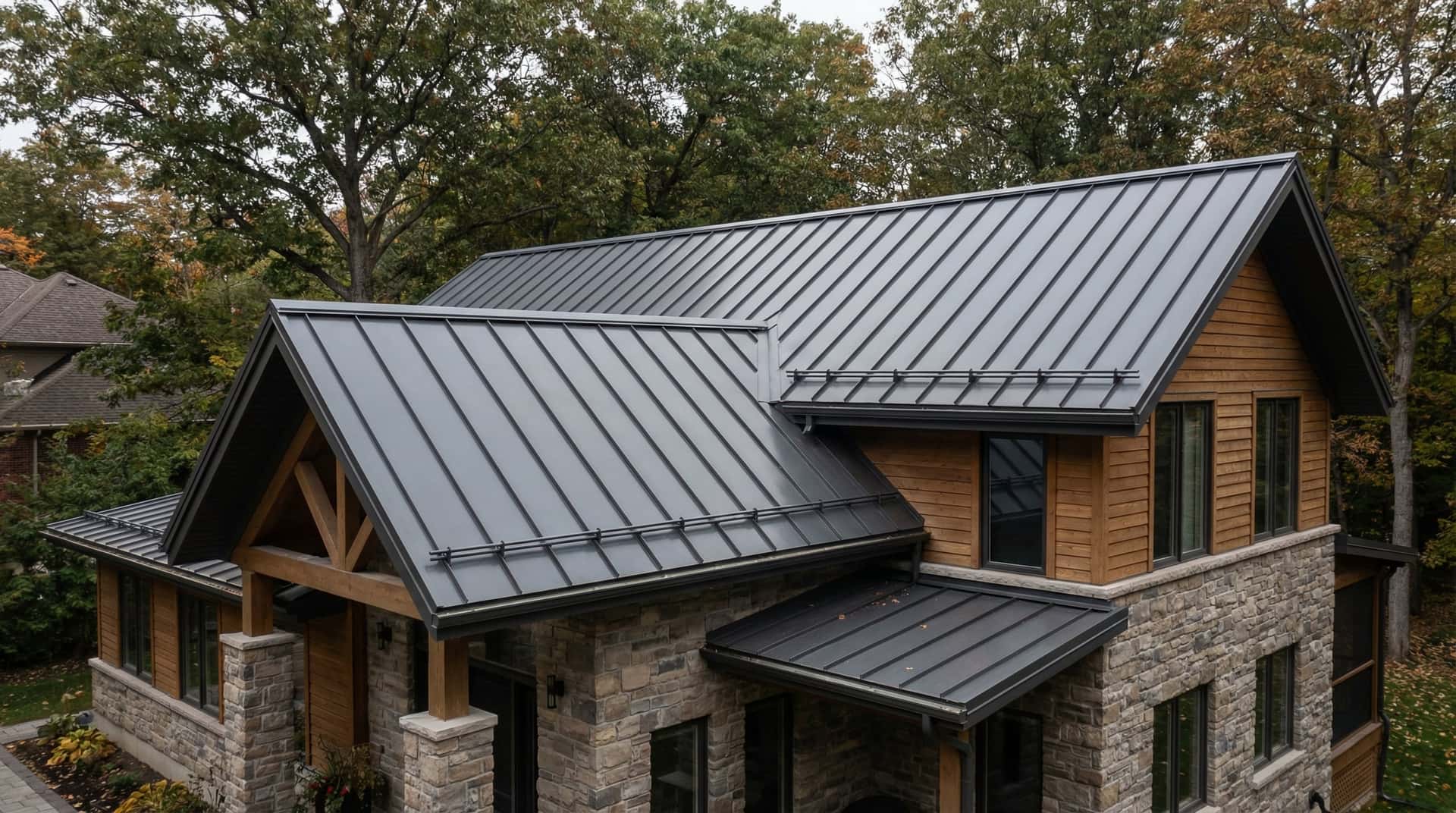
If you live in a heavy-snow region, on a rural property, or under a metal roof that sheds snow in sheets, steel — ideally Galvalume — is worth the upcharge. You'll gain impact resistance that aluminum genuinely cannot match, and the longer service life of Galvalume narrows the lifecycle-cost gap compared with aluminum substantially. Budget for professional installation and make sure your contractor has experience with steel specifically.
If you own a heritage home, a high-end custom build, or a property you intend to keep in the family for generations, copper earns its premium. You're paying not only for 50 to 100 years of service, but for a material that develops visible character, that resists corrosion better than anything else in the category, and that visibly elevates the architecture it belongs to. On the right home, copper looks correct in a way that no alternative quite achieves. On the wrong home, it reads as mismatched — so be honest about whether the surrounding details support it.
Finally, if you're shopping with resale value in mind, pay attention to context. On an entry-level or starter property, copper is unlikely to return its own cost at sale; aluminum is the market expectation, and buyers will price accordingly. On an architecturally distinctive property, copper can meaningfully boost perceived quality and curb appeal. Steel falls somewhere in between and is rarely a differentiator at sale, though its durability matters to informed buyers.
Whichever material you choose, the single most impactful decision you can make outside of material selection is your installer. A skilled contractor will specify gauge and coating in writing, explain their approach to joint-sealing and expansion, use compatible fasteners throughout, and make sure your system is drained well away from the foundation.
Permit expectations can vary by municipality for eavestrough and downspout work, so it's worth a quick call to your local building department before replacement, as the Government of Canada recommends. A poor contractor can make even copper fail early. A great one can make aluminum outlast its reputation.