Health Canada Pulls Nearly 44,000 Premium 1.5-Litre Kettles in Joint Action with CPSC

Credit: Homeowner.ca
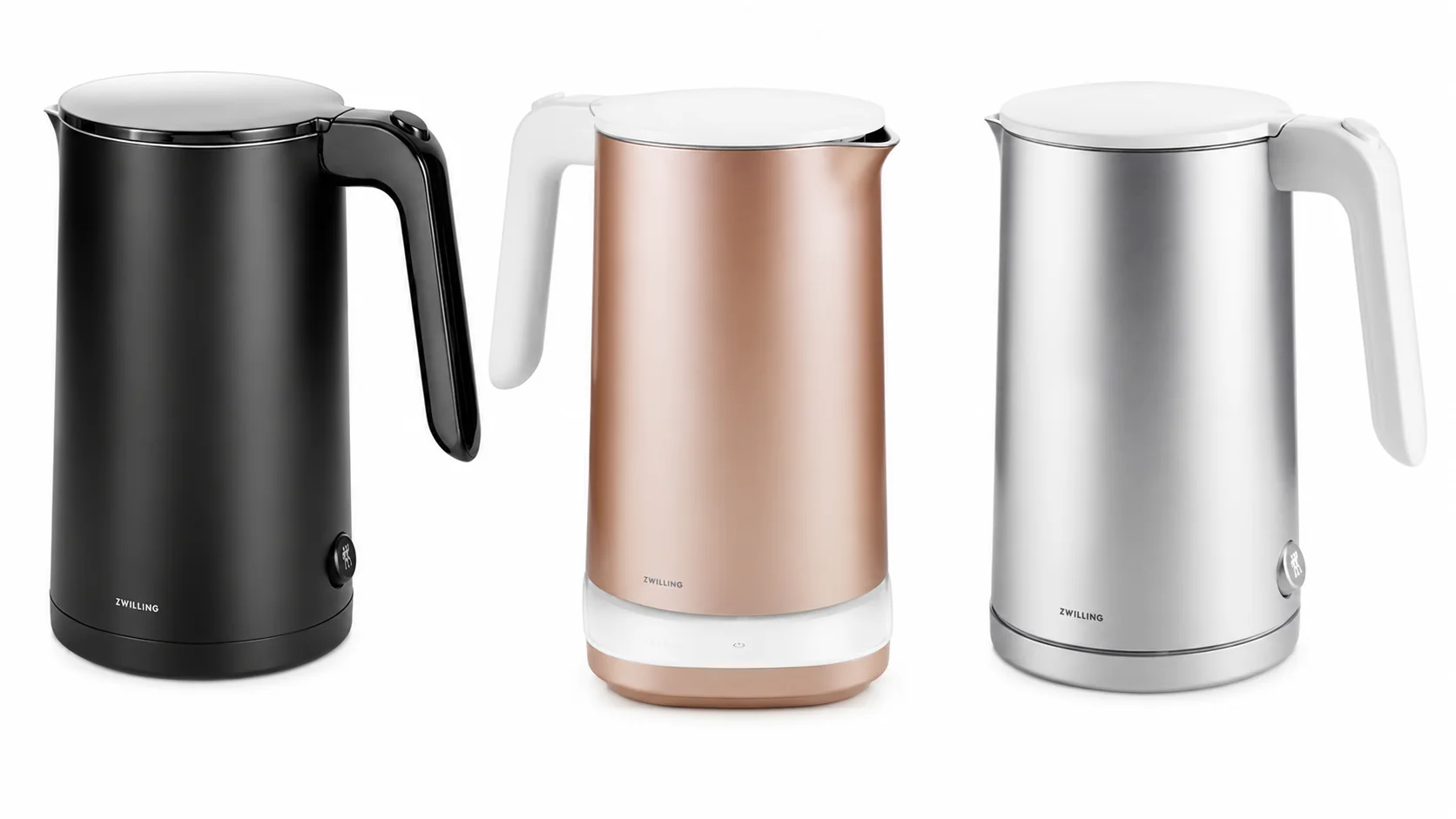
Most kitchen recalls land on a single retailer's private-label line and a small unit count. This one does not. On May 14, 2026, Health Canada and the U.S. Consumer Product Safety Commission jointly recalled Zwilling's Enfinigy Electric Kettle and Enfinigy Electric Kettle Pro in their 1.5-litre size, citing handles that can loosen or break off during normal use and spill boiling water onto users and bystanders. The Canadian footprint is the headline number: 43,963 units across a six-year sales window, sold through the country's most recognizable premium kitchen retailers.
The hazard is the kind that does not announce itself. Owners who have used the kettle daily for years are not warned by a wobble, a click, or a visible crack — Zwilling and Health Canada describe the failure as a sudden detachment during routine pouring. One Canadian injury and twenty-one incident reports have already been logged, alongside a confirmed second-degree burn south of the border.
This piece walks through what was recalled, how to identify an affected kettle in under a minute, and the specific refund and disposal pathway Zwilling is running for Canadian owners.
The recall, identified as RA-82052, covers two product families in a single capacity: the Zwilling Enfinigy Electric Kettle (1.5 L) and the Zwilling Enfinigy Electric Kettle Pro (1.5 L), according to the Health Canada recall notice. The affected units carry a capacity label inside the kettle marked "MAX 1.5 L" or showing a maximum of 10 cups. Both lines were sold from February 2020 through February 2026 — a long enough window that current owners include both first-wave buyers and recent purchasers still inside their warranty period.
Colours and identifiers covered by the Canadian notice include the Enfinigy Electric Kettle in black (PC/GTIN 035886542252) and silver (035886524524), and the Enfinigy Electric Kettle Pro in black, silver, rose, gold, and pure-white finishes. The U.S. parallel notice references the same product family by model number — 53101-200 and 53101-201 for the standard kettle, and 53101-500 through 53101-504 for the Pro — printed on the bottom of the unit and the base. Either identifier route works for Canadian owners: model number on the base, or capacity marking inside.
The failure mode is mechanical and abrupt. Health Canada describes the kettle's handle as potentially loosening or breaking off entirely during use, allowing hot water to spill from the kettle and creating a scalding risk to the user or nearby bystanders, including small children. The defect is not a slow degradation; it presents as a sudden separation, often during the most ordinary moment of a kettle's lifecycle — lifting it off the base to pour.
The premium positioning of the brand is part of what makes the recall worth flagging to Canadian homeowners. Zwilling J.A. Henckels is a marquee German cookware label, and the Enfinigy Pro retails through Williams-Sonoma Canada at roughly C$219.95, with similar pricing at Hudson's Bay and seasonal discounting through Amazon.ca. The owner base is concentrated in exactly the demographic that assumes premium pricing has already absorbed the cost of mechanical reliability. That assumption is what the recall is asking owners to revisit.
Recalls vary widely in how many households they actually touch. This one sits at the high end of the homeowner-relevant scale this month. Zwilling reported to Health Canada that 43,963 units of the affected kettles were sold in Canada and 113,590 units in the United States, with the products manufactured in China by Zhongshan AnBoEr Electrical Appliance Co., Ltd. and imported into Canada by Zwilling JA Henckels Canada Ltd. of Markham, Ontario.
Incident data is consistent across both regulators. As of May 13, 2026, the company reported 21 incident reports in Canada and one report of a potential injury, alongside 96 incidents and one potential injury in the United States. The CPSC's parallel disclosure is more granular: 163 total reports of the handle separating or loosening, five incidents specifically involving handle detachment, and one confirmed second-degree burn.
The injury count is low relative to the unit count, but it is not zero — and the failure rate that produced 163 cumulative reports across the fleet is what regulators are using to justify a full stop-use directive. A second-degree burn from a 1.5-litre kettle full of boiling water is a meaningful event. The right read is not "twenty-one out of forty-four thousand," but "the defect has already crossed the threshold from theoretical to documented."
Zwilling itself lists the U.S. retail channels for the Enfinigy line as Amazon.com, Bloomingdale's, Crate & Barrel, Williams-Sonoma, and HomeGoods' parent company. The Canadian channel mix is similar: Williams-Sonoma Canada, Hudson's Bay, and Amazon.ca dominate, with seasonal sale pricing landing the Pro model in the C$135–C$240 range depending on the retailer and timing. That distribution profile concentrates ownership in households that bought through retailer-of-record channels — the same channels that will be best positioned to process refunds and return shipping documentation if needed for the recall registration.
It is also worth noting that the kettles are not the only Zwilling product in active Canadian kitchens. Owners checking the Enfinigy should not assume other Zwilling small appliances are affected — the recall is specifically scoped to the 1.5-litre Enfinigy and Enfinigy Pro electric kettles, not to coffee makers, toasters, or other capacity sizes in the same product line.

The remedy is straightforward but procedural. Health Canada and Zwilling are both directing consumers to immediately stop using the recalled kettles and register for the return process to obtain a refund rather than continuing to use or attempting to repair the appliance. The registration entry point is Zwilling's dedicated Canadian recall portal — accessible via zwilling.com's Canadian recall page — which routes owners to the same back-end refund system Zwilling J.A. Henckels Canada Ltd. is operating.
Contact channels for the Canadian recall:
The remedy is a refund, not a repair. Zwilling's U.S. process — which the Canadian portal mirrors — requires owners to make the kettle unusable before disposal: unplug it, cut the cord, and upload a product photo as part of the refund registration. Do not donate, resell, or give away the kettle. Under the Canada Consumer Product Safety Act, recalled products cannot be redistributed in Canada in any form.
The disable step is the part most owners do not expect. Zwilling's recall workflow is designed to physically remove the affected kettles from circulation, not just shift them out of one kitchen into another. The cord-cutting requirement and product photo upload close the loop on what the U.S. CPSC parallel notice describes as the path to a full refund. The same general approach applies to Canadian owners through the dedicated portal.
Practically, that means setting aside ten minutes the day the recall registration is completed: unplug the kettle, cut the power cord at the base of the unit with a pair of scissors or wire cutters, photograph the disabled kettle alongside any model markings, and upload the photo through the recall registration form. Once Zwilling confirms the refund, the disabled kettle can be safely recycled through a municipal small-appliance recycling stream.
This recall lands in a stretch of recent Health Canada actions that have hit the kitchen and home-maintenance categories hard. The agency recently pulled BISSELL Steam Shot OmniReach cleaners over burn injuries affecting nearly 96,000 Canadian units. Wagner power steamers and Frigidaire gas ranges have followed under similar burn-hazard framing. The unifying thread across these notices is thermal injury during routine appliance use — not catastrophic fires, not chemical exposure, but the kind of failure that happens at a counter or stovetop with no warning.
The practical homeowner takeaway is to treat any major small-appliance purchase from the last six years as worth a quick check against Health Canada's active recall list. The Enfinigy recall is unusual in its scale and channel mix, but the underlying point — that premium price does not insulate a household from a sudden mechanical failure — applies across the category. Owners who have used the kettle daily without incident are not exempt from the recall; failure is described as occurring without warning during normal use, which is precisely the scenario the registration process is built to prevent.
For Canadian owners, the action this week is concrete: check the inside capacity label, check the base model number, and if either matches, stop using the kettle, register for the refund, and treat the disable-and-photograph step as part of getting the refund processed quickly.
About the Author
Ryan is the founder of Homeowner.ca and a proud Canadian homeowner based in Guelph, Ontario. Over his 25-year career in digital publishing, he has focused on transforming complex information into clear, practical guidance that helps people make confident, well-informed decisions.