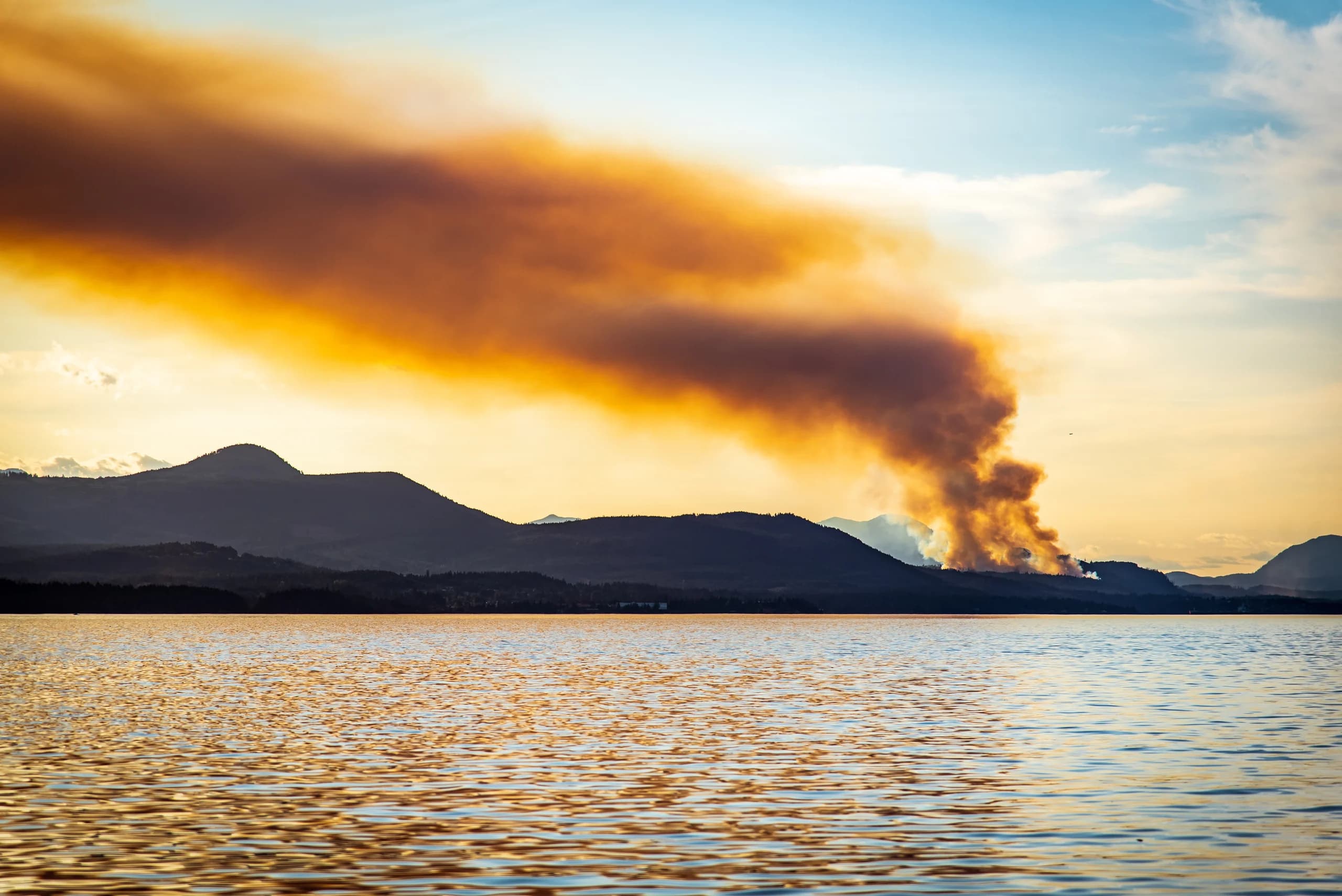
As of 9:30 a.m. PT on Monday, August 3, 2026, roughly 4,700 properties across British Columbia were under evacuation order and another 3,600 under evacuation alert, the province's Ministry of Emergency Management and Climate Change said. The Quilpituk Creek wildfire west of Okanagan Lake had alone forced more than 2,200 properties out. A separate, fast-moving fire near Vernon pushed evacuation orders onto the Okanagan Indian Band's main reserve, the township of Spallumcheen and the Splatsin First Nation. Nationally, Canada was sitting at a Level 4 wildfire preparedness rating.
For the roughly 8,300 households caught in that single snapshot, the gap between "alert" and "order" reads like a difference in danger. It is also, quietly, a difference in money. For most Canadian home and tenant policies, an evacuation order — not an alert — is the civil-authority trigger that turns on the coverage that pays for hotels, restaurant meals and the other costs of being displaced. Same fire. Same smoke. A very different position on your policy.
This is an explainer, not legal advice or a survival checklist. The aim is narrow: to make clear what usually changes on your policy when an alert becomes an order, what you can do for free while you are still on alert, and what to track once you have been told to go.