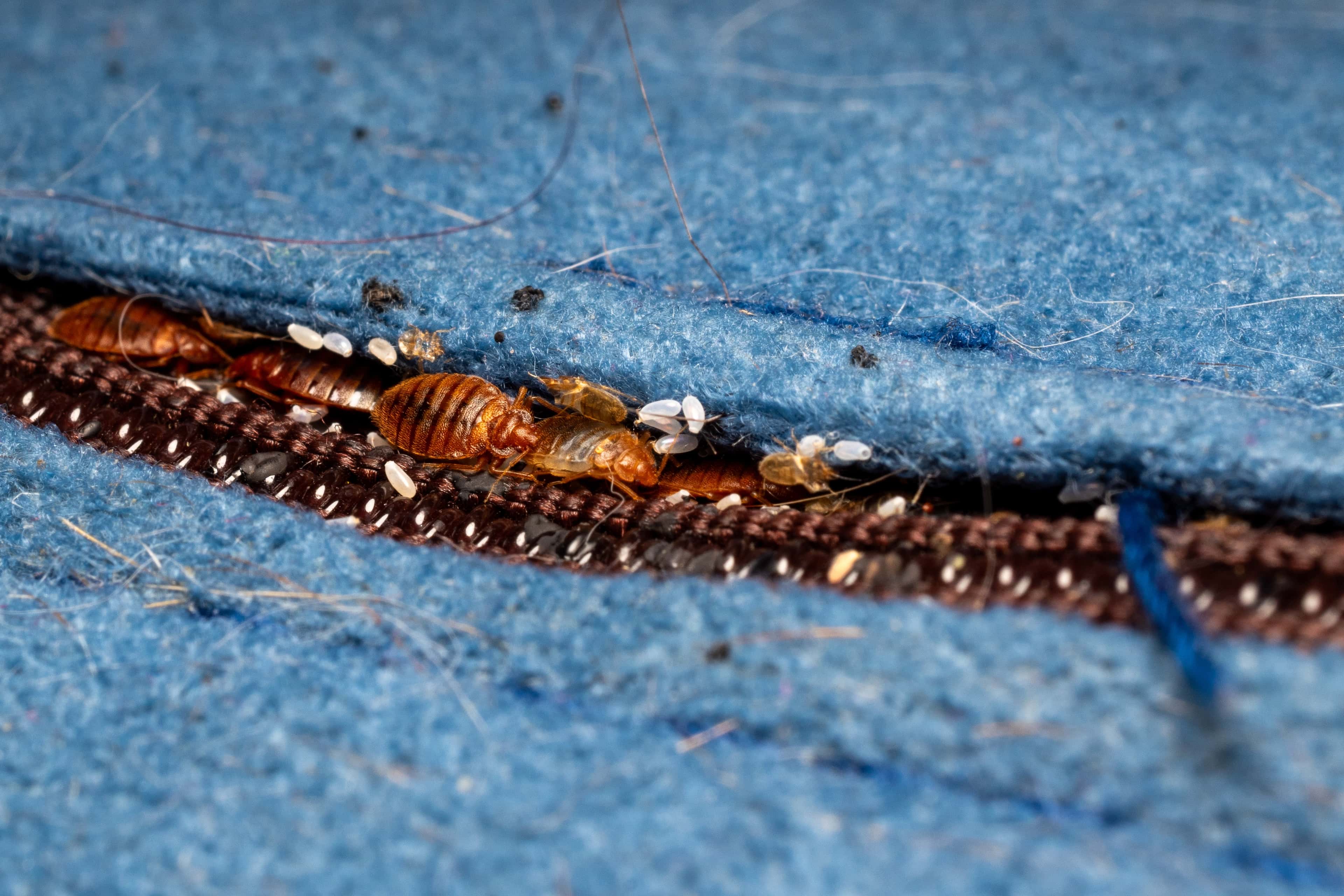
A bed bug is a small, wingless, blood-feeding insect. Adults are roughly the size of an apple seed — about 5 to 7 mm long — oval, flat, and brown. After feeding, they swell and darken to a reddish-brown. Nymphs (juveniles) are smaller, ranging from 1 to 5 mm, and translucent or pale before feeding. Eggs are roughly 1 mm, whitish, and typically glued into cracks where they are extremely difficult to spot without magnification.
They cannot fly. They cannot jump. They crawl, and they spread by hitchhiking — on luggage, furniture, clothing, electronics, books, and any item that moves between locations. This is how they arrive in your home, and it is how they move between rooms if containment fails.
Important
Having bed bugs is not a sign of poor housekeeping. Public health agencies across Canada are explicit: anyone, in any type of housing — from five-star hotels to suburban homes to shelters — can get bed bugs. Infestations are not caused by dirt or neglect. Shame and stigma delay reporting and treatment, which increases spread. If you suspect bed bugs, the best thing you can do is act quickly and without embarrassment.
Where They Hide
Bed bugs are nocturnal. During the day, they retreat to tight, dark harbourage sites close to where people sleep. Understanding their hiding preferences is the foundation of effective inspection.
Primary hiding zones (start here):
Mattress seams, tufts, piping, handles, and air holes
Box spring — especially the stapled fabric edges and where the spring meets the frame
Bed frame joints, screw holes, and headboard mounting points
Cracks between the headboard and the wall
Secondary hiding zones (check these next):
Upholstered furniture seams, especially couches and armchairs used for sleeping or napping
Baseboards and floor cracks within a few metres of the bed
Behind picture frames, mirrors, and wall-mounted décor
Electrical outlet and light switch covers
Under peeling wallpaper or loose paint
In heavier infestations, bed bugs can spread to virtually any crack or crevice in a room. But early detection focuses on the bed and the furniture within arm's reach of it. That is where 70–80% of bed bugs in a typical infestation are concentrated.