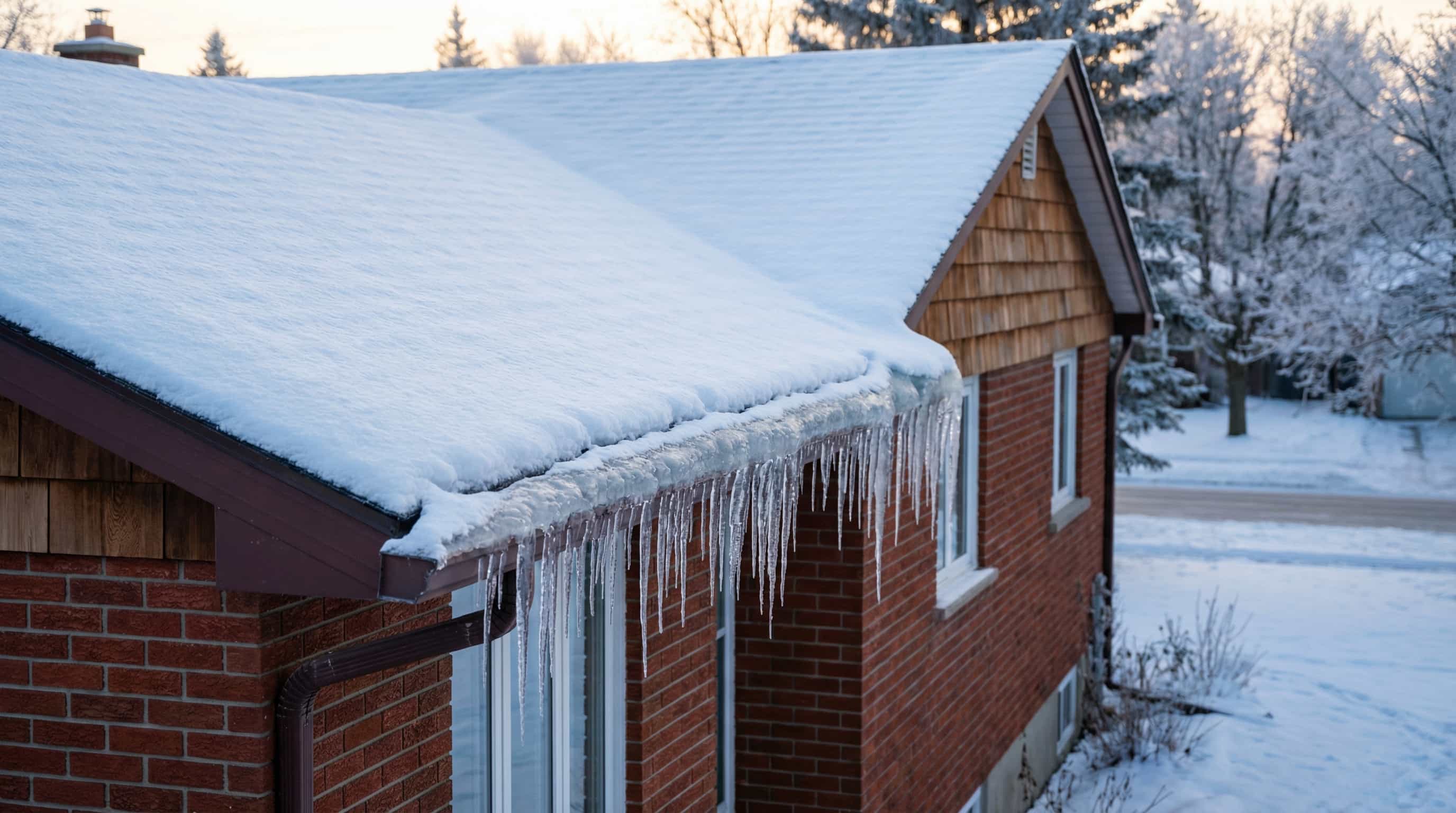
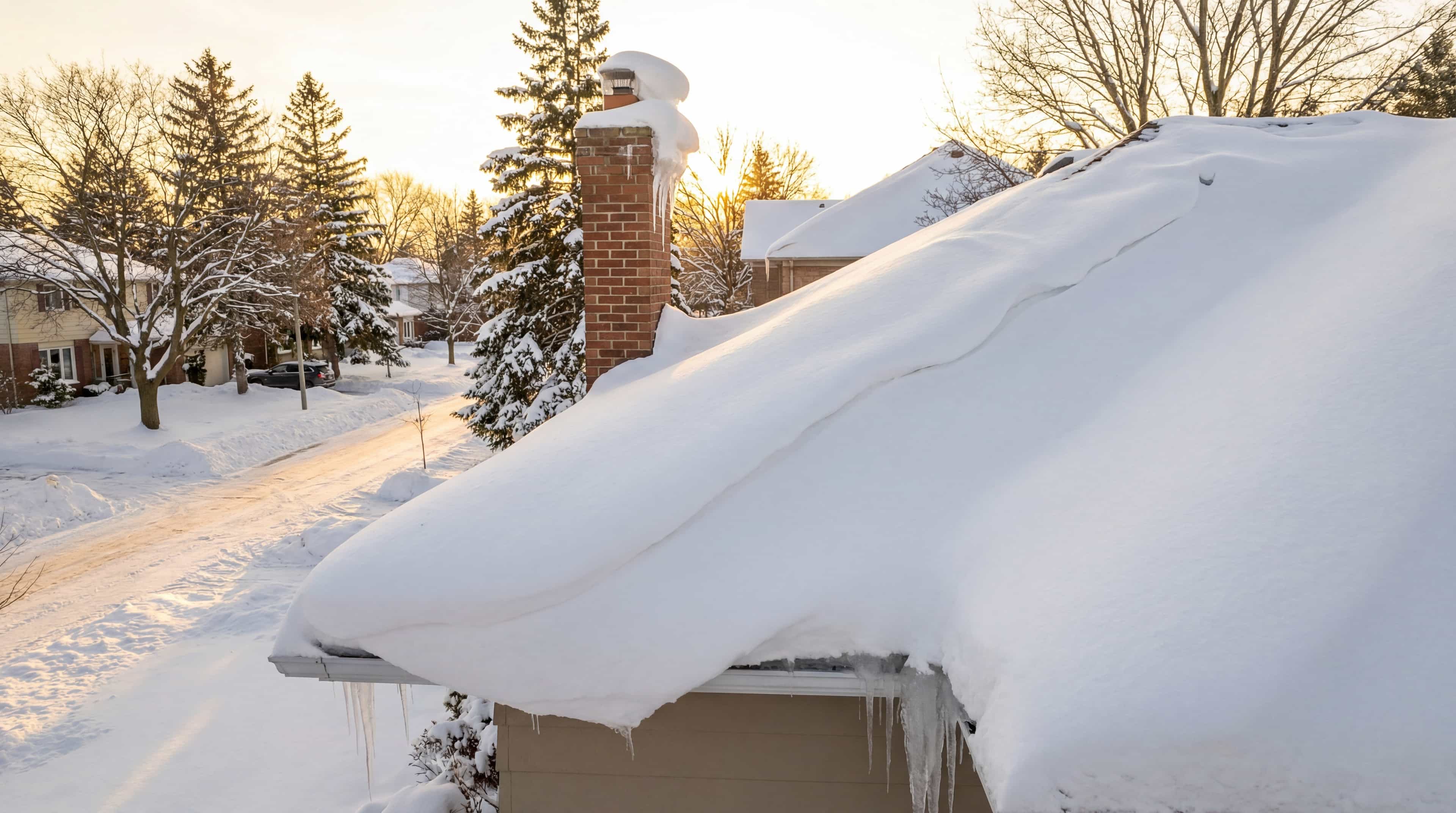
If you’ve ever walked outside after a mild day in January and seen icicles “growing” from your eavestroughs, you’ve already witnessed the core issue: meltwater is being created, but it isn’t draining cleanly before temperatures drop again. In much of Canada, winter is rarely a steady deep-freeze. It’s a loop of snow, sun, warming, dripping, re-freezing, and occasional rain—exactly the pattern that turns small drainage weaknesses into ice buildup.
The term homeowners often hear is “ice dam,” and it matters because it describes a specific mechanism at the roof edge. According to Natural Resources Canada’s guidance on roofs and attics, ice dams form when snow melts on a warmed roof surface and then refreezes at colder eaves, allowing water to back up under shingles and into the roof assembly. That description is important for one reason: the “cause” is usually heat + roof temperature, while the damage pathway is often water that can’t drain.
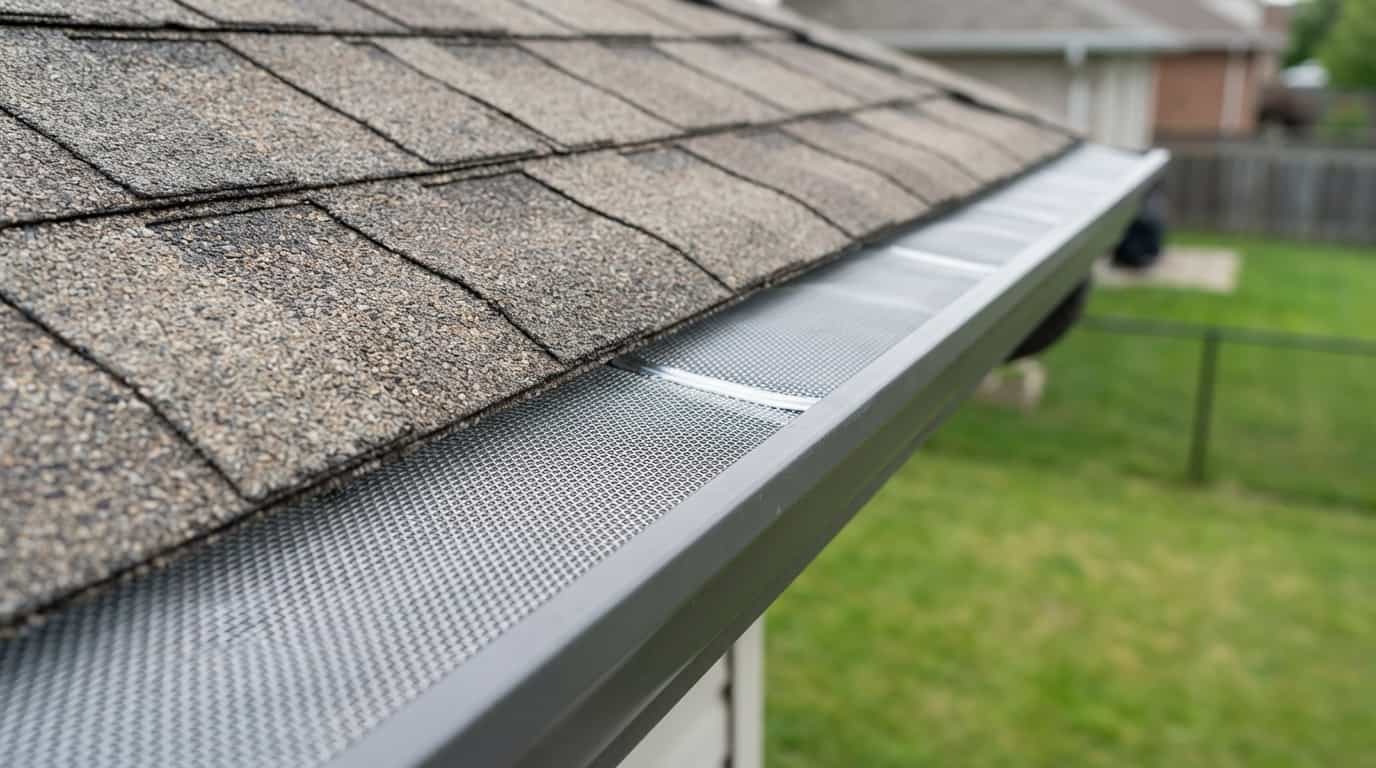
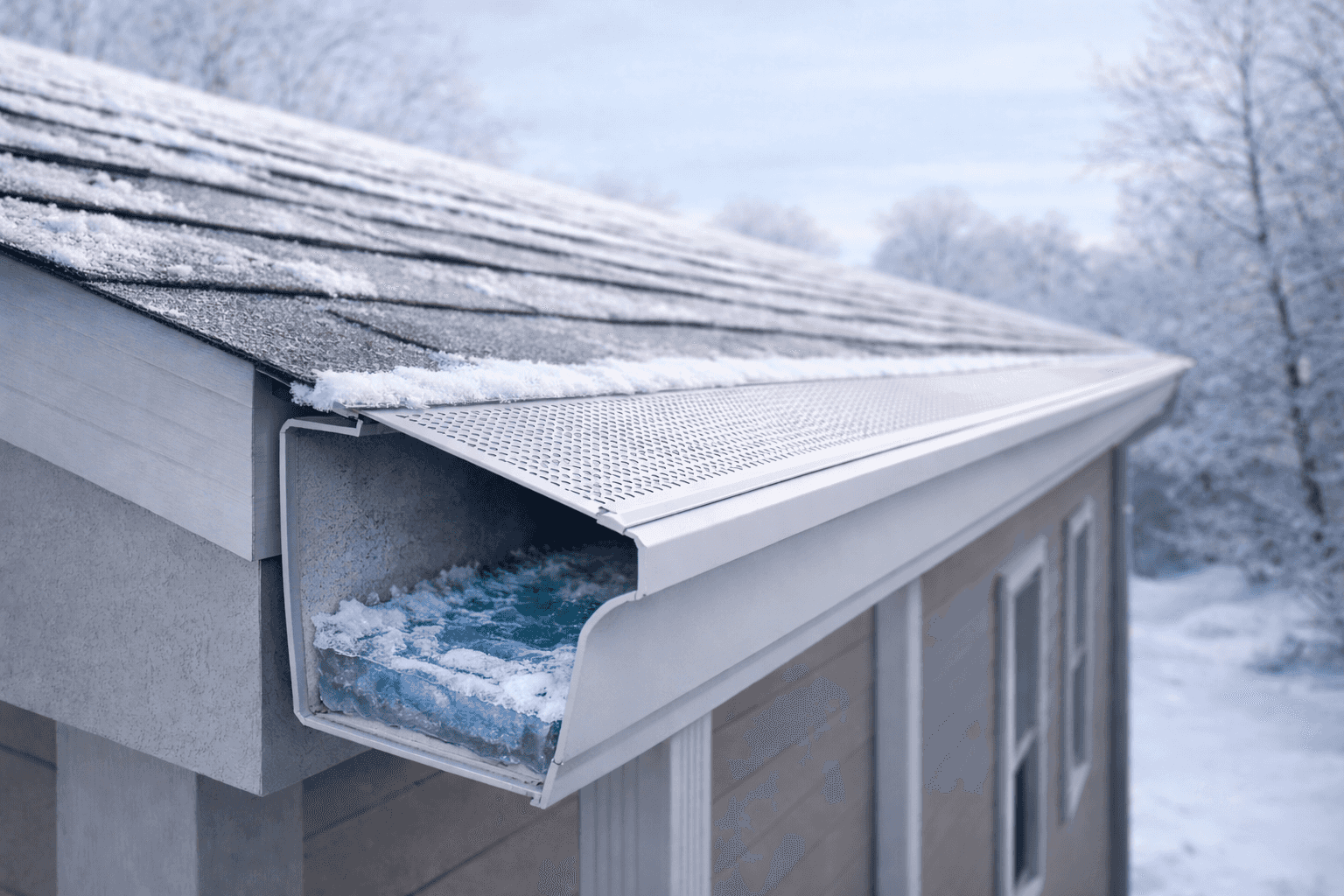
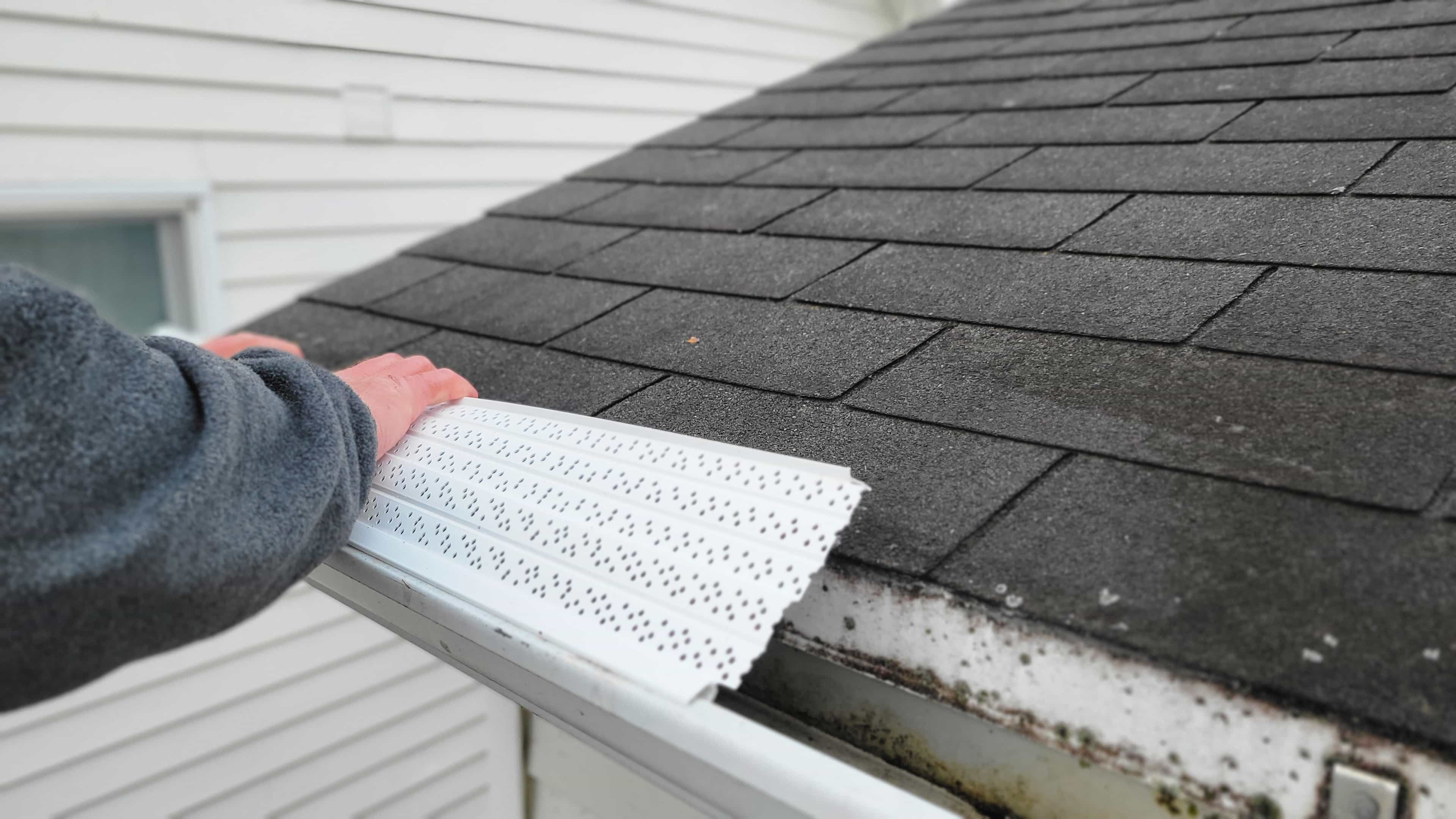
Eavestrough guards live in that second half of the story. They’re not insulation, ventilation, or air sealing—but they can reduce clogs, limit standing water, and keep meltwater flowing during short thaws. From a risk perspective, that’s valuable because water backup and leaks can become expensive, and in the Insurance Bureau of Canada’s overview of ice dams, the organization emphasizes prevention and practical steps to reduce the chance of water damage tied to ice buildup at the roof edge.
This guide is built around one principle: drainage first. You’ll get a homeowner-friendly framework for choosing the right guard style for Canadian winters, installing (or upgrading) the eavestrough system so it drains reliably, and maintaining it through freeze–thaw season—without creating new problems like overflow, ice shelves, or blocked downspouts.