Cold-Climate Reality Check for Modular Homes: What Actually Drives Durability and Winter Comfort
The Practical Building-Science Factors That Decide Whether “Prefab” Feels Warm in January
By
Published: March 18, 2026
Updated: March 21, 2026
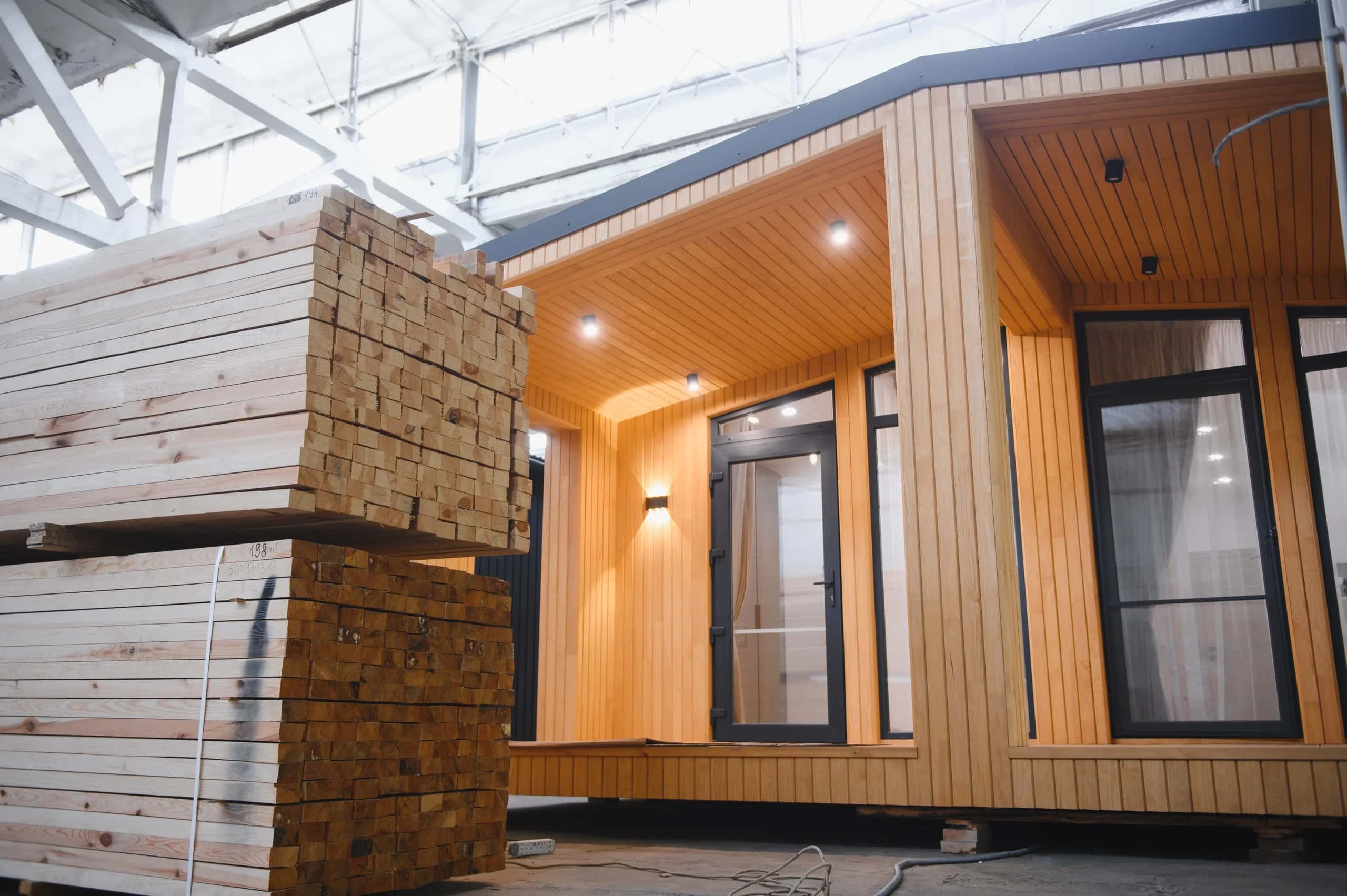
Snow clings to sleek modular walls where airtight seams and real RSI decide winter comfort. (Credit: Homeowner.ca)
Key Takeaways
•Winter comfort in a modular home is mostly about continuity: continuous insulation, a continuous air barrier, and continuous ventilation.
•Durability in cold climates is moisture management—stop warm, wet indoor air from reaching cold surfaces where it can condense.
•The best “cold-climate upgrades” are usually boring details: module-joint sealing, attic air-sealing, window air leakage, and foundation drainage.
A modular home can be an excellent cold-climate home—but “built in a factory” isn’t the same thing as “built for winter.” Comfort in January (and durability over decades) comes down to how well the home controls heat, air, and moisture at every seam, penetration, and transition: wall-to-roof, wall-to-foundation, and module-to-module.
Think of winter performance like a system stack. Insulation slows heat flow. Air-sealing stops drafts and keeps moisture-laden air from being pushed into cold cavities. Vapour control keeps the dew point where it belongs. Mechanical ventilation replaces the “fresh air” older leaky homes got accidentally—without wasting the heat you paid to make. Then the structure and site details (foundation frost strategy, roof snow loads, drainage) keep the building stable and dry as the weather cycles between freeze and thaw.
Modular construction has a real advantage: the controlled environment helps builders place insulation accurately and install membranes without rain, wind, and on-site chaos. But modular homes also introduce unique weak points—especially at transport splits and set-day joints—where continuity can be lost if the on-site finishing crew doesn’t treat sealing as part of the structure, not a cosmetic afterthought.
This article is a “reality check” you can use in two ways. If you’re shopping, it gives you specific questions to ask so you can tell the difference between marketing specs and true cold-climate design. If you already own a modular home, it shows you where to look (and what to maintain) so winter comfort and moisture control don’t slowly drift out of tune.

Bulk Insulation Beats “Miracle Layers”
Why Real RSI Is Non-Negotiable in Canadian Winters
Cold-climate comfort starts with bulk insulation—the kind that has measurable thermal resistance because it traps air in a stable way. Reflective foils and bubble-foil products can play a supporting role, but in Natural Resources Canada’s insulation materials guidance the agency notes that radiant foil or bubble-foil insulation alone has very low effective RSI values, which is why conventional insulation (batts, rigid foam, spray foam) is the backbone of winter performance.
If you’re comparing modular home specs, it helps to translate “what it’s made of” into “how much resistance you’re actually getting per thickness.” That same Natural Resources Canada resource provides typical design RSI values that let you sanity-check assemblies:
Common for slabs/foundations and exterior continuous layers
In modular homes, “thin but high-R” materials are often used strategically because wall thickness is constrained by transport and standard framing. The best assemblies treat insulation as a system: cavity insulation for cost-effective R, plus an exterior layer to reduce thermal bridging, plus careful attention to airtightness so wind and stack effect don’t turn insulation into a filter.
Tip
When a spec sheet says “R-24 wall,” ask whether that’s cavity-only or an “effective” whole-wall value that accounts for studs and thermal bridging, because the comfort difference is noticeable near exterior walls.
Advertisement — Article Continues Below
Code Targets Help You Sanity-Check Claims
What “Cold-Zone” Levels Look Like for Walls, Roofs, and Floors
One of the fastest ways to evaluate a modular home is to compare its stated insulation levels against a real Canadian code framework—especially in colder heating-degree-day zones. In the British Columbia Building Code’s Section 9.36 energy-efficiency provisions you can see how prescriptive minimum effective RSI values rise with colder climate zones, which is why cold-climate modular homes often require substantial roof and floor insulation even when walls look “normal” in thickness.
As an example of the scale involved in colder zones (often characterized by higher heating degree-days), that BC code framework includes prescriptive targets on the order of:
ceilings below attics in the range of roughly RSI 8.67–10.43,
above-grade walls around RSI ~2.97–3.08,
floors over unheated spaces around RSI 5.02 or higher,
and foundation insulation requirements that can be around RSI ~2.98 depending on the assembly and ventilation approach.
The practical point isn’t to memorize those numbers. It’s to use them as a filter: if a modular home marketed for a cold region comes in far below those levels, you should assume either (a) it’s not intended for that climate zone, or (b) the builder is relying on a performance path that needs documentation (energy modelling, airtightness results, and verified assemblies).
If you want a broader view of how Canadian model codes are published and updated, the National Research Council of Canada’s Codes Canada publications page is a reminder that code language and adoption vary by province and municipality, which is why the same modular design may need adjustments when it moves from one jurisdiction to another.
Continuous Insulation and Sealing Beat “More Batt” in the Real World
Walls aren’t just “a place to put insulation.” They’re one of the biggest drivers of comfort because they’re full of framing, joints, and penetrations that can short-circuit your thermal performance. In Natural Resources Canada’s guidance on insulating walls the agency estimates that exterior walls account for about 20% of heat loss in typical Canadian houses, and it emphasizes that cracks and penetrations add uncontrolled air leakage that can undermine even “high-R” walls.
For modular homes, this matters in two specific places:
Panel edges and module seams: the marriage wall line, rim joists, and floor/ceiling transitions are where continuity can be broken during transport and set-day assembly.
Service penetrations: electrical, plumbing, HRV ducts, range hood exhausts, and exterior hose bibs create pathways for air leakage if not sealed with intent.
A strong cold-climate wall approach typically includes a continuous exterior insulation layer (to reduce thermal bridging), careful detailing at window and door openings, and a clear strategy for a drainage plane so bulk water doesn’t become trapped behind cladding. Factory construction can help with repeatability, but the on-site crew still needs a precise plan for sealing the “last 5%” at module joints.
A simple homeowner test: on a windy day, check for cold air movement around baseboards, electrical outlets on exterior walls, and any visible module seam lines. Drafts are a symptom—not just of comfort loss, but of moisture transport risk.
Important
If you’re choosing upgrades, prioritize continuity upgrades (exterior continuous insulation, taped air barrier, sealed penetrations) before chasing a slightly higher cavity R-value, because the comfort payoff is usually bigger.
Advertisement — Article Continues Below
Vapour and Air Layers Decide Durability
Keep Moisture from Reaching Cold Surfaces Inside the Envelope
Winter durability is largely about preventing condensation inside the building envelope. In Natural Resources Canada’s “how your house works” guidance the agency explains that vapour barriers in Canadian houses are typically located on the warm side of the insulation, and it describes the “one-third, two-thirds” rule used in cold or high-humidity situations—an approach intended to reduce condensation risk by keeping enough insulation to the exterior side of the vapour control layer.
The building-science reason is straightforward: warm indoor air can hold a lot of moisture. If that air leaks into a cold wall or attic cavity and reaches its dew point, it can condense as liquid water or frost. Over time, that can reduce insulation effectiveness, create mould-friendly conditions, and damage materials.
For modular homes, the design intent can be excellent—and still fail if continuity is broken at:
module-to-module joints,
ceiling plane transitions (especially around attic access hatches),
plumbing stacks and duct chases,
and rim joist areas where multiple assemblies meet.
A practical mindset is to treat the air barrier as the “zipper” on your winter jacket. Insulation is the puffy fill, but an open zipper makes the jacket feel useless even if it’s technically thick.
Warning
Avoid adding extra interior vapour layers (for example, additional polyethylene or impermeable finishes) without professional guidance, because trapping moisture between layers can turn a minor humidity issue into a hidden wall or attic problem.
Advertisement — Article Continues Below
Attics Are a Condensation Magnet When Details Slip
Air-Seal First, Then Add Insulation Depth
Attics are often where cold-climate homes succeed or fail because the temperature gradient is extreme and the assembly is full of openings (lights, fans, wiring, attic hatches). In Natural Resources Canada’s roofs and attics guidance the agency stresses that the vapour barrier belongs on the warm side of insulation and that the air barrier must be continuous and sealed, noting that as insulation levels increase the attic becomes colder—making any air leakage into that space more likely to condense.
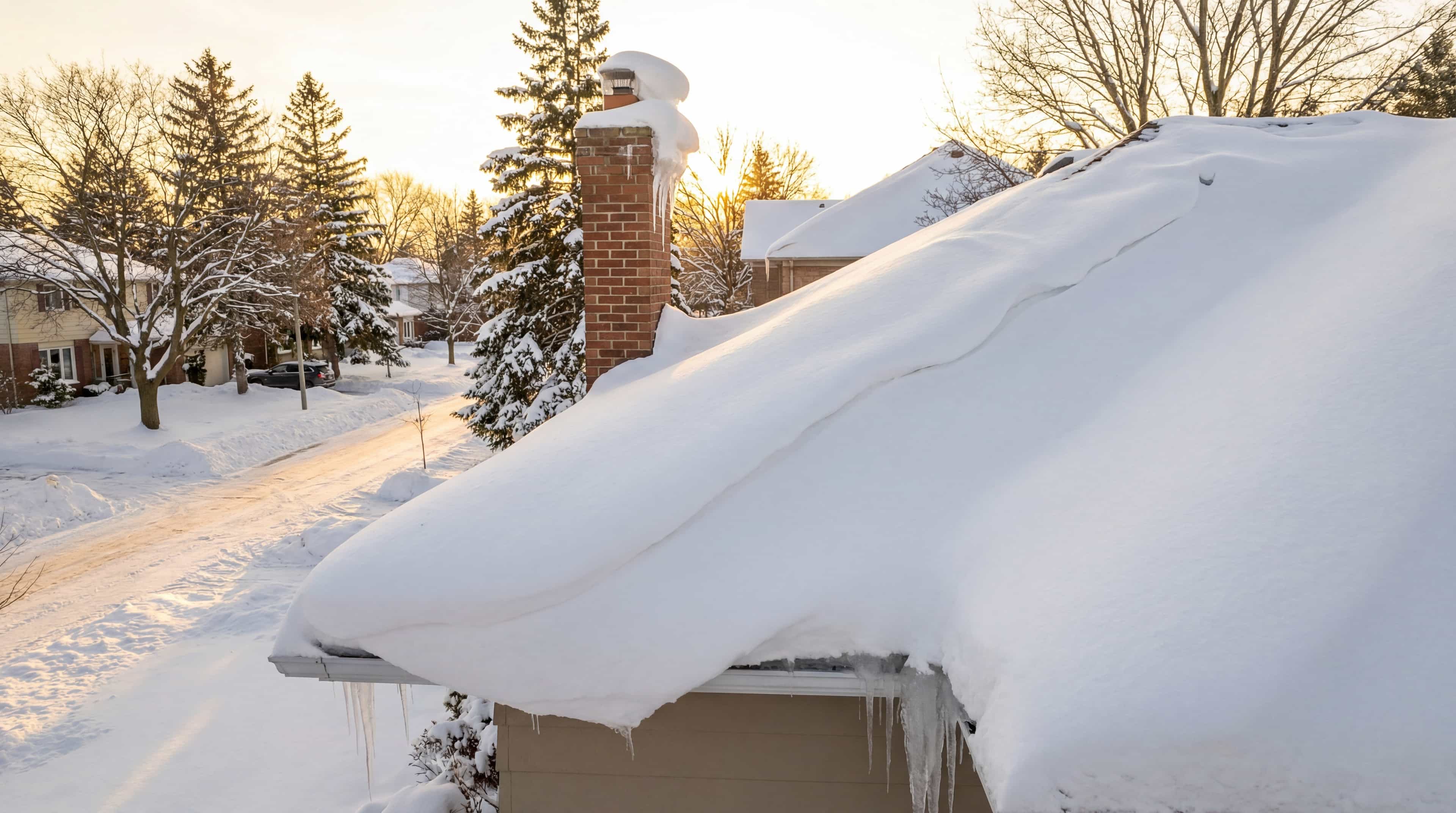
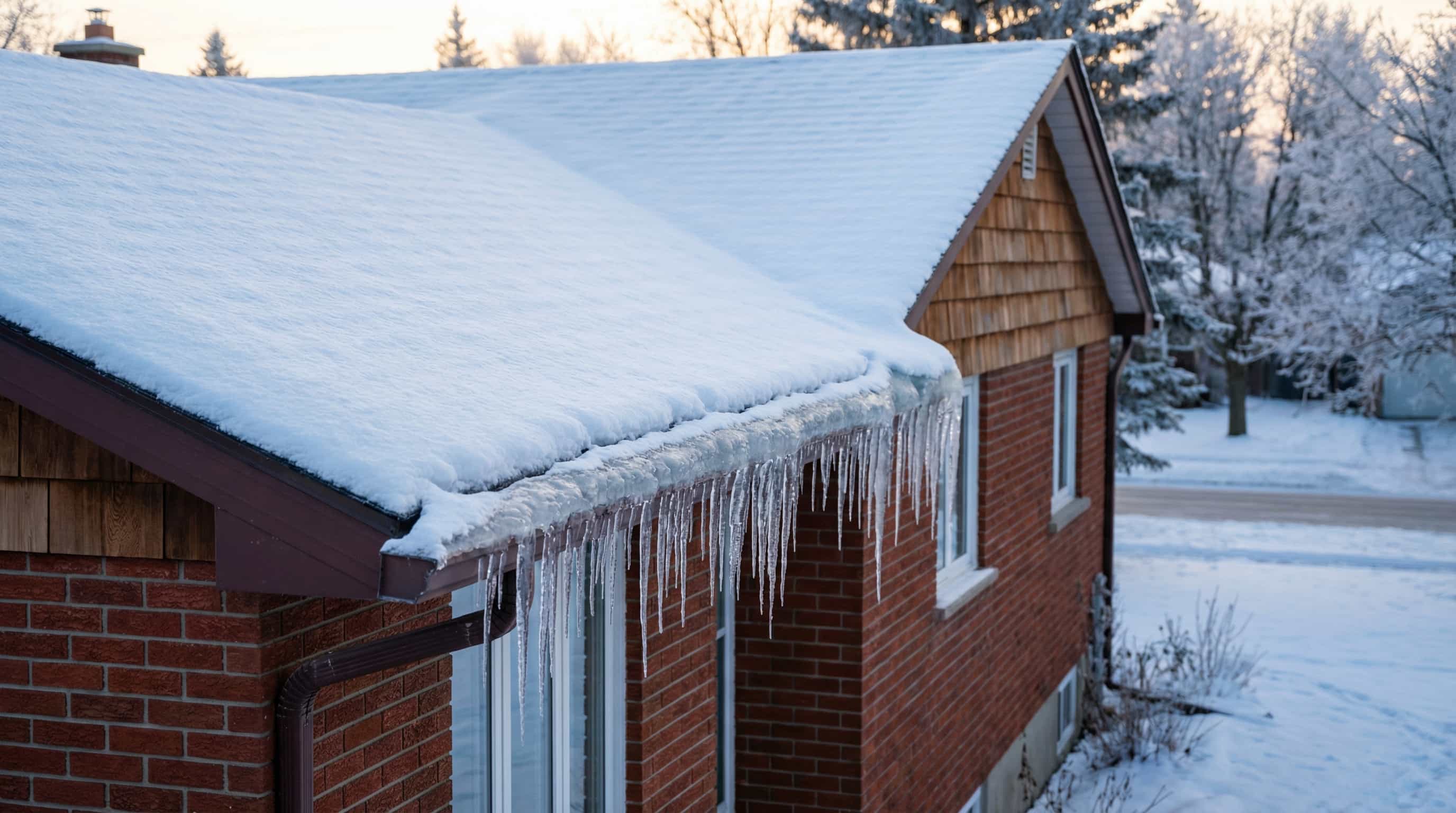
This is one of the counterintuitive cold-climate lessons: more insulation can increase condensation risk if the ceiling plane isn’t airtight. The goal is a “cool roof,” where heat isn’t escaping to melt snow unevenly. A well-sealed, well-insulated attic generally reduces ice dam risk, while complex roof geometries (valleys, dormers, big overhangs) are more prone because they create thermal and airflow weak points.
If you’re evaluating a modular home (or troubleshooting one), focus on these attic-specific checks:
the attic hatch is insulated and gasketed,
penetrations (bath fans, wiring, plumbing vents) are sealed at the ceiling plane,
and roof/attic ventilation is designed as a system, not an afterthought.
Tip
Early-season roof melt patterns are diagnostic: uneven melt often points to heat loss locations that can be improved with air-sealing and better ceiling-plane detailing.
Advertisement — Article Continues Below
Ventilation Is Essential in Cold Regions
HRVs and ERVs Replace “Accidental Fresh Air” in Tight Homes
A tight, well-insulated modular home won’t behave like an older leaky house—and that’s a good thing, as long as ventilation is designed properly. In Health Canada’s guidance on ventilation and the indoor environment the agency notes that in colder parts of Canada homeowners must primarily rely on mechanical ventilation for adequate air exchange, and it points out that heat-recovery ventilators (HRVs) and energy-recovery ventilators (ERVs) are often required by local building codes in those regions.
The winter comfort win here is that HRVs/ERVs give you fresh air without flushing your heat budget out the window. The durability win is humidity control: ventilation helps keep moisture loads from accumulating in a way that drives condensation at cold surfaces.
But ventilation problems are often subtle until they’re not. In Health Canada’s ventilation infographic common signs of insufficient ventilation include high humidity, mould, odours, and a general sense of stuffiness, which is why “the house feels tight” should trigger commissioning and maintenance, not window-cracking as your only strategy.
A practical homeowner routine is:
run bathroom ventilation during and after showers,
If you’re upgrading or troubleshooting, the goal isn’t “maximum ventilation”—it’s balanced ventilation that keeps indoor air quality and humidity stable while preserving heat.
Advertisement — Article Continues Below
HRV/ERV Systems Need Standards and Cold-Weather Ratings
Equipment Choice Matters More Than Most Buyers Realize
Because HRVs/ERVs are core to how a cold-climate modular home functions, the “it’s installed somewhere” approach isn’t enough—you want a system that’s designed, installed, and verified correctly. The Standards Council of Canada listing for CSA F326 describes a national standard that defines performance, installation, application, and verification requirements for residential mechanical ventilation systems in single-family dwellings under Part 9 of the National Building Code scope, which is a helpful reference point when you’re comparing builders and HVAC contractors.
On the equipment side, winter suitability should be more than marketing language. In Natural Resources Canada’s Energy Efficiency Regulations summary for heat-recovery ventilators the government outlines how HRVs/ERVs are defined and tested in Canada, including lab testing based on CAN/CSA standards with sensible heat recovery efficiency reported at 0°C and, for most units, at −25°C—details that matter when your real winter isn’t a mild shoulder-season.
When you’re reviewing a modular home’s ventilation package, the practical questions are:
What are the unit’s winter ratings (including low-temperature performance)?
How is defrost handled in cold weather?
Is the system balanced and commissioned after installation?
Are ducts and penetrations sealed so the system isn’t “fighting” uncontrolled leakage?
Advertisement — Article Continues Below
HRV/ERV Maintenance Is a Comfort Strategy
Small Habits That Keep a Tight Home Feeling Fresh
Even an excellent ventilation design can underperform if it’s not operated and maintained. In Natural Resources Canada’s guidance on heat/energy recovery ventilators the agency advises that HRVs/ERVs should generally run continuously except during servicing, that annual servicing by an accredited contractor is recommended, and that filters should be cleaned every 1–3 months to maintain performance.
A simple maintenance rhythm for a modular home in a cold region:
Every 1–3 months: clean or replace filters (more often if you have pets, renovations, or lots of airborne dust).
Seasonally: inspect exterior intake/exhaust hoods for snow blockage and debris; confirm condensate drains are clear if your unit uses them.
Annually: have the unit inspected and serviced, ideally timed with other HVAC maintenance so it becomes routine.
If indoor air starts feeling stale, windows fog more than usual, or odours linger, treat it like a filter/airflow problem first—not a mystery.
Important
In a tight modular home, a clogged HRV/ERV filter can mimic “poor construction” because it reduces fresh air delivery and can push humidity up, which affects both comfort and condensation risk.
Advertisement — Article Continues Below
Windows and Doors: Look for Performance Numbers
U-Factor, Energy Rating, and Air Leakage Are the Comfort Trio
Windows and doors aren’t just aesthetic choices in a cold climate—they’re thermal and airflow components you live beside every day. In Natural Resources Canada’s ENERGY STAR Canada technical specification for residential windows and doors the specification defines key thresholds for certified products, including limits on U-factor (or an alternate minimum Energy Rating) and limits on air infiltration/exfiltration, which directly relate to draftiness and heat loss near glazing.
For modular homes, this is especially relevant because factory-built envelopes can be very airtight—so a leaky window or poorly sealed door becomes a disproportionate comfort problem. When comparing packages, ask for:
U-factor (lower is better in cold climates): affects heat loss and interior glass temperature.
Air leakage rating: affects drafts and how “still” the air feels near the window.
Installation detailing: taped/flashed openings, shimming, and air-sealing strategy matter as much as the unit itself.
Climate context helps too. As one Canadian window resource summarizes, Northern Comfort Windows’ overview of ENERGY STAR climate zones explains that Canada is divided into multiple ENERGY STAR zones and that selecting products rated for colder zones can provide a performance margin, which is a useful shortcut if you’re trying to avoid “almost good enough” glazing in a long heating season.
Advertisement — Article Continues Below
Learn the Labels and the “Triple-Glaze Tell”
How to Read U-Factor Without Getting Lost in Specs
If window shopping feels like alphabet soup, reduce it to one concept: U-factor is the rate of heat flow through the window system (lower means less heat loss). The U.S. Department of Energy’s explainer on energy performance ratings for windows, doors, and skylights notes that these products are rated and labelled through the National Fenestration Rating Council (NFRC) system and that typical residential window U-factors span a wide range, which helps you see just how different “two windows that look the same” can perform.
For winter comfort, lower U-factor generally means:
warmer interior glass temperatures,
less “cold radiating” sensation when you sit near windows,
reduced risk of condensation on the inside surface,
and lower heating demand.
A practical cold-climate benchmark is that extremely low U-factors are commonly associated with triple glazing. In the U.S. Building America program’s guidance on high-performance ENERGY STAR windows the resource notes that top-tier ENERGY STAR “Most Efficient” windows targeting high performance are triple-glazed and tied to very low U-factor requirements, which is a helpful reality check when a sales pitch promises “high efficiency” without showing the rating numbers.
Tip
If you want “no cold-glass” comfort, ask for the NFRC label data (U-factor and air leakage) and compare it across packages—the label is often more honest than the brochure.
Advertisement — Article Continues Below
Foundations and Drainage Are Cold-Climate Durability Insurance
Frost Strategy Plus Water Control Prevents Movement and Moisture
A modular home can arrive with a perfect envelope and still struggle if the foundation and site water management are weak. Frost action isn’t a theory in Canada—it’s a design load. In the National Research Council building digest on frost action the conventional prevention strategy is to place foundations below expected maximum frost penetration and to avoid frost-susceptible backfill soils, favouring coarse, well-drained granular backfill and perimeter drainage tile that reduces the chance of frost heave and related movement.
At the same time, water control at the surface is one of the easiest homeowner wins. A basement moisture guide that reproduces CMHC-style recommendations, Baseline Inspections’ basement flooding reference, recommends downspouts discharge water at least 1.8 metres (6 feet) away from basement walls and that grading near the foundation slope away from the house, while also emphasizing regular eavestrough cleaning and correction if gutters overflow.
For modular homes, this “below and around the modules” strategy matters because set-day precision doesn’t protect you from spring thaw water pooling against the foundation.
Warning
If you see recurring ice buildup near the foundation, chronic basement dampness, or downspouts dumping beside the wall, address drainage first—those are often solvable without touching the interior finishes.
Advertisement — Article Continues Below
Snow Loads and Roof Engineering Are Location-Specific
Why “Designed for Winter” Should Mean Calculated Loads
Snow isn’t uniform across Canada, and roof design shouldn’t be either. In an engineering context, snow loads are calculated using climatic data and code procedures, not guessed. Tools like the Jabacus roof snow load calculator based on NBCC 2015 procedures illustrate how regional ground snow loads and rain loads feed into design loads, which is why a modular roof package should be matched to the final installation location—not just “the factory’s home region.”
From a homeowner perspective, the lesson is twofold:
Roof trusses are engineered for specific loads, including drift and accumulation assumptions.
Unusual conditions (extreme events, drifting from wind exposure, complex roof geometry) can create localized stresses even in well-designed roofs.
It’s also worth recognizing that many prefab/modular builders market cold-climate packages that include roof systems engineered for heavier snow regions. A Canadian prefab overview, My Own Cottage’s summary of prefab house benefits, describes features like snow-load-rated roof trusses and higher-performance window packages as common regional adaptations, which can help you ask better questions about what is standard versus optional.
Advertisement — Article Continues Below
Modular Performance Benchmarks to Ask For
Airtightness, Insulation Ranges, and What “Better Quality Control” Really Means
If you want a modular home that feels warm, focus less on the word “modular” and more on measurable performance: airtightness, insulation levels, and verified detailing. A Canadian prefab builder’s Ontario-focused discussion, My Own Cottage’s review of small prefab energy efficiency, reports indicative ranges like tighter airtightness (ACH50) and higher wall/roof insulation ranges in prefab builds compared to typical traditional homes, along with reported utility bill reductions—useful as directional data for what “good” can look like, even if you still want third-party verification on any specific project.
In practice, when a modular builder claims high performance, ask for:
blower-door test results (or a target, with commissioning steps),
how module joints are sealed and inspected on site,
and whether windows/doors are specified with U-factor and air leakage data.
Factory quality control is real, but it’s not magic. A modular builder’s cold-region perspective, My Own Cottage’s discussion of sustainable features of modular homes, emphasizes that controlled factory conditions and inspections before transport can support better consistency in insulation and system installation, which is exactly the kind of upstream discipline that pays off when the weather turns severe.
Note
Performance isn’t just a spec—it’s an outcome. The best modular homes treat on-site sealing and commissioning as part of the build, not “post-delivery touch-ups.”
Advertisement — Article Continues Below
Modular Can Also Be a Climate Win
High Performance and Lower Construction Emissions Can Go Together
Cold-climate durability and sustainability often point to the same decisions: build tight, insulate well, ventilate correctly, and reduce waste. The Canadian Home Builders’ Association’s overview of modular and the environment reports that modular homes can be built to the same high-performance levels as site-built homes, including net-zero targets, and it highlights research indicating off-site construction can reduce greenhouse gas emissions during construction by more than 40% through waste reduction and improved durability.
For homeowners, the takeaway is practical: the path to “greener” is often the same path to “more comfortable in February.” Better envelopes and better ventilation reduce energy demand, which can make efficient heating systems (including heat pumps where appropriate) more effective and more affordable to operate.
If you’re comparing options, you don’t need to choose between comfort and responsibility. You can treat winter performance as the first principle and let the environmental benefits follow from solid building science and consistent execution.
Advertisement — Article Continues Below
FAQ
Treat reflective products as a supplement, not the main insulating layer. In Canadian winters, comfort depends on bulk insulation that delivers meaningful thermal resistance through thickness and continuity, plus good air-sealing so wind and stack effect don’t bypass it.
RSI is the metric (SI) version commonly used in Canada, while R-value is the imperial version. Builders may use either; what matters is that you compare apples to apples and confirm whether the value is cavity-only or a whole-assembly (“effective”) estimate.
It’s an attempt to account for thermal bridging through framing and other real-world factors, not just the insulation in the cavity. Two walls can have the same cavity insulation but different comfort because one has more continuous insulation and fewer thermal bridges.
Module seams (marriage walls), rim joists, service penetrations, attic hatches, and window/door perimeters are the usual suspects. The home can be excellent everywhere else and still feel drafty if one transition is weak.
Because warm indoor air carries moisture. If that air reaches a cold surface inside the wall or attic, it can condense as water or frost, which undermines insulation and can damage materials over time.
More insulation can make the attic colder in winter. If warm, moist air leaks into that colder space through gaps in the ceiling plane, it’s more likely to hit the dew point and condense—so air-sealing becomes even more important.
Yes—tightness reduces accidental fresh air, which means ventilation must be intentional. HRVs/ERVs provide fresh air while recovering heat, helping with both comfort and humidity control during long heating seasons.
Persistent window condensation, musty odours, stuffiness, and recurring mould spots are common red flags. Start with filter condition, fan operation, and whether ventilation is being used consistently.
Look beyond “triple pane” and ask for U-factor and air leakage data, because those numbers correlate directly with heat loss and drafts. Installation detailing matters too—an excellent window can still feel bad if it’s poorly sealed to the wall.
Focus on the fundamentals: reduce heat loss into the attic (air-seal the ceiling plane), ensure insulation is continuous, and keep attic ventilation paths clear. Ice dams are usually a symptom of heat escaping, not just “too much snow.”
Foundations need the right depth for local frost conditions, plus drainage and backfill strategies that keep water from feeding frost action. Good site water management—moving roof runoff away from the house—supports the foundation strategy.
Confirm the roof structure was engineered for the installation location and avoid ad-hoc changes (like adding heavy roof-mounted equipment) without checking. If you see unusual drifting or signs of stress, consult the builder or a structural professional before attempting risky snow removal.