Why Existing Homeowners May Care More Than Buyers

Credit: Shutterstock
Most coverage of the May 7, 2026 announcement will read like an affordability story. Buyers can now use CMHC mortgage loan insurance to finance a factory-built home with 5% down and access funds in stages as construction progresses. The headline is real, and it matters. But it is not the most interesting part of the announcement.
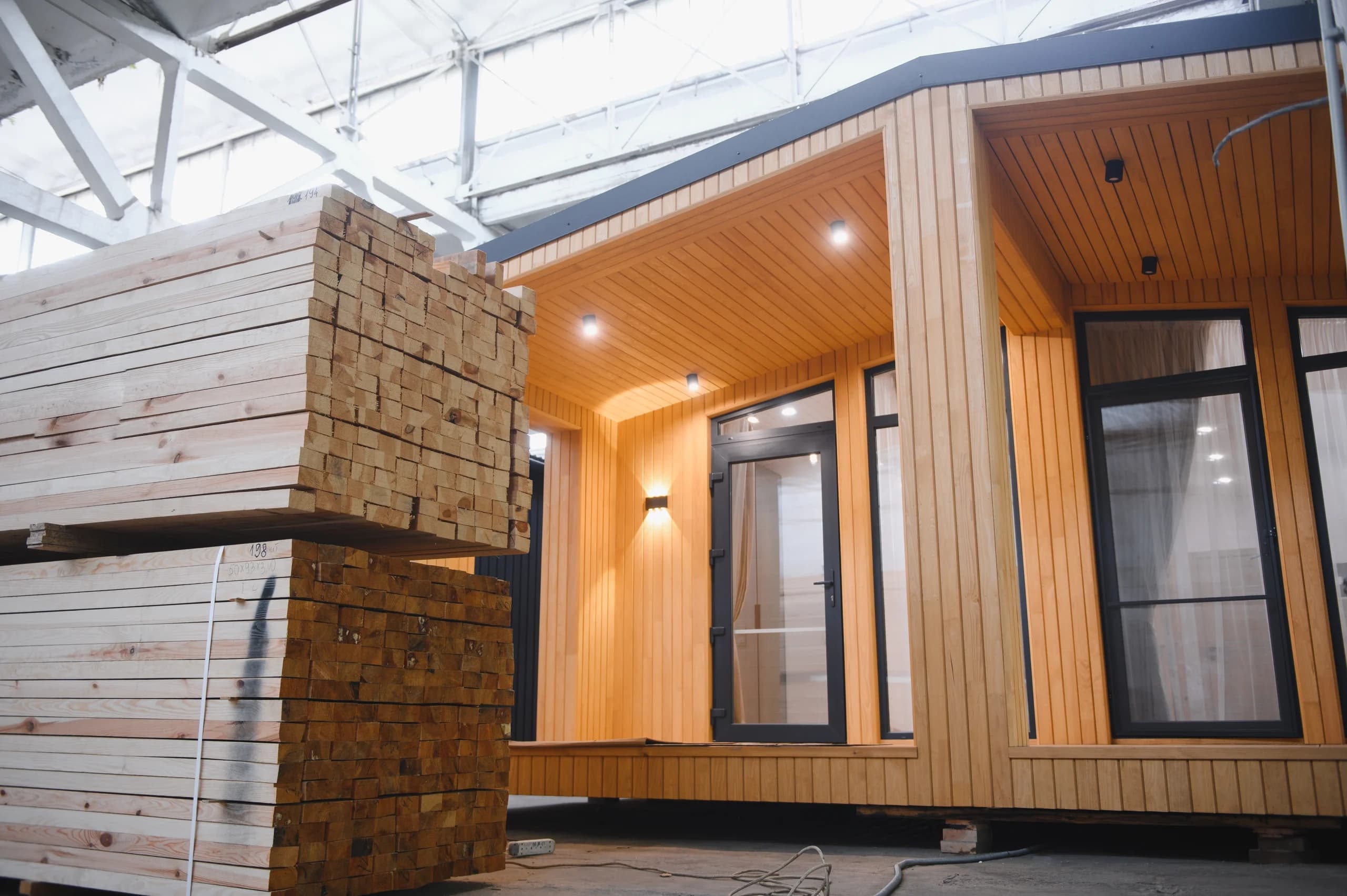
The more useful framing for anyone who already owns a home is this: CMHC Prefab Plus quietly resolves a financing gap that has been awkward for years. Until now, an owner contemplating a knockdown-rebuild or a prefab garden suite usually had to use their own cash or a home equity line of credit to bridge factory payments before a traditional mortgage advance could close out the file. The new product collapses that timeline into one insured loan with up to four staged advances — designed around the prefab build sequence rather than a stick-built one.
The signal is bigger than the loan-to-value math. CMHC also extended permanent eligibility for modular construction across all of its multi-unit insurance products, including the flagship MLI Select. Translated: prefab is no longer an experimental category in Canadian housing finance. It is now a mainstream channel, with implications for resale comparables, lender comfort, and the toolkit available to existing homeowners weighing a major project on land they already own.
Prefab Plus is mortgage loan insurance, not a mortgage. CMHC underwrites the insurance, but the actual loan still comes from a participating lender. That distinction matters because product availability — and willingness to sign off on staged draws for a prefab build — varies by lender. Pre-approval at one bank does not guarantee Prefab Plus participation at another, or even at the same one.
The basic terms map cleanly onto familiar high-ratio mortgage mechanics. For owner-occupied properties with one or two units, the product supports up to 95% loan-to-value, with minimum borrower equity of 5% on the first $500,000 of lending value and 10% above that. The maximum purchase price or as-improved property value is capped at $1.5 million, and the standard amortization is 25 years, as detailed on CMHC's Prefab Plus product page. For three- and four-unit owner-occupied properties, the LTV ceiling drops to 90% with 10% minimum equity. Eligible borrowers are Canadian citizens, permanent residents, and non-permanent residents legally authorized to work in Canada, subject to standard underwriting on credit, debt-service ratios, and income.
The property must be in Canada, suitable for full-time, year-round occupancy, and have year-round vehicular access — including a bridge or ferry connection if it sits on an island. Permanently affixed homes are secured under a traditional mortgage; movable factory-built units are eligible under CMHC's chattel financing. For a wider primer on how Canadian codes treat prefab and manufactured construction beyond the financing layer, our hub on modular, prefab, and manufactured homes in Canada walks through the regulatory and performance context.
The closest prior comparable was a self-build construction draw mortgage. Those products have existed for years, but they were designed around stick-built timelines, not factory ones. A prefab build inverts the cash-flow profile. A large factory invoice often arrives weeks before the unit is set on its foundation, while site prep, foundation, and utility connections happen in parallel rather than sequence. Owners frequently had to cover that factory payment from cash or a HELOC, then refinance once the build was complete.
Prefab Plus is built around that reality. The advance structure mirrors the actual prefab workflow: land and site preparation come first, then the prefabricated unit cost on delivery, then post-installation and finishing draws. Up to four consecutive advances are available, validated either by CMHC under what the program calls Full Service or by the lender under Basic Service.

The four-stage structure is the single most consequential mechanical change. It is also the part most likely to be glossed over in general coverage. Below is a working model of how the draws are intended to flow, drawn from CMHC's published advance schedule.
The reader-facing implication is straightforward. A homeowner planning a prefab project no longer has to assume they need a HELOC sitting in reserve to bridge the factory payment. Statistics Canada has tracked the role HELOCs play in renovation financing for years, and a meaningful share of that borrowing has gone toward home improvements that overlap with the kinds of works Prefab Plus now finances directly. For owners still weighing how to fund a prefab project today, our comparison on HELOC vs home equity loan vs refinance maps the trade-offs that Prefab Plus is designed to make less necessary.
The draw timing is set by CMHC's policy, but the actual release of funds depends on lender processes and inspections. Under Basic Service, the lender validates each advance without CMHC pre-approval — which can be faster, but also means lender-specific requirements may govern when each draw clears.
The most underappreciated use case for Prefab Plus is the existing homeowner who wants to replace an aging house on a lot they already own. The financing math for a knockdown-rebuild has historically been awkward. You cannot get a purchase mortgage on a property you already hold title to, and self-build construction draws assume conventional methods. Prefab Plus, applied to an as-improved lending value, gives lenders a CMHC-insured framework for advancing funds against a factory-built replacement structure. The product is calibrated to a $1.5 million as-improved ceiling, which covers a wide range of suburban infill and semi-urban replacement projects.
The resale-comp implication is worth flagging. If insured prefab becomes a routine financing path in supply-constrained neighbourhoods, prefab transactions will start to appear in appraisal comparables alongside traditionally built homes. That has been the missing ingredient for owners debating a rebuild — appraisers and underwriters have generally treated prefab as a comparable-sparse category, which has discouraged lenders from leaning in. A federal-backed insurance product is the kind of institutional signal that begins to close that gap.
The second use case is additional dwelling units. Garden suites, laneway homes, and prefab secondary structures have moved from boutique to mainstream in cities like Toronto and Vancouver, and the financing has lagged the appetite. Prefab Plus is not an ADU-specific product, but its structure suits ADU economics: the factory unit is the single largest cost line, and the staged draw aligns with how those builds actually progress.
Layered on top, municipal programs are doing the policy work. London, Ontario's Additional Residential Unit incentive stack offers loans of up to $45,000 alongside grants of up to $20,000 or $45,000 depending on stream, structured as forgivable over a 10-year period when paired with affordability or Indigenous housing conditions. Toronto's laneway and garden suite development charge deferral effectively pushes a major upfront soft cost out by up to 20 years or until a severance event. Vancouver's lower-density housing options program adds a similar enabling layer for owners considering prefab additions in detached neighbourhoods. Stacking municipal incentives with insured Prefab Plus financing changes the affordability math on these projects in ways that a standalone HELOC never could. Our coverage of London's expanded secondary-suite grants and permit-fee waiver walks through the eligibility window in more detail.
If you are weighing a prefab ADU or a knockdown-rebuild, sequence your research in this order: confirm your municipality's current ADU incentive program and its 2026 funding window, then ask your lender or broker whether they participate in CMHC Prefab Plus, then engage a prefab builder. Reversing that order tends to lock in costs before the financing pathway is confirmed.
Buried below the homeowner headline is a structural change for purpose-built rental. CMHC has expanded modular eligibility across all of its multi-unit insurance products, including MLI Select, the program responsible for insuring more than 150,000 rental units to date. The expansion follows a pilot that financed more than 800 modular rental units across five provinces. CMHC President and CEO Coleen Volk framed the combined announcement as a commitment to expand access to homeownership and rental supply using "every tool" available, as reported by Cantech Letter.
The pilot's flagship project, 605 Studio West in Calgary, delivered an 84-unit affordable building in under one year — roughly half the timeline of a comparable conventional project in the same community. That number is the practical case for treating modular as a mainstream rental method, not a niche one. The relevance to single-family homeowners is indirect but real. When modular and prefab construction is a routine part of CMHC's underwriting universe, lenders, appraisers, and municipalities calibrate accordingly. Insurance, like most institutional infrastructure, defines what is normal. The federal-provincial dimension is moving in parallel: see our reporting on B.C. partnering with Build Canada Homes on prefab housing at scale for the supply-side counterpart to the financing change.
Lender participation in Prefab Plus is not automatic. The Financial Consumer Agency of Canada has long noted that each lender sets its own mortgage guidelines, and that pre-approval is not a guarantee that a specific property or build type will fund. With a brand-new product, the variation will be wider in the early months than it will be by year-end. Brokers in particular work with a defined panel of lenders, and that panel may or may not include CMHC Prefab Plus participants on day one.
The decision-ready conversation is short. Confirm whether the lender or broker is participating in CMHC Prefab Plus. If they are, confirm whether they are using Full Service (CMHC validates each draw) or Basic Service (the lender validates) — this affects how quickly draws clear and what documentation is required. Confirm whether the project type you have in mind — purchase of a new prefab, knockdown-rebuild on an existing lot, or prefab secondary suite — fits their interpretation of the product. And confirm what eligibility evidence the prefab builder needs to provide upfront, because that documentation has historically been the slowest part of any factory-built loan file. If you are still comparing how to fund the project before Prefab Plus availability firms up at your lender, our hub on HELOCs explained covers the most common bridging instrument and where its limits actually sit.
Prefab Plus eligibility requires the home to be intended for full-time, year-round occupancy with year-round vehicular access. Recreational properties, seasonal cabins, and RV-type units do not qualify. If your project sits in a fringe category — a four-season cottage on a private road, for example — confirm access standards with your lender before assuming the program applies.
Before assuming construction financing options are limited to traditional self-build draw mortgages, ask your lender or broker explicitly whether they are participating in CMHC Prefab Plus. The answer determines whether you are working with a 25-year, low-down, four-stage advance product, or improvising with a HELOC and a refinance plan. Those are not the same financing posture, and the difference often shows up in monthly cash flow during construction.
About the Author
Ryan is the founder of Homeowner.ca and a proud Canadian homeowner based in Guelph, Ontario. Over his 25-year career in digital publishing, he has focused on transforming complex information into clear, practical guidance that helps people make confident, well-informed decisions.