What It Means for Existing Homeowners in Slow Markets

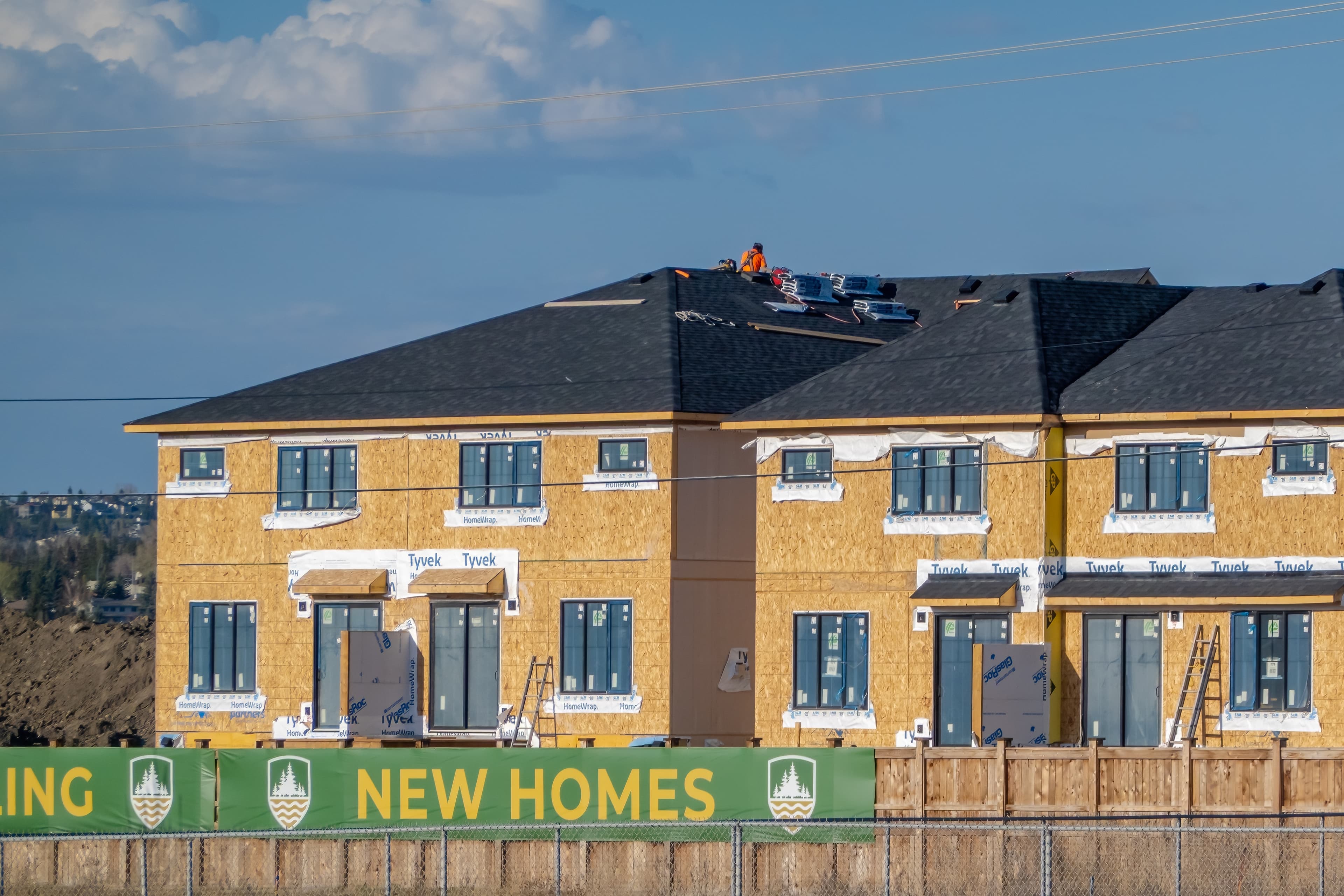
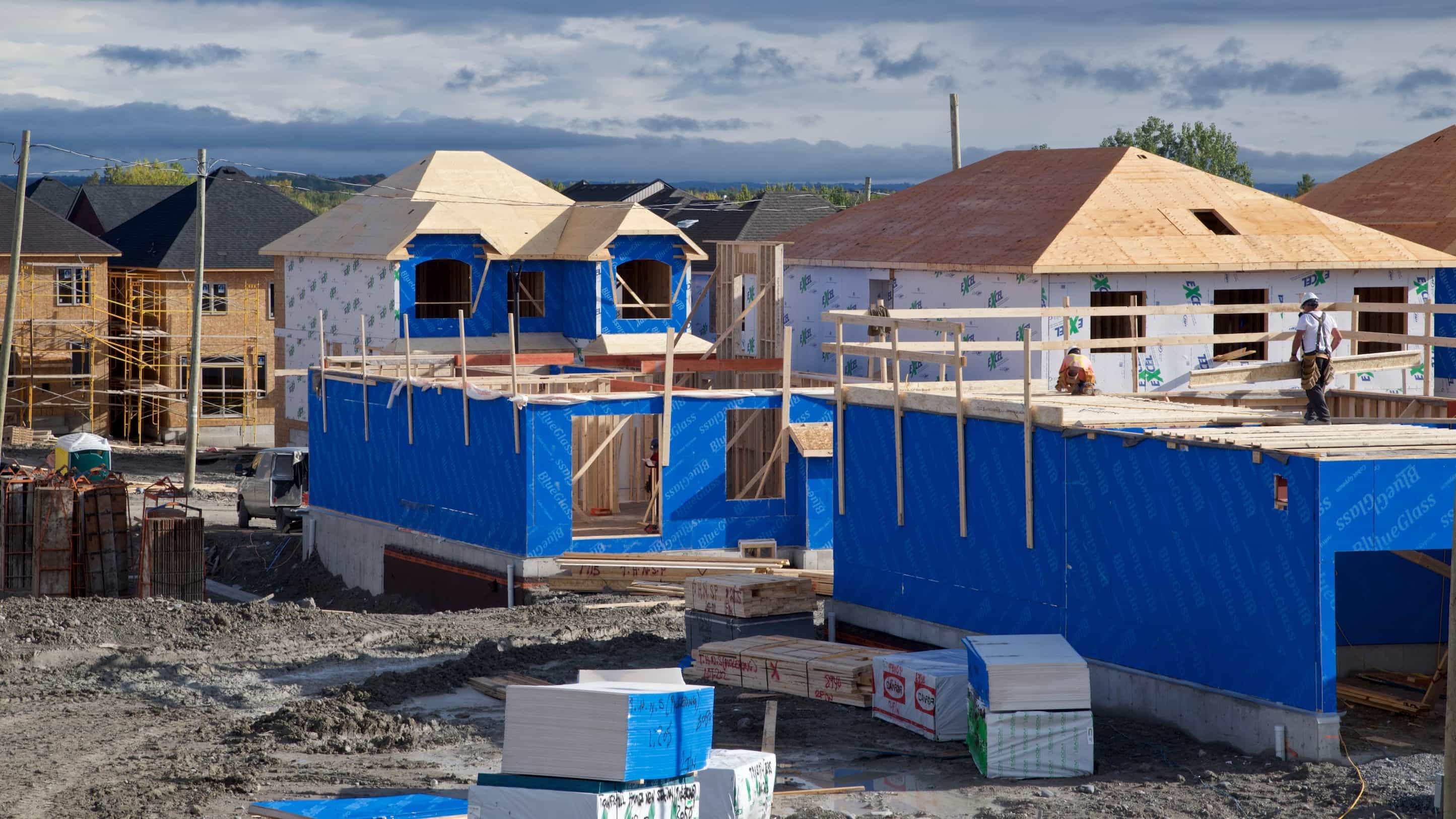
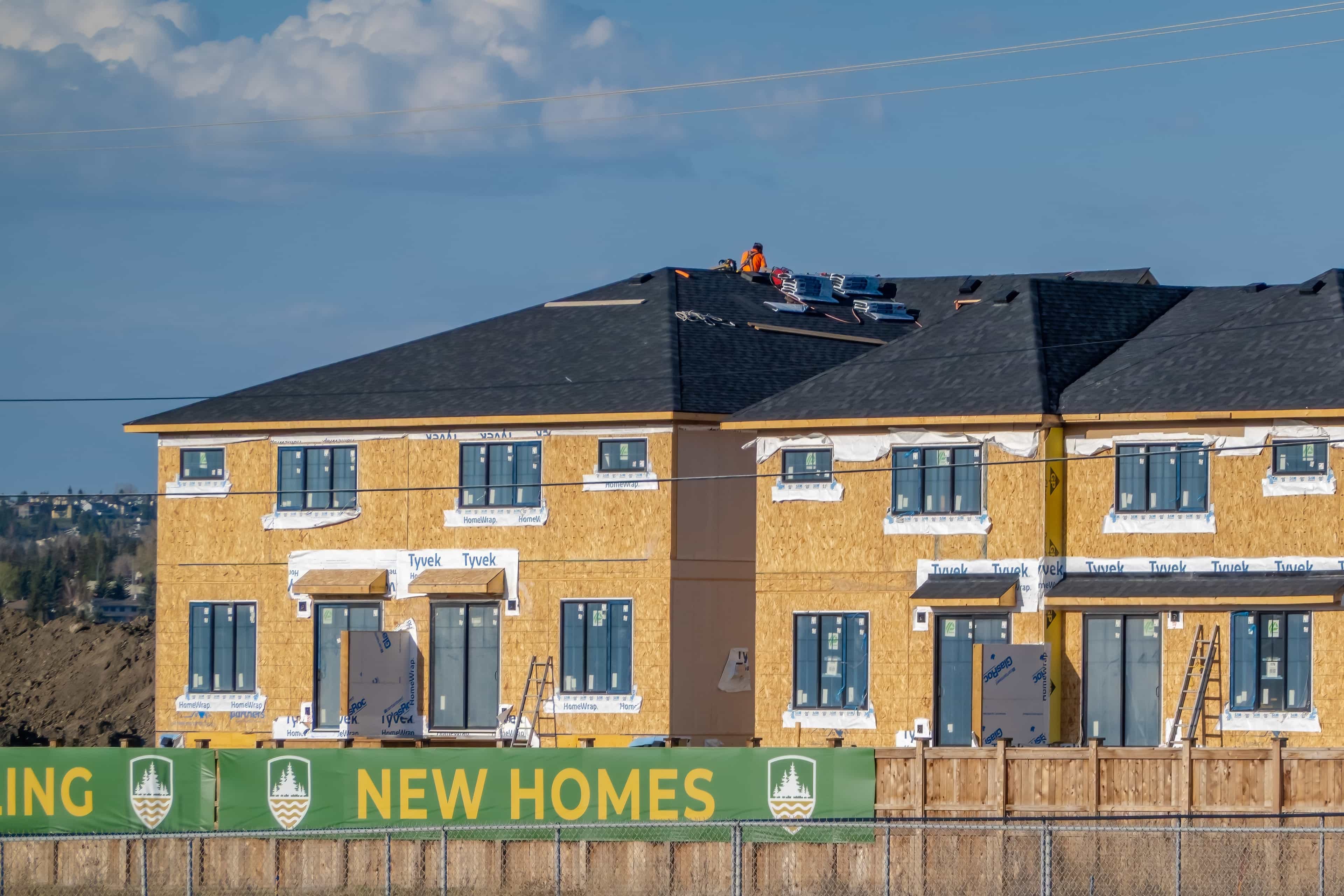
The construction site of new homes signifies ongoing residential development, reflecting current trends in housing starts. (Credit: Shutterstock)
The federal government is putting money behind a straightforward bet: if you reduce the fees that make new homes expensive to build, more homes get built. On March 26, 2026, Finance Minister François-Philippe Champagne introduced Bill C-26, the Improving Housing Supply Act, proposing $1.7 billion in immediate transfers to provinces and territories. The funds are targeted at development fee reductions, construction productivity improvements, and regulatory harmonization across provincial borders.
The timing is deliberate. New home sales in Canada's major cities have fallen below historical levels, construction job losses are mounting, and the pipeline of future supply is thinning in the markets that need it most. CREA has already downgraded its 2026 resale housing forecast as tariff uncertainty weighs on buyer confidence.
Bill C-26 arrives one day after Ontario and Ottawa announced a temporary elimination of HST on new home purchases up to $1 million — a move the federal government explicitly cited as a model for how provinces should deploy the new money.
For existing homeowners, this is not a buyer-assistance story. It is a supply-and-pricing story. When the cost floor for new construction drops, the comparables that appraisers use to value existing homes shift. When provincial trade barriers ease, renovation material costs change. The transmission channels are indirect — but they are real.
Bill C-26 is not a housing program. It is a spending authority — a legislative mechanism that allows the federal government to transfer $1.7 billion to provinces and territories for a defined set of housing supply objectives.
The official release identifies three eligible uses for the money: reducing development fees or levies on new home construction, making incremental investments in existing provincial and territorial housing programs already aimed at spurring development, and supporting efforts to harmonize interprovincial regulations and increase productivity in the home construction sector.
Bill C-26 requires passage through the House of Commons. It is not enacted — it is tabled. Provincial uptake, allocation timelines, and specific fee reduction targets are not yet defined.
The legislation builds on an existing condition. Provinces and territories must already reduce development fees and other charges to homebuilding in order to access funding through the provincial and territorial stream of the Build Communities Strong Fund. Bill C-26 adds $1.7 billion to that framework and widens the eligible uses to include internal trade reform and construction sector productivity.
Housing Minister Gregor Robertson framed it as a cost-and-supply measure, saying that the government's partnership with provinces, territories, and local governments is "key to building more homes and making housing more affordable." The $1.7 billion sits within a broader federal housing commitment that the government describes as approximately $40 billion across multiple programs, including the Build Canada Homes agency launched to increase the pace of homebuilding.
Development charges are not a small line item. They are a significant share of the cost of building a new home, and they are passed directly to buyers.
A CMHC analysis of development charges found that in 2025, a two-bedroom apartment in Ottawa (outside the Greenbelt) carried approximately $39,600 in development charges — about 8.2% of the average new condo price. In Markham, that figure was $121,500, representing roughly 15.7% of the unit price. A separate CMHC research paper concluded that new homebuyers effectively bear the burden of these charges: government fees — including development charges, fees, and sales and transfer taxes — constitute a significant share of total costs for new housing.
The trend is accelerating. A 2025 briefing from Housing, Infrastructure and Communities Canada cited the Canadian Home Builders' Association's Municipal Benchmarking 2024 Study, noting that development charges and related taxes and fees on low-rise housing have increased by an average of $27,500 per unit since 2022, and by $3,000 per unit for high-rise developments.
Here is why this matters beyond the new-build market. When a developer builds a condo for $750,000 and $120,000 of that is fees, the market reads $750,000 as the benchmark. A comparable resale unit in the same neighbourhood prices against that number. Reduce the fee component, and new builds can come to market at lower price points. That changes the comparables that appraisers and buyers use for the surrounding resale stock.
This is the mechanism Bill C-26 is designed to activate — and the reason it is relevant to homeowners who have no intention of buying new.

Bill C-26 does not arrive into a healthy construction market. The federal government's own release acknowledged that new home sales in major cities have "fallen below historical levels," contributing to job losses in the skilled trades and construction.
The data supports that framing. CMHC's Spring 2026 Housing Supply Report showed that total housing starts in Toronto in 2025 reached 18,986 units — well below the city's 10-year average of 26,856. Ground-oriented starts in both Toronto and Vancouver remained below their historical averages. Pre-construction condo sales in Toronto in 2025 fell to their lowest levels since 2009, and Vancouver has now seen two consecutive years of declining condominium starts.
The most recent CMHC monthly data confirmed this weakness is continuing into 2026.
When new supply contracts in these markets, the pressure shifts. Fewer new units entering the market means less competition for existing homes, which can support resale prices in the short term. But it also means fewer construction jobs, weaker economic activity, and a thinner pipeline of homes for the next cycle of demand. For homeowners who plan to sell in the next three to five years, the trajectory of new supply in their local market is a leading indicator worth tracking. That is part of why TD Economics recently slashed its 2026 national housing forecast, now expecting sales and prices to fall after predicting 9% gains just three months earlier — weak new supply is only one piece of a broader demand uncertainty.
The least-discussed provision in Bill C-26 may be its most interesting for existing homeowners. The legislation authorizes funds to "support the efforts of provinces and territories to deliver on improving internal trade by harmonizing regulations and increasing productivity in the home construction sector."
This targets a real cost. The Canadian Chamber of Commerce estimates that interprovincial trade barriers cost the Canadian economy more than $14 billion annually, and parliamentary debate around the One Canadian Economy Act (Bill C-5) cited estimates that these barriers add approximately 8.3% to the cost of food, goods, and building supplies.
For homeowners planning a spring renovation, that 8.3% markup is not abstract. It shows up in the price of lumber, drywall, fixtures, and any other construction input that crosses a provincial border under different standards, certifications, or procurement rules — costs that are already rising due to U.S. tariffs on lumber and appliances. If Bill C-26 funds drive even partial harmonization — aligning building material certifications, recognizing trade credentials across provinces, simplifying interprovincial procurement — the cost structure for residential construction and renovation shifts downward.
The internal trade provisions are stated as eligible uses of the $1.7 billion, not mandated allocations. Whether provinces direct meaningful funding toward harmonization — versus simpler, more visible fee reductions — remains to be seen.
Bill C-26 is clear on what it authorizes. It is less clear on how the money will actually be deployed.
What is known: The $1.7 billion is available immediately upon passage. Development fee reductions, existing provincial housing program top-ups, and internal trade harmonization are all eligible uses. Ontario's HST rebate expansion is the reference model. The funding sits within a broader $40 billion federal housing commitment and builds on existing conditions that require provinces to cut development-related charges.
What is not known: How each province will allocate its share. Whether municipalities — which set most development charges — will be required to pass fee reductions through to buyers. What accountability or reporting mechanisms will track whether the money actually reduces construction costs. How quickly any of this translates into new housing supply or changed market conditions. And whether Bill C-26 will pass Parliament at all — it is tabled, not enacted.
For homeowners, the practical stance is monitoring, not action. The story to watch is not the federal legislation itself. It is whether your province uses its allocation to meaningfully reduce the charges that inflate new construction costs in your local market — and whether those reductions flow through to the price points that shape your home's resale value.