The March 2026 deal makes New Brunswick the agency’s second provincial partnership and could have outsized effects in smaller housing markets across the province.

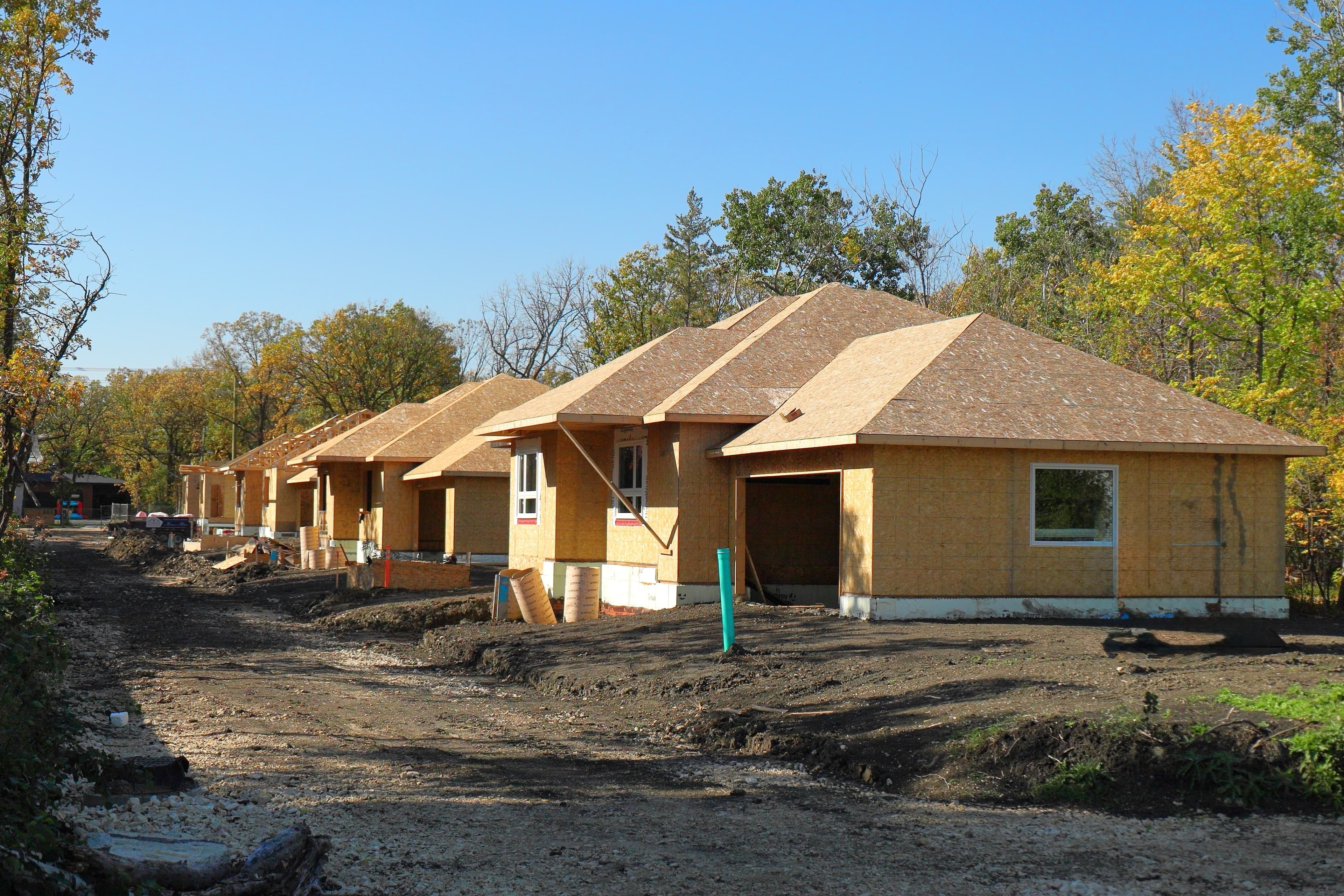
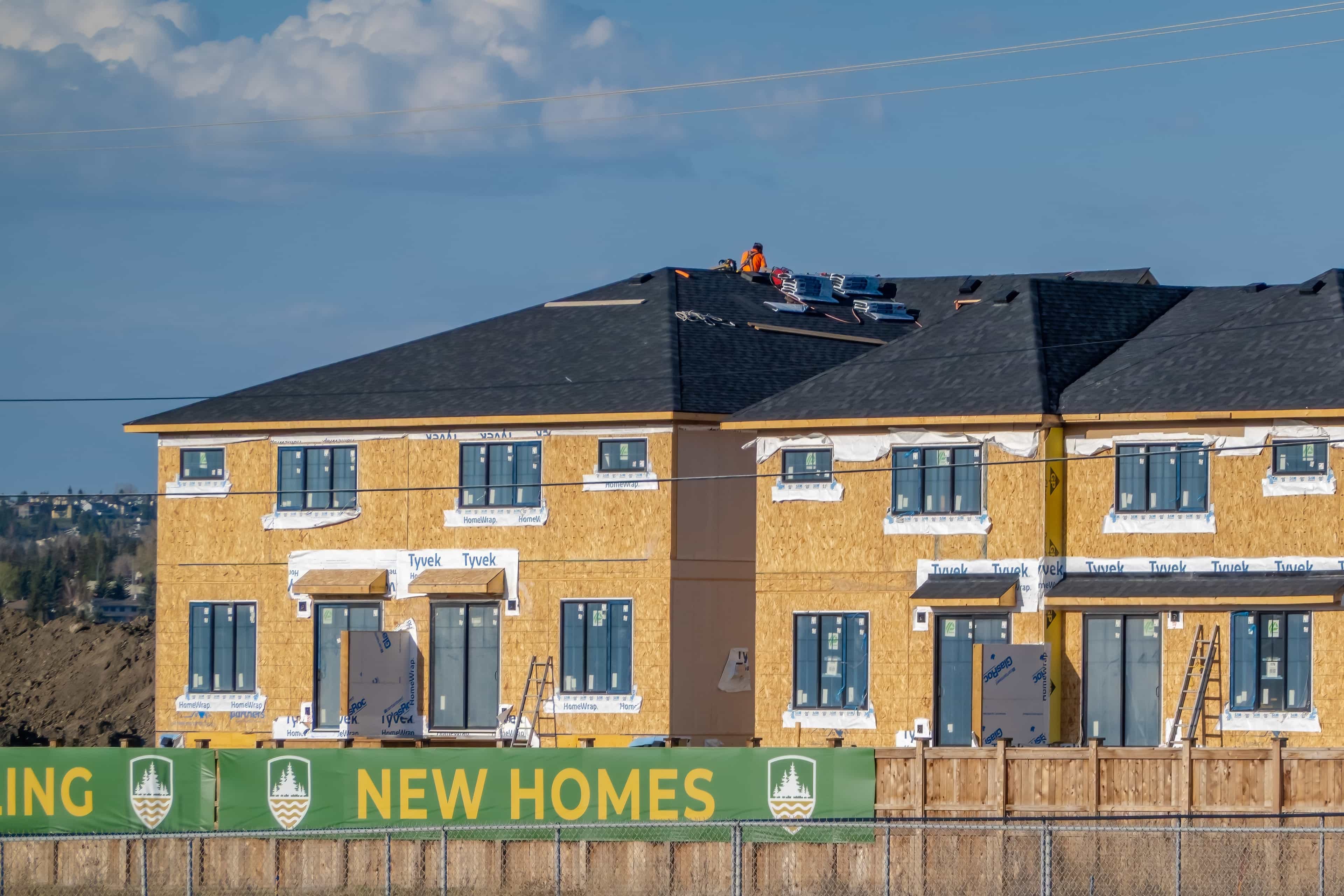
New-build homes rise against autumn woods as Ottawa and New Brunswick fast-track 1,200 affordable units. (Credit: Shutterstock)
On March 20, 2026, the federal New Brunswick announcement said the Government of Canada, through Build Canada Homes, and the Province of New Brunswick will work together to accelerate delivery of up to 1,200 shovel-ready affordable homes, with the agreement structured to scale to 1,500 if more suitable projects are identified. That is a large number for any province. In New Brunswick, where smaller centres can feel even moderate additions to rental supply more quickly than larger metropolitan markets, it is especially notable.
The headline matters. So does the pattern behind it. This is New Brunswick’s entry into a growing Build Canada Homes footprint, and that shifts the story from announcement to execution. For homeowners, the practical question is not whether more affordable housing is a worthy goal. It is how this pipeline gets distributed across the province, how quickly sites move from paper to construction, and whether new supply lands in places where it can materially change local conditions.
This is also why the announcement deserves a closer read than a typical housing press release. The partnership is large enough to matter, specific enough to watch, and structured enough to suggest that Build Canada Homes is being used as a delivery vehicle with provincial partners rather than as a one-time funding banner.
Build Canada Homes is still new, but it is moving beyond the launch phase. In the federal progress update released on January 7, 2026, the government said the agency had already advanced six Direct Build projects on federal lands expected to deliver up to 4,000 homes and had opened a national submission portal that had already drawn dozens of proposals, with hundreds more in progress. That is what operational capacity looks like: sites, intake channels, counterparties, and a visible project pipeline.
For homeowners, that distinction matters. A housing agency that is still conceptual may shape conversation. A housing agency that can assemble land, financing, procurement, and repeatable project models can start shaping local supply. New Brunswick’s agreement suggests provinces now have a federal partner that is trying to standardize delivery around affordable housing, modern construction methods, and faster approvals rather than negotiating every project from scratch.
That does not mean every announced unit will arrive on the same timeline, or that every market will feel the effect equally. It does mean the federal government appears to be building machinery that can keep producing similar partnerships across provinces. New Brunswick is important not only because of the unit total, but because it reinforces that this is becoming a platform.
In the detailed terms outlined in the March 20 release, Build Canada Homes says it could contribute up to $150 million toward the initial 1,200-home portfolio, while the province would match that amount through combined capital and operating support for a proposed total of up to $300 million. Ottawa’s share is structured as capital plus repayable financing, while the province’s contribution includes both capital support and long-term operating funding. At least half of the units are designated for lower-income households, and a minimum of 160 homes are reserved for supportive and transitional housing backed by operating support for wrap-around services.
The portfolio is also designed to reach beyond the province’s largest centres. Roughly 30 per cent of the homes, or up to about 450 units, are expected to be located in smaller and rural communities. For a province with many relatively small housing markets, that detail may prove more important than the overall provincial headline. A few dozen units in the right place can matter more locally than a much larger total spread thinly across several regions.
There is also a clear acceleration angle. The release sets a target for 40 per cent of the portfolio to use modular, prefabricated, or other off-site construction methods. In plain language, that means the partnership is not only funding homes; it is trying to shorten delivery timelines. “Shovel-ready” does not mean every site is about to break ground tomorrow. It usually means projects are far enough along in land assembly, planning, design, financing, or approvals that they can move more quickly than a brand-new concept.
The governance model is equally important. Final funding decisions are to be made through a Joint Implementation Table, and municipalities are expected to help projects move by expediting permits, reducing or waiving some fees, and, where possible, offering temporary property tax relief. That is the point where this story becomes very local. Homeowners may first encounter the partnership not through ribbon-cuttings, but through council agendas, permitting decisions, and site-level debates about fit, servicing, and timing.
The same release also says Build Canada Homes has now signed agreements representing nearly 10,000 new units across Canada since its 2025 launch. That cumulative figure makes the New Brunswick announcement easier to read as part of a scaling national program rather than as an isolated provincial exception.
In a 2025 Saint John multifamily market report, the Greater Saint John apartment market was described as having roughly 10,726 units, a 4.0 per cent vacancy rate, 581 units under construction, and 515 completions in 2024. That is a useful scale check. In a market of that size, even a share of a 1,200-to-1,500-unit provincial pipeline can be meaningful. The same logic applies even more strongly in smaller centres where the base rental stock is thinner and new supply tends to arrive in more visible increments.
That does not create a clean, immediate forecast for detached-home prices. The more direct near-term effect is likely to be in rental conditions, project siting, and neighbourhood change. If new supportive, transitional, and affordable rental homes are delivered where vacancy is tight, the first signs may be more tenant choice, less pressure on older rental stock, and more visible discussion about local services and community integration.
CMHC’s research on filtering and rent spillovers adds a useful analytical frame, finding that new rental construction can lower rents in nearby older buildings in some markets and can trigger “vacancy chains” as households move into new homes and free older units downstream. New Brunswick is not Calgary, and no one should assume the same percentage effects will appear everywhere. Even so, the mechanism matters: in supply-constrained places, added housing can ease pressure beyond the new buildings themselves.
For homeowners, the key takeaway is not that one announcement will instantly rewrite local values. It is that additional supply in smaller markets can be felt more quickly and more visibly than many people expect. Where those units land will shape whether the main local effect is gentler rental competition, more supportive housing capacity, new development activity, or all three at once.

The provincial number is large enough to command attention, but the neighbourhood effects will turn on details that are not yet public. The biggest open questions are which communities receive the first sites, how the 1,200-home base portfolio is sequenced, what the unit mix looks like within each development, and what conditions have to be met for the partnership to reach the 1,500-home upper range.
The best way to read this announcement today is as a funded pipeline, not a finished map. The money is meaningful, the framework is real, and the local footprint is still emerging.
Existing homeowners will probably see early signals in local process before they see them in provincial statistics. Watch for council discussions, servicing questions, land-use debates, and public information around supportive housing or affordability targets. In many communities, those local decisions will tell a more useful story than the headline number alone.
Just as important, some things remain unknown by design. The announcement does not yet identify every site, every municipality, or every project schedule. That is normal at this stage. The right way to interpret the deal is not to assume instant construction everywhere, but to recognize that a credible pipeline now exists and that its local effects will be shaped by where projects cluster and how quickly they move.
In the British Columbia partnership announced on February 18, 2026, Ottawa and Victoria committed to a minimum of 700 shovel-ready supportive and transitional homes set to begin construction within 12 months, while also exploring at least 400 additional affordable rental homes through B.C.’s DASH program and modern construction methods. Read alongside New Brunswick, the pattern is difficult to miss: Build Canada Homes is using provincial agreements to move faster-delivery affordable housing from policy concept toward repeatable execution.
That matters beyond one province. For Atlantic Canadian homeowners, this is not only a Fredericton story. It is also a sign that the federal government appears serious about Build Canada Homes as an ongoing delivery channel. If similar deals continue, the bigger consequence may be cumulative: more affordable supply entering markets that have not historically seen large, rapid additions to rental stock, especially outside the country’s biggest urban cores.
The strongest conclusion available today is also the simplest one. Build Canada Homes is no longer just a promise attached to future ambition. It is building a provincial footprint. New Brunswick now has a place in that rollout, and the most revealing next steps will be the first site decisions, permitting timelines, and construction starts that show how much of this pipeline turns into homes on the ground.