CHBA’s 2025 Exposure Map Still Shows Where Renovation Budgets Are Vulnerable, Even Though The Tariff Picture Has Narrowed Since Last Spring

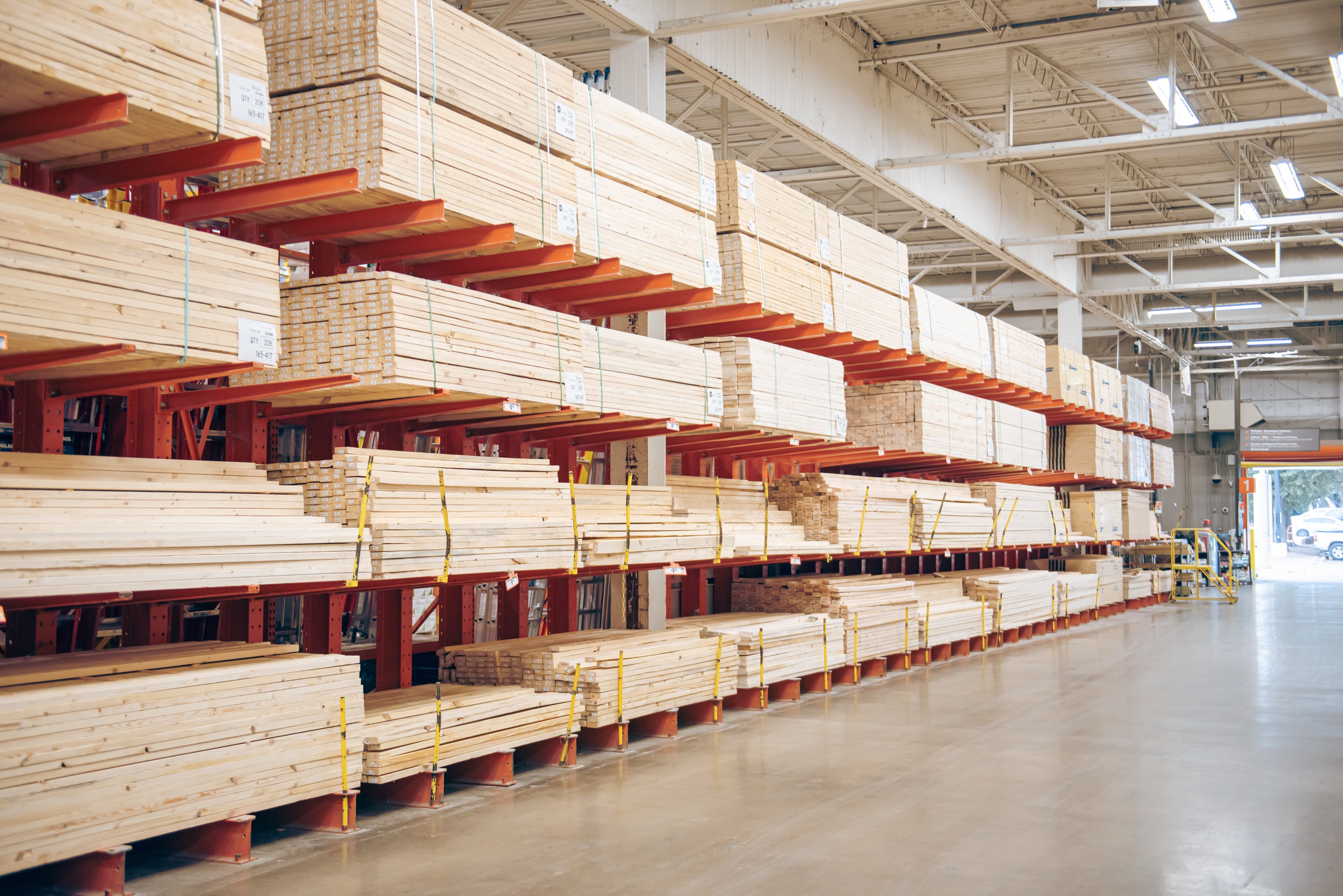
A well-organized lumber section in a home improvement store, highlighting essential materials for renovation projects. (Credit: Shutterstock)
March is when many Canadian homeowners move from ideas to numbers. Contractors are pricing decks, kitchens, bathrooms, window replacements, and exterior repairs right now, which makes trade policy more than background noise. The spring 2026 cost picture is being shaped by a stack of confirmed policy changes: the White House’s June 2025 Section 232 fact sheet says U.S. steel and aluminum tariffs rose to 50 per cent effective June 4, 2025, while Department of Finance Canada’s tariff-response page shows Ottawa later removed most of its March 2025 retaliatory tariffs on U.S. consumer goods but kept measures on steel, aluminum, and autos.
That timing matters. A homeowner comparing a quote from fall 2025 with one received in March 2026 is not looking at the same cost base, even if the scope barely changed. The pressure is not evenly spread across every renovation input, but it is concentrated in the products that tend to carry a lot of trade exposure: framing lumber, metal-containing components, window glass, major appliances, and hardware-heavy finish packages. The result is not a universal 25 per cent jump in every quote. It is a more complicated, and often more expensive, pricing environment.
One of the biggest spring 2026 misunderstandings is assuming the tariff picture still looks exactly like March 2025. It does not. Canada lifted its broad March 4 and March 13 retaliatory lists on most U.S. goods as of September 1, 2025, which reduces the case for describing every U.S.-made appliance or hardware item as still carrying a direct Canadian surtax. At the same time, the active measures that remain are large enough to keep renovation pricing uncomfortable, especially when metal or cross-border fabricated products are involved.
Lumber is the clearest example of why this still matters. For many Canadian softwood shipments, Global Affairs Canada’s softwood lumber update lists an amended combined “all others” anti-dumping and countervailing duty rate of 35.16 per cent, and the White House’s September 2025 wood-products proclamation added a separate 10 per cent tariff on softwood timber and lumber effective October 14, 2025. That is how the “roughly 45 per cent” figure in current coverage becomes plausible for broad portions of the market, even before any normal wholesaler markup or freight cost is added.
Metals are simpler, but harsher. Steel and aluminum moving into the United States now face the higher 50 per cent Section 232 rate, and those costs can come back north through fabricated products, components, and replacement parts. For homeowners, that shows up less as an abstract trade statistic and more as a higher line item for railings, metal roofing pieces, aluminum-framed products, fasteners, brackets, and some window and door systems.
Even after Canada removed most of its broad consumer-goods countermeasures, the Canadian Home Builders’ Association’s exposure math still matters because it shows how dependent the residential sector is on U.S. supply in some everyday renovation categories. In the Canadian Home Builders’ Association tariff analysis the association says Canada imports about $3.5 billion in glass and glass products, $3.1 billion in major appliances, and $2.2 billion in hardware from the United States each year, with ceramic tile adding another roughly $1 billion.
That matters for renovation planning because these are not obscure industrial inputs. Glass turns up in windows, patio doors, shower enclosures, mirrors, and some stair systems. Major appliances obviously shape kitchen, laundry, and suite renovations. Hardware sounds small, but it reaches into cabinet pulls, hinges, locks, door sets, deck connectors, specialty fasteners, brackets, and trim packages. When a category is this import-heavy, homeowners do not need a tariff to be stamped on every single SKU for prices to move. Distributors can reprice inventories, brands can shift sourcing, contractors can widen allowances, and substitutions can still come in above pre-tariff levels.
This is why kitchen and bath renovations can feel more volatile than a paint refresh or a simple flooring change. They bundle several exposed categories together in one project: appliances, hardware, glass, fixtures, and often metal-containing components. A small change in each category can produce a noticeable difference by the time the final quote lands.

As the same CHBA analysis explains a tariff is paid by the importer, and most of that added cost is typically passed on rather than absorbed. In renovation work, that pass-through usually happens in layers rather than in one dramatic jump.
That is also why homeowners should be careful about assuming a tariff headline translates neatly into the same percentage jump on a finished project. Some contractors bought inventory earlier. Some suppliers have hedged. Some products are CUSMA-compliant, partially exempt, or less exposed than the headline suggests. But the opposite can also happen: a product that does not look tariff-heavy on paper can still rise because it contains steel, aluminum, glass, or imported hardware somewhere deeper in the bill of materials.
In Housing, Infrastructure and Communities Canada’s 2025 parliamentary briefing the federal government describes Canadian residential construction as a net importer of homebuilding products and says firms are already facing sourcing pressure on U.S.-made equipment, windows, toilets, and doors, with steel and aluminum tariffs creating additional concern across construction.
With that backdrop, the spring 2026 renovation categories that look most exposed are the ones with a high concentration of wood, metal, glass, or imported finished goods:
Relatively more insulated projects are the ones where labour dominates and material inputs are simpler or easier to source domestically. Cosmetic repainting, selective trim work, or straightforward finish updates can still rise in price, but they usually do not carry the same concentration of tariff-sensitive inputs as a kitchen, a window package, or a structural exterior build.
Trade measures are not the only reason spring 2026 quotes can feel firmer. Environment and Climate Change Canada’s 2023-2030 carbon-pricing benchmark requires industrial compliance prices to rise automatically on or before January 1 each year and sets the national minimum price path at $110 per tonne for 2026.
That does not mean every sawmill, glass processor, or building-material plant pays $110 on every tonne of emissions, and homeowners should be wary of anyone claiming a perfect one-for-one pass-through. But it does mean the industrial price signal facing energy-intensive processing is higher in 2026 than it was in 2025. When that higher domestic cost base sits on top of tariff pressure, it can reinforce rather than replace the upward push on material pricing.
Not every spring 2026 renovation quote will jump by the same amount, or even at all. The real variables are when the supplier bought the material, whether the product is domestically sourced, how much steel, aluminum, glass, or imported hardware sits inside it, and how long the contractor is willing to hold pricing.
The practical lesson for March 2026 is not panic. It is precision. If a project depends heavily on lumber, glass, appliances, or metal-containing components, a quote from fall 2025 should be treated as a historical reference rather than a current benchmark. The more allowances a quote contains, the more room there is for the final number to drift.
The smartest questions right now are simple ones: which items are price-protected, which allowances are still floating, and how long the quote is valid. Homeowners do not need to become trade-policy experts. They only need to understand that the cost environment changed underneath the renovation market over the last year, and that the most exposed categories are often the most visible parts of a project. In spring 2026, that can make the difference between a manageable update and a budget that suddenly feels out of date.