Expanded Rebate Opens to All Buyers, Not Just First-Time Purchasers, With Up to $130,000 in Tax Relief

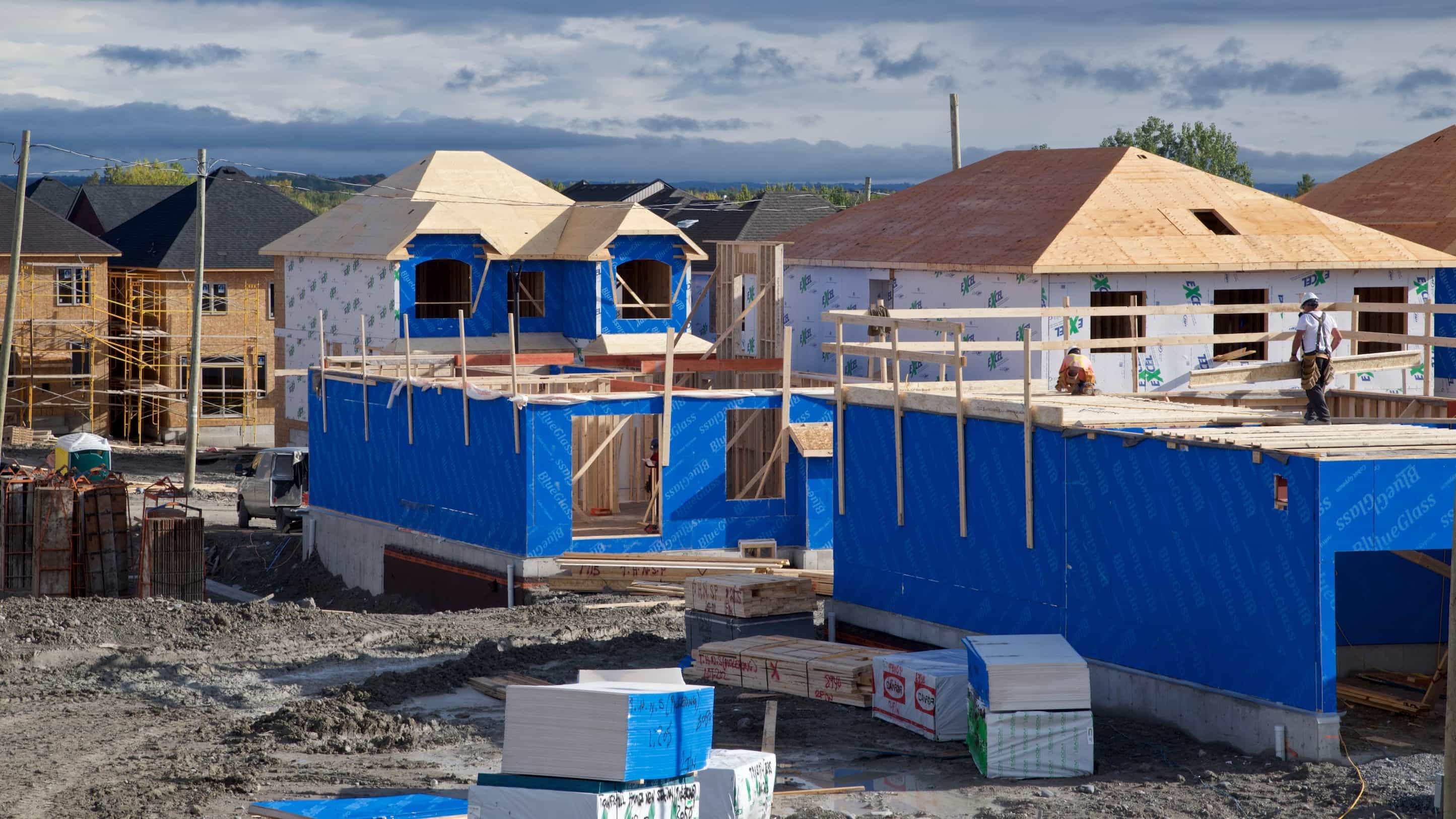
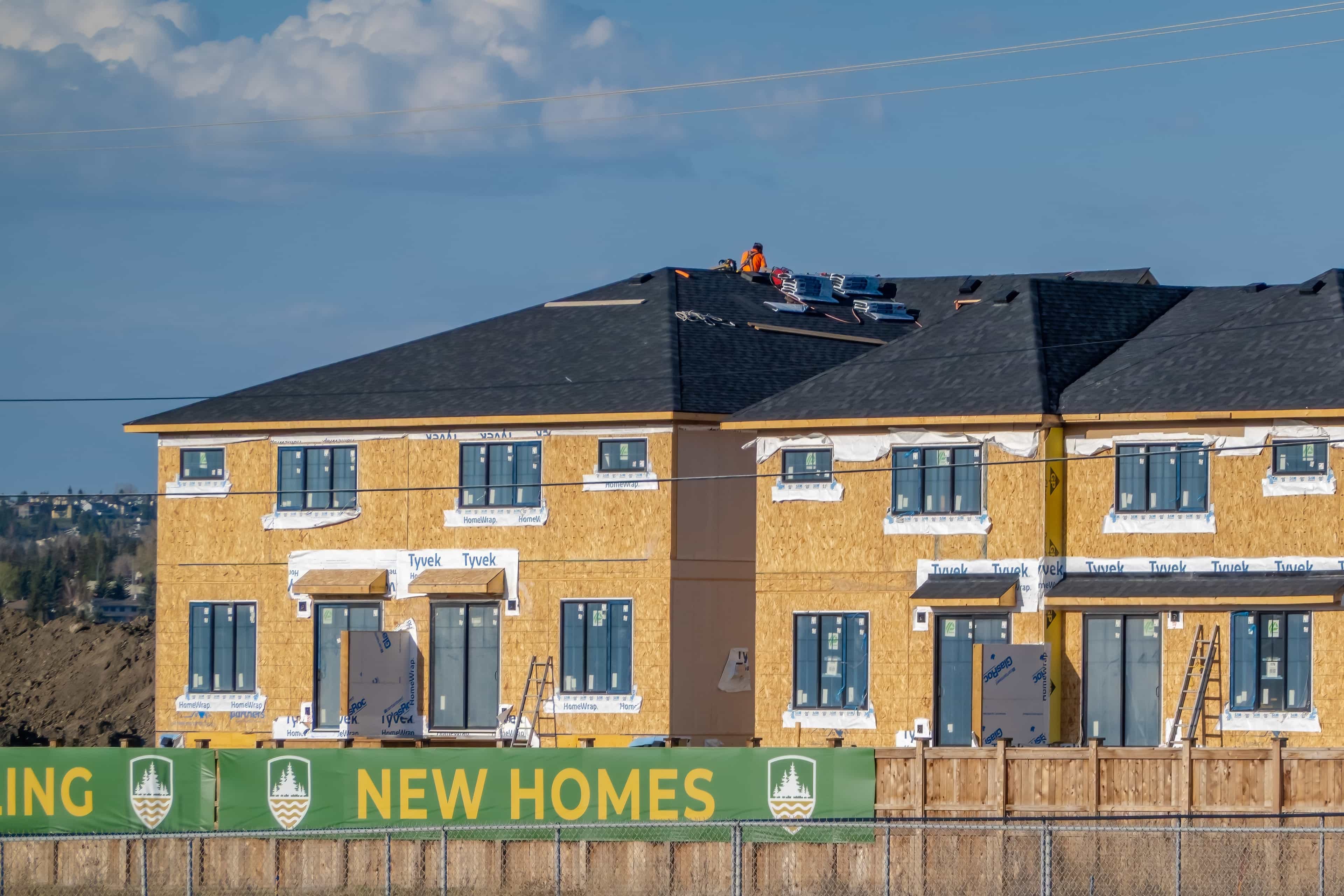
A new home under construction is highlighted by a warm sunset, illustrating development as part of home purchase incentives. (Credit: Shutterstock)
Ontario's preconstruction housing market has been in freefall. New home sales across the province dropped to roughly 15,000 units in 2025 — down from historical annual volumes of 65,000 to 85,000. In the Greater Toronto Area, total new home sales hit just 5,314 units for the year, with condo sales plunging 89% below the 10-year average.
CMHC's 2026 Housing Market Outlook projects Ontario housing starts will fall to near two-decade lows this year, driven by collapsing condominium presales.
That is the backdrop to yesterday's announcement from Premier Doug Ford: starting April 1, 2026, Ontario and the federal government will remove the full 13% Harmonized Sales Tax on new homes priced up to $1 million — for all buyers, not just first-time purchasers — for one year. The maximum rebate is $130,000.
The measure expands a more limited program introduced in the fall 2025 economic statement, which applied only to first-time buyers of new homes valued up to $1 million. That restriction is now gone. If you are buying a qualifying new home in Ontario and your purchase agreement is signed within the one-year window, you are eligible.
The core structure of Ontario's HST New Housing Rebate and New Residential Rental Property Rebate programs remains intact. What changed are two things: who qualifies, and how much the rebate is worth at higher price points.
Under the previous first-time buyer program, the rebate covered the 13% HST on new homes up to $1 million. Above that, the rebate began to decrease. Under the expanded program, the full $130,000 maximum is maintained all the way to $1.5 million — a significant improvement for buyers in Toronto, Ottawa, and other markets where even modest new builds regularly exceed $1 million.
Here is the rebate structure announced on March 25:
The provincial government covers the 8% provincial portion. The federal government has agreed to cover the 5% federal portion, subject to passage of federal legislation.
The federal cost-sharing component requires legislation that has not yet passed. Ontario has confirmed the province will cover its share regardless, but the federal portion depends on that legislative process. Watch for updates after the 2026 Ontario Budget, tabled today (March 26).
The eligibility rules are broader than the previous program, but they are not unlimited. The expanded rebate applies to:
Primary residence buyers — any buyer purchasing a qualifying new home to use as their primary residence. The first-time buyer restriction is removed. If you already own a home and are buying a newly built property to move into, you qualify.
Rental property purchasers — buyers acquiring qualifying new homes for use as residential rental properties also remain covered under the existing New Residential Rental Property Rebate framework. However, the province's media briefing materials indicate that investors purchasing rental properties would qualify if construction began before March 31, 2026, and will be substantially completed before December 31, 2029. That suggests the rental investor stream is primarily aimed at existing unsold inventory, not future project launches.
The one-year window is clearly defined, but the construction timelines extend well beyond March 2027. There are two eligibility paths:
Path 1 — New projects starting after April 1, 2026: The purchase agreement with the builder must be signed between April 1, 2026 and March 31, 2027. Construction must begin on or before December 31, 2028, and be substantially completed on or before December 31, 2031.
Path 2 — Projects already underway: If construction began before March 31, 2026, the purchase agreement must still be signed between April 1, 2026 and March 31, 2027, and construction must be substantially completed on or before December 31, 2029.
The distinction matters. Path 2 covers the province's significant backlog of stalled or slow-selling projects — the kind of standing inventory that builders have struggled to move for the past two years. Path 1 is about stimulating new starts.
If you are considering a new-build purchase in Ontario, the purchase agreement date is the trigger — not your closing date. A preconstruction purchase agreement signed within the April 2026 to March 2027 window qualifies even if you do not close and take possession for several years, provided the construction deadlines are met.
On a $750,000 new home, the HST would normally total $97,500. Under the expanded rebate, that entire amount would be returned — either at closing or through a post-purchase claim. That is $97,500 back in your pocket, or more precisely, $97,500 that never adds to your mortgage balance.
On a $1 million home, the savings are $130,000. On a $1.3 million home, you still receive the full $130,000 cap. The rebate only begins to phase down above $1.5 million.
For context, $130,000 is roughly the equivalent of a 13% reduction in your purchase price. On a $1 million home with 20% down, that rebate exceeds the $200,000 down payment threshold that most buyers take years to save. It does not replace the down payment, but it materially changes the affordability equation — particularly for buyers who were already close to qualifying.
The policy is not primarily about making individual homes cheaper, though it does that. It is about restarting a construction pipeline that has effectively seized.
Ontario's home-building industry operates on a simple sequence: presales fund financing, financing funds construction, construction creates supply. When presales collapse — as they have since 2023 — the entire pipeline stalls. Projects cannot secure financing without meeting presale thresholds (typically 70% of units sold), and developers cannot hit those thresholds if buyers are sitting on the sidelines.
CMHC's 2026 Housing Market Outlook projects Ontario housing starts will fall to near two-decade lows this year, driven by collapse in condominium presales. The province's own estimate is that this rebate could stimulate an additional 8,000 housing starts, supporting up to 21,000 jobs and adding $2.7 billion to Ontario's GDP.
The Toronto Regional Real Estate Board called the measure an important step toward addressing housing affordability, noting that removing the tax burden should improve the feasibility of bringing new projects to market, particularly missing middle housing like multiplexes and mid-rise developments. BILD and the OHBA called it a "game changer" that would reduce upfront homeownership costs and strengthen mortgage qualification outcomes for buyers.
The rebate applies only to new homes. Resale properties are not eligible and never have been — resale homes do not attract HST in Ontario. The relevant tax on resale is the land transfer tax, which is a separate provincial levy unaffected by this announcement.
The rebate does not reduce development charges, municipal fees, or any of the other government levies embedded in the price of a new home. Those costs remain significant — often adding hundreds of thousands of dollars to a project before a foundation is poured — and are a separate, ongoing pressure point for Ontario's building industry.
The one-year time limit is also worth understanding clearly. This is a temporary stimulus measure designed to pull forward demand. The province has not signalled any intention to make it permanent. If you are planning a new-build purchase in Ontario, the window is April 1, 2026 to March 31, 2027 for your purchase agreement. After that, the program reverts to whatever baseline rules are in place at the time.
Premier Ford used the announcement to press Ontario's municipal leaders on a related issue: development charges and fees that add to the cost of new housing before a builder breaks ground. He named several mayors — including Mississauga's Carolyn Parrish, Brampton's Patrick Brown, and Vaughan's Steven Del Duca — as leaders who have reduced or eliminated development charges, and called on others to follow.
The province also announced a separate $300-million investment through the Building Ontario Fund to convert GTA condos into long-term housing, including roughly 550 units set at below-market rents. That initiative targets the existing inventory of unsold condo units rather than new construction.
Additionally, the province confirmed it is removing the full 8% provincial portion of the HST on qualifying purpose-built rental housing — a measure aimed at encouraging institutional rental development alongside the homeownership rebate.
If you are actively considering a new-build purchase in Ontario, the next steps are practical:
Watch the 2026 Ontario Budget (being tabled today, March 26) for final implementation details. The province has indicated that application forms, filing procedures, and whether relief is credited at closing or claimed afterward will be clarified after the budget. The mechanics matter — particularly for buyers arranging financing.
Talk to your mortgage broker or lender. A $130,000 rebate on a $1 million purchase changes your debt-to-income ratio and potentially your qualification outcome. If you were previously borderline, this may move the needle. If you are looking to minimize your long-term interest cost, understanding whether the rebate reduces your mortgage principal at closing or comes as a subsequent reimbursement is critical.
Understand that federal legislation is still pending. The province is covering its 8% share. The federal government has agreed to cover the 5% share, but that commitment requires legislation. Until that legislation passes, there is a degree of uncertainty about the full 13% rebate. The provincial portion alone — 8% — would still represent significant savings (up to $80,000 on a $1 million home).
Evaluate the home's total cost, not just the sticker price. The HST rebate removes a major line item, but new-build purchases come with other costs that resale purchases do not: development charges passed through to the buyer, builder upgrades, Tarion warranty enrolment fees, and utility connection charges. Make sure you are budgeting for the full picture, including land transfer tax and closing costs that apply regardless of this rebate.