A Rare Piece of Good Cost News — But Only Through June 30, 2026

Credit: Shutterstock
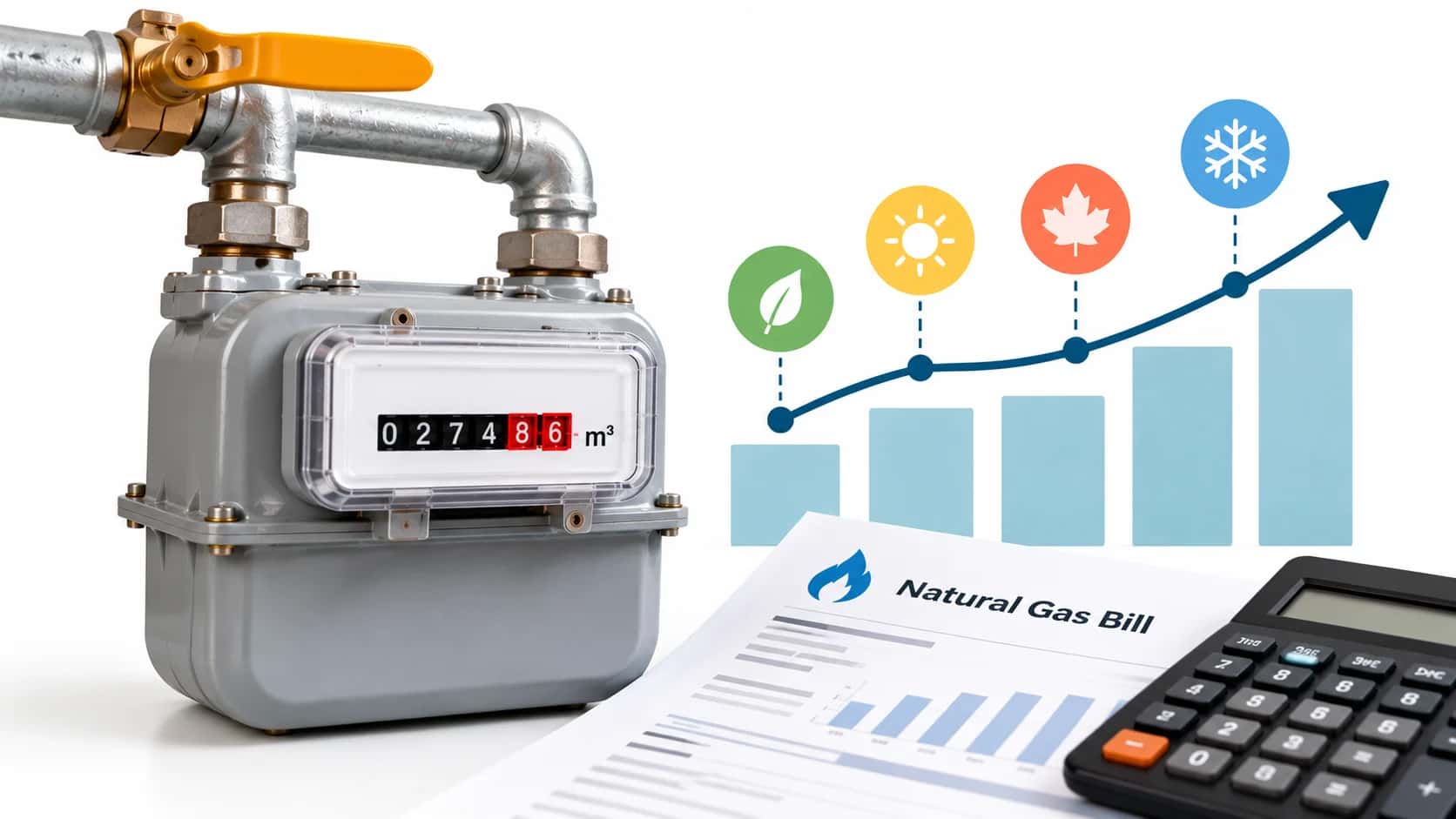
For once, the mail is carrying good news. The Ontario Energy Board has approved a quarterly rate reset for Enbridge Gas that will shrink typical residential natural gas bills across the province starting April 1, 2026. Depending on where a homeowner lives, the annual savings land between about $56 and $136 — a 4.6% to 13.6% reduction on a typical household's gas spend. After a winter of property-tax notices, insurance renewals, and mortgage resets, a utility bill moving the other direction is genuinely unusual.
The scale matters, but so does the shelf life. These rates are interim. They apply only through June 30, 2026, at which point Enbridge will file a new forecast for the July 1 quarterly adjustment and the OEB will decide whether the reduction holds, deepens, or reverses. That three-month window is not a loophole. It is how the Quarterly Rate Adjustment Mechanism is designed to work — and it is the single most important thing for homeowners to understand about this story.
This is what changed, where the savings actually appear on a bill, why the drop is happening now, and what to watch between now and the next reset.
The decision, filed under proceeding EB-2026-0091, authorizes Enbridge Gas to charge new interim rates in all four of its Ontario rate zones beginning April 1, 2026. According to the OEB's consumer backgrounder, typical residential customers — those using roughly 2,200 to 2,400 cubic metres of gas per year — will see annual bill reductions ranging from $56.20 at the low end to $136.01 at the high end. The wide spread is not a rounding artifact. It reflects real differences in how gas is sourced, transported, and priced across Ontario's four Enbridge-served rate zones.
Two things are worth emphasizing up front. First, this is a regulator-approved change, not a voluntary discount. The OEB is the independent body that sets and oversees natural gas commodity prices for Enbridge customers, and it conducts a formal review every quarter before approving new rates. Second, the change applies to customers who buy their gas from Enbridge directly. Households on fixed-price contracts with third-party energy marketers will see their commodity charges governed by the terms of those contracts, not by this OEB decision.
The effective date is firm. The expiry is firmer. On June 30, 2026, these rates lapse.
Enbridge Gas does not earn a profit on the gas itself. Commodity costs are passed through to customers without markup, subject to OEB review and approval. When market prices fall, the utility's margin doesn't shrink — the customer's bill does.
A natural gas bill is not a single number. It is a stack of line items: a fixed customer charge, delivery charges (covering transportation, storage, and distribution through the utility's pipes), and the gas supply charge itself, which is the commodity cost passed through from the wholesale market. A quarterly rate adjustment mainly moves the commodity and transportation portions. Delivery rates and the customer charge are set separately in annual rate cases and will not change on April 1.
The practical effect is that the April 1 decrease shows up primarily in the "Gas Supply Charge" line, with some additional movement in transportation costs depending on the zone. That is also why the zone-by-zone impact varies so dramatically — Enbridge sources gas from different pipeline routes depending on geography, and the transportation component is bundled differently in each zone. A customer in Union North West, served by a shorter and currently less expensive supply path, sees a far larger percentage drop than a customer in the densely populated Enbridge Gas Distribution zone around the GTA.
Here is the zone-by-zone breakdown for a typical residential customer, based on the OEB's approved rates:
Two patterns jump off the page. Union North West gets more than twice the dollar relief of any other zone. And Union North East — which started with the highest typical annual bill of the four — sees the smallest percentage drop. Neither is unusual. Transportation and supply costs in the north are driven by a different mix of pipelines and long-haul routes, and when wholesale conditions shift, the northern zones tend to move in larger steps than the more stable southern zones.
One small bill-line caveat worth flagging: the federal carbon charge was removed from Enbridge bills effective April 1, 2025, and it does not return on April 1, 2026. A separate, much smaller facility carbon charge — about 32 to 35 cents per year for a typical residential customer — remains embedded in the "Delivery to You" line, unchanged by this QRAM.
Two forces are doing most of the work. The first is North American wholesale gas prices, which have softened into spring 2026. The OEB's own explanation points to higher-than-last-year storage inventories heading into the shoulder season, combined with a mild winter in western Canada that kept supply robust even while Ontario and eastern Canada ran colder than normal. When storage is full and supply is moving, commodity prices fall — and because Enbridge buys its gas at market and passes the cost through without markup, lower wholesale prices translate almost directly into lower commodity line items on residential bills.
The second force is transportation. Moving gas from western Canadian and U.S. supply hubs into Ontario's distribution system costs money, and those transportation costs are not uniform. For the April 1 reset, transportation costs have decreased in parts of the province and increased in others. The northwestern corner of the province happens to have benefited most from the current transportation and supply mix, which is why Union North West customers are seeing outsized relief this quarter.
The thing to hold onto: neither driver is a structural change. Inventories can tighten. A cold wave, a pipeline outage, or a shift in LNG export demand can move North American prices quickly. The 4.6% to 13.6% relief is a snapshot of current market conditions, not a new baseline.
Enbridge's natural gas commodity rates are set through the Quarterly Rate Adjustment Mechanism, a process the OEB runs four times a year. On January 1, April 1, July 1, and October 1, Enbridge files an updated forecast of what it expects to pay for gas and transportation over the coming quarter, plus a reconciliation of any gap between prior forecasts and actual costs. The OEB reviews the filing, applies consumer-protection scrutiny, and approves interim rates that take effect on the first of the month.
The April 1 decision is exactly that: an interim rate filing for the three months between April 1 and June 30, 2026. It is not a standalone "rate cut." It is one quarter of a continuous rolling process. On July 1, a new filing replaces it. If wholesale prices have risen by then, the July 1 rates will be higher than the April rates. If they have fallen further, the relief deepens. If they are flat, bills hold roughly where they are. There is no automatic assumption in either direction.
The $56 to $136 annual savings figure is an annualized projection of what a typical household would save if these April 1 rates applied for a full year. In reality, the rates only run from April 1 through June 30, so the actual in-pocket savings between now and the next reset will be a fraction of that headline number. Budget accordingly.
For Ontario homeowners, a utility bill moving downward is a small rebuttal to a much longer list of line items that keep moving the other way. Home insurance premiums have been a particularly aggressive mover — industry coverage of Ontario's 2025 home insurance market put the year-over-year average premium increase at roughly 7% in 2025, well ahead of general consumer-price inflation. Municipal property tax notices for 2026 are adding another layer in several cities, with Barrie homeowners facing a 4.8% increase this year and Ottawa council approving a 3.75% bump in its 2026 budget.
Mortgage renewals are the third pressure point. As Homeowner.ca has previously reported in its look at TD Economics' 2026 renewal outlook, the average monthly payment jump at renewal is expected to land near 6% in 2026, down from about 10% in 2025. Lower than last year — but still positive, and still landing on top of everything else.
Seen against that backdrop, a $56 to $136 annual natural gas saving is not going to rebalance a household budget. It will, for many homeowners, roughly offset a single month of the insurance premium increase or a portion of a mortgage payment change. That is the honest size of this story: a meaningful but modest tailwind, tucked inside a year that is otherwise mostly a headwind. The temptation to dismiss it or to oversell it are both worth resisting.
Because the relief window is narrow and the mechanism is quarterly, there is no big "action item" attached to this decision for most Enbridge customers on standard variable rates. Bills will simply arrive smaller. The commodity and transportation portions will be lower; delivery and customer charges will not move. No enrolment, no paperwork, no election.
The small minority of customers who are on fixed-price natural gas contracts with third-party energy marketers are in a different position. Those contracts lock in a commodity price for a defined term and are explicitly excluded from the OEB's QRAM decisions. Whether a fixed-price contract looks favourable right now depends on the difference between the contract rate and the new interim regulated rates — and on how long the contract still has to run. The OEB provides neutral consumer information on energy contracts for households that want to evaluate their situation without leaning on a marketer's sales script. Homeowner.ca does not make individualized recommendations on contract decisions; the maths depend on the specific contract terms and household consumption profile.
The more useful action for most households is simply to watch the July 1 reset. Enbridge will file a new forecast in early summer for the July 1 to September 30 window. That filing will make clear whether the April relief extends into the back half of the year or whether it was a spring anomaly. Budgeting to the April 1 rates for the rest of 2026 would be optimistic. Budgeting to last fall's rates and treating any April-to-June savings as an unexpected credit is the safer frame.
Enbridge offers an Equal Monthly Payment Plan (EMPP) that smooths expected annual gas costs into 12 predictable instalments. For homeowners whose budgets are sensitive to winter bill spikes, enrolling now — while rates are lower — can make next winter's cash flow easier to manage, even if commodity prices rise again by the time heating season returns.
Three things are worth keeping an eye on over the next three months.
First, the July 1 QRAM filing itself. Enbridge typically files its quarterly application several weeks before the effective date, and the OEB publishes both the application and its decision as public documents. A significant reversal — say, if wholesale prices climb sharply in May and June — would show up there before it shows up on a bill.
Second, the underlying storage and weather conditions that drove this April decrease. If North American storage inventories draw down faster than expected heading into summer, or if export demand from U.S. LNG terminals tightens the supply picture, the April 1 rates will look, in retrospect, like a short window rather than a trend.
Third, the separate, longer-running Enbridge rates proceeding. The April 1 commodity rates are "interim" not only because they apply for a quarter but also because Enbridge's broader delivery and customer-charge rates remain under review in a multi-phase rebasing proceeding. Any outcome from that longer case will reshape the non-commodity portions of the bill over a multi-year horizon and is worth tracking separately from the QRAM headlines.
For now, the headline is simple enough. Ontario homeowners on Enbridge Gas are getting a small but real break on their natural gas bills starting April 1, 2026. The regulator has signed off, the numbers are published, and the savings will appear automatically. Just don't build a 12-month budget around a three-month rate.