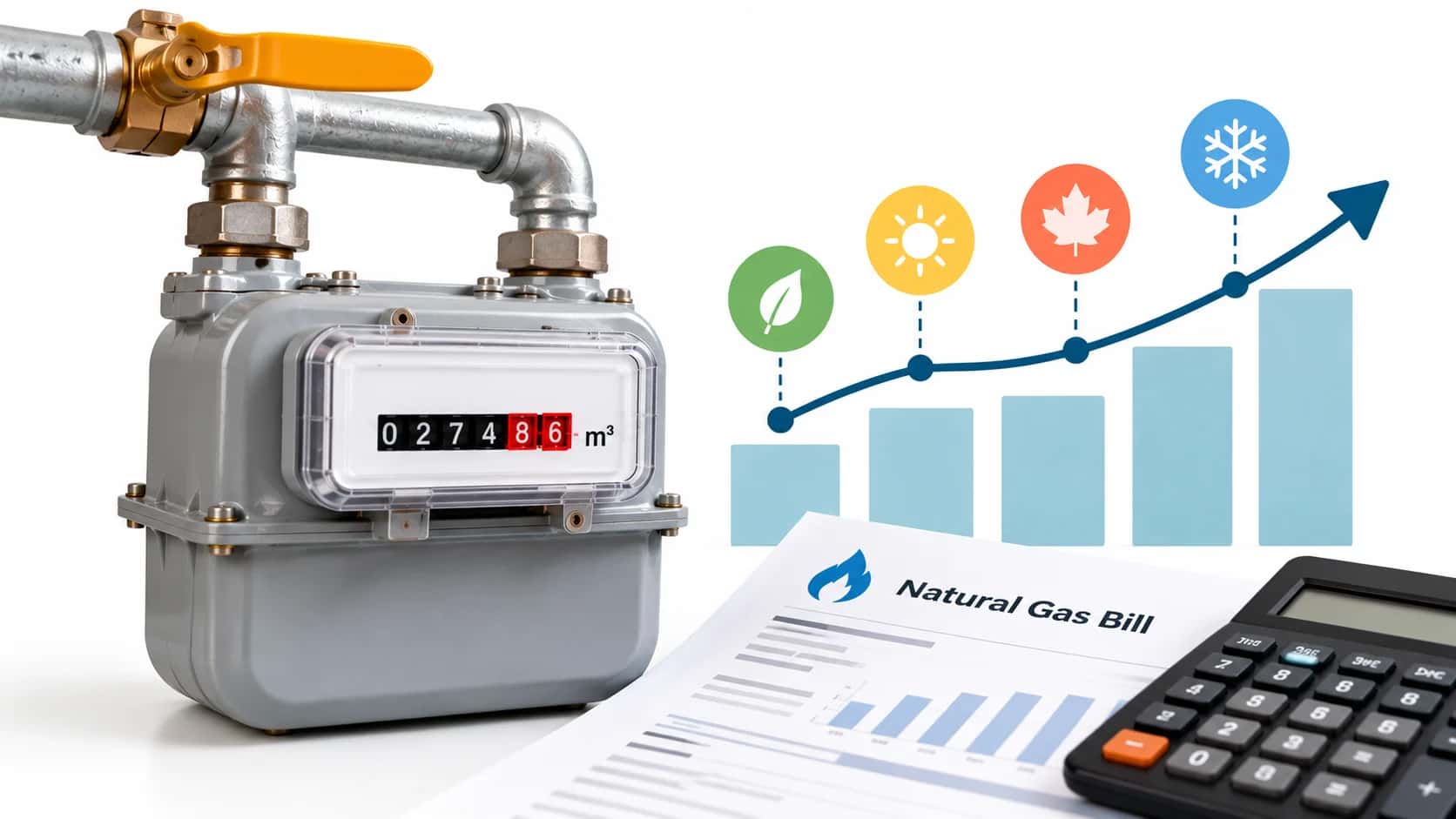
If you ran heat-pump numbers last year and set them aside, the inputs have changed. Not the equipment, and not the rebates — the fuel price assumption underneath the payback period. Macklem said market expectations for oil have shifted up since July, and a payback calculation built on a lower expected fuel price now understates the case for switching.
The federal estimates give a sense of the stakes and of the spread. Natural Resources Canada has put heat pumps at two to four times the efficiency of an oil furnace, with an oil-heated household switching to an eligible unit saving roughly $1,500 to $4,500 a year, subject to regional and household factors. It has also estimated that a fully oil-heated Canadian home burning 1,000 to 3,500 litres a year spent roughly $2,000 to $5,500 on heating in 2023, depending on climate, province, equipment efficiency and heating load. Those ranges are wide for a reason. They are not your number.
So run your own. Pull your actual litres from last year's delivery invoices, use a current local quote rather than a national average, and if you are in Ontario, remember that the electricity side of the comparison changes on November 1. This is a calculation to revisit, not a purchase to rush — and the equipment decision has its own sequence of steps, which we set out in our guide to oil tank removal in Atlantic Canada and the conversion options that follow.
The Bank's position, stated plainly, is that the spillover has not happened yet. That is the sentence to hold onto. The reasonable response to a widened range of outcomes is to price your options while the market is calm and the calendar is open, and then to decide with real quotes in front of you.