Yes—treat a new taste change as a valid “test now” trigger, because many issues don’t show up as visible changes.
A Canadian Homeowner’s Framework For Spotting Problems Early And Acting Fast

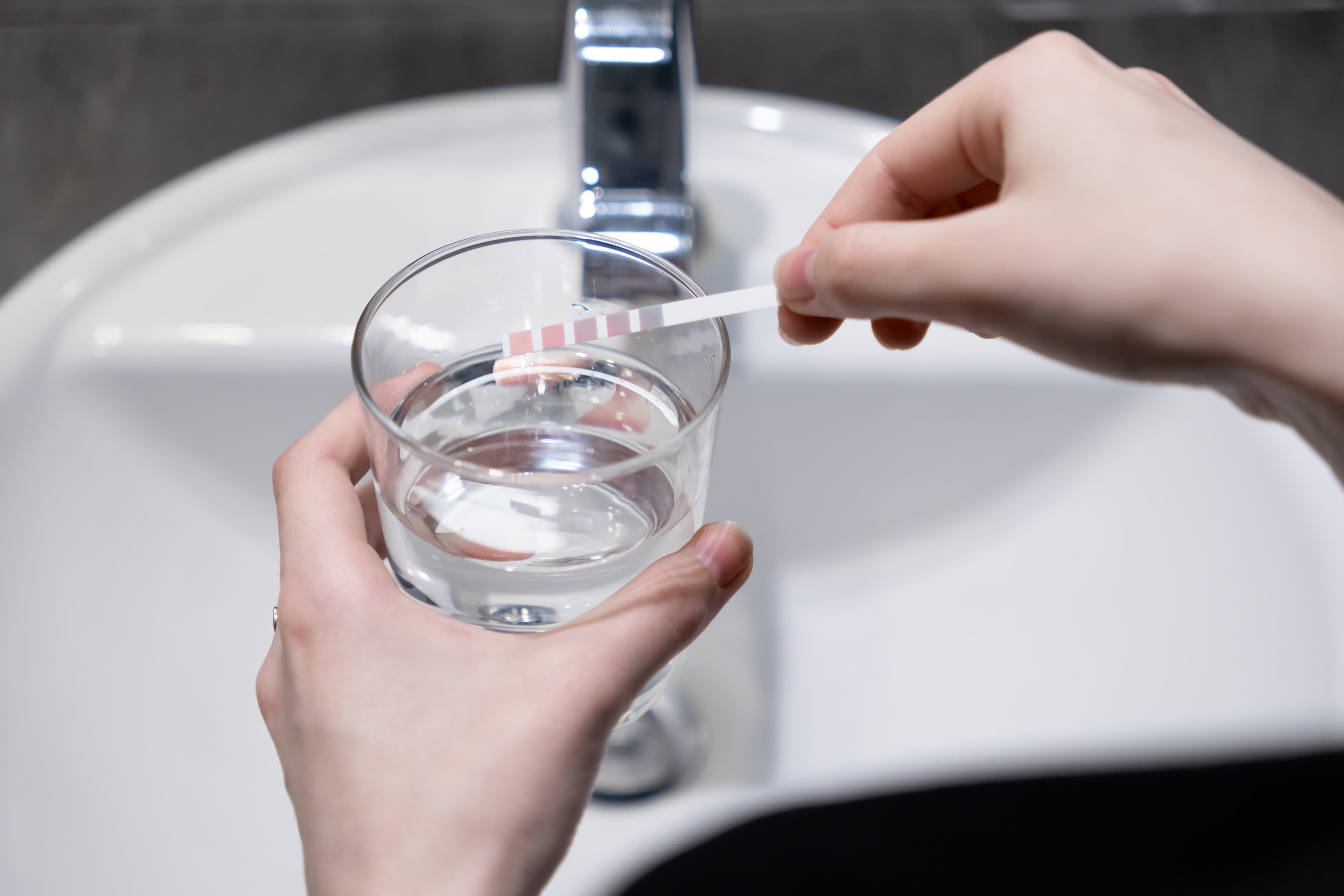
Hands dip a pH strip into well water as subtle taste and odour shifts turn urgent. (Credit: Shutterstock.com)
Private wells don’t come with a warning light. When something shifts underground, the first “alert” is often something small: water that tastes a bit metallic, a faint rotten-egg smell in a hot shower, tea-coloured water that clears after a minute, or a household member who suddenly can’t tolerate the tap water.
The hard part is that well water can look fine while still carrying a problem. Groundwater changes with weather, seasons, and nearby activity, and some wells are more vulnerable than others. That’s why sensory changes should be treated as a real signal—not a nuisance you wait out.
Canadian public health guidance is clear that changes in taste, odour, or colour are enough reason to test, and events like flooding or repairs raise the stakes, as described in Health Canada’s guidance on testing private well water for homeowners using private wells.
This guide gives you a practical decision framework, symptom-to-test mapping, and a fast action plan. It’s not meant to replace your local public health unit or an accredited laboratory, but it will help you recognize when the “maybe” moment has become a “test now” moment.

Most well-water problems show up through one of four signals. If you learn to sort what you’re seeing into these buckets, you’ll make faster, safer decisions.
Two points matter here:
Provincial and local guidance reinforces this “change = re-test” principle, including after events like floods or sewage back-flow, as stated in New Brunswick’s guidance on testing private water supplies for private well owners.
If your water changes and then “goes back to normal,” treat that as a stronger signal—not a weaker one—because intermittent problems often track with rainfall, pumping patterns, or seasonal groundwater movement.
Smell and taste are useful clues, but they don’t diagnose a single contaminant. Think of them as “directional indicators” that tell you what category of testing is urgent.
A practical way to use odour information is to separate it into patterns:
Health Canada treats odour as an important drinking-water quality characteristic and provides background on why odours can arise and why investigation matters in Health Canada’s technical document on drinking water odour for Canadian drinking water quality.
Here are the most common “homeowner-detectable” patterns:
If your water smells like rotten eggs, hydrogen sulfide is a common suspect and the smell often becomes more noticeable in hot water; this pattern is described by Chatham-Kent Public Health’s overview of hydrogen sulfide in water in homeowner-friendly terms.
Where technical context helps is understanding that “aesthetic” does not mean “ignore it.” A sulphur odour can still be corrosive to plumbing at higher levels and can point to bacterial activity in low-oxygen conditions, which is discussed in Purisoft’s overview of common well water issues from a Canadian water-treatment perspective.
If an odour seems strongest only in hot water, don’t automatically assume it’s “just the water heater.” Treat it as a clue: hot water can release dissolved gases more readily, and that same odour can still originate from the well water itself.
Colour changes are one of the most practical “test now” signs because they’re hard to rationalize away once you’ve seen them. The key is to look for repeatable patterns:
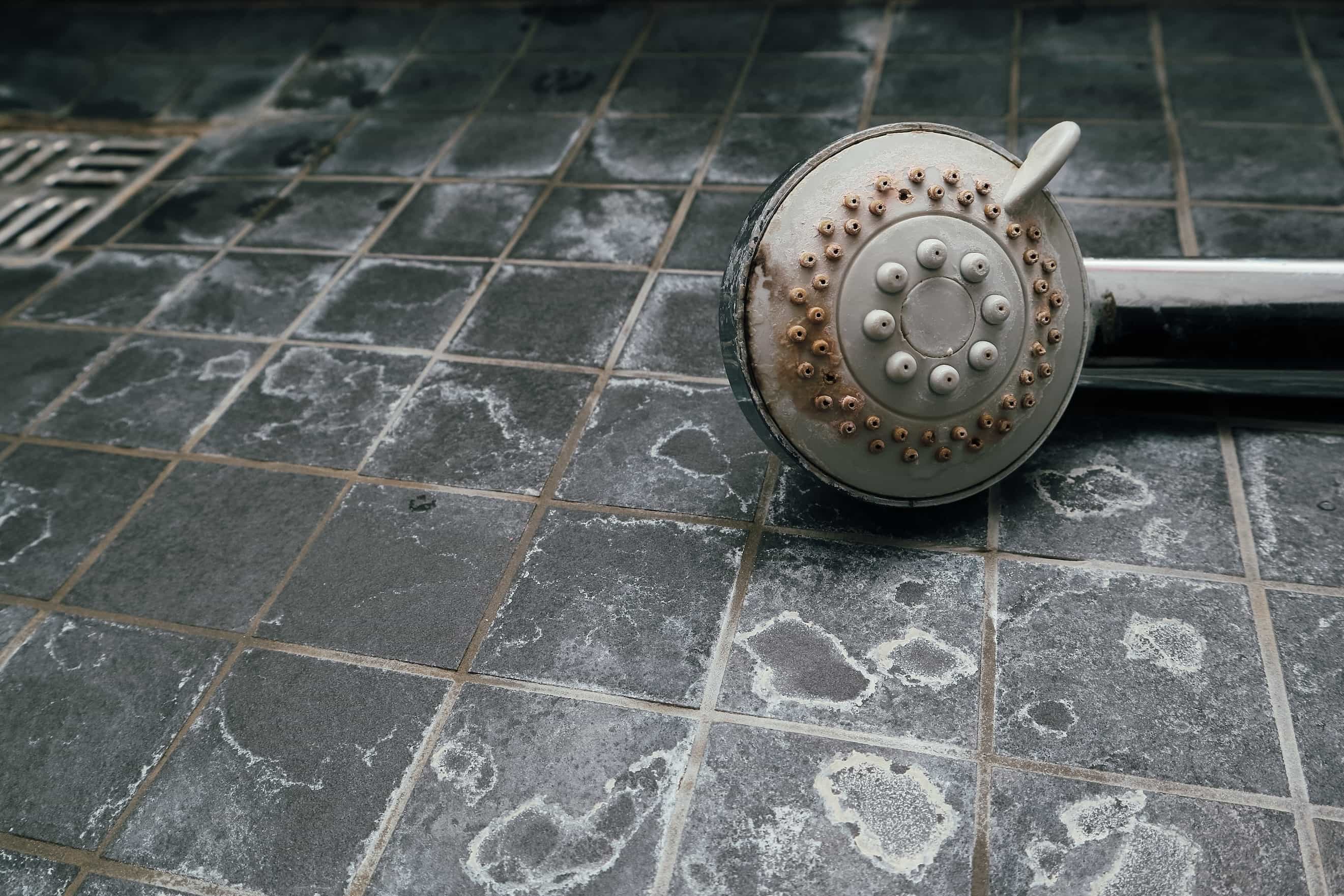
Health Canada explicitly includes general water quality parameters that affect taste, odour, and appearance—such as pH, iron, sulphate, total dissolved solids, and more—and notes that iron can influence other metals, as outlined in Health Canada’s guidance on well water testing for private well owners.
Use this as a practical translation layer:
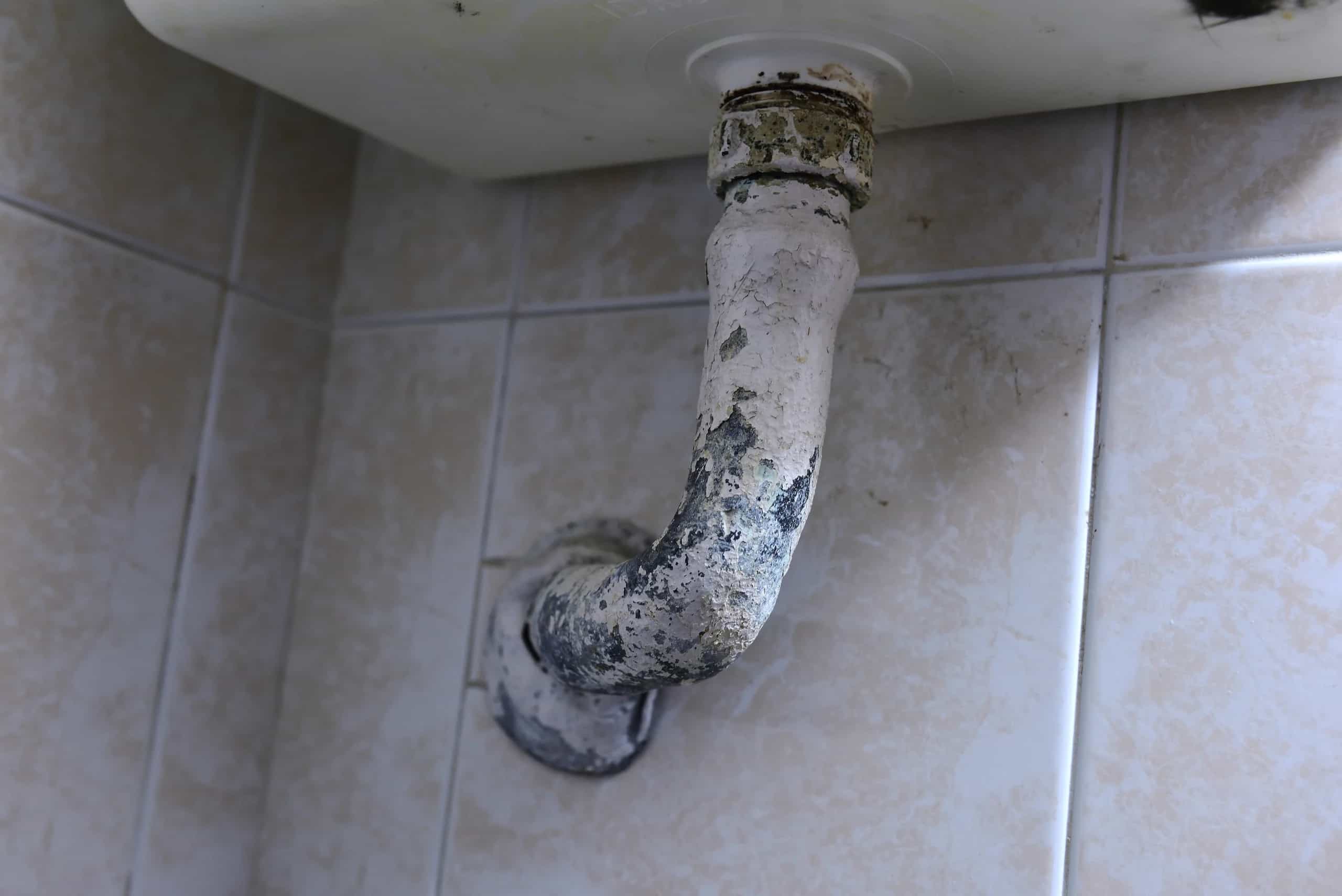
If you’re seeing dark staining, metallic taste, tea-coloured water, or slime in toilet tanks, those symptom descriptions align with iron and manganese patterns described in Purisoft’s guidance on iron and manganese water problems in practical terms homeowners recognize.
A sudden visual change after heavy rain or spring melt is not “just aesthetics.” Treat it as a surface-intrusion risk until testing confirms otherwise, especially for shallow or vulnerable wells.
Health clues are tricky because they’re rarely specific. A stomach bug can come from many sources, and skin irritation can be seasonal. What matters is pattern recognition:
Microbial contamination is a major reason health-based testing matters because indicator organisms can be present even when water looks, tastes, and smells normal, which is why routine microbial testing (often using E. coli and total coliform indicators) is emphasized in Health Canada’s private well testing guidance for well owners.
Practical interpretation for homeowners:
If you suspect water-related illness, switch immediately to a safe alternative source for drinking and food prep, and consider contacting a healthcare professional—especially for infants, seniors, or anyone with severe symptoms.
Canadian wells live in a climate of big swings: spring snowmelt, freeze-thaw cycles, intense rain events, and increasingly common wildfire smoke and ash impacts. Even if your well has been stable for years, these conditions can change groundwater pathways.
Health Canada notes that the best time to sample well water is when the chance of contamination is highest—such as early spring and fall, after heavy rains or floods, after a long dry spell, after wildfires, or after the well has not been used for a long time—and also explains that some wells are more easily contaminated due to construction or geology; these seasonal and vulnerability triggers are summarized in Health Canada’s guidance on when to test well water for private wells.
Use this seasonal checklist as a “Canadian reality filter”:
Treat early spring and fall as your “baseline windows” for building a testing habit, then add event-based testing any time something changes.
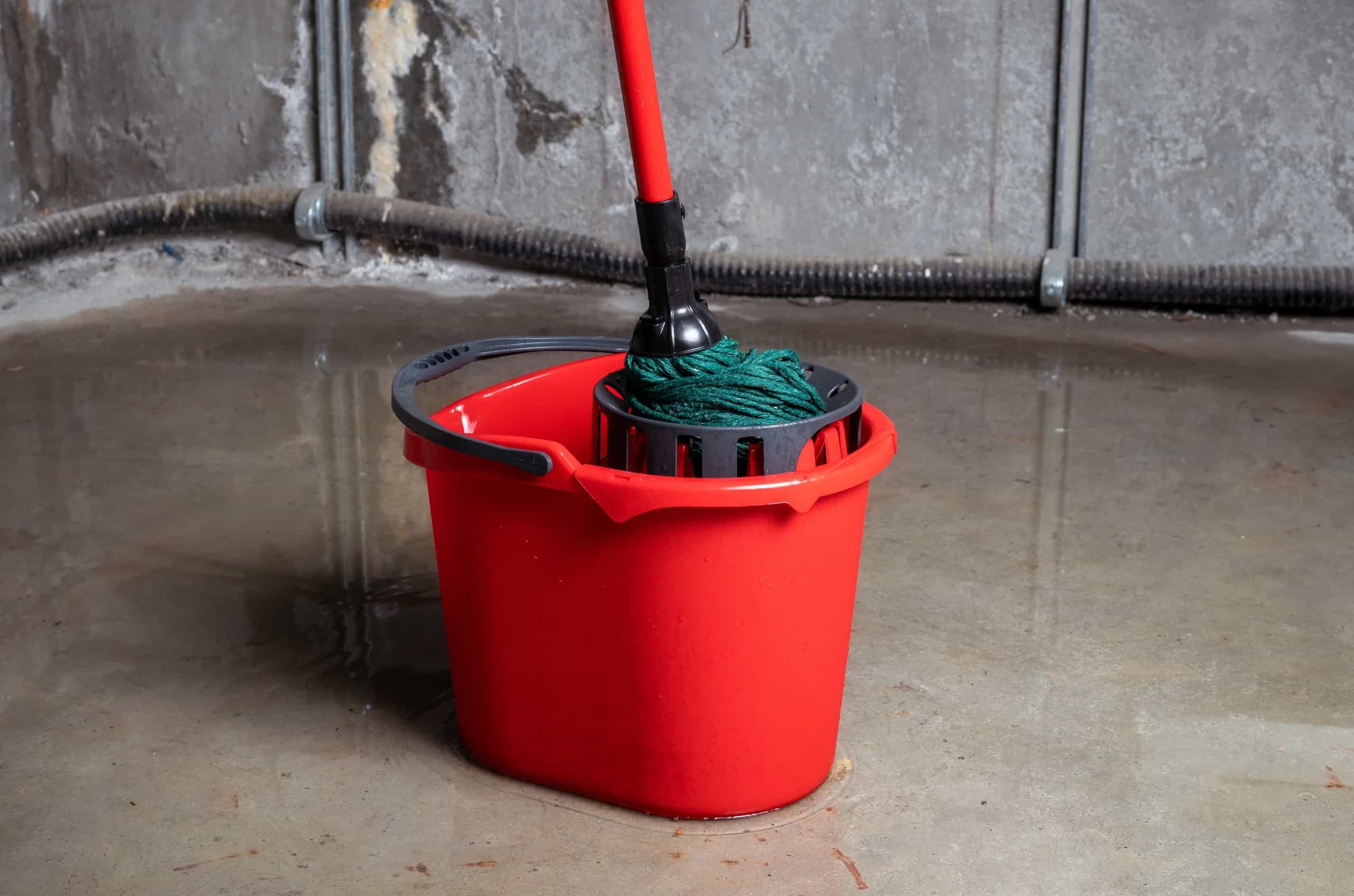
Flooding is different from “normal” weather triggers because it can physically submerge well components and drive contaminated water into places it normally wouldn’t reach. The safest stance is to assume contamination until proven otherwise.
During a flood, Health Canada advises well owners not to use well water for drinking, cooking, bathing, showering, or brushing teeth, which is outlined in Health Canada’s well safety guidance during and after emergencies for private wells.
Provincial and local guidance adds the same practical direction: heavy rain and flooding can allow surface water carrying harmful germs to enter wells, and you should use an alternative safe source until testing confirms safety, as explained in MyHealth Alberta’s advice on testing your water after your well has flooded for Alberta well owners.
If you’re in a flood-prone region (river flooding in parts of Ontario and Quebec, prairie flooding after snowmelt, coastal storm surge), it also helps to remember that floodwater can carry pathogens and chemical products like fuel or oil into wells, which is emphasized in Eastern Ontario Health Unit guidance for well owners during and after a flood for households using private wells.
Here’s a homeowner-focused flood timeline:
Local Ontario guidance also highlights two crucial practical details: boiling is an interim measure for microbial risk only, and it does not remove chemical contaminants, with additional conservative re-testing guidance described in Renfrew County and District Health Unit’s flood well-water guidance for flood-affected wells.
After flooding or sewage back-flow, treat your well like it is contaminated until lab results confirm it is safe, and use an alternate safe water source for drinking and food preparation in the meantime.
This is where many homeowners get caught: clear, good-tasting water can still be unsafe. The senses are biased toward aesthetic changes (smell, colour, staining) while many health-relevant contaminants are colourless and odourless.
A high-impact example is nitrate and nitrite. Health Canada’s drinking water guideline technical document sets a maximum acceptable concentration (MAC) for nitrate at 45 mg/L and for nitrite at 3 mg/L, values intended to protect infants from methaemoglobinemia, as detailed in Health Canada’s guideline technical document on nitrate and nitrite used in Canadian drinking water guidance.
What makes this especially important is that nitrate/nitrite risks are not something you can reliably detect by taste, smell, or colour, and the infant protection rationale is further explained in the Health Canada nitrate/nitrite guideline document’s additional guidance pages for Canadian drinking water quality.
Beyond nitrates, provincial guidance often recommends inorganic screening for naturally occurring contaminants like arsenic and uranium, which can be present even when water seems normal; that broader testing scope is described in New Brunswick’s private water supply testing guidance for private wells.
Use this table to keep your expectations realistic:
If you make infant formula at home, do not assume your well water is safe because it looks clear; build nitrate/nitrite awareness into your testing plan, especially in agricultural or septic-influenced areas.
When you notice a change, your goal is to reduce exposure risk immediately, then collect the right information quickly, without overcomplicating the process.
Here’s a straightforward playbook:
Reliable testing depends on proper sampling, labelling, storage, and transport, and Health Canada encourages using accredited laboratories or local public health units for dependable results, as described in Health Canada’s guidance on where to get well water testing for private well owners.
When in doubt, test bacterial indicators first and use your event context (flooding, nearby fuel storage, new drilling, farm activity) to decide what additional chemical tests to add.
Use this as a one-page reference when you’re deciding what to ask for. It’s designed to help you describe the problem clearly to a public health unit or lab without guessing at the “one true cause.”
A testing routine is less about “checking a box” and more about building a baseline so that changes are obvious and actionable. If you’ve ever wondered whether the water “always tasted like that,” you’re missing the benefit of a simple history.
Health Canada points to regular testing as a way to track changes in water quality over time, helping homeowners spot trends before they become obvious sensory problems, as explained in Health Canada’s well water testing guidance for Canadians on private wells.
A simple routine most homeowners can maintain looks like this:
If you ever sell your home, a clear well-water testing history can reduce uncertainty for buyers and make problem-solving faster if anything changes.
Yes—treat a new taste change as a valid “test now” trigger, because many issues don’t show up as visible changes.
That pattern often points toward hydrogen sulfide gas being released more in hot water, so treat it as a real signal and arrange testing.
No—microbial contamination can be present even when water looks, tastes, and smells normal.
Not always, but it is always a reason to test because it signals a change in water chemistry or intrusion pathways that you should confirm in a lab.
Intermittent changes often track with rainfall, pumping, or seasonal groundwater movement, so they’re worth testing and documenting.
If you notice any change after heavy rain, test promptly; if you don’t notice a change, follow local guidance for seasonal and event-based testing.
Yes, that swing can change groundwater conditions and increase the chance of surface contaminants moving, so pay attention to any new changes and test if anything shifts.
Generally yes, because shallow wells can be more vulnerable to surface influence; your best protection is a consistent baseline plus event-trigger testing.
Boiling can reduce microbial risk but it does not remove chemical contaminants, so flooding should be treated as an emergency until testing confirms safety.
After significant contamination events, some local guidance recommends multiple safe results over time before considering the well reliably safe.
Yes—nearby land-use and activity changes can introduce new contaminants without immediately changing taste, odour, or colour.
Microbial contamination, nitrates/nitrites, and some naturally occurring inorganic contaminants (like arsenic or uranium) can be present without obvious sensory clues.
The health concern is infant methaemoglobinemia risk, which is part of why Canadian guideline values exist, and it isn’t something you can detect by taste or odour.
Yes as a signal, especially if it’s new behaviour; it doesn’t prove contamination, but it’s enough to justify testing and switching to a safe source temporarily.
Not necessarily—start with high-value core testing (especially microbial indicators), then add targeted chemical/inorganic tests based on recent events and local risk factors.
Reduce ingestion risk right away by switching to a safe water source, then arrange accredited testing and document what changed.