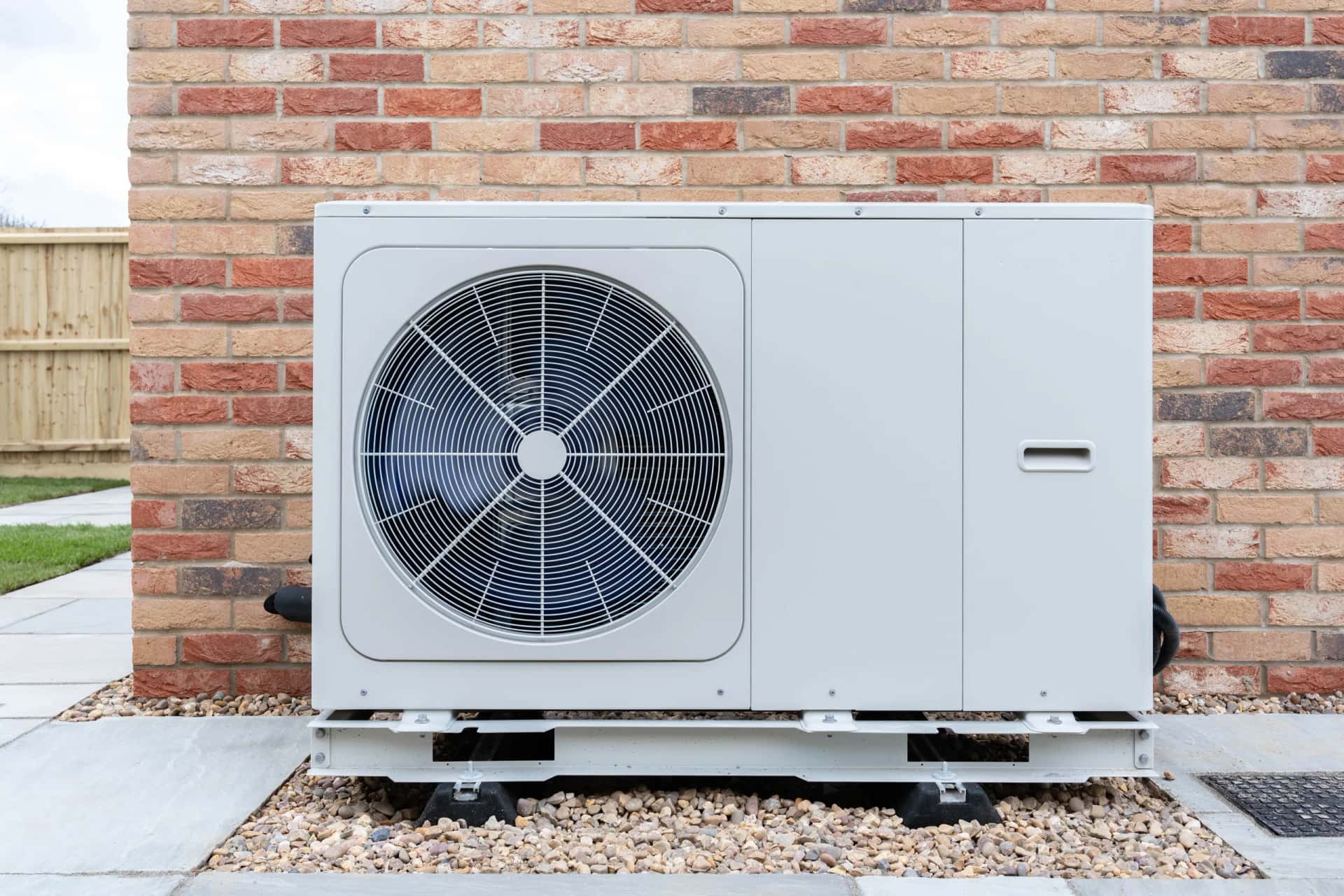
The second decision is bigger and slower: whether September's prices change the case for replacing oil heat with a cold-climate heat pump. The useful way to answer it is to compare what each source costs per unit of heat actually delivered into the house, not per litre or per kilowatt-hour.
Three inputs are needed. Natural Resources Canada puts the energy content of No. 2 fuel oil at about 38.2 megajoules per litre; how much of that reaches your rooms depends on your furnace or boiler's efficiency.
On the electric side, Nova Scotia Power's standard residential rate charges $0.19128 per kilowatt-hour, flat all day, as of May 1, 2026. And a heat pump's efficiency is measured as a coefficient of performance (COP): the units of heat delivered per unit of electricity used. In an NRCan field test of a cold-climate air-source heat pump in Ottawa, COP averaged 1.5 at -21°C and 3.0 at about +5°C.
Put those together and the comparison per gigajoule (GJ) of delivered heat looks like this:
Homeowner.ca calculation. Oil price is the Statistics Canada Halifax average including taxes; the electricity rate is the energy charge before taxes and excludes the monthly base charge, which you pay regardless of fuel. Equipment, installation, maintenance, tank removal and backup heat are not included.
Now the precise answer to "has the math flipped?"
Against a heat pump, oil was already the more expensive way to make heat a year ago. That has not changed. What changed is the size of the gap: at a COP of 2.0, oil went from costing roughly 1.7 times as much per GJ to roughly 2.8 times.
The genuine flip is against plain electric resistance. At September 2025's 139.7¢ per litre, an 80%-efficient oil system delivered heat for less than baseboard. At September 2026's 230.8¢, it costs more. The break-even sits at roughly 162¢ per litre: above it, even baseboard heat costs less per GJ than oil at 80% efficiency. Against a heat pump averaging COP 2.0, the break-even is roughly 81¢ per litre, a price Halifax has not seen in years.
That does not make conversion automatically worthwhile. Running cost per GJ is only one side of the decision. The other is capital: a ducted or multi-head system, possible electrical panel work, tank decommissioning and how much backup heat a given house needs on the coldest nights. A house that burns 1,500 litres a year has far less running cost to recover than one burning 3,500. That is why the comparison has to be run on your litres, your equipment and your quotes, not on a provincial average.