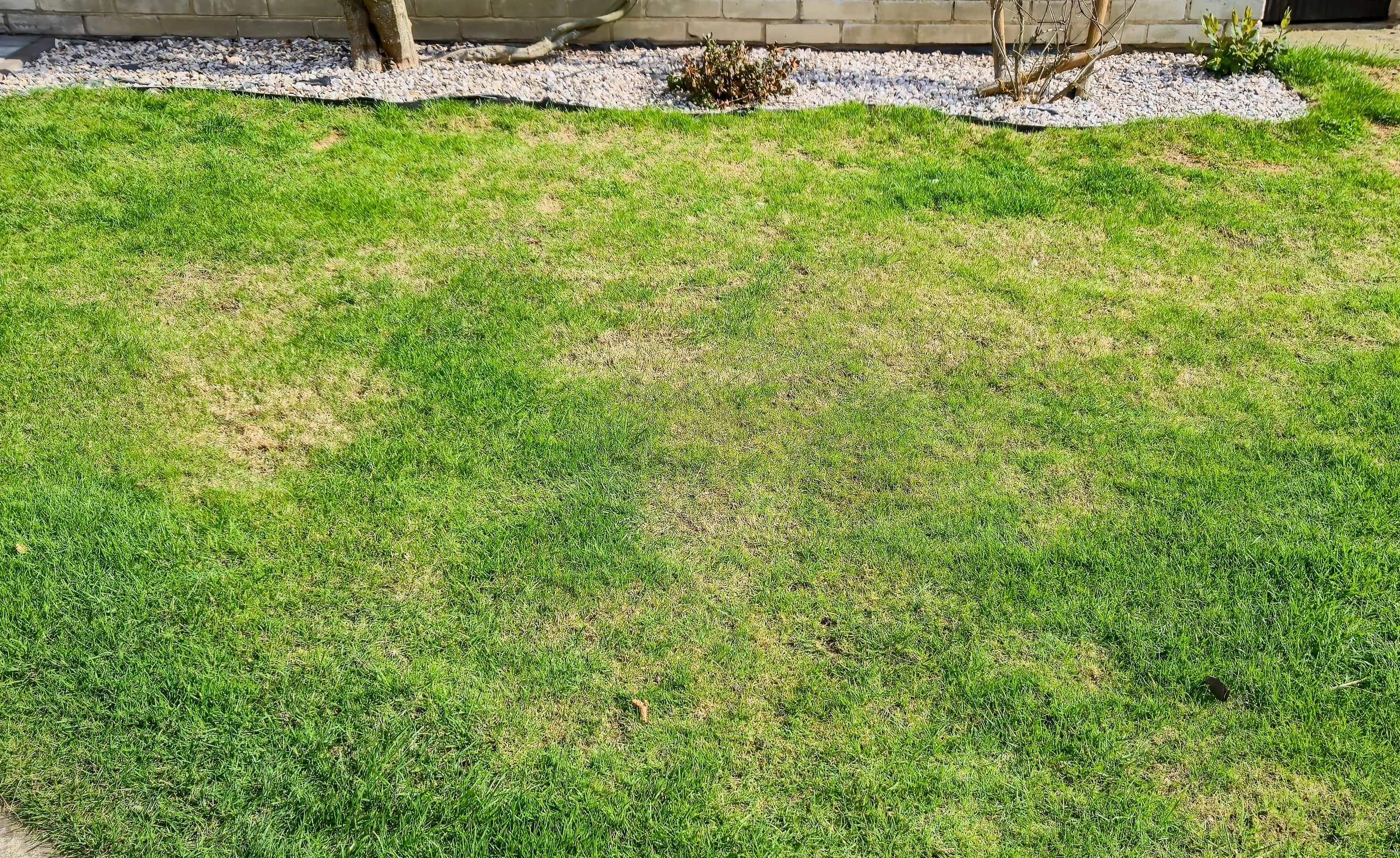
Most Canadian lawn diseases are cosmetic. The short list of fungicides registered for residential turf here means cultural fixes — mowing, watering, fertility, airflow — are the first and second moves for almost every homeowner. According to the Government of British Columbia's home-lawn guide, most lawn diseases trace back to fertility, thatch, or moisture imbalances, and routine fungicide spraying is more of a golf-course expectation than a home-lawn one.
Snow Mould: The April Heart Attack
Pink and grey snow mould appear as flat, matted patches of bleached or pinkish grass after snowmelt, usually where snow piled deep or sat long. They look like the lawn is dying, but the grass underneath is almost always alive. Light raking to lift the matted blades and let air through is usually all that's needed.
Red Thread, Rust, Dollar Spot, and Fairy Ring
Red thread shows up as tan patches with thin pink or reddish fungal threads on the leaf blades, mainly in cool, damp weather on lawns that haven't been fertilized recently. Rust appears as orange or rust-coloured powder that rubs off on shoes, mower decks, or the dog. Both are flags that the lawn is undernourished — modest fertilizing and consistent mowing usually clear them within a few weeks.
Dollar spot looks like its name: small, sunken, straw-coloured patches the size of a silver dollar, sometimes with cobwebby fungal threads in heavy morning dew. Fairy ring is the dark green circle of taller, faster-growing grass — sometimes with mushrooms — caused by soil-dwelling fungi. Aerating the affected area and watering deeply are the standard cultural responses.