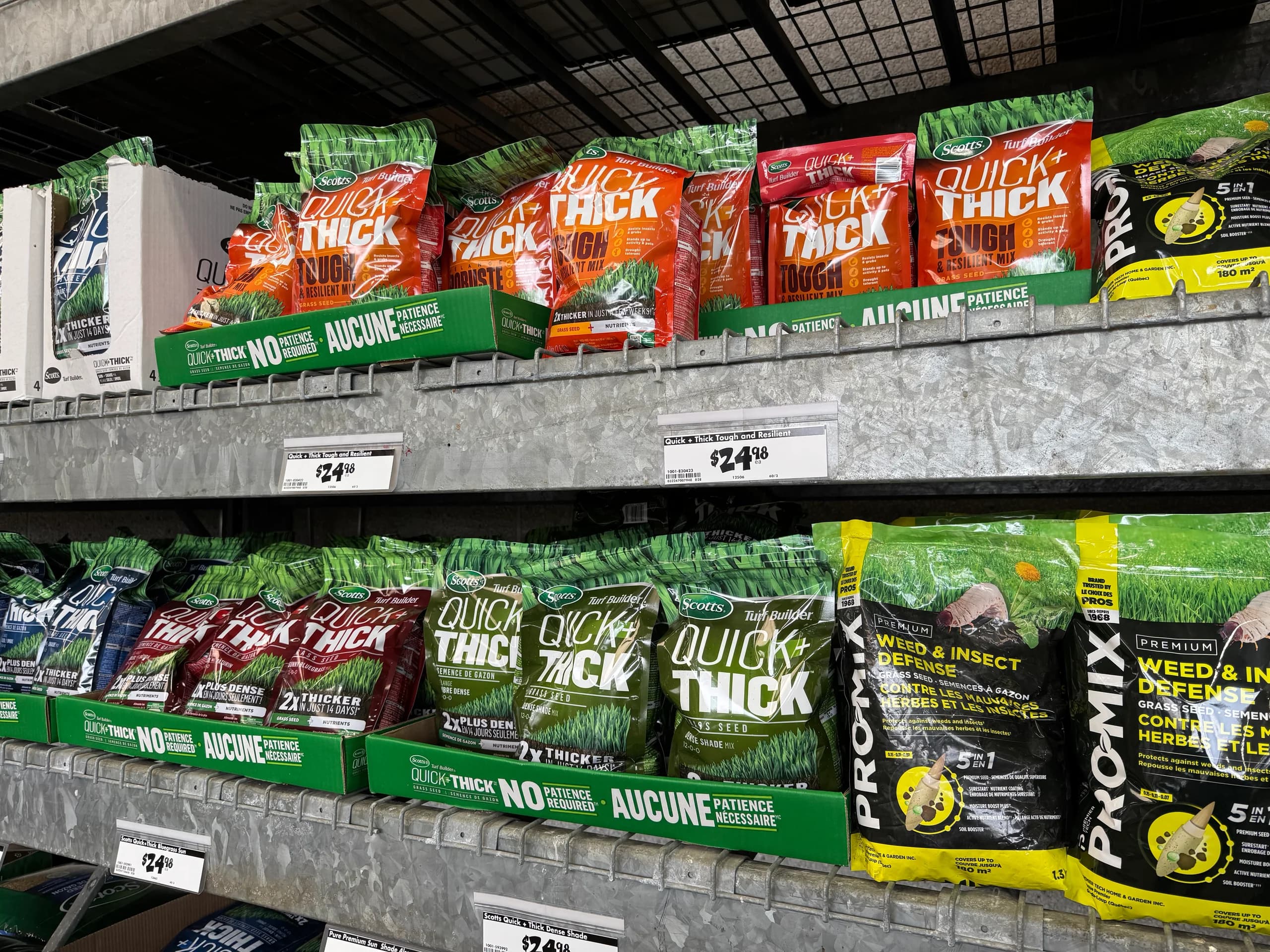
Before the conditions, the cast. Almost every grass blend you will encounter at a Canadian retailer is built from these four species in different ratios. Knowing what each one does — and what it cannot do — is the framework that makes the rest of the article useful.
Kentucky bluegrass (KBG). The default premium grass in Canada. It is the most cold-hardy of the common species, surviving roughly −35 °C with snow cover, and it self-repairs through underground rhizomes that knit thin spots back together over a season. The trade-offs are real: it establishes slowly (three to four weeks), it is the thirstiest of the four, and its shade tolerance is only fair. Per the Ontario Ministry of Agriculture's Integrated Pest Management for Turf guide, KBG rates good for wear and drought tolerance but high for water use — meaning it can survive drought, but it will not stay green through it without irrigation.
Perennial ryegrass (PRG). The fast-germinating workhorse. It pops in four to six days at 15 to 18 °C and tolerates heavy foot traffic better than almost anything else, which is why it shows up in most blends at 20 to 25 percent by weight. Its weakness is winter: cold tolerance is poor compared to KBG and the fescues, and it does not spread on its own. Use it as the nurse grass that gets cover on the ground while the slower species establish.
Tall fescue (specifically turf-type tall fescue). The drought-tolerant, soil-forgiving option that has surged in popularity over the last decade. Deep roots help it hold green colour during dry spells, it tolerates heat and salt, and it adapts to a wide range of soils. The catch is texture: tall fescue is medium-to-coarse compared to the fine, dense look of a KBG lawn, and it does not blend visually into a bluegrass-dominated yard. It is excellent on its own or as the dominant species in a low-maintenance, drought-leaning mix.
Fine fescues (creeping red, Chewings, hard fescue). The shade and low-input specialists. They produce a fine-textured, medium-green turf that grows in moderate shade, requires very little fertilizer, and goes dormant later than KBG during drought because of deeper roots. They do not tolerate heavy traffic, and they grow slowly. If your yard is shaded, sandy, or you simply do not want to fertilize and water four times a season, fine fescues belong in your mix.
Here is the at-a-glance comparison most blends are designed around:
Read the rest of this guide as condition-driven recipes pulled from those four ingredients.