Artificial Turf in Canada: Types, Costs, Installation Steps, Pet Considerations, and When It’s Worth It
A Homeowner’s Framework For Durable, Low-Maintenance Lawns In Canadian Climates
By
Published: March 15, 2026
Updated: March 21, 2026
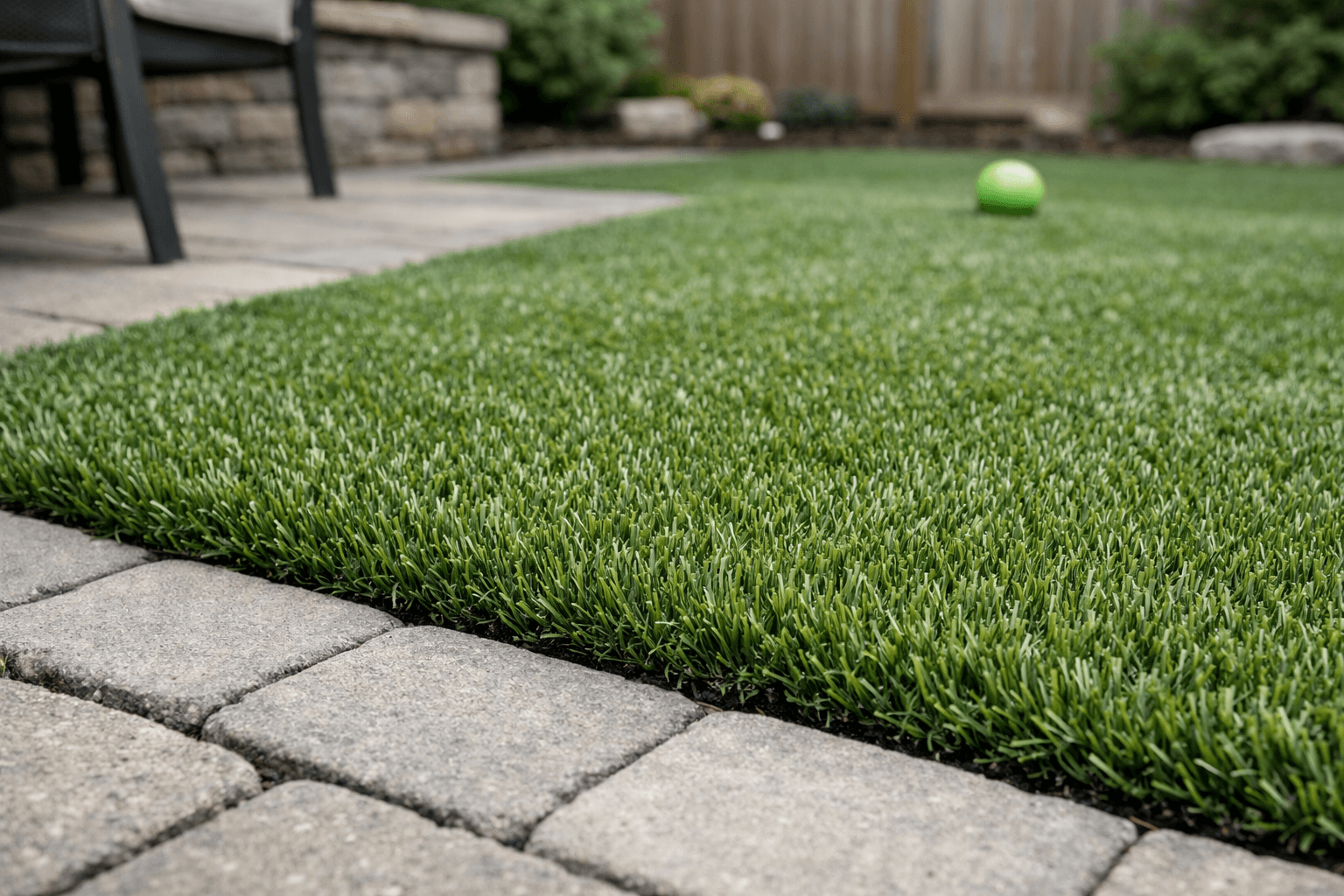
Artificial turf stays green through Canadian freeze-thaw cycles, where drainage and pet odour decide value. (Credit: Homeowner.ca)
Key Takeaways
•Artificial turf is most worth it where natural grass consistently fails: deep shade, heavy traffic, tight urban lots, rooftops, and dog zones.
•In Canada, the biggest cost swing usually isn’t the turf roll—it’s base prep, drainage, access, and removal/disposal.
•Great installs are “boring”: stable base, clean seams, proper edging, and drainage that can handle snowmelt and pet rinsing.
Artificial turf is one of those home upgrades that can look like a shortcut—until you price it out, live with it through a Canadian winter, and realize it’s closer to a hardscaping project than a simple lawn swap. For some homes, it’s a smart, low-maintenance surface that stays presentable through drought, shade, and heavy use. For others, it’s an expensive way to create heat, glare, and drainage problems if the base work is rushed.
This guide is designed for Canadian homeowners who want a clear decision path. You’ll learn how turf systems actually work, how to compare product specs without getting lost in marketing, and what installation steps matter most in freeze–thaw climates. You’ll also get realistic Canadian cost ranges, practical advice for pets, and a “worth it” rubric you can apply to your own yard, rooftop deck, or side passage.
Artificial turf also comes with legitimate questions: Is it safe for kids? Does it get too hot? What happens with dog urine? How does it perform when snow melts and refreezes? The answers are less about hype and more about system design—drainage capacity, infill choice, cleaning habits, and whether the turf was installed as a complete system instead of “rolled out like carpet.”
If you want a neat takeaway before we go deep: turf works best when you treat it like a built surface with a defined purpose. The goal isn’t to “replace grass.” The goal is to create a usable outdoor area that stays functional and attractive with less ongoing effort, in the specific conditions your property actually has.

Understanding Artificial Turf In A Canadian Context
What It Is, What It Isn’t, And Where You’ll See It
At a basic level, artificial turf is a surface made from synthetic fibres designed to look like natural grass, and in municipal guidance like Toronto Public Health’s overview of artificial turf in Toronto the City also notes it’s increasingly used not only for sports fields but for childcare areas, streetscapes, residential and commercial landscaping, rooftops, patios, and pet areas.
That breadth matters for homeowners because it reframes turf as a surface solution rather than a sports-only product. If you’ve got a shaded side yard that never dries, a dog run that turns into mud every spring, or a rooftop deck where soil depth is limited, turf is often considered specifically because natural grass isn’t realistic there.
Toronto Public Health’s assessment also concludes that modern third‑generation turf systems—when properly installed and maintained, and when users follow good hygiene practices—are not expected to expose people to contaminants at levels that pose a significant risk to human health. In practical homeowner terms, the “system” (base, drainage, maintenance, cleanliness) is part of the product.
Term You’ll Hear
What People Usually Mean
What To Know As A Buyer
Artificial turf
The full synthetic “grass-like” surface
Often used as the umbrella term for landscaping, play, and sport applications
Synthetic grass
Landscaping-focused turf that looks like a lawn
Usually softer, more natural-looking fibres and a “yard” aesthetic
“AstroTurf”
Any fake grass
A brand name that became a generic nickname; not a technical category
“Fake grass”
Anything not natural lawn
Useful shorthand, but it hides big differences in quality and drainage design
Third-generation turf
Modern turf systems typically used today
Often refers to systems designed to be safer/softer than early turf generations
Note
“Artificial turf” is a broad category. Two lawns can look similar in a listing photo and perform completely differently once you add snowmelt, dog urine, or a few years of freeze–thaw cycles.
Why Durability And “Active Space” Keeps Coming Up
A recurring theme in public and commercial use is that artificial turf can sustain higher levels of use than natural surfaces and can be appropriate where grass would otherwise fail or become unusable. For homeowners, this is the strongest non-aesthetic argument: if you’re constantly patching mud, reseeding bare spots, or restricting use because the lawn can’t handle it, turf can effectively “unlock” yard space.
That said, “durability” isn’t magic—it’s engineering. Turf performs when it’s installed on a stable, well-draining base and when it’s maintained enough to keep fibres upright and the surface clean.
Important
If you want turf primarily for durability, budget accordingly for base prep and drainage. The turf roll is the visible part, but the base is what determines whether the surface stays flat, drains properly, and avoids odours.
Advertisement — Article Continues Below
Pros And Cons For Canadian Homeowners
The Tradeoffs That Actually Show Up In Real Yards
Artificial turf is neither a universal upgrade nor an environmental villain by default. It’s a trade: you replace ongoing biological lawn management (watering, mowing, fertilizing, repairing) with an installed synthetic surface that needs periodic cleaning and will eventually be replaced.
Here’s the Canadian lens that tends to matter most:
Factor
Where Turf Shines
Where Turf Can Disappoint
Shade and damp areas
Stays consistent where grass thins, moss spreads, or mud forms
If drainage is poor, damp areas can still smell or grow surface algae
High-traffic zones
Handles kids, dogs, and pathways without turning to bare soil
If base prep is weak, traffic reveals waves, dips, or seam movement
Time and maintenance
No mowing, fewer seasonal lawn chores
You still need brushing, debris removal, and occasional rinsing/cleaning
Water use
Eliminates routine lawn irrigation
You may still rinse for cooling, dust, or pet hygiene
Winter performance
Stays green and usable when grass is dormant
Snow/ice management matters, and poor drainage can freeze into slick spots
Upfront cost
One-time install can simplify long-term upkeep
Higher upfront investment than sod for most homeowners
Heat and glare
Can look great year-round
Can get hot in direct sun and reflect light depending on fibre and infill
Warning
If your yard already drains poorly, turf doesn’t “fix” that—it can make it more obvious. Drainage is a design requirement, not a nice-to-have.
A Simple Rule: Turf Is Best When Grass Is Already Losing
In many Canadian homes, turf is most compelling when natural grass is already failing for predictable reasons: dense shade from mature trees, narrow side yards with limited sunlight and airflow, dog traffic that compacts soil, or compacted clay that turns to mud in spring and hardpan in summer.
If your lawn is healthy, sunny, and easy to maintain—and you enjoy gardening—turf may feel like a solution in search of a problem. But if you’re spending money and time just to keep the space usable, turf often becomes a rational option.
Tip
Walk your yard right after a heavy rain and again during spring melt. If you consistently see puddles, spongy spots, or muddy track lines, build your turf decision around drainage first.
Fibre Materials, Performance Specs, And Use-Case Fit
Artificial turf isn’t one product. It’s a family of systems built from different fibre materials, different backing designs, and different surface “tuning” (pile height, density, infill, and drainage behaviour). That’s why a cheap decorative patch can look fine in photos but fail quickly in a dog run.
A good starting point is fibre material, because it influences feel, resilience, and cost. Cost guides such as The Grounds Guys Canada’s artificial grass pricing breakdown outline common residential materials—polyethylene, polypropylene, and nylon—and note that material pricing can vary widely, from low-cost decorative options to premium nylon products.
Fibre Material
Typical Feel And Look
Durability Profile
Common Use Cases
Approximate Material Cost Signals
Polyethylene
Softer, more “lawn-like”
Good for most residential use
Front yards, backyards, general landscaping
Often positioned as a cost-effective “primary lawn” fibre
Polypropylene
Stiffer, more decorative
Lower resilience under heavy wear
Low-traffic decorative zones, accents
Often priced in the lower-to-mid range
Nylon
Very resilient, springy
Strong under heat and high use
High-traffic areas, specialty applications
Often positioned as premium, with premium variants much higher
Note
Fibre material is only one piece. A well-built polyethylene turf with good density and backing can outperform a poorly-built “premium” product installed on a weak base.
The Specs That Matter Most (And How To Think About Them)
Most homeowners don’t need to obsess over every data point, but you do need a few anchors so you can compare quotes and samples meaningfully.
Spec
What It Affects
What To Ask/Look For
Homeowner Shortcut
Pile height
Plushness, realism, debris trapping
Taller isn’t always better
Medium heights often balance realism with easier cleaning
Density / stitch rate
How “full” the turf looks and how it wears
Higher density usually costs more
For dogs/kids, density helps fibres stand back up
Face weight
Material mass (often tied to durability)
Compare within the same category
Use it to compare two similar-looking samples
Backing type
Dimensional stability, drainage behaviour
Ask about permeability and stability
Stable backing helps prevent ripples and seam movement
Drainage design
Snowmelt and rinse-out performance
Ask about drainage rate and base design
Drainage is a system: backing + base + slope
Infill type
Feel underfoot, cooling, odour behaviour
Ask what infill is included and why
Pet areas often benefit from easy-rinse, low-odour approaches
UV stability
Colour and fibre degradation
Ask about UV ratings/warranties
Canadian sun can be intense in open yards and rooftops
Match The Turf To The Job, Not The Instagram Photo
The same “green lawn” look can be tuned for very different performance outcomes. A shaded side yard wants drainage and low-maintenance cleanability. A front yard often prioritizes realism and curb appeal. A dog run prioritizes rinse-through drainage and odour control. A putting green is a different category altogether, because surface speed, fibre stiffness, and infill tuning matter more than “lushness.”
Important
If you’re comparing samples, do it outdoors in your lighting conditions. Fibres that look natural in shade can look shiny in full sun, and bright fibres can read as “plastic” depending on angle and glare.
Advertisement — Article Continues Below
Cost Reality Check In Canada
Installed Pricing, What Drives Quotes, And Sample Budgets
Artificial turf pricing in Canada is usually quoted per square foot, and the hard part is that two quotes can differ by thousands of dollars while both being “reasonable.” That’s because pricing is a mix of materials, base prep, removals/disposal, access constraints, and finishing details.
Typical Installed Price Ranges And Quality Tiers
In Canadian contractor pricing summaries like HomeStars’ artificial grass cost guide the typical installed range is often presented around $5 to $20+ CAD per square foot, with budget projects roughly in the $5–$10 range, mid-range in the $10–$15 range, and premium projects at $15–$20+ depending on product and site factors.
That range is broad on purpose. “$10/sq. ft.” might be a fair deal for a simple, accessible rectangular yard with good soil and minimal removals. The same price could be a red flag if it includes complex excavation, drainage work, tight access, multiple seams, and premium turf.
Ensure premium pricing corresponds to real scope/value
Tip
When you compare quotes, force them into the same categories: turf supply, base prep, edging, seams, infill, removals/disposal, and any drainage upgrades. The “all-in” number is meaningless if the scopes are different.
Turf-Only Versus Installed: Why The Gap Is So Big
Homeowners often start with a turf-roll price they saw online and then feel surprised when a professional quote doubles or triples it. The difference is usually labour and base work.
For example, in GTA-focused pricing commentary like Fieldmasters’ breakdown of Toronto-area turf installation costs the turf alone is often framed around roughly $4–$6 CAD per square foot, while full professional installation commonly lands around $10–$15 CAD per square foot, with higher labour costs when removals are heavier or shapes/access are more complex.
That’s a useful mental model for many Canadian projects: the visible “grass” can be the minority of the total bill once you add excavation, base material, compaction time, disposal, and finishing details.
Published Price Menus Show What “Base Prep Included” Really Means
When you see “installation pricing,” you need to understand whether it’s turf laid over an existing surface or a full excavation-and-base system. In published examples like Canada Turf Pros’ pricing page you can see a meaningful difference between turf installation pricing and installation that includes full base preparation, and specialty products like putting greens can be priced significantly higher per square foot than standard lawn turf.
You don’t need to memorize anyone’s menu pricing to benefit from it. The point is structural: base preparation is a real scope item with real cost, and specialty turf is not “the same thing, just shorter.”
A Practical Cost Breakdown: Where Your Money Typically Goes
Exact percentages vary, but most residential projects follow this pattern:
Sites that already pond water require real drainage work
Warning
If a quote is dramatically cheaper, ask exactly what they’re doing for base depth, compaction, edging, and drainage. “Looks good on day one” is easy; “stays flat and drains in year five” is the goal.
Sample Budgets: Turning Per‑Square‑Foot Into Real Numbers
Because Canadian pricing is commonly expressed per square foot, it helps to translate quickly into totals. Here are rough planning ranges using common installed tiers. Treat these as budgeting brackets, not quote substitutes.
Area Size
Budget Tier ($5–$10/sq. ft.)
Mid-Range ($10–$15/sq. ft.)
Premium ($15–$20+/sq. ft.)
200 sq. ft. (small dog run / patio zone)
$1,000–$2,000
$2,000–$3,000
$3,000–$4,000+
500 sq. ft. (small yard)
$2,500–$5,000
$5,000–$7,500
$7,500–$10,000+
1,000 sq. ft. (typical backyard)
$5,000–$10,000
$10,000–$15,000
$15,000–$20,000+
If you want a concrete “reality anchor” for a typical project size, the same Grounds Guys Canada cost discussion that many homeowners reference is The Grounds Guys Canada’s artificial grass cost article where a 500‑square‑foot installation is described as commonly totalling around $6,000 CAD in their Canadian context.
Turf Versus Sod: The Upfront Gap (And Why People Still Choose Turf)
Turf is usually a higher upfront cost than sod. A Canadian brand example that puts numbers to that comparison is Bella Turf’s 1,000‑square‑foot cost comparison which frames an installed turf project at about $15 per square foot (around $15,000 total) compared with natural sod around $9 per square foot (around $9,000 total) for the same area, and then emphasizes that turf avoids many recurring lawn-care services after installation.
Even if you disagree with any one provider’s assumptions, the structure of the decision is real: turf is a larger initial investment that can reduce recurring mowing, watering, and seasonal lawn-care costs.
Multi‑Year Cost Of Ownership: A Useful “Worth It” Lens
If your main reason for turf is to reduce ongoing costs and hassle, you should evaluate it over multiple years, not just the first invoice. In an illustrative Canadian model like MegaGrass Canada’s turf cost breakdown the company compares a multi‑year total for turf versus sod by including installation and ongoing lawn-care line items, framing turf as a higher upfront project with minimal annual maintenance costs compared to a natural lawn that accumulates yearly costs for mowing, treatments, irrigation servicing, and repairs.
The homeowner takeaway is simple: turf is easiest to justify when you currently pay for ongoing lawn services or spend significant time and water maintaining grass that still looks patchy.
Important
Don’t treat turf like a “grass product.” Treat it like a surface build (similar to interlock or decking): install quality determines longevity, and value comes from years of use.
Advertisement — Article Continues Below
Installation Overview
DIY Versus Pro And The Steps That Matter Most
A proper turf install is mostly earthwork and finishing. If you’re comparing DIY to professional installation, think in terms of risk:
DIY can save labour cost, but increases your risk of poor grading, weak compaction, and seam/edge failures.
Professional installation costs more, but a good crew brings experience with drainage, base thickness, and tight finishing around curves and hardscapes.
The Step-By-Step Installation Sequence
Below is a practical, homeowner-friendly sequence that mirrors how good installs are typically built.
Step
What Happens
What “Good” Looks Like
Common Mistake
Plan and measure
Confirm area, shape, seams, drainage direction
Clear plan for seams and slope
Ordering too little turf or placing seams in traffic paths
Remove existing surface
Remove sod, weeds, and organic material
Clean excavation to stable subgrade
Leaving organic material that decomposes and creates dips
Establish grade
Shape slope to shed water away from structures
Water flows away from foundation and doesn’t pond
Flat installs that become puddle zones in spring melt
Install edging
Add strong perimeter containment
Edges are locked and consistent
Weak edging that lets turf creep or lift
Build base
Add aggregate base in lifts
Base is compacted in layers, not dumped once
Under-compacted base that settles and ripples
Add leveling layer
Fine layer to smooth and shape
Smooth plane with correct slope
Over-smoothing that creates low spots
Add weed barrier
Geotextile layer (if used)
Overlaps and is secured
Skipping it where weeds are aggressive
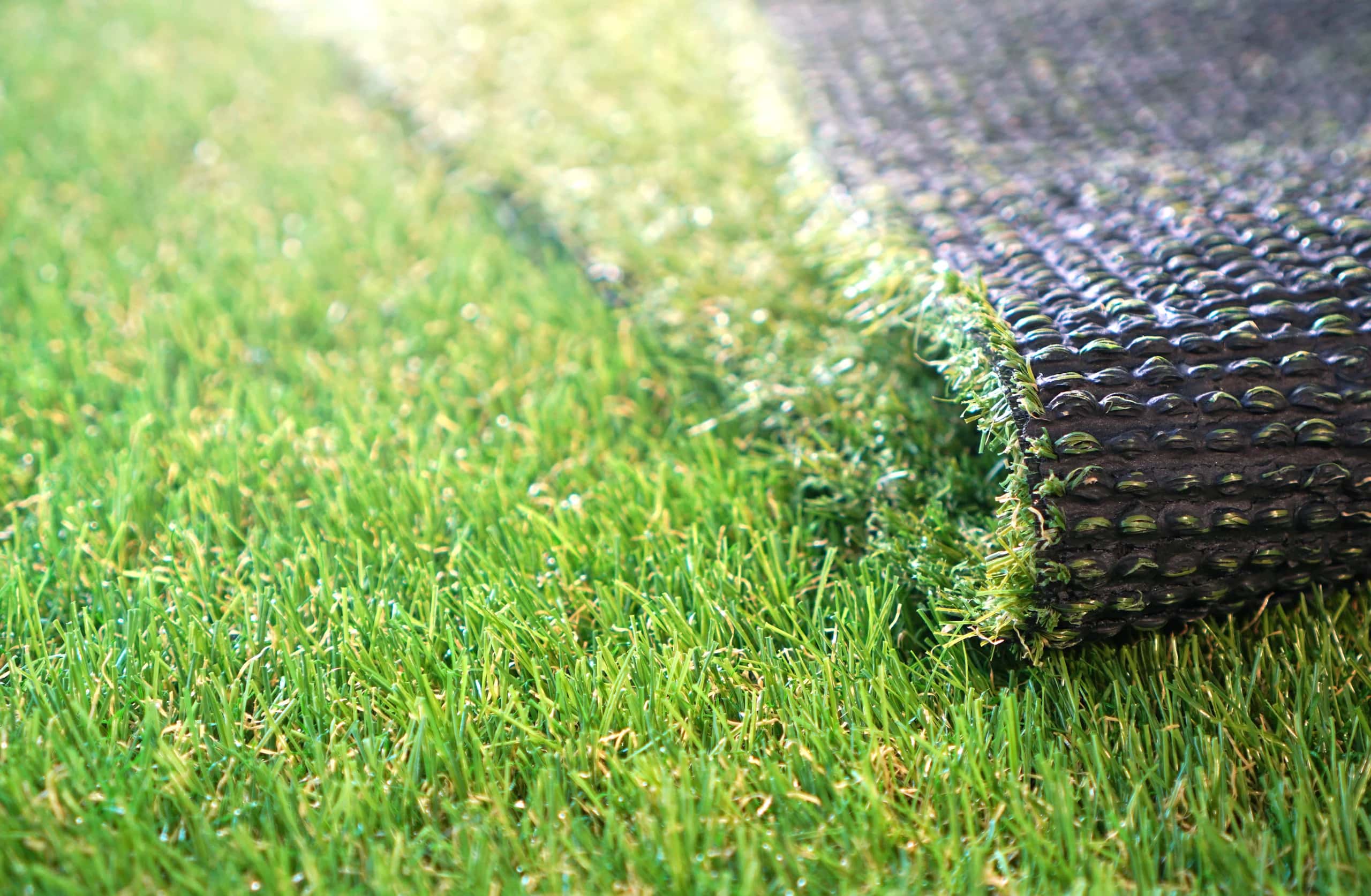
Lay and relax turf
Position turf and let it settle before fixing
Fibres oriented intentionally, minimal stress
Stretching turf too tight and creating seam stress
Seam and secure
Join seams, fix perimeter, secure edges
Seams are invisible and stable
Poor seam alignment that opens over time
Add infill
Spread infill evenly (if specified)
Consistent coverage and fibre support
Uneven infill that creates soft/hard spots
Power broom and groom
Brush fibres upright, final clean
Natural look with stable footing
Skipping grooming, leaving turf flat and shiny
Warning
The fastest way to hate turf is to install it on a base that isn’t properly compacted or graded. Most long-term failures are base failures, not fibre failures.
A “Scope Checklist” For Comparing Quotes
If you’re hiring out, ask each installer to confirm these items in writing so you can compare scopes fairly:
Excavation depth and what’s being removed
What base material is used and how it’s compacted
Whether edging/containment is included (and what type)
Seam method (tape/glue vs stitching; where seams will land)
Infill type and whether it’s included
Drainage approach (especially if your yard currently ponds water)
Disposal and cleanup responsibilities
Warranty terms (materials vs labour)
Tip
Walk your installer through the yard and point out the worst spots—where water sits, where dogs run, where shade never clears. The best quote is the one designed for your failure points.
Advertisement — Article Continues Below
Pet Considerations
Odour Control, Drainage, And Cleaning Routines For Canadian Households
Turf can be very pet-friendly, but it’s not “maintenance-free,” especially with dogs. The main pet issues are predictable:
Urine can create odours if it isn’t rinsed through and flushed from the base
Solid waste needs fast pickup to avoid staining and bacteria
Hair and debris can compact into fibres if the surface isn’t brushed periodically
Spring thaw can mobilize smells if winter waste wasn’t fully removed
Design Choices That Make Turf Work Better With Dogs
If pets are central to your use case, prioritize these system choices:
Drainage-first base design: You want urine and rinse water to move through, not linger.
Infill that supports cleaning: Some infills hold odours more than others; ask how the system is designed for pet hygiene.
Seam placement: Keep seams out of the primary dog run line if possible.
Access to water: Having a hose hookup nearby changes your cleaning reality.
Pet Concern
What Usually Causes It
What Helps Most
Good Habit
Persistent urine smell
Poor drainage or lack of rinsing
Better base drainage + periodic rinse
Quick rinse in favourite pee zones
Staining
Delayed cleanup or concentrated urine
Faster pickup + spot cleaning
Keep a small cleanup kit near the door
Flattened fibres
Heavy traffic + no brushing
Higher density turf + brushing
Brush traffic lanes monthly
Spring “funk”
Winter accumulation + thaw
Deep clean after snowmelt
Do a spring reset clean before warm weather
Important
Pet turf success is mostly routine. A 60‑second rinse a few times a week beats a “deep clean” crisis once a month.
Cleaning Without Overcomplicating It
A practical routine most homeowners can stick to:
Daily/regular: Pick up solid waste quickly, rinse if needed.
Weekly: Rinse high-use zones (especially in warm weather).
Monthly: Brush fibres upright and remove embedded debris.
Seasonal: Spring deep clean after snowmelt; fall leaf management so organic debris doesn’t break down in the pile.
Warning
Avoid harsh chemicals that can damage backing, harm pets, or create runoff concerns. If you use cleaners, choose products intended for pet odour and outdoor surfaces, and rinse thoroughly.
Advertisement — Article Continues Below
Water, Climate, And Heat In Canadian Conditions
Why Turf Appeals In Some Regions And What To Watch For
One reason turf is getting more attention in parts of Canada is climate pressure on natural lawns: hotter summers, periodic drought conditions, and watering restrictions that can stress or brown grass. In a GTA-specific discussion like Turfs Up Canada’s analysis of irrigation needs in the Greater Toronto Area the article cites lawn-care data suggesting natural lawns can require about 55–75 litres of water per square metre per year in that climate context, framing turf as a way to eliminate routine irrigation and reduce that outdoor watering demand.
Even if your region differs, the homeowner logic holds: if you currently irrigate heavily to keep grass alive, turf can reduce both water use and time spent managing sprinklers.
Seasonal Performance: A Canadian Reality Table
Season
What You’ll Notice
What To Do
What To Avoid
Spring thaw
Snowmelt tests drainage; debris becomes obvious
Rinse, brush, and clear low spots early
Ignoring ponding that later freezes or smells
Summer heat
Surface can get hot in direct sun
Add shade, rinse to cool, choose lighter fibres/infill
Letting pets linger on hot turf at peak sun
Fall leaves
Leaves can mat and hold moisture
Leaf-blow or rake gently, brush fibres
Letting organic debris break down in the pile
Winter snow/ice
Snow sits on top; melt/refreeze can be slick
Use plastic tools, manage melt paths
Metal shovels that cut fibres or backing
Tip
If heat is a concern, plan shade the way you would for a deck: umbrellas, pergolas, trees (where appropriate), or timing pet/kid use for cooler parts of the day.
Advertisement — Article Continues Below
When Artificial Turf Is Worth It
A Decision Rubric You Can Apply In Five Minutes
The fastest way to decide is to evaluate turf against the real constraints of your property. Here’s a practical rubric that works for most Canadian homes.
The Use–Site–System–Service Framework
Use: What are you actually trying to do out there?
Kids’ play space
Dog run
Entertaining area
Front-yard curb appeal
Low-maintenance side yard
Rooftop/deck greenery feel
Specialty surface (putting green)
Site: What conditions are forcing your hand?
Deep shade
Poor soil or persistent mud
Heavy traffic compaction
Tight access (narrow side gates, stairs, condo elevators)
Slopes or known drainage issues
Rooftop weight limits and drainage constraints
System: What build will reliably solve it?
Turf type and density appropriate for wear
Base designed for drainage and stability
Edging strong enough for your perimeter and use case
Infill choice aligned with heat, feel, and pet hygiene
Specialty turf, precise base levelling, higher budget
Important
Turf is easiest to justify when it replaces a problem you’re already paying for—either in money (services, water) or in constant time and frustration.
Advertisement — Article Continues Below
FAQ
In homeowner conversations, “artificial turf” is often the umbrella term for all synthetic grass-like surfaces, while “synthetic grass” is commonly used to describe landscaping products designed to look and feel like a natural lawn. The more important distinction is the system: drainage design, base build, infill, and density.
Most of the time it’s a nickname people use for any fake grass. Treat it like saying “Kleenex” for tissues—useful shorthand, but not a technical spec.
Modern turf systems are generally evaluated as safe when properly installed, maintained, and used with good hygiene practices. For families, the practical focus is keeping the surface clean (especially in play areas) and ensuring drainage works so water and contaminants don’t linger.
It can, especially in direct sun. Heat depends on sun exposure, fibre type/colour, infill, and airflow. If heat is a concern, plan shade and consider occasional rinsing to cool the surface during peak sun.
Turf stays “green” through winter, but snow and ice sit on top the way they do on decks. The key is drainage for melt events and gentle snow management (plastic tools and avoiding anything that cuts fibres).
Installed pricing is usually quoted per square foot and can vary widely depending on product tier and install complexity. The most useful approach is to get multiple quotes and compare scopes line-by-line (base prep, removals, edging, seams, infill, drainage).
The base work is the swing factor: excavation depth, disposal, access constraints, drainage upgrades, slope correction, and the amount of seam/edging labour. Two yards can be the same size and have completely different prep requirements.
Yes, especially for small, simple areas, but DIY success depends on your ability to excavate, grade, and compact properly. The risk isn’t that it looks bad on day one—it’s that it develops waves, puddles, or odours over time if the base build is weak.
Base prep and compaction. A stable, well-compacted, well-graded base is what keeps the turf flat, drains water, and prevents settling.
Many systems use infill to support fibres, improve footing, and tune feel. Whether you need it, and what type, depends on your turf product and your use case (pets, kids, sun exposure). Ask what the installer includes and why.
Design for drainage and adopt a rinse routine in favourite pee zones. Fast pickup of waste, periodic rinsing, and occasional deeper cleaning are the difference between “pet-friendly turf” and a yard that smells in summer.
A good install reduces weeds by removing organics, using a stable base, and (often) using a barrier layer. But windblown seeds can still sprout in surface debris—so routine debris cleanup matters.
Often yes, and it’s a common use case where soil depth is limited. The key is planning drainage so water can escape without creating trapped moisture, and ensuring the build is compatible with the structure and any condo/building rules.
Longevity depends on product quality, UV exposure, traffic, and maintenance. Treat it like a built surface: higher-quality turf and a proper base typically last longer than budget turf installed quickly.
Expect debris removal, occasional brushing to keep fibres upright, and rinsing/cleaning as needed (especially with pets). Spring and fall are the big moments: spring reset after thaw and fall leaf control.
Often yes, because shade is one of the most common reasons lawns fail in Canadian yards. Turf can turn a muddy or mossy corridor into a usable, clean space—if the drainage and base are designed for that damp environment.
Not really. Putting greens are specialty systems with different fibre, density, and installation precision needs, and they’re commonly priced higher because the tolerances are tighter and the product is tuned for ball roll rather than lawn realism.