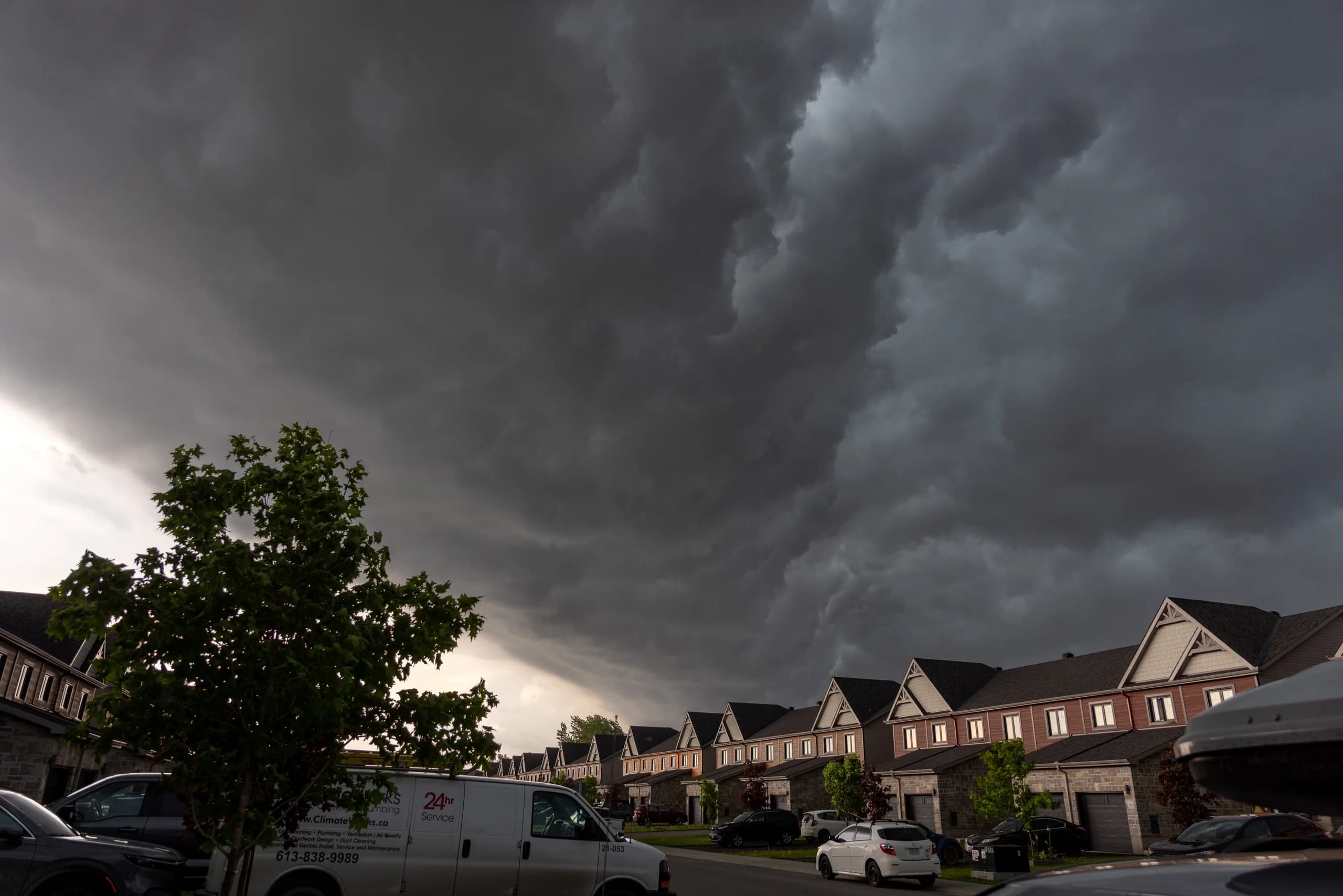
Once the cell has moved through and the warning has expired for your area, two clocks start: a safety clock, and a documentation clock. They run in parallel.
Safety first. If you see downed wires, leaning trees over power lines, debris on the roof, or pooling water near electrical service, stay out and call the appropriate utility or municipal emergency line. Do not photograph anything you have to enter unsafe space to capture.
Once safe, document before you clean. The Insurance Bureau of Canada is unambiguous on this sequence: photograph or video damage thoroughly, take an inventory of affected items, and hold onto damaged items unless they are dangerous. Receipts for emergency repairs, cleanup, and temporary accommodation are typically reimbursable under standard policies. The order matters. Mitigation done before documentation can complicate or even disqualify a claim, because the adjuster cannot independently verify the original loss.
One coverage nuance worth saying plainly. Standard home insurance generally covers wind, hail, fire and lightning damage. Overland flooding and sewer backup are usually optional add-ons. If your loss is water entering through a wind-damaged roof, that is usually a wind claim. If it is groundwater coming up through a basement floor drain, that is usually a sewer-backup or overland-water claim — and only if you have the endorsement. Knowing which bucket your loss falls into before you call will speed the conversation.
A reasonable mitigation step — tarping a roof breach, redirecting water away from an active leak, removing soaked drywall to slow mould growth — is not just allowed; it is generally expected. Take photos of the damage first, take photos of the mitigation step, and keep the receipts. Skipping mitigation can hurt your claim. So can skipping the photos.