What the Four-Point Scale Means for Insurance, Why It Differs From Provincial Maps, and the Opt-In Catch That Limits Coverage

Credit: Shutterstock
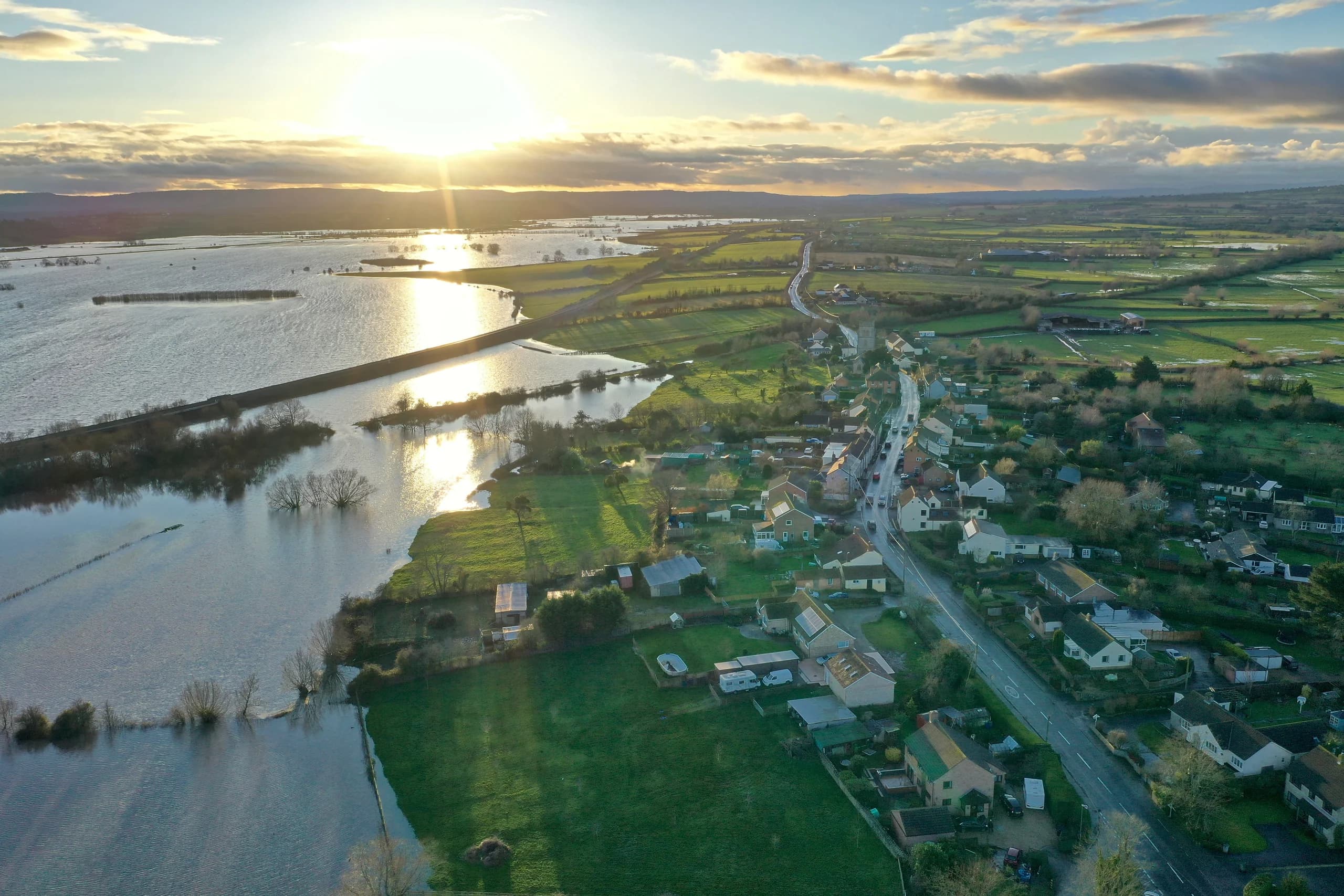
On April 27, 2026, Minister Eleanor Olszewski announced in Ottawa that technical development of Canada's Flood Risk Finder is complete. The platform is the country's first national, publicly available source of flood hazard and risk information — and the first one a homeowner can query simply by typing an address. Each property returns a rating on a four-point scale (low, moderate, high, or extreme) and an indication of which of four flood types apply: coastal, rainfall, riverine, or combinations of those.
The news matters because the tool collapses a long-standing problem for Canadian homeowners into a single lookup. Until now, flood-risk information has lived in patchwork form across provincial floodplain maps, conservation authority overlays, and municipal hazard layers — most of them designed for engineers and planners, not for someone trying to understand whether their basement is in a recurring rainfall-flood corridor. Flood Risk Finder is the homeowner-facing translation of that data, built on top of the federal Flood Hazard Identification and Mapping Program.
There is, however, a significant catch: the platform's usefulness is gated by provincial and territorial participation. Public Safety Canada said the platform would now work "urgently" with provinces and territories through summer 2026 to advance their participation, with rollout communicated jurisdiction by jurisdiction as each one opts in. The implication for homeowners is that the tool is real, the framework is national, but the coverage map is going to look uneven for some time — and the homeowner action items differ depending on whether your jurisdiction is online yet.

The technical work behind Flood Risk Finder is a multi-agency effort. According to the Public Safety Canada news release on the launch, the platform was developed collaboratively by Natural Resources Canada, Statistics Canada, and Public Safety Canada — with Statistics Canada contributing data, IT, and usability-testing expertise, and Natural Resources Canada providing the underlying flood data drawn from the Federally Identified Flood Risk Areas dataset.
This is a meaningful detail. Flood Risk Finder is not a public-information microsite layered on top of unchanged data. It is a federal platform that sits on dedicated hazard-identification work funded through the Flood Hazard Identification and Mapping Program, with the explicit policy goal of giving every Canadian a consistent way to understand the flood exposure of a specific property. The news release frames the tool as a starting point for "actions to improve resilience" — a homeowner-level signal designed to drive conversations with insurers, neighbours, and local officials, not a static label.
Public Safety Canada also pegged flooding as Canada's most common and costly natural hazard, with average annual losses of more than $2 billion. That number is a useful baseline. It establishes why a national risk platform exists at all, and why it has taken several years and three federal agencies to bring one online.
Flood Risk Finder presents results in two coordinated layers. The first is the risk band — a rating from low to extreme based on the federal flood data for that address. The second is the flood type — coastal, rainfall (also called pluvial), riverine (fluvial), or combinations of those — which tells the homeowner what kind of water event drives the rating.
This is more useful than a single number. A "high" rating in coastal British Columbia points to storm surge and sea-level vulnerability. A "high" rating in suburban Mississauga more often points to rainfall flooding overwhelming local sewer capacity. A "high" rating along the Red River means riverine spring flooding tied to snowpack and ice. The risk band tells you the magnitude; the flood type tells you the mechanism. Insurance language tracks the same distinction — overland flood, storm surge, and sewer backup are typically separate coverage components, and the flood type from the lookup gives a homeowner the vocabulary to ask whether their policy includes the relevant peril.
The bands are deliberately broad. Federal data does not — and could not — predict whether an individual basement floods this year. What the rating does do is tell a homeowner whether their property is in a defined federal flood-risk area, what type of flooding has been identified, and whether the underwriting conversation with their insurer should sound like the one a low-risk neighbourhood gets or the one an extreme-risk neighbourhood gets.
Provincial flood maps have existed for decades. Several provinces — Ontario through conservation authorities, British Columbia through dike and floodplain mapping, Quebec through its zone d'intervention spéciale — already publish hazard layers homeowners can browse. Flood Risk Finder is not designed to replace those maps. It is designed to overlay them with a consistent national rating built on federally identified flood risk areas, so that a homeowner in Saskatoon and a homeowner in Saint John can both look up an address and read the same four-point scale.
The differences matter. Provincial maps are typically built for regulatory purposes — zoning, development permits, and floodplain management — and are updated on cadences set by the responsible authority. Flood Risk Finder is built for public risk awareness, with a homeowner-friendly interface and an explicit aim of catalysing local mitigation behaviour. A property may show as "high" on the federal tool and "regulated floodplain" on a provincial map, or vice versa, because the inputs and the purposes are different. Neither layer is wrong. Homeowners in jurisdictions where local maps have been particularly granular — particularly Ontario and British Columbia — should expect to use both.
Homeowner.ca's coverage of NRCan's recent flood-map inventory update provides additional context on the federal mapping work that feeds into Flood Risk Finder. The two efforts — the inventory and the public-facing portal — are complementary: NRCan's mapping populates the underlying risk areas, and Public Safety Canada's portal is the homeowner-readable surface.
A "no result" or low rating in Flood Risk Finder does not mean a property has zero flood risk. It can mean the federal dataset has not yet identified that location as a defined risk area, or — more commonly during the rollout — that the relevant province has not yet opted in. Always cross-check with provincial and conservation authority maps where available.
The most important practical fact about Flood Risk Finder right now is that its coverage is incomplete by design. Provinces and territories have to opt in before their local flood-risk data populates the portal for their jurisdiction. Public Safety Canada described the next phase as working "urgently" with provinces and territories through summer 2026 to advance participation, and confirmed that public rollout will be communicated jurisdiction by jurisdiction.
This creates two practical implications for homeowners. The first is that searches in early jurisdictions will return useful, populated risk ratings, while searches in later jurisdictions may return little or no data. That asymmetry will persist for several months. The second is that an empty result during the rollout window should not be interpreted as a low risk — it should be interpreted as missing data. The federal dataset may still flag the property as being in a recognized flood-risk area; the public-facing portal simply may not be displaying it yet.
Homeowners in jurisdictions that opt in early will, in effect, gain a year-zero head start in renewal-season insurance conversations. Homeowners in later-joining jurisdictions can prepare in the meantime by verifying provincial and conservation authority maps, reviewing their existing overland flood and sewer backup endorsements, and noting which flood type is most relevant to their property based on local geography — riverine for valley properties, rainfall for low-lying urban lots, coastal for shoreline homes.
The most direct application of Flood Risk Finder for homeowners is at the insurance renewal table. The Insurance Bureau of Canada, in its public statement supporting the launch, framed the tool as a way for homeowners and renters to make more informed decisions and take practical steps to mitigate their risk. Translated to the renewal conversation, that means three things.
First, the four-point rating is shorthand a homeowner can bring to a renewal call. A rating of high or extreme should prompt explicit confirmation that the policy includes overland flood and sewer backup endorsements, not assumptions about what the standard policy covers. The federal government's overland flood insurance overview makes the structural point clear: standard home and tenant policies in Canada typically do not include flood coverage, overland flood is offered as an optional endorsement, and availability is tied to the insurer's own assessment of the property's flood risk. Federal guidance pegs the average cost to repair a flooded basement at over $40,000, which sets the magnitude of the exposure homeowners are insuring against.
Second, the flood type matters for the policy detail. A coastal-flood-driven rating raises questions about storm surge sub-limits; a rainfall-driven rating points squarely at sewer backup endorsement language and basement coverage caps; a riverine rating may interact with how the insurer treats overland flooding versus seepage. The vocabulary the federal tool gives homeowners is the same vocabulary insurers use internally — using it explicitly tightens the conversation.
Third, the bigger context matters too. Homeowner.ca's reporting on Canadian home insurance premiums rising 31% over five years establishes the affordability backdrop against which any new flood-risk loading will be applied. A high or extreme Flood Risk Finder rating is not, on its own, a reason for a premium adjustment at this renewal — but over time, federal risk classifications are likely to become more visible inputs into the way insurers price overland flood endorsements.
The structural limitation of Flood Risk Finder is not a flaw in the tool itself — it is a flaw in the coverage system the tool sits on top of. A federal risk lookup is genuinely useful information. It is also incomplete as a homeowner protection strategy without a corresponding national flood insurance solution, and that solution is not yet operational.
The Insurance Bureau of Canada's 2025 pre-budget submission to the House of Commons finance committee set out the structural numbers: more than 1.5 million Canadian households — about 10% of all residences — sit in known areas of high flood risk and account for roughly 78% of all flood losses, with the top 2% of highest-risk residences alone accounting for 50% of losses.
The federal government committed in Budgets 2023 and 2024 to a CMHC reinsurance subsidiary delivering a low-cost, high-risk National Flood Insurance Program, but as of mid-2024 still required the Fall Economic Statement to fully fund core operations and stand up the entity. Homeowner.ca's reporting on Ottawa's hesitation to launch the national flood insurance program tracks how that gap has persisted into spring 2026.
The numbers from the federal willingness-to-pay study are sharper still. About 5 million of Canada's 15 million homes carry overland flood insurance, but those insured homes are mostly in low-risk areas — accounting for only 5–10% of expected residential flood damage — while very few high or extreme-risk homes are currently insured even though they account for 90–95% of residential flood damage risk. The roughly 1% of homes in extreme-risk areas have about a 50% chance of flooding over the next 10 years and would face premiums in the several-thousand-dollars-per-year range, likely requiring subsidies, elevation, protection, or relocation.
That is the gap Flood Risk Finder helps surface but cannot close. A homeowner who looks up an address and sees "extreme" can now act on that information — confirm coverage, evaluate mitigation, factor it into longer-term decisions. What they cannot yet do is buy affordable, broadly available high-risk overland flood insurance through a federal backstop, because the federal backstop has not yet been built. The risk lookup is a real and overdue improvement; it arrives in front of the coverage program, not behind it.
Until your jurisdiction's data is live in Flood Risk Finder, the most useful preparation is to know your property's flood type by local geography (coastal, riverine, rainfall, or combination), confirm your existing overland flood and sewer backup endorsements in writing, and document your basement's current finished value and contents. All three steps are valuable regardless of what your eventual federal rating turns out to be.
About the Author
Ryan is the founder of Homeowner.ca and a proud Canadian homeowner based in Guelph, Ontario. Over his 25-year career in digital publishing, he has focused on transforming complex information into clear, practical guidance that helps people make confident, well-informed decisions.