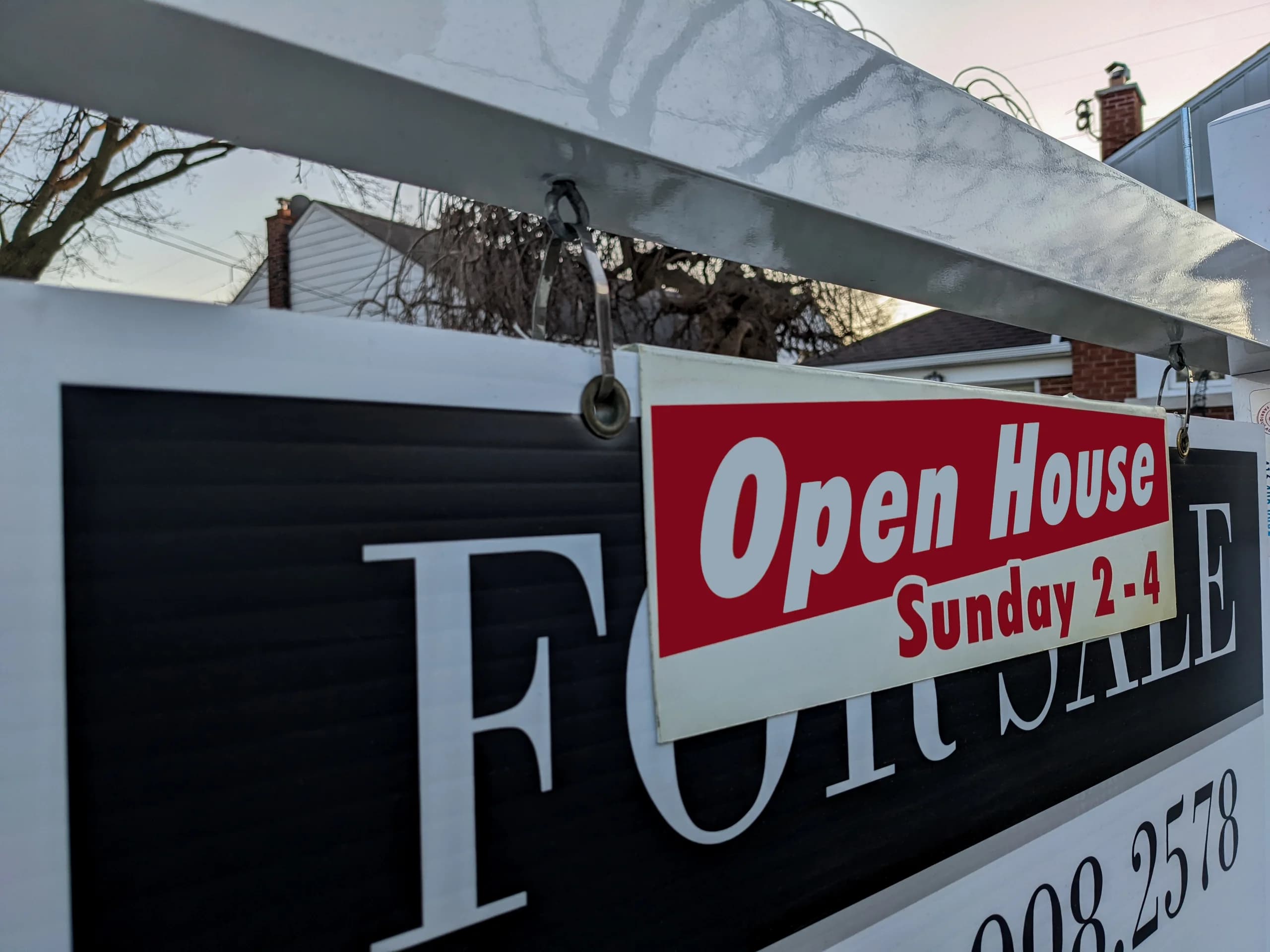
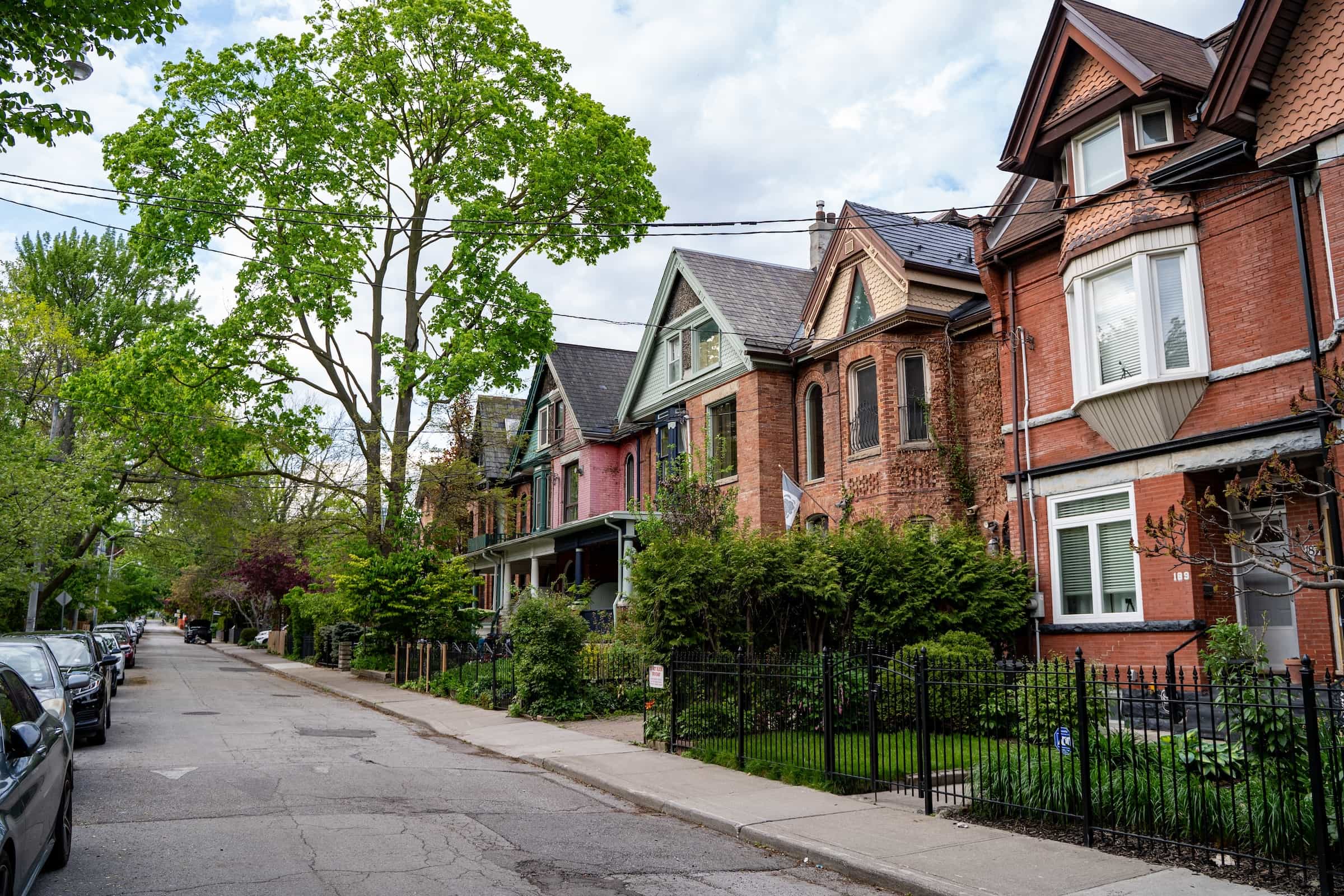
TRREB's First Full Spring Print Shows Buyers Returning, Listings Pulling Back, and Equity Still Eroding

Credit: Shutterstock
The Toronto Regional Real Estate Board (TRREB) released its April 2026 Market Watch on May 5, and the headline read like two stories stitched together. Sales went up. Listings went down. Prices kept sliding. For GTA homeowners watching the spring market for clues about whether the price decline is bottoming, the April print is the first real test — the first full month of spring under tighter conditions, with the Bank of Canada on pause and a heavy renewal wave still working its way through the market.
The structural question for homeowners isn't whether sales will keep rising; volume is the lagging indicator. The question is whether tighter inventory and stronger buyer demand are starting to put a floor under prices, or whether year-over-year softness has more room to run. April's data offers signals on both sides — and the gap between them is what matters heading into summer.
GTA REALTORS® reported 5,946 home sales through TRREB's MLS® System in April 2026, a 7% increase year-over-year, while new listings fell 9.3% to 17,097, according to TRREB's April 2026 Market Watch release. The average selling price came in at $1,051,969 — down 4.9% from April 2025. The MLS® Home Price Index Composite benchmark, which strips out changes in the mix of homes sold, fell 6.6% year-over-year.
Two things stand out about that mix. First, the gap between sales (up) and new listings (down) is wider than the spring of 2025 — a clear shift in the supply-demand balance. Second, the HPI is falling faster than the average price. That tells you the average is being held up somewhat by composition (more sales of higher-priced homes), and that the underlying quality-adjusted decline in home values is steeper than the headline. April continues the pattern that took shape last month, when Toronto's HPI fell to 2020 levels even as March sales edged up. The April release widens that gap rather than closing it.

The year-over-year picture is one thing. Month-over-month, on a seasonally adjusted basis, is something different. TRREB notes that both sales and new listings rose month-over-month in April compared to March, but sales rose at a higher monthly rate than new listings — the kind of asymmetry that, sustained over several months, signals tightening. On the same seasonally adjusted basis, the average selling price edged up versus March while the HPI Composite was flat.
That uptick is the first slightly positive month-over-month price signal since the BoC paused, and TRREB itself flags it. It's also small. A flat HPI alongside a slight average-price gain is consistent with composition shifts more than a true price recovery. One month of seasonally adjusted data is a tell, not a trend. But it's the kind of tell that explains why TRREB's commentary on the April release is more constructive than the year-over-year numbers alone would suggest. The national picture has been moving in a similar direction — CREA's February 2026 print showed sales down 8.1% and the HPI off 4.8%, so the GTA's tightening is happening against a softer national backdrop, not in spite of it.
The MLS® HPI Composite is a quality-adjusted benchmark — it controls for changes in the mix of homes sold, so it's a cleaner read on underlying home values than the average price. When the HPI is falling faster than the average, it usually means the average is being supported by a heavier weighting of higher-priced sales, not by genuine price strength.
The honest read of April is that the market is getting tighter and prices are still down. Both can be true at the same time, and TRREB explicitly says so: despite tighter conditions, buyers continued to benefit from ample choice and negotiating power. TRREB President Daniel Steinfeld pointed to the same dynamic from the buyer side, calling out an uptick in spring activity as buyers take advantage of more affordable conditions on the back of lower prices, and flagging that if tightening continues and prices level off, sidelined demand may step back in.
For homeowners, the operative variable heading into summer is what happens to listings. If new supply continues to trend below year-ago levels — as it did across the GTA in April, and as it has in Vancouver's detached segment, where the listings/price split is even more pronounced — then the seasonally adjusted price-floor narrative gets stronger. If listings rebound and a wave of sellers comes off the sidelines in May or June, the year-over-year price picture has more room to soften. Sellers thinking about timing should be reading the listings line, not the sales line.
The equity-erosion narrative is sharper because it's not happening in isolation. Roughly 60% of all outstanding Canadian mortgages will renew in 2025 or 2026, according to the Bank of Canada's 2025 Financial Stability Report, and a sizeable share of those borrowers will see payment increases at renewal even with policy rates well below their peak.
The first-time-renewal cohort is where the price decline matters most. The Office of the Superintendent of Financial Institutions estimates that 1.3 million mortgages — about 22% of total mortgages — are renewing by the end of 2026 for the first time since they were originated during the 2021–2022 low-rate years. Many of those borrowers locked in at rates well below today's market. Some have already seen their loan-to-value and debt-service ratios worsen because the home is worth less and the new payment is higher — a structural headwind that doesn't show up in the sales line.
The result is a market where tighter conditions and softer prices coexist with concentrated household stress, even as the average expected renewal payment shock has been easing on the back of lower borrowing costs. The improvement is relative, not absolute — most renewing borrowers are still rolling into higher payments than they originated at, and the equity buffer behind those payments is thinner than it was a year ago.
The HPI matters here, not just the average price. Lenders, appraisers, and renewal underwriters lean on benchmark indices for collateral valuations. A 6.6% YoY decline in the HPI Composite shows up in real spreadsheet terms — in the LTV ratio at renewal, in the equity available for refinance, and in the cushion behind any HELOC. For homeowners renewing this summer or fall, the April HPI print is more than a market-watch line item.
The May print is the next data point that matters. Three signals will determine whether April was the start of a turn or a single-month head-fake:
TRREB itself is using the April release to push on a longer-running structural story. CEO John DiMichele tied the data to the board's recent "Removing Roadblocks" report, arguing that decades of municipal red tape, outdated local rules, and rising development costs are blocking new supply in Ontario. That's a multi-year argument, not a May print variable — but it's the through-line behind why current new-listings declines are unlikely to be reversed by a wave of new construction. Supply is constrained for reasons that don't move in a single month.
For now, the read is straightforward. Sales are rising. Listings are tightening. Prices are still down. Whether that combination produces a floor or just a slower decline is the next thing the data will tell us.
About the Author
Ryan is the founder of Homeowner.ca and a proud Canadian homeowner based in Guelph, Ontario. Over his 25-year career in digital publishing, he has focused on transforming complex information into clear, practical guidance that helps people make confident, well-informed decisions.