Canada's Economy Shrank in Q4 2025 — and Residential Investment Led the Decline: What Homeowners Need to Know
A Plain-Language Read of The GDP Print, The Housing Signal Inside It, and What To Watch Next
By
Published: March 21, 2026, 6:57 a.m. ET
Fact-checked · , including Bank of Canada, CMHC & Statistics Canada
Credit: Shutterstock
Key Takeaways
•The economy cooled at the end of 2025, and housing-related investment was one of the main drags.
•A pullback in new construction and renovations can quietly slow the future housing supply pipeline—even if today’s market feels softer.
•For homeowners nearing renewal, weaker growth can matter because it can influence the interest-rate path, but it doesn’t “guarantee” lower mortgage rates.
Canada just got a late‑2025 economic snapshot that’s more homeowner-relevant than it looks at first glance. A Reuters summary via Investing.com reports real GDP contracted at a 0.6% annualized pace in Q4 2025, with residential structure investment falling at a 4.4% annualized rate and an advance estimate suggesting January 2026 likely stalled again.
If you don’t speak “macro,” you’re not alone—and you don’t need to. The homeowner version is simpler: when the economy slows, the Bank of Canada tends to feel more comfortable cutting rates over time (not a promise, but a common pattern), and when residential construction spending slows, the longer-run supply problem often doesn’t fix itself.
This matters even if you’re not moving. A weaker construction pipeline can keep pressure on prices and rents once demand returns, and it can shape renovation timing and contractor availability in your area. Meanwhile, the same data that hints at softer growth can also feed into expectations for where borrowing costs might head next—right when a large number of Canadian mortgages are coming up for renewal.
Below is the cleanest way to read the release as a homeowner: what actually drove the GDP dip, what “residential investment” includes, why an “inventory drawdown” can show up in renovation costs, and what to keep an eye on into spring.
Stay on top of Canadian homeowner news
What The GDP Report Said (In Plain English)
Quarterly vs. Annualized, and Why Inventory Matters
In its Q4 2025 national accounts release, Statistics Canada said real GDP fell 0.2% quarter-over-quarter (after rising in Q3), and it attributed the drop mainly to businesses withdrawing from non-farm inventories after building stock in the prior two quarters. It also notes the largest inventory withdrawals were in manufacturing, followed by wholesale trade, with motor vehicle inventories declining in retail—an important detail because it implies part of Q4 demand was met by “using what’s on the shelf” rather than producing and shipping as much new output.
For homeowners, that “inventory” detail is not trivia. When businesses run inventories down, it can be a sign that production is adjusting to slower demand, that supply chains are rebalancing, or both. In construction and renovation, that dynamic can show up later as uneven availability (some items discounted, others backordered), shifting lead times, or pricing that’s more volatile than you’d expect in a quiet market.
A few quick translations help keep the headlines in context:
Term You’ll See
What It Means
Why A Homeowner Might Care
“Annualized”
The quarter’s pace, expressed as if it continued for a full year
It makes small quarterly moves sound bigger (up or down)
“Real GDP”
Output adjusted for inflation
Helps separate “higher prices” from “more activity”
“Inventories fell”
Businesses sold from stock instead of adding to it
Can foreshadow production changes and supply hiccups
“Per capita GDP”
Output per person
A rough lens on whether the average person’s slice is growing
Note
GDP is a broad scorecard, not a housing price forecast. It can tell you whether the economy is cooling and where the weak spots are, but it doesn’t reliably “call” your neighbourhood’s home values.
If you want one practical “timeline” takeaway, the same release flags the next checkpoints: those real-time GDP tables are slated for an update on March 9, 2026, and the next full GDP-by-income-and-expenditure release (for Q1 2026) is scheduled for May 29, 2026.
Residential Investment Fell—Why Homeowners Should Pay Attention
New Builds, Renovations, and The Supply Pipeline
Residential investment is one of those terms that sounds abstract until you translate it into everyday housing reality. In the GDP accounts, “business residential investment” covers the work and costs tied to housing structures—new construction, renovations, and “ownership transfer costs” (think resale-market transaction costs like commissions and legal fees, which tend to move with sales activity).
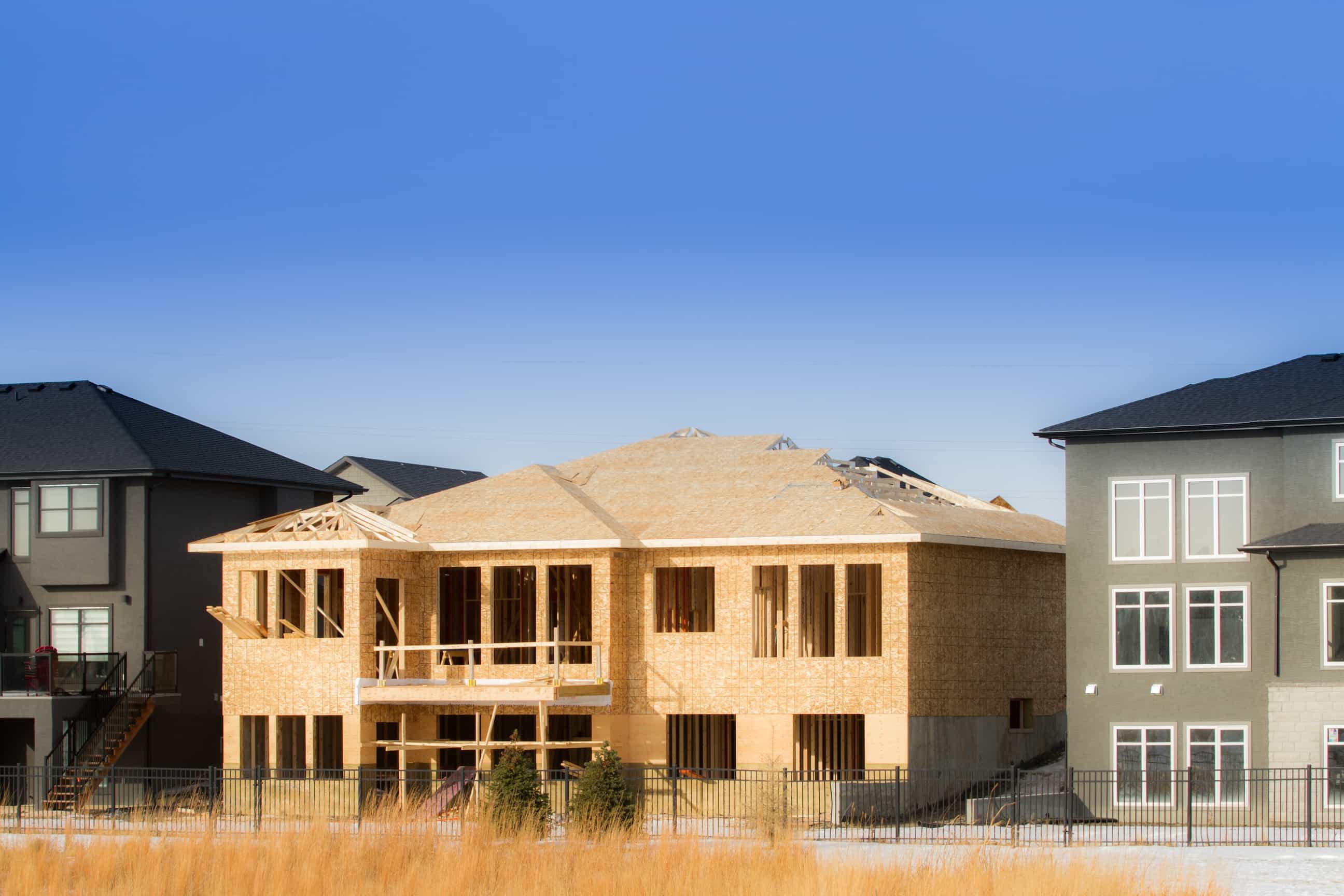
In Q4 2025, Statistics Canada reported business residential investment fell, driven by decreased ownership transfer costs (a proxy for cooler resale activity), lower renovations, and a decline in new construction linked to reduced work put in place for single-family homes and apartments.
Here’s the homeowner-first interpretation:
Fewer new builds today can become tighter supply tomorrow. When builders and developers slow down, it doesn’t just affect this quarter’s GDP. It can reduce completions a year or two out—often right when demand is ready to re-engage.
Softer renovations can be a “budget signal.” Renovations are frequently discretionary. When that line item drops, it can reflect households and investors getting more cautious with cash.
Ownership transfer costs falling points to quieter resale conditions. That can reduce “move-up” activity and slow the churn that typically frees up different types of homes for different life stages.
It’s also not happening in a vacuum. A CMHC outlook summary reported by Advisor.ca projects housing starts easing from about 259,000 units in 2025 to about 247,000 in 2026, with developers constrained by high construction costs, weaker demand, and rising inventories of unsold units.
And the slowdown risk is especially visible in condo-heavy markets. CMHC’s Housing Supply Report notes condo apartment starts fell 13.4% in the first half of 2025, with many pre-construction projects cancelled or paused after failing to hit financing thresholds—conditions that can translate into fewer new units delivered later.
If you’re staying put, that supply pipeline still matters: it can influence how tight (or loose) your local rental market becomes, how easy it is for adult kids to find a place nearby, and whether “downsizing” options actually exist when you want them.
New Builds, Renovations, and The Supply Pipeline
Residential investment is one of those terms that sounds abstract until you translate it into everyday housing reality. In the GDP accounts, “business residential investment” covers the work and costs tied to housing structures—new construction, renovations, and “ownership transfer costs” (think resale-market transaction costs like commissions and legal fees, which tend to move with sales activity).
In Q4 2025, Statistics Canada reported business residential investment fell, driven by decreased ownership transfer costs (a proxy for cooler resale activity), lower renovations, and a decline in new construction linked to reduced work put in place for single-family homes and apartments.
Here’s the homeowner-first interpretation:
Fewer new builds today can become tighter supply tomorrow. When builders and developers slow down, it doesn’t just affect this quarter’s GDP. It can reduce completions a year or two out—often right when demand is ready to re-engage.
Softer renovations can be a “budget signal.” Renovations are frequently discretionary. When that line item drops, it can reflect households and investors getting more cautious with cash.
Ownership transfer costs falling points to quieter resale conditions. That can reduce “move-up” activity and slow the churn that typically frees up different types of homes for different life stages.
It’s also not happening in a vacuum. A CMHC outlook summary reported by Advisor.ca projects housing starts easing from about 259,000 units in 2025 to about 247,000 in 2026, with developers constrained by high construction costs, weaker demand, and rising inventories of unsold units.
And the slowdown risk is especially visible in condo-heavy markets. CMHC’s Housing Supply Report notes condo apartment starts fell 13.4% in the first half of 2025, with many pre-construction projects cancelled or paused after failing to hit financing thresholds—conditions that can translate into fewer new units delivered later.
If you’re staying put, that supply pipeline still matters: it can influence how tight (or loose) your local rental market becomes, how easy it is for adult kids to find a place nearby, and whether “downsizing” options actually exist when you want them.
Mortgage Renewals: Why A Softer Economy Can Matter
Rate-Cut Expectations, Payment Shock, and Budget Breathing Room
It’s tempting to read a weak GDP print as automatically “good for rates.” Reality is messier: the Bank of Canada reacts to a mix of growth, inflation, and financial stability risks, and mortgage rates also move with bond yields and lender pricing. Still, softer growth can tilt the conversation.
In its January 2026 outlook, the Bank of Canada’s Monetary Policy Report characterizes growth as subdued and projects growth around 1¼% over its horizon, with inflation expected to stay near the 2% target—exactly the kind of backdrop where homeowners pay extra attention to interest-rate decisions.
That matters because the renewal wave is not small. A Bank of Canada staff analytical note estimates about 60% of outstanding mortgages are expected to renew in 2025 or 2026, and it models average payments remaining meaningfully higher for renewers versus late‑2024 levels even under a path where rates evolve with market expectations.
Private-sector estimates put a fine point on the timing. A BMO Economics report estimates roughly 1.8 million mortgages are set to renew over the subsequent 12 months, with a peak around June 2026—meaning a lot of households are running renewal math right as new GDP and inflation prints arrive.
You can see the anxiety in sentiment, too: a BNN Bloomberg report highlights survey results showing homeowners expect monthly payments to rise at renewal, which matches what many households are already experiencing in lender quotes.
Important
If you’re within a year of renewal, the most useful mindset is “budget resilience,” not rate prediction. Assume your payment could stay higher than your old rate, build a cushion where you can, and treat any future rate relief as upside—not something your plan depends on.
A practical way to connect this back to the GDP news: when growth weakens and households are already stretched, even small changes in the rate path can affect cash flow. That doesn’t tell you what to choose (fixed vs. variable is personal), but it does explain why a seemingly abstract GDP release can suddenly feel very real.
Conclusion
The Bottom Line For Homeowners
The Q4 2025 GDP story isn’t just “Canada slowed.” It’s how it slowed: an inventory drawdown plus a meaningful pullback in residential investment—the exact combo that can keep renovation decisions uncertain and the future housing supply pipeline under pressure.
If you’re renewing in 2026, the homeowner takeaway is not to cheer or panic, but to watch the next few data points with purpose: updated GDP reads, inflation prints, and Bank of Canada decisions, all through the lens of your own payment risk and timeline. A softer economy can increase the odds of easing over time, but housing supply constraints can still linger—and that tension is likely to define the homeowner experience well beyond this quarter’s headline.
Ryan is the founder of Homeowner.ca and a proud Canadian homeowner based in Guelph, Ontario. Over his 25-year career in digital publishing, he has focused on transforming complex information into clear, practical guidance that helps people make confident, well-informed decisions.