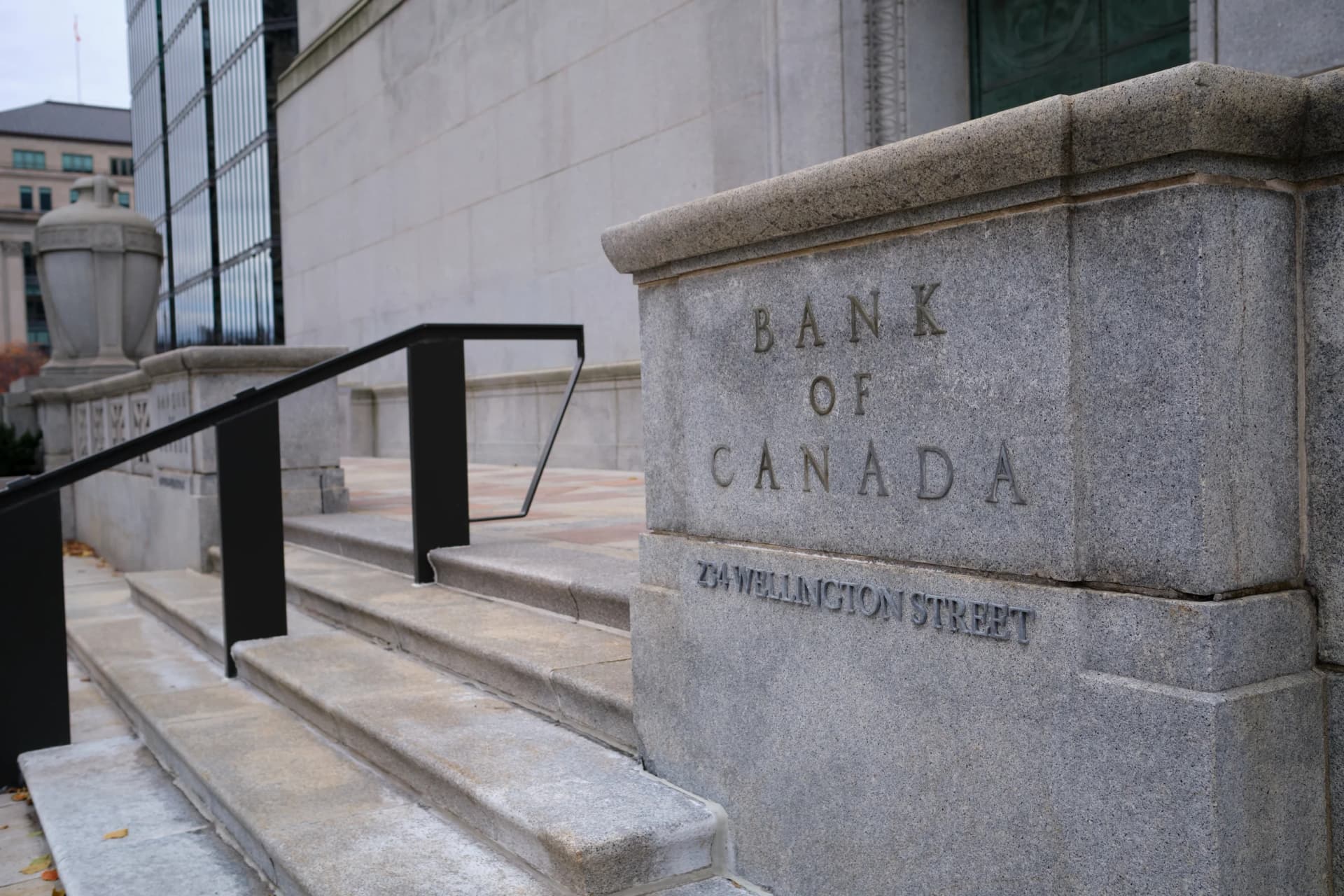
Budget 2026 Will Make the Bank of Canada Publish Insured Mortgage Rates: What It Means at Your Renewal
A Public Rate Benchmark Is Coming, but Not Yet, and Not for Every Mortgage
By
Published: November 6, 2026, 12:43 p.m. ET
Fact-checked · , including Department of Finance Canada, Bank of Canada & OSFI
Credit: Shutterstock
Key Takeaways
•Budget 2026 proposes regulations that would have the Bank of Canada publish more timely information on insured mortgage rates, giving renewing owners a public yardstick for their lender's offer once it exists.
•The benchmark will track insured mortgages, and loans that were refinanced, sit on homes over $1 million, or carry amortizations past 25 years generally cannot be insured.
•Nothing here is in force yet: rate publication is a proposal, prepayment penalties are headed to consultation, and the $1.5 million optional-insurance cap has no start date.
On Nov. 5, 2026, Ottawa tabled Budget 2026, and its third chapter, titled "A more affordable life," contains a short passage that matters more to existing homeowners than the first-time-buyer headlines around it. The government proposes new regulations that would have the Bank of Canada publish information on insured mortgage rates, and it says it will consult on making prepayment penalties on insured mortgages more transparent. The same section raises the price limit for optional mortgage insurance from $1 million to $1.5 million, with 30-year amortizations for first-time buyers and new builds.
Most coverage has led with that last item. For the much larger group of Canadians who already own and are heading into a renewal, the more useful line is the first one. A renewal letter is a negotiation that most borrowers walk into blind: the lender knows what it charges everyone else, and the borrower knows only what it is charging them. A central-bank-published benchmark would change that information gap, and it lands just after the Bank of Canada raised its policy rate on Oct. 28 and the big banks moved prime to 4.70%.
This piece separates what has been announced from what is actually in force, explains which mortgages a published "insured rate" would describe, puts a dollar figure on what a quarter-point gap costs at renewal, and sets out the questions worth asking a lender while the regulations are still being written.
Stay on top of Canadian homeowner news
What Budget 2026 actually committed to
Three measures, three different stages
The budget language is precise, and the precision matters. According to Budget 2026, Chapter 3, the government "proposes to establish new regulations to enhance publicly available information on insured mortgage rates, to be published by the Bank of Canada." The stated purpose is that better and more timely information will help borrowers compare and shop for the best available rates.
That is a proposal. The regulations still have to be written, and the budget sets no date for them. The prepayment-penalty item is one step earlier still: the government announces only its intention to consult industry and stakeholders on potential reforms, and only for insured mortgages. The optional-insurance change is also proposed rather than enacted.
The reading from Canadian Mortgage Trends lines up with the text. The budget leaves open which rates would be published, how often the data would be updated and when publication would begin, and it gives no start date for the higher insurance cap.
Here is the status ledger, which is the most important thing to get right before acting on any of it.
5 rows · 4 columnsTap a header to sort
Insured mortgage rate publication
Bank of Canada to publish enhanced information on insured rates
Proposed regulations
Not stated
Prepayment-penalty transparency
Consult on reforms for insured mortgages
Intention to consult
Not stated
Optional mortgage insurance cap
Raise home price limit from $1 million to $1.5 million
Proposed rule change
Not stated
30-year amortization on those loans
Only if a borrower is a first-time buyer or the home is newly built
Proposed rule change
Not stated
New 3-4 unit and 5-50 unit insurance products
Separate missing-middle measures
Parameters published
Feb. 1, 2027
Three measures, three different stages
The budget language is precise, and the precision matters. According to Budget 2026, Chapter 3, the government "proposes to establish new regulations to enhance publicly available information on insured mortgage rates, to be published by the Bank of Canada." The stated purpose is that better and more timely information will help borrowers compare and shop for the best available rates.
That is a proposal. The regulations still have to be written, and the budget sets no date for them. The prepayment-penalty item is one step earlier still: the government announces only its intention to consult industry and stakeholders on potential reforms, and only for insured mortgages. The optional-insurance change is also proposed rather than enacted.
The reading from Canadian Mortgage Trends lines up with the text. The budget leaves open which rates would be published, how often the data would be updated and when publication would begin, and it gives no start date for the higher insurance cap.
Here is the status ledger, which is the most important thing to get right before acting on any of it.
5 rows · 4 columnsTap a header to sort
Insured mortgage rate publication
Bank of Canada to publish enhanced information on insured rates
Proposed regulations
Not stated
Prepayment-penalty transparency
Consult on reforms for insured mortgages
Intention to consult
Not stated
Optional mortgage insurance cap
Raise home price limit from $1 million to $1.5 million
Proposed rule change
Not stated
30-year amortization on those loans
Only if a borrower is a first-time buyer or the home is newly built
Proposed rule change
Not stated
New 3-4 unit and 5-50 unit insurance products
Separate missing-middle measures
Parameters published
Feb. 1, 2027
Important
Some early coverage attached a Feb. 1, 2027 date to the $1.5 million cap. That date belongs to the separate multi-unit insurance products. The budget gives no implementation date for the optional-insurance cap, the rate publication or the penalty consultation.
Why a public benchmark matters at renewal
The information gap is the product
Renewal is where lenders have the most pricing power. Switching takes paperwork, appraisals and sometimes legal fees, so many borrowers sign the first offer that arrives. The lender knows this. A published benchmark does not force anyone's rate down, but it gives the borrower a reference point that does not come from the lender making the offer.
That reference point matters more this fall than it did in the spring. The Bank of Canada raised its policy rate by 25 basis points to 2.5% on Oct. 28, its first increase since July 2023, and said a further increase could be needed. Its next scheduled decision is Dec. 9.
Fixed renewal offers had already been climbing for weeks, because they follow the five-year Government of Canada bond yield rather than the policy rate. All six of the big banks lifted fixed rates by as much as half a percentage point over roughly five weeks into early October, as reported by money.ca. When rates move week to week, the offer in your renewal letter can be stale by the time you read it.
The case for a benchmark rests on a simple question: how much does it cost to accept an offer that is slightly worse than the market? We ran the numbers on a $500,000 balance using Canadian semi-annual compounding, starting from a best-available five-year fixed rate of 4.44% listed by Ratehub.ca as of Oct. 29, 2026. The starting rate is illustrative; the gap is what matters.
2 rows · 5 columns
Remaining amortization
Payment at 4.44%
Payment at 4.69%
Monthly difference
Over a five-year term
25 years
$2,750.71
$2,820.42
about $70
about $4,200
20 years
$3,136.18
$3,202.47
about $66
about $4,000
A quarter point sounds like rounding. On a typical renewal it is roughly $800 a year in extra payments, and those dollars go to interest rather than principal.
That is the job a benchmark does. It does not tell you the right rate. It tells you whether the offer in front of you is in the neighbourhood of what other insured borrowers are paying, or a quarter point above it.
The information gap is the product
Renewal is where lenders have the most pricing power. Switching takes paperwork, appraisals and sometimes legal fees, so many borrowers sign the first offer that arrives. The lender knows this. A published benchmark does not force anyone's rate down, but it gives the borrower a reference point that does not come from the lender making the offer.
That reference point matters more this fall than it did in the spring. The Bank of Canada raised its policy rate by 25 basis points to 2.5% on Oct. 28, its first increase since July 2023, and said a further increase could be needed. Its next scheduled decision is Dec. 9.
Fixed renewal offers had already been climbing for weeks, because they follow the five-year Government of Canada bond yield rather than the policy rate. All six of the big banks lifted fixed rates by as much as half a percentage point over roughly five weeks into early October, as reported by money.ca. When rates move week to week, the offer in your renewal letter can be stale by the time you read it.
The case for a benchmark rests on a simple question: how much does it cost to accept an offer that is slightly worse than the market? We ran the numbers on a $500,000 balance using Canadian semi-annual compounding, starting from a best-available five-year fixed rate of 4.44% listed by Ratehub.ca as of Oct. 29, 2026. The starting rate is illustrative; the gap is what matters.
2 rows · 5 columns
Remaining amortization
Payment at 4.44%
Payment at 4.69%
Monthly difference
Over a five-year term
25 years
$2,750.71
$2,820.42
about $70
about $4,200
20 years
$3,136.18
$3,202.47
about $66
about $4,000
A quarter point sounds like rounding. On a typical renewal it is roughly $800 a year in extra payments, and those dollars go to interest rather than principal.
That is the job a benchmark does. It does not tell you the right rate. It tells you whether the offer in front of you is in the neighbourhood of what other insured borrowers are paying, or a quarter point above it.
Note
Assumptions: $500,000 balance, monthly payments, rate compounded semi-annually, the Canadian convention for fixed-rate mortgages, payment = P × i ÷ (1 − (1 + i)^−n), where i = (1 + r/2)^(1/6) − 1. Amounts are rounded; your lender's figure will differ slightly with payment frequency and the exact balance.
Is your mortgage insured?
Three buckets, one benchmark
The budget says "insured mortgage rates," and that word is doing a lot of work. Canadian mortgages fall into three pricing buckets, and a published insured-rate series would describe only one of them directly.
An insured mortgage carries default insurance from CMHC, Sagen or Canada Guaranty. The common case is a home bought with less than 20% down: as the Financial Consumer Agency of Canada explains, a down payment under 20% typically means buying mortgage loan insurance.
That rule exists because the Office of the Superintendent of Financial Institutions generally restricts federally regulated lenders from lending more than 80% of a property's value without insurance. If you paid a premium at purchase, often rolled into the loan, your mortgage is insured, and it generally stays insured at renewal as long as you do not increase the balance or extend the amortization.
An insurable mortgage had 20% or more down but meets the insurance rules, so the lender can choose to insure it in bulk at its own expense. That is what the budget calls "optional" mortgage insurance. These loans usually price close to insured rates.
An uninsurable mortgage cannot be insured at all. Since the 2016 rule changes, as the Bank of Canada's 2017 Financial System Review summarized, homes priced over $1 million, amortizations longer than 25 years and mortgage refinances are prevented from being insured under those low-ratio rules. That captures a lot of existing owners: anyone who has taken equity out through a refinance, for instance, has typically moved into this bucket.
5 rows · 3 columnsTap a header to sort
Bought with less than 20% down, have not refinanced
Insured
Directly comparable
Bought with 20%+ down, home under $1 million, 25-year amortization or less, no refinance
Insurable
Close guide; expect a small spread
Refinanced to take out equity
Uninsurable
Floor, not a target; expect a higher rate
Home value over the insurance cap
Uninsurable
Floor, not a target
Amortization longer than 25 years with 20%+ down
Uninsurable
Floor, not a target
The spread between buckets is real. One comparison from WOWA.ca shows a best five-year fixed of 4.34% for insured borrowers against 4.69% for insurable borrowers with 20% down, and uninsurable loans priced higher still. Those are point-in-time figures, but the direction is consistent: insured money is the cheapest money.
So the benchmark will be most precise for the borrowers who were most constrained at purchase. For uninsured owners it becomes a floor: if your offer sits well above the published insured rate, the gap is not automatically unfair, but you should be able to get a clear explanation of what it is pricing.
Three buckets, one benchmark
The budget says "insured mortgage rates," and that word is doing a lot of work. Canadian mortgages fall into three pricing buckets, and a published insured-rate series would describe only one of them directly.
An insured mortgage carries default insurance from CMHC, Sagen or Canada Guaranty. The common case is a home bought with less than 20% down: as the Financial Consumer Agency of Canada explains, a down payment under 20% typically means buying mortgage loan insurance.
That rule exists because the Office of the Superintendent of Financial Institutions generally restricts federally regulated lenders from lending more than 80% of a property's value without insurance. If you paid a premium at purchase, often rolled into the loan, your mortgage is insured, and it generally stays insured at renewal as long as you do not increase the balance or extend the amortization.
An insurable mortgage had 20% or more down but meets the insurance rules, so the lender can choose to insure it in bulk at its own expense. That is what the budget calls "optional" mortgage insurance. These loans usually price close to insured rates.
An uninsurable mortgage cannot be insured at all. Since the 2016 rule changes, as the Bank of Canada's 2017 Financial System Review summarized, homes priced over $1 million, amortizations longer than 25 years and mortgage refinances are prevented from being insured under those low-ratio rules. That captures a lot of existing owners: anyone who has taken equity out through a refinance, for instance, has typically moved into this bucket.
5 rows · 3 columnsTap a header to sort
Bought with less than 20% down, have not refinanced
Insured
Directly comparable
Bought with 20%+ down, home under $1 million, 25-year amortization or less, no refinance
Insurable
Close guide; expect a small spread
Refinanced to take out equity
Uninsurable
Floor, not a target; expect a higher rate
Home value over the insurance cap
Uninsurable
Floor, not a target
Amortization longer than 25 years with 20%+ down
Uninsurable
Floor, not a target
The spread between buckets is real. One comparison from WOWA.ca shows a best five-year fixed of 4.34% for insured borrowers against 4.69% for insurable borrowers with 20% down, and uninsurable loans priced higher still. Those are point-in-time figures, but the direction is consistent: insured money is the cheapest money.
So the benchmark will be most precise for the borrowers who were most constrained at purchase. For uninsured owners it becomes a floor: if your offer sits well above the published insured rate, the gap is not automatically unfair, but you should be able to get a clear explanation of what it is pricing.
Tip
Not sure which bucket you are in? Look for a mortgage default insurance premium on your original closing statement or mortgage commitment, or ask your lender directly whether the loan is insured, insurable or conventional. Lenders know the answer, and it changes how you read every quote.
The prepayment-penalty consultation
Why it matters if you want out early
The second measure targets the other half of a renewal decision: the cost of leaving before your term is up. The Financial Consumer Agency of Canada's prepayment penalty guide explains that the penalty is usually the higher of three months' interest on what you still owe or the interest rate differential, known as the IRD. Lenders usually use the IRD when your contract rate is higher than current rates and you signed less than five years ago.
The three-month figure is easy to estimate. The IRD is not, because each lender chooses which comparison rate to use and whether to apply the discount you originally received. Two borrowers with identical balances can face penalties thousands of dollars apart at different lenders.
The budget does not propose to cap those penalties. It proposes to consult on making them easier to understand and compare, and only for insured mortgages. That makes it relevant to three groups:
Owners who want to break a fixed term early to switch to a lender with a better rate.
Owners who want to refinance before maturity, which also moves the loan out of insured status.
Owners selling before their term ends who are not porting the mortgage to a new home.
For everyone else, the practical impact is limited until the consultation produces actual rules. With rates now rising rather than falling, the IRD trigger is also less likely to bite for borrowers who locked in recently at lower rates, because their contract rate may sit below today's comparison rates.
Why it matters if you want out early
The second measure targets the other half of a renewal decision: the cost of leaving before your term is up. The Financial Consumer Agency of Canada's prepayment penalty guide explains that the penalty is usually the higher of three months' interest on what you still owe or the interest rate differential, known as the IRD. Lenders usually use the IRD when your contract rate is higher than current rates and you signed less than five years ago.
The three-month figure is easy to estimate. The IRD is not, because each lender chooses which comparison rate to use and whether to apply the discount you originally received. Two borrowers with identical balances can face penalties thousands of dollars apart at different lenders.
The budget does not propose to cap those penalties. It proposes to consult on making them easier to understand and compare, and only for insured mortgages. That makes it relevant to three groups:
Owners who want to break a fixed term early to switch to a lender with a better rate.
Owners who want to refinance before maturity, which also moves the loan out of insured status.
Owners selling before their term ends who are not porting the mortgage to a new home.
For everyone else, the practical impact is limited until the consultation produces actual rules. With rates now rising rather than falling, the IRD trigger is also less likely to bite for borrowers who locked in recently at lower rates, because their contract rate may sit below today's comparison rates.
The rest of the budget's mortgage measures
Secondary context, with corrected dates
The higher insurance cap is the headline item, and it is worth stating precisely. Budget 2026 proposes raising the home price limit for optional, or low-ratio, insurance from $1 million to $1.5 million, and permitting 30-year amortizations on those loans when at least one borrower is a first-time buyer or the home is newly built. It would bring the 20%-down market in line with the $1.5 million cap already in place for high-ratio buyers since December 2024.
For existing owners, the indirect effect is the one to watch. More loans that can be insured means more loans that a published insured-rate series could describe. A $1.2 million home bought with 20% down would move from uninsurable to potentially insurable, which typically means sharper pricing.
The Feb. 1, 2027 date that appeared in some summaries belongs to different measures. The Finance Canada backgrounder sets that date for new insured products covering newly built three- and four-unit properties and for private insurance on properties with five to 50 units. Those changes are aimed at builders and investors, not at a typical renewal.
What to do at renewal while the rules are drafted
Build your own benchmark for now
The published series does not exist yet, and there is no date for it. Your renewal does have a date. Until the Bank of Canada publishes anything, the work of benchmarking falls to you, and the framework is straightforward.
Know your bucket. Confirm whether your mortgage is insured, insurable or uninsurable before comparing a single number. A quote is only comparable to quotes in the same bucket.
Get the statement on time. According to the Financial Consumer Agency of Canada's renewal guidance, a federally regulated lender must send a renewal statement at least 21 days before the end of your term. Many lenders will hold a rate earlier than that. Start shopping well before the letter arrives.
Price at least two alternatives. A competing written offer is the benchmark you can get today. Ask each lender for the rate, the term, whether the loan stays insured, and any switching costs such as discharge, registration or appraisal fees.
Know your switching rights. Since November 2024, OSFI no longer requires the stress test on an uninsured straight switch at renewal, meaning a move between federally regulated lenders with no increase to the balance or amortization. Insured borrowers who switch without raising the balance or extending the amortization generally avoid a new insurance premium.
Ask about the penalty before you need it. Request the exact comparison rate your lender would use in an IRD calculation and whether it subtracts your original discount. Getting it in writing now is the clearest preview of what the consultation is meant to standardize.
Put the gap in dollars. Use the quarter-point table above. If a lender's offer is 0.25 points above a competitor's on a $500,000 balance, you are being asked to pay about $70 a month for the convenience of not switching.
The open questions that decide how useful this becomes
The proposal is promising, but its value depends on details the budget does not supply. Until draft regulations appear, treat these as the questions to watch:
Which rates. Posted rates, contract rates actually signed, or both. Posted rates are not what most borrowers pay, so a posted-only series would add little.
Which terms and products. Five-year fixed only, or variable and shorter terms as well. Shorter terms are now a large share of renewals.
New loans or renewals. Rates on new purchases and rates offered at renewal are not always the same, and the renewal number is the one existing owners need.
Frequency. The budget promises "more timely" information. A monthly series published weeks after the fact would lag a market that has been moving week to week.
Timeline. No date for draft regulations, final regulations or the first publication.
Until those answers arrive, the benchmark is a promise, not a tool. The habits that make it useful, knowing your bucket, collecting competing offers and putting gaps in dollars, are available at your next renewal regardless.
Ryan is the founder of Homeowner.ca and a proud Canadian homeowner based in Guelph, Ontario. Over his 25-year career in digital publishing, he has focused on transforming complex information into clear, practical guidance that helps people make confident, well-informed decisions.
Department of Finance Canada. (2026). Budget 2026, Chapter 3: A more affordable life. Retrieved from https://budget.canada.ca/
Department of Finance Canada. (2026). Mortgage Insurance Rule Changes to Support "Missing Middle" Housing. Retrieved from https://www.canada.ca/
CMT Team. (2026). Budget 2026 explained: 12 changes for housing, mortgages and banking. Canadian Mortgage Trends. Retrieved from https://www.canadianmortgagetrends.com/
Show 12 more sourcesHide additional sources
Bank of Canada. (2026). Bank of Canada raises the policy rate by 25 basis points to 2½%. Retrieved from https://www.bankofcanada.ca/
National Bank of Canada. (2026). National Bank of Canada increases its prime rate. Retrieved from https://www.nbc.ca/
Financial Consumer Agency of Canada. (2025). Mortgage fees: Prepayment penalties. Retrieved from https://www.canada.ca/
Financial Consumer Agency of Canada. Renewing your mortgage. Retrieved from https://www.canada.ca/
Financial Consumer Agency of Canada. How much you need for a down payment. Retrieved from https://www.canada.ca/
Office of the Superintendent of Financial Institutions. (2024). Mortgage insurance. Retrieved from https://www.osfi-bsif.gc.ca/
Office of the Superintendent of Financial Institutions. (2024). OSFI exempts uninsured mortgage straight switches from the prescribed MQR. Retrieved from https://www.osfi-bsif.gc.ca/
WOWA.ca. Insurable vs Uninsurable Mortgages. Retrieved from https://wowa.ca/
Money.ca via Yahoo Finance Canada. (2026). All six big banks raised fixed mortgage rates by up to 0.5 points in five weeks. Retrieved from https://ca.finance.yahoo.com/
Money.ca via Yahoo Finance Canada. (2026). CIBC and TD raise fixed mortgage rates by 20 basis points. Retrieved from https://ca.finance.yahoo.com/