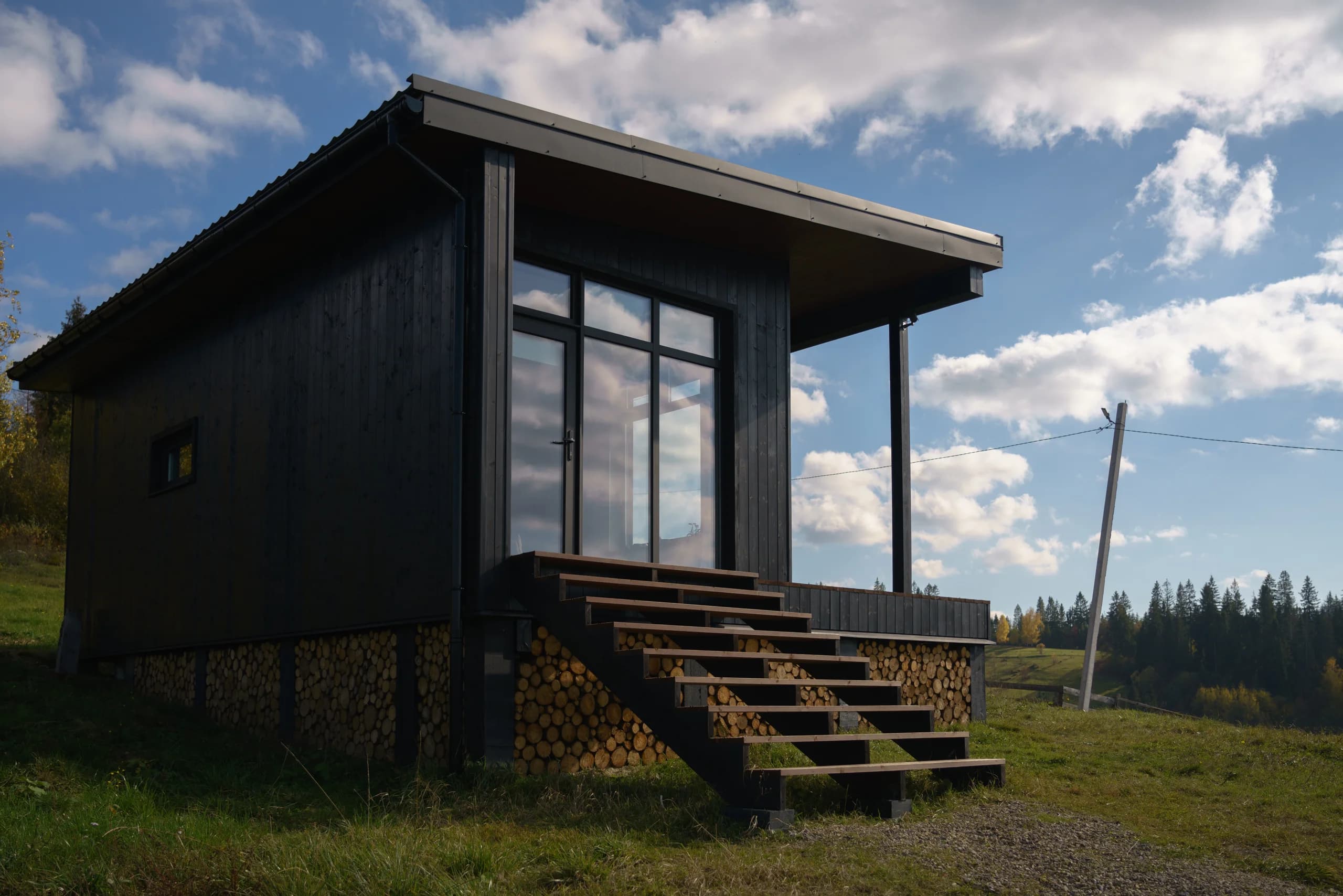
Before you compare builders or fall for a particular layout, there's a fork in the road that determines almost everything that follows. A tiny home in Canada is generally treated as one of two very different things: a permanent dwelling, or a recreational vehicle. They can look nearly identical parked side by side, and yet the law sees them in completely different ways.
A Dwelling Is Held to the Same Standard as Any House
When a tiny home is built as a permanent dwelling, it has to meet the same building-code requirements as a full-sized house — just in a smaller footprint. That means real structural, fire-safety, plumbing, electrical, and foundation standards, not a lighter version of them. According to the Ontario government's tiny-home guide, a tiny home built on site must meet all the same provincial Building Code provisions as any other house and be securely attached to the ground with code-compliant footings and a foundation.
That foundation piece matters more than people expect. In British Columbia, the Regional District of Nanaimo treats a tiny house as a permanent, ground-oriented dwelling under 500 square feet built to the BC Building Code, and it still requires a proper foundation — which might be a traditional concrete base or an engineered alternative such as helical screw piles. A dwelling-class tiny home, in other words, is a small house. It's just held to house-sized expectations, which is exactly why it can be lived in year-round and recognized as a home.
A Home on Wheels Is Often an RV in the Eyes of the Law
Now for the other path. Many tiny homes on wheels are built to recreational-vehicle standards, and that single fact reshapes everything. The CSA Group's Z240 RV standard defines recreational vehicles as units meant for temporary living — recreational, camping, or seasonal use — rather than permanent, year-round occupancy. A home built to that standard is designed for weekends and summers, not for riding out a Canadian February as your primary residence.
The industry itself is clear on this. The Canadian Recreational Vehicle Association says plainly that if a tiny home is intended and marketed as a permanent residence, it "cannot and should not" be considered an RV, and should instead comply with local building codes for housing. There's also a middle category worth knowing: park models. A helpful breakdown of the CSA standards explains that Z240 covers RVs, the separate Z241 standard covers park model trailers designed for seasonal camping, and CSA A277 is the factory-certification process used to build modular dwellings to the building code. If your goal is to live somewhere full-time, you want to be firmly in dwelling territory — built to the building code, certified accordingly, and planted on an approved foundation. Many of these same questions come up with factory-built housing in general, which is worth understanding if you're weighing your options for modular and prefab homes in Canada.