Reverse Osmosis Filter Stages Explained: What Each Cartridge Does and When to Replace It
A Practical, Stage-By-Stage Maintenance Guide for Canadian Homes
By
Published: March 15, 2026
Updated: March 21, 2026
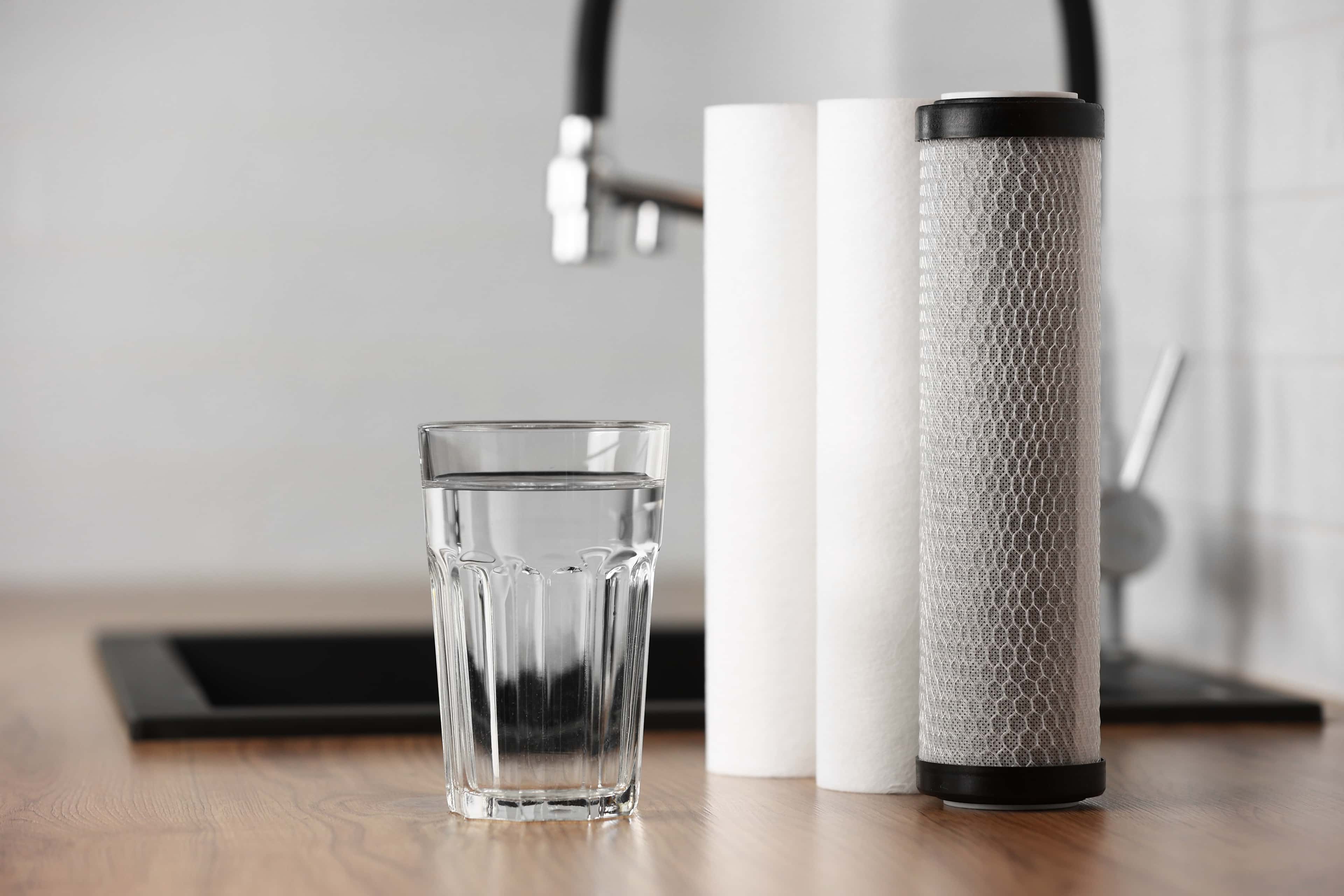
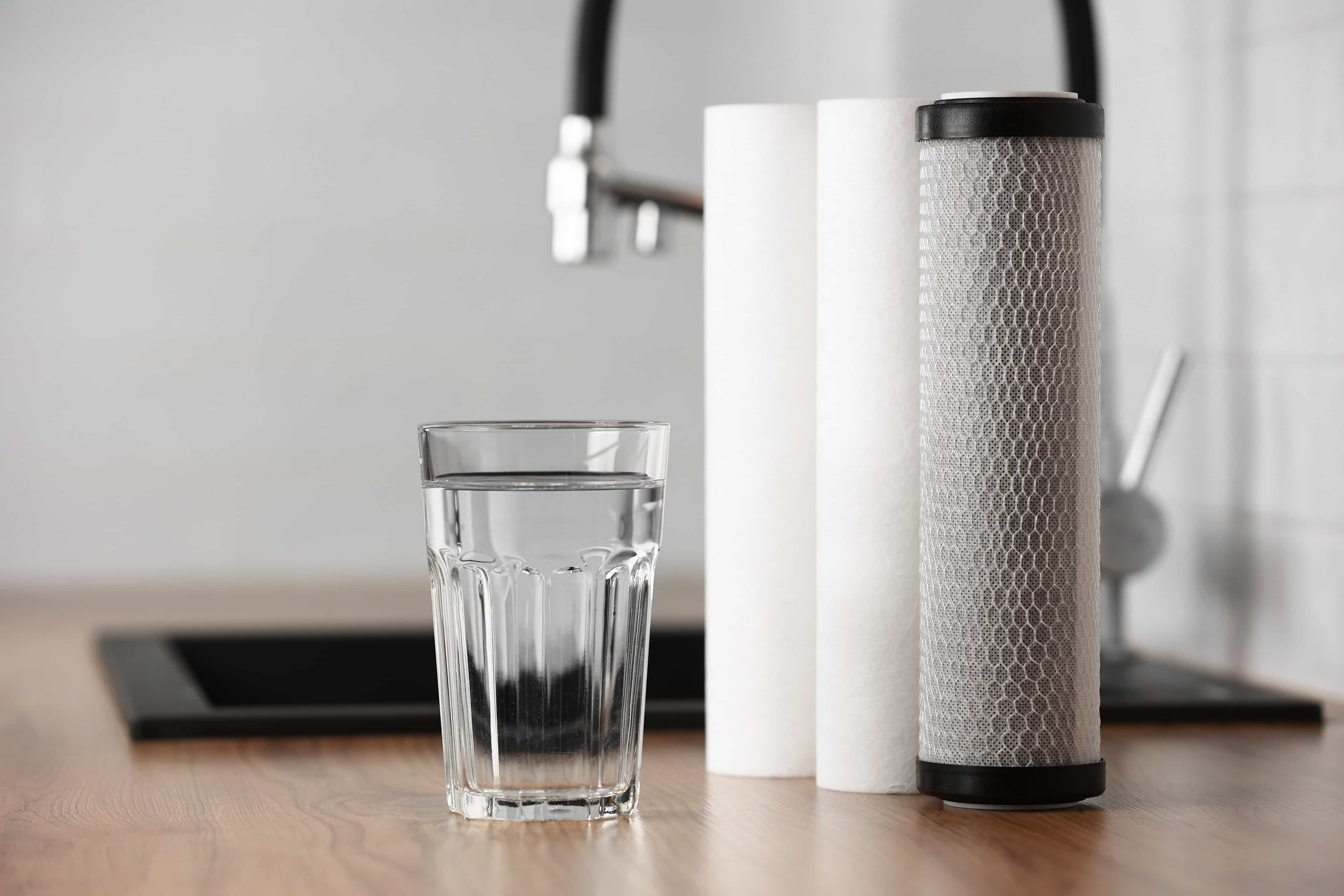
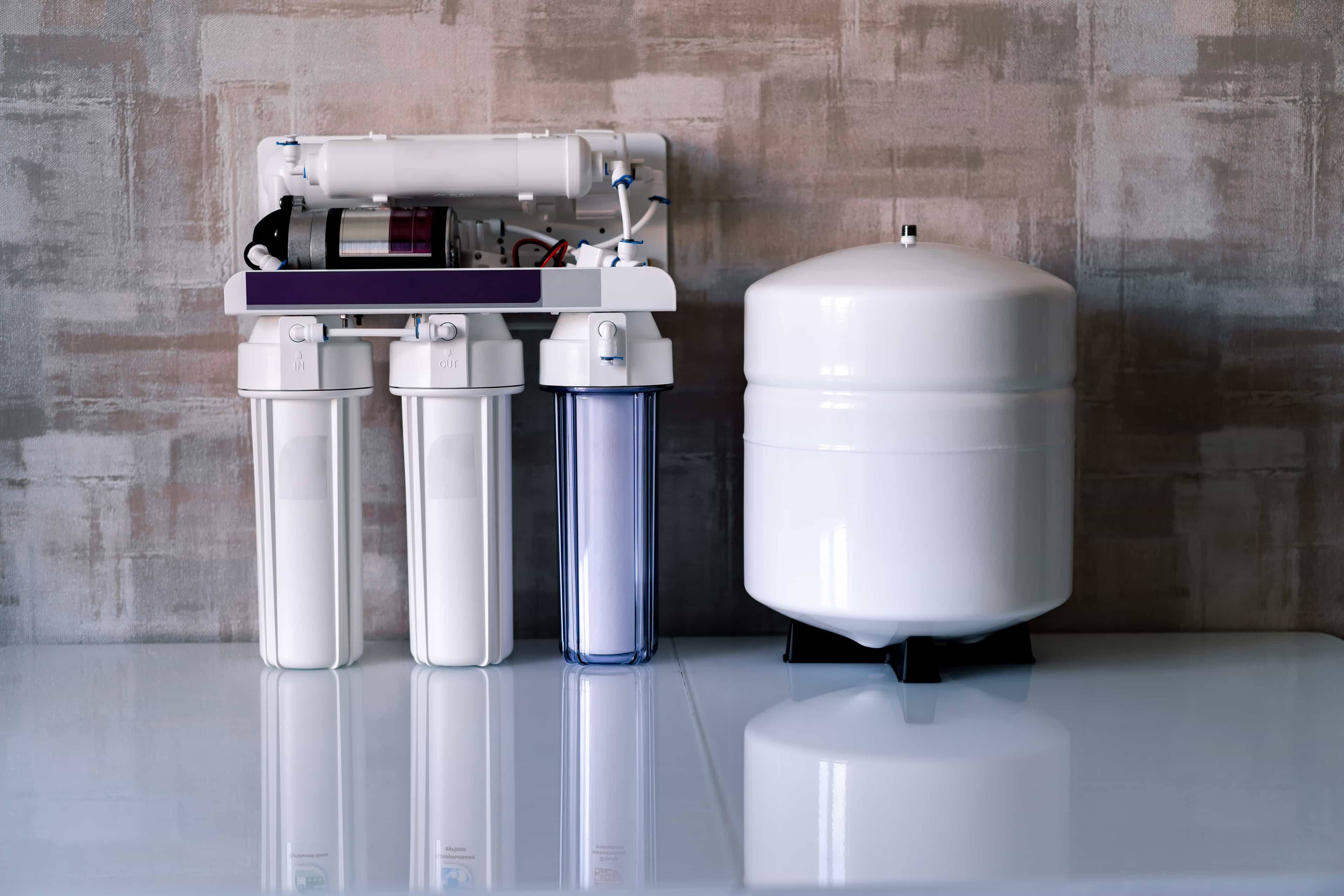
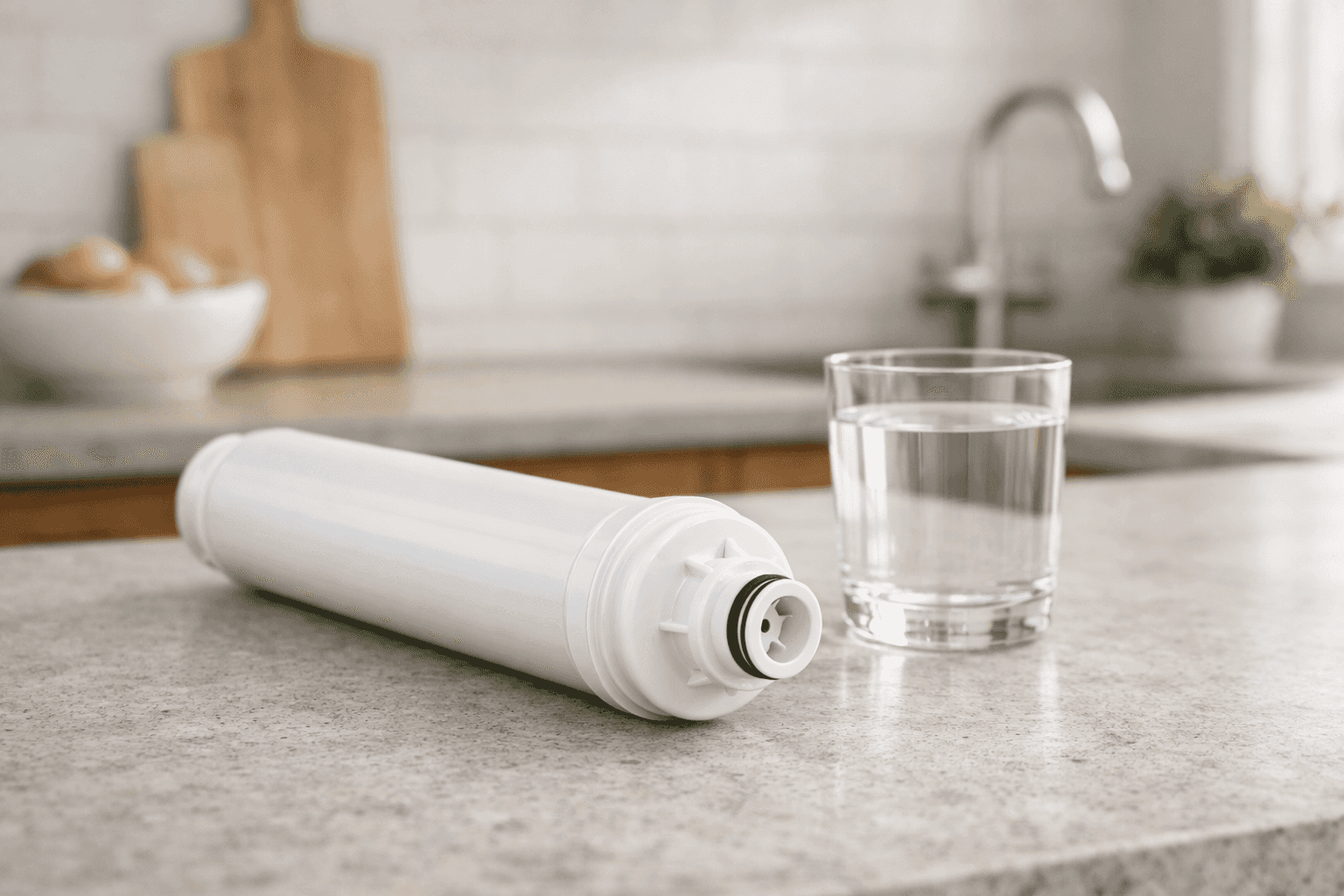
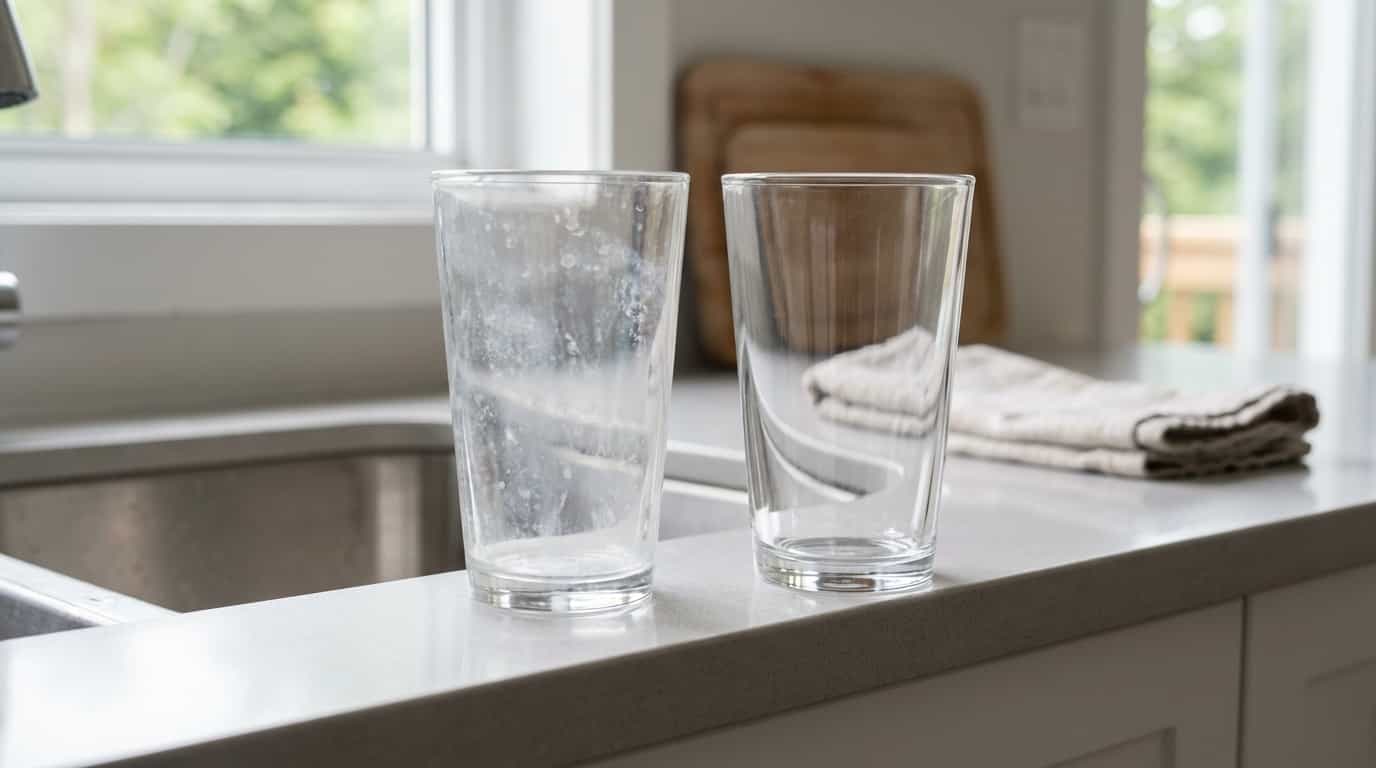
Crystal-clear water beside stacked RO cartridges reveals each stage’s quiet work and the moment performance slips. (Credit: Shutterstock)
Key Takeaways
•An RO system is a “treatment train,” and most performance problems start with overdue pre-filters—not the membrane.
•Filter labels (especially NSF/ANSI standards) tell you what a cartridge is actually verified to do, which helps you avoid bad replacement buys.
•Use a simple rhythm: replace what clogs first, test/track what matters (flow + taste + TDS trend), and only “upgrade stages” when you have a clear reason.
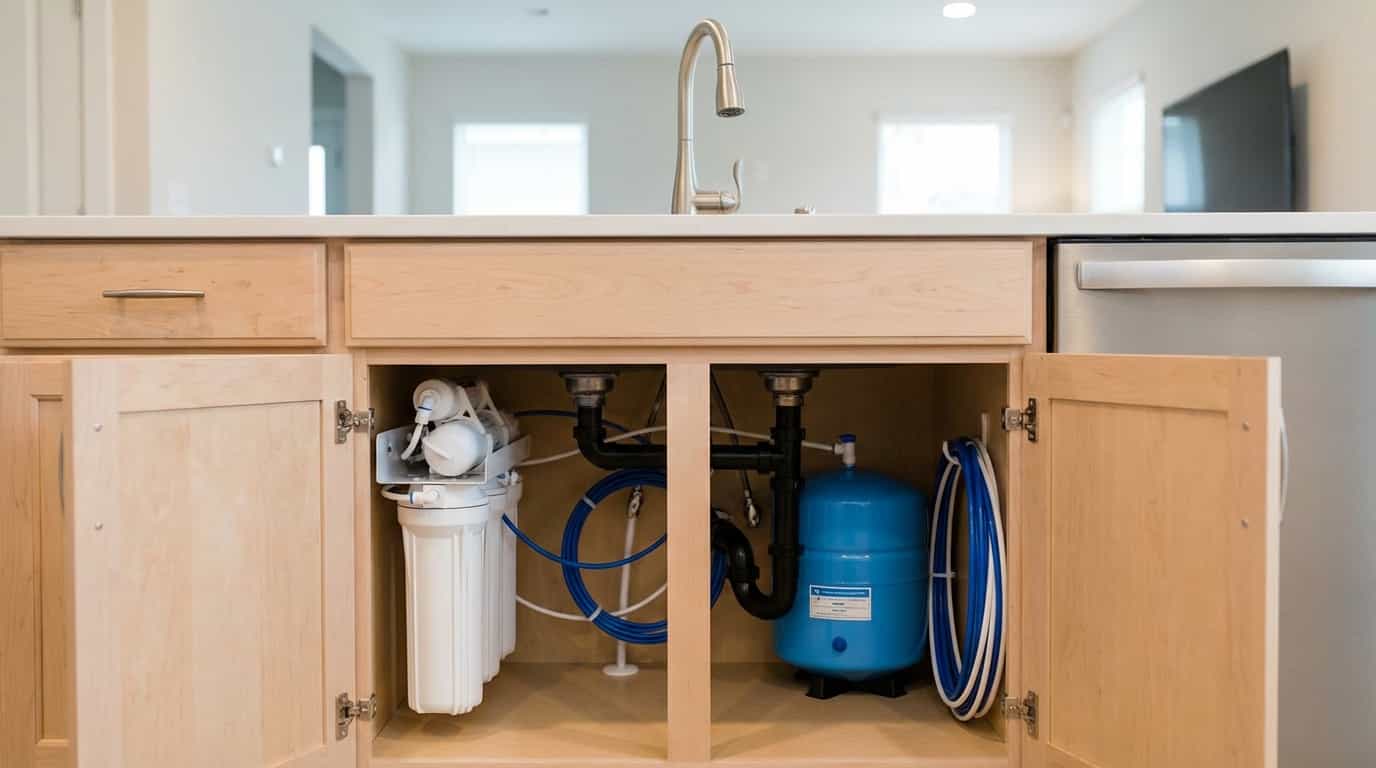
Reverse osmosis (RO) systems get described like a single product—“an RO filter”—but they behave like a small water treatment plant under your sink. Each stage (cartridge) has a distinct job, and the stages work in sequence. When one stage is overdue, it doesn’t just “filter less.” It can change pressure, flow, taste, and the workload on every stage downstream.
That’s why troubleshooting an RO system is much easier when you think in stages: a sediment filter is about particles and clogging, carbon stages are about adsorption (and protecting the membrane), the membrane is about dissolved contaminants and TDS reduction, and the final “polishing” stage is mostly about taste. Optional add-ons like UV and remineralization are not “better RO.” They’re separate tools for different problems.
For Canadian homeowners, the context matters. If your water comes from a community system that already meets the Guidelines for Canadian Drinking Water Quality, additional treatment is often a choice about taste, odour, or specific concerns—whereas well and cottage water can change seasonally and may require a tighter maintenance routine. Health Canada’s overview of treatment options and buying advice in Health Canada’s drinking water treatment guidance, including its emphasis on choosing devices certified to applicable NSF/ANSI standards, is the baseline lens this article uses.
What you’ll get below is a stage-by-stage explanation of what each cartridge does, how to recognize when it’s past its useful life, and how to replace parts without accidentally downgrading performance (or buying something that doesn’t fit). You’ll also get a symptom-driven troubleshooting map—because the most common RO complaints (slow flow, “flat” taste, weird smells, noisy tanks, cloudy water) usually point to one or two stages, not the whole system.

The Sediment Pre-filter
The Cartridge That Fails First (Because It’s Meant To)
What it does. The sediment pre-filter is the RO system’s front door bouncer. Its job is to capture physical particles—think sand, silt, rust flakes from older plumbing, and general turbidity—before those particles can plug up your carbon block or coat the membrane.
What it doesn’t do. A sediment filter isn’t designed to “fix taste,” and it doesn’t remove dissolved contaminants. If your water tastes like chlorine or has a chemical edge, the sediment stage isn’t your solution. But if your system is slow, this stage is a prime suspect.
Why it matters to every other stage. The sediment filter is primarily about protecting flow paths. When it clogs, the entire system downstream is starved for pressure and feedwater. That can look like:
the storage tank taking much longer to fill
the RO faucet producing a weak stream
the system sounding like it’s working harder (especially if you have a booster pump)
When to replace it (practical signals).
Flow drops noticeably at the RO faucet (after the system has had time to fill the tank).
You see discoloration if you have a clear pre-filter housing.
Your carbon stage seems to “wear out” early (a sediment filter that’s overloaded can cause channeling or uneven loading downstream).
Seasonal well water: spring runoff and heavy rains often mean more particulates, which can shorten life dramatically.
A realistic replacement mindset. You don’t need a perfect schedule—you need a reliable trigger. For many homes, sediment is the first thing to change because it’s both inexpensive and the most likely to be physically clogged. If you’re troubleshooting, swapping this first is often the fastest way to rule out “pressure starvation.”
Tip
If you’re trying to diagnose slow production, replace the sediment pre-filter before you blame the membrane. It’s the cheapest “pressure test” you can do—and it often fixes the issue by itself.
Advertisement — Article Continues Below
The Carbon Pre-filter
The Stage That Protects Your Membrane (and Fixes Most Chlorine Complaints)
What it does. The carbon pre-filter is an adsorption stage. It targets “aesthetic” issues (taste/odour) and, depending on the cartridge and its certification, can also target specific contaminants. In most under-sink RO systems, carbon pre-filtration also plays a second, less obvious role: it protects the RO membrane from oxidants (commonly chlorine or chloramine) that can shorten membrane life.
Why certifications matter here. Carbon filters are often marketed with vague claims (“removes chemicals,” “improves water quality”), but the more useful approach is to look for a standard that matches the job. NSF’s breakdown of drinking water treatment standards in NSF Standards for Water Treatment Systems, including the distinction between NSF/ANSI 42 (aesthetic effects like chlorine taste/odour) and NSF/ANSI 53 (health effects for specific contaminants), is a practical way to evaluate carbon cartridges without getting lost in marketing.
What it doesn’t do. Carbon doesn’t remove everything—and it isn’t a substitute for an RO membrane. Carbon is not designed to reduce total dissolved solids (TDS) in a meaningful way, and it won’t correct hardness or salinity on its own. It also won’t fix a microbe problem if your source water is not microbiologically safe.
When to replace it (practical signals).
Chlorine taste or smell returns at the RO faucet.
Taste gets “chemical” or “pool-like,” especially in municipal systems with disinfectant residuals.
Membrane performance degrades early, even when you think you’re maintaining the system—because carbon’s protection role is upstream of the membrane.
Important
If you suddenly notice a chlorine-like taste at the RO tap, treat it as a “protect the membrane” moment. Replace the carbon pre-filter promptly, then reassess performance after the tank refills.
The Stage That Actually Reduces Dissolved Stuff (and Why “TDS Removal” Gets Misunderstood)
What it does. The membrane is the heart of the system. Reverse osmosis uses pressure to force water through a semi-permeable membrane, separating product water from a concentrated waste stream. If you want a clean mental model, imagine it as a selective barrier where water passes and many dissolved substances are rejected. The reverse-osmosis process description in the American National Standards Institute’s overview of NSF/ANSI 58, including the emphasis on pressure-driven separation through a semi-permeable membrane, is a useful way to anchor what makes this stage different from sediment or carbon.
What it doesn’t do (the big expectation reset). A residential RO membrane should not be treated as your “primary disinfection strategy.” RO systems are commonly positioned as contaminant reduction devices on water that’s already considered safe from a microbiological standpoint. The NSF standards committee language on intended use in NSF’s NSF/ANSI 58-2024 uploaded discussion post, which specifies that systems addressed by the standard are designed for drinking water considered microbiologically safe and of known quality, is the key reason many homeowners add UV only when they have a clear microbial-risk reason.
How membranes “fail” in real homes. Most membranes don’t catastrophically break; they degrade. The degradation can show up as:
higher TDS in product water (a lower “rejection rate”)
slower production even after fresh pre-filters
taste drift that doesn’t improve after changing carbon stages
more frequent drain flow while the tank is filling (harder to notice, but common)
When to replace the membrane (a practical decision rule).
Replace pre-filters first, then re-check.
If flow and taste don’t improve and your TDS trend is worsening over time, the membrane becomes the likely limiter.
If your system has been neglected (long intervals without pre-filter changes), it’s reasonable to assume the membrane took the hit—because it likely operated under poor pressure and higher fouling load.
Note
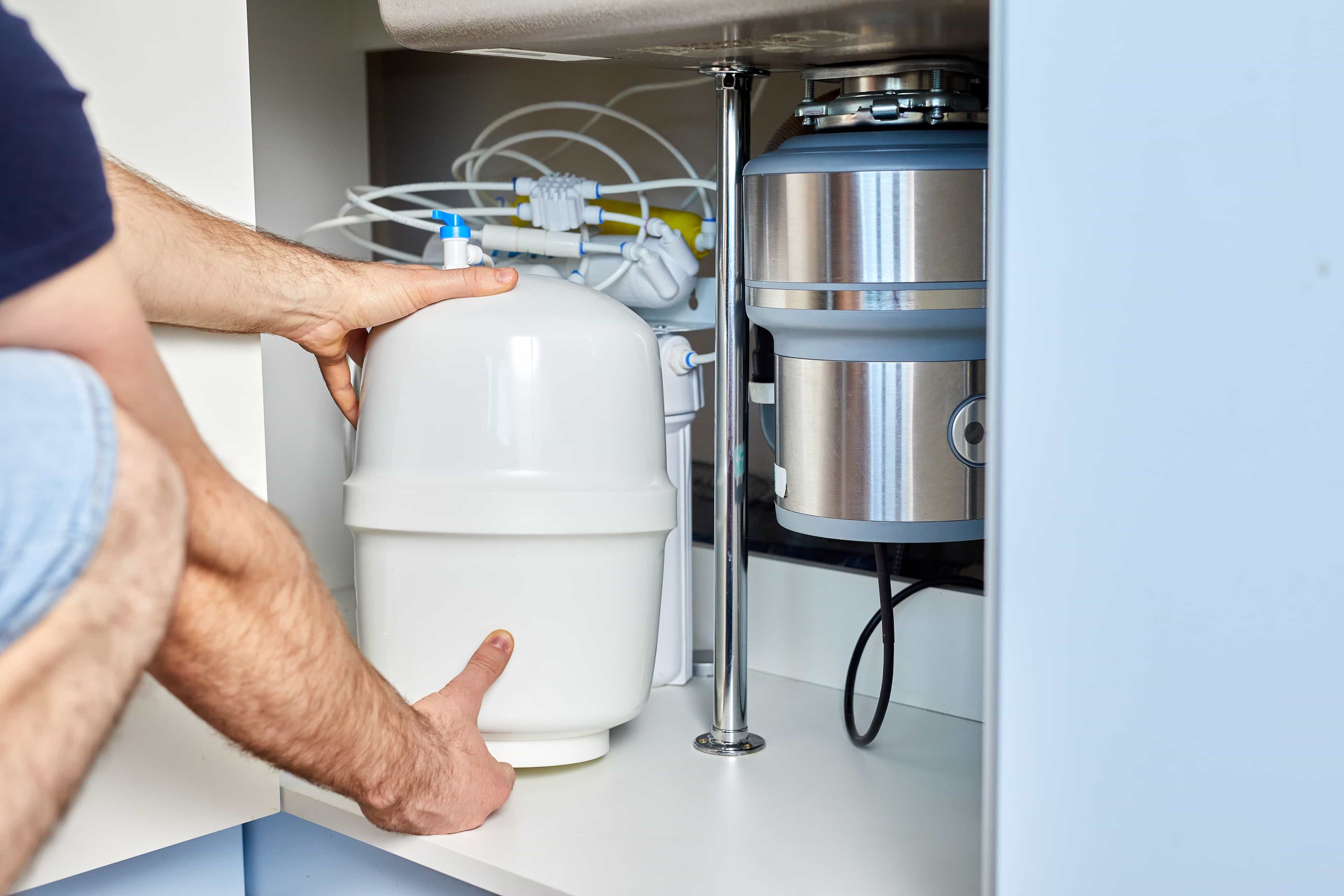
Cold feed water (common in Canadian winters) slows RO production even when everything is healthy. Before calling it a “bad membrane,” compare performance to your typical season and make sure the tank fully refills.
Advertisement — Article Continues Below
The Post-Carbon “Polishing” Filter
The Stage That Fixes “Stale Tank” Taste and Most “Plastic” Complaints
What it does. Post-carbon sits after the storage tank (in most designs), so it’s the final taste-and-odour cleanup before water reaches your RO faucet. This matters because storage tanks, lines, and fittings can contribute mild “stale,” “flat,” or “plastic/rubbery” notes—even when the membrane is working well.
Common misconceptions. If your water tastes “off,” people often jump straight to the membrane. In practice, a lot of taste complaints are downstream:
water sitting in the tank longer than usual (low usage)
a post-carbon cartridge that’s saturated
a new tank, tubing, or faucet that needs a proper flush cycle
When to replace it (practical signals).
Taste changes that show up even when TDS looks stable.
A slight odour that wasn’t present after your last maintenance.
You replaced the membrane and pre-filters but the taste still isn’t right (post-carbon is often the missing step).
A good homeowner habit. If you do a “full service” (sediment + carbon + membrane), don’t skip post-carbon. It’s the stage most likely to make your system feel fixed to your taste buds.
A Taste and Mouthfeel Choice for Most Canadians (Not a Requirement)
What it does. Remineralization cartridges add back a controlled amount of minerals (often calcium and/or magnesium compounds) to change the flavour profile and mouthfeel of RO water. Some people experience plain RO water as “flat,” and remineralization can make it taste more like conventional tap water or bottled spring water.
What it doesn’t do. Remineralization is not a substitute for the membrane, and it doesn’t fix upstream taste issues like chlorine breakthrough. It also isn’t a “health necessity” for most households.
The Canadian reality check. Reverse osmosis does reduce minerals like calcium and magnesium, but Health Canada’s consumer guidance explains that drinking water is generally a minor mineral source compared with food, and that Canadians eating a reasonably balanced diet do not need mineral supplements solely because they use RO in Health Canada’s drinking water treatment device Q&A, which is why you should treat remineralization as a preference decision rather than a mandatory upgrade.
When remineralization makes sense.
You like RO performance but dislike the taste.
Your coffee/tea tastes “thin,” and you want a slightly rounder profile.
You want a more neutral pH feel (some cartridges are designed around that perception).
When to skip it.
You’re trying to avoid any added scaling potential in kettles/humidifiers.
You’re troubleshooting core performance issues (flow/TDS/taste from chlorine). Add-on stages should come after the fundamentals are stable.
Tip
If you’re unsure, run your system without remineralization for a week after a full filter change. If the water is clean but you just don’t love the taste, that’s the strongest signal remineralization is worth it.
Advertisement — Article Continues Below
Optional Stage: UV Filtration
When Extra Microbial Assurance Makes Sense (and When It Doesn’t)
What it does. UV stages use ultraviolet light to inactivate microorganisms. In RO systems, UV is usually an “extra barrier” step—either after the tank or as part of a multi-stage design—rather than the main purification mechanism.
How to think about it. UV is a microbiological tool. It doesn’t remove dissolved metals, salts, or organics the way a membrane can, and it doesn’t remove particulates the way sediment filtration can. It’s not “better RO”; it’s a different type of control.
The standard distinction that matters. Health Canada’s treatment guidance outlines that NSF/ANSI 55 applies to UV microbiological water treatment systems and distinguishes Class A systems (for inactivating or killing bacteria, viruses, and cysts in contaminated water) from Class B systems (for supplemental treatment of already disinfected water) in Health Canada’s drinking water treatment guidance, which is exactly why UV claims should be evaluated separately from the RO membrane’s claims.
When UV is worth considering.
You’re on a well or seasonal source and want an added layer of microbiological assurance after you’ve addressed turbidity and core system maintenance.
You’ve had boil water advisories or uncertainty about microbial quality and want a final, point-of-use barrier.
Maintenance reality. UV systems are maintenance items, not “set and forget.” Lamps age, sleeves can foul, and power interruptions matter. If you add UV, build it into your replacement routine the same way you do cartridges.
Warning
UV performance depends on correct sizing and operating conditions. If you’re adding it because you suspect unsafe source water, treat it as part of a broader plan (testing + source correction + treatment design), not a single silver bullet.
The Performance Terms That Help You Diagnose the Membrane Stage
If you own an RO system long enough, you’ll run into three terms that get tossed around loosely: TDS, recovery, and efficiency. Understanding them doesn’t make you a water chemist—it just helps you interpret whether the system is behaving normally.
TDS (total dissolved solids) in homeowner terms. A handheld TDS meter doesn’t identify individual contaminants; it measures electrical conductivity and expresses it as an approximate “dissolved solids” number. It’s best used as a trend tool:
establish a baseline right after maintenance
track changes over time
use big shifts as a trigger to investigate (pre-filters, membrane, or operating conditions)
Why the standard language matters. The reason “TDS removal” is often misunderstood is that it’s a defined test concept in certification—not a guarantee of removing everything. The certification discussion in WaterWorld’s overview of RO certification and efficiency ratings, including its summary of NSF/ANSI 58’s minimum requirements (materials safety, structural integrity, product literature, TDS reduction, and additional contaminant reduction claims), is a helpful reminder that credible performance claims have a scope and a test method behind them.
Recovery vs efficiency (why your drain ratio changes).
Efficiency relates to how much of the water entering the RO unit becomes usable product water during normal tank-filling conditions.
Recovery relates to how much becomes product water under open-faucet conditions (no tank filling).
In practical terms: storage tanks create back pressure, and that changes the membrane’s operating behaviour. That’s why two systems can both “work” yet have very different drain-to-product ratios depending on design and conditions.
Tip
Don’t chase a single “perfect” TDS number. Track your own baseline and watch for drift—especially after you replace pre-filters—because a stable trend is often more meaningful than a one-off reading.
Advertisement — Article Continues Below
Replacement Timing That Actually Holds Up
A Simple Framework That Adapts to Municipal vs Well Water
Most replacement advice online is either too rigid (“always change every X months”) or too vague (“change when needed”). A better approach is to combine source context, symptoms, and baseline tracking.
Step 1: Decide what “success” means for your home.
Is your RO system primarily for:
better taste/odour?
reduced scaling in a kettle?
specific contaminant reduction concerns?
peace of mind on a private source?
Your “success metric” changes which stage you watch most closely.
Step 2: Set two baseline checks you can repeat.
Flow baseline: After a full tank refill, time how long it takes to fill a 1 L container at the RO faucet.
TDS baseline: If you use a meter, record feed (tap) and product (RO) TDS right after maintenance.
Write those numbers down. You’re building a simple, homeowner-friendly trend line.
Step 3: Replace in a ‘front-to-back’ logic.
Start with what clogs first: sediment.
Then what saturates and protects the membrane: carbon.
Then the membrane (only after pre-filters are confirmed healthy).
Then post-carbon (taste polish).
Optional stages last (UV lamp/sleeve, remineralization).
Step 4: Adjust frequency based on your source.
Municipal water: often steadier, so you can stay closer to the manufacturer’s schedule unless you notice disinfectant taste breakthroughs or seasonal changes.
Well/cottage water: more variability—sediment, iron, hardness, and organics can shorten life, and spring/fall transitions are common trouble windows.
Step 5: Re-test after changes.
Always give the system time to flush and the tank time to refill, then compare to your baseline. The goal is not “new filter smell.” It’s stable performance.
Important
A “schedule” is your minimum standard; your baseline trend is the smarter trigger. When the trend changes, the system is telling you something—even if the calendar says you’re not due yet.
Advertisement — Article Continues Below
Troubleshooting By Symptom
Mapping What You Notice to the Stage That’s Usually Responsible
Most RO problems aren’t mysteries—they’re patterns. Here’s how to interpret the most common complaints without replacing everything at once.
Slow flow at the RO faucet
Most likely: clogged sediment filter, clogged carbon pre-filter, low feed pressure, cold water, or a partially depleted tank air charge.
Best first action: replace sediment and carbon pre-filters, then reassess after a full tank refill.
Tank takes forever to refill
Most likely: clogged pre-filters, low feed pressure, cold water, or a membrane nearing end-of-life.
Best first action: front-to-back replacement logic (pre-filters first), then evaluate membrane performance with your TDS trend.
Bad taste after you “just changed filters”
Most likely: post-carbon not changed, inadequate flushing, low usage causing tank water to sit, or a mismatched cartridge (wrong carbon type/size).
Best first action: flush per manufacturer guidance and ensure post-carbon is fresh.
Noisy tank or “burping” faucet
Often: air charge issues in the storage tank or inconsistent pressure. This can be normal during filling, but persistent noise can signal a tank problem rather than a filter problem.
Best first action: confirm the tank is filling properly and that flow is stable after the system has rested.
Cloudy water in the glass
Often: dissolved air bubbles after filter changes or after the system has been idle. This typically clears in minutes.
Best first action: let it sit; if cloudiness persists or there’s sediment, re-check pre-filters and housing integrity.
Rotten egg / sulphur smell
This one is different. Hydrogen sulphide is known for its offensive “rotten egg” odour and low odour threshold, as detailed in Health Canada’s sulphide (as H₂S) technical document, so a sudden sulphur smell—especially on a well or cottage source—often points to a source-water issue that may need upstream treatment rather than repeated postfilter swaps.
Note
When troubleshooting, change only one “layer” at a time (pre-filters, then membrane, then polishing/add-ons). If you replace everything at once, you lose the diagnostic signal and make it harder to learn what your system actually needed.
Advertisement — Article Continues Below
Buying Replacement Cartridges Without Mistakes
Compatibility First, Then Certification, Then “Upgrades”
A large percentage of RO frustration comes from buying the wrong replacement parts—wrong length, wrong fittings, wrong membrane rating, or a carbon cartridge that doesn’t match the system’s intended design.
Start with compatibility (the non-negotiables).
Cartridge size (length and diameter)
Connection type (quick-connect, threaded, proprietary)
Flow direction requirements (some cartridges are directional)
Membrane format (element style, rated capacity, housing compatibility)
Then look at certification and claim clarity. In residential water treatment, certification is often voluntary, but it’s still one of the strongest consumer protections you can use when shopping online. NSF’s overview of certification and the value of the NSF mark for consumer confidence in NSF’s overview of water treatment and filtration systems, including its framing of certification as a trust signal for safety and performance claims, is the reason “generic” is not automatically “equivalent” when the part is in contact with drinking water.
Be careful with the word “universal.”
Universal filters often work mechanically (they fit), but they may not match what your system was designed and certified to do. The safest approach is: match the original part numbers first, then consider equivalent replacements that are explicitly compatible and properly certified for the relevant claims.
Membranes and modules deserve extra caution.
The membrane is where performance lives, and it’s also where “almost right” can become “quietly disappointing.” NSF’s knowledge library note that RO systems and components fall within the scope of NSF/ANSI 58 in NSF/ANSI 58: Reverse Osmosis Drinking Water Treatment Systems, including its explicit mention of components, is a useful reminder to treat membrane shopping as a performance decision—not just a fitment decision.
Important
If a listing can’t clearly tell you what it fits, what standard/certification it meets (if any), and what the cartridge is intended to remove or improve, assume the burden of proof is on the seller—not on your plumbing.
Advertisement — Article Continues Below
Decoding NSF/ANSI Labels
A Homeowner-Friendly Way to Read “42 / 53 / 55 / 58” Without Guessing
One of the fastest ways to avoid bad replacement buys is to treat standard numbers as scopes, not “scores.” The numbers don’t mean “better” or “worse”—they tell you what category of performance is being evaluated.
NSF/ANSI 53: health effects (specific contaminant reduction claims) sometimes relevant to carbon stages
NSF/ANSI 55: UV microbiological systems (Class A vs Class B)
NSF/ANSI 58: point-of-use reverse osmosis systems and related performance requirements
To anchor what “58” means in practice, it helps to look at how the standard itself is described. Accuris’s product page summary in the NSF/ANSI 58-2024 standard listing, including its statement that the standard establishes minimum requirements for materials, design and construction, and performance (along with minimum product literature and service-related obligations), is the clearest “why you should care” explanation: a credible RO product should come with specific, checkable performance data—because the standard expects that level of disclosure.
Quick “Stage to Standard” Decoder (Typical Use Cases)
RO System Stage
What You’re Mostly Trying to Achieve
Standards You’ll Commonly See Referenced*
Sediment pre-filter
Protect flow paths and downstream cartridges from clogging
Often packaged as part of a certified system; may not carry a standalone claim
Carbon pre-filter
Reduce chlorine taste/odour; protect membrane; sometimes specific contaminant reduction
Reduce dissolved contaminants (TDS and other certified claims)
NSF/ANSI 58
Post-carbon filter
“Polish” taste/odour after storage tank
Often NSF/ANSI 42-related claims for taste/odour
UV stage (optional)
Inactivate microorganisms under defined conditions
NSF/ANSI 55 (Class A or Class B)
Remineralization (optional)
Adjust taste/mouthfeel by adding minerals
Usually a taste preference feature; certification focus varies
*Always match standards and claims to your exact model and documentation—cartridges can look similar while doing different jobs.
Advertisement — Article Continues Below
FAQ
Slow flow is usually a pressure and restriction problem, not a taste problem. Sediment and carbon pre-filters clog and reduce feed pressure to the membrane and tank, which makes the faucet feel weak even if the membrane is still rejecting dissolved contaminants well. Replace pre-filters first, let the tank refill fully, then reassess.
Yes. Colder feed water reduces membrane throughput. If your RO feels slower in winter but rebounds in summer—especially after you confirm pre-filters are fresh—that seasonal pattern is often normal. Track your refill time as a winter baseline rather than comparing to July performance.
For most people with a balanced diet, remineralization is about taste and preference, not health necessity. If you like the taste of straight RO, you can skip it. If you find RO water “flat,” remineralization can improve mouthfeel.
Often it’s just trapped air that clears in a few minutes. If it doesn’t clear, or you see actual particles, re-check that cartridges are seated correctly and housings are sealed properly, then flush longer.
Neglected pre-filters. When sediment and carbon aren’t changed on time, the membrane can foul faster and may also be exposed to oxidants it wasn’t meant to handle. A membrane is durable, but it’s not meant to be your first line of defence.
You can, but it’s risky. Fitment doesn’t guarantee equivalent performance, especially for carbon stages (media type and certification scope) and membranes (performance ratings and compatibility). If you do mix-and-match, do it deliberately: match specs, then confirm claims and compatibility.
RO creates a concentrated waste stream by design. Drain ratio varies with water pressure, temperature, membrane condition, and the system’s flow restrictor and shutoff design. If waste increases noticeably alongside slower tank fill, check pre-filters and membrane condition.
Usually, yes. Well water can vary more in sediment, organics, and seasonal conditions. That often means shorter pre-filter life and a stronger case for baseline tracking (flow and TDS trend) instead of relying only on the calendar.
RO is typically used on water already considered microbiologically safe. If you suspect microbial risk (or you’ve had advisories), start with testing and source correction, then consider adding an appropriately certified UV stage as a separate barrier.
Replace the sediment and carbon pre-filters first, flush, let the tank refill fully, and re-check taste, flow, and (if you track it) TDS. That sequence solves a large share of common complaints and prevents you from replacing the membrane prematurely.